



Rythme de base 1
Avec
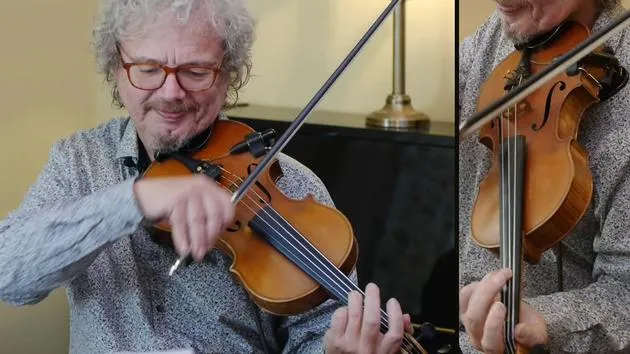
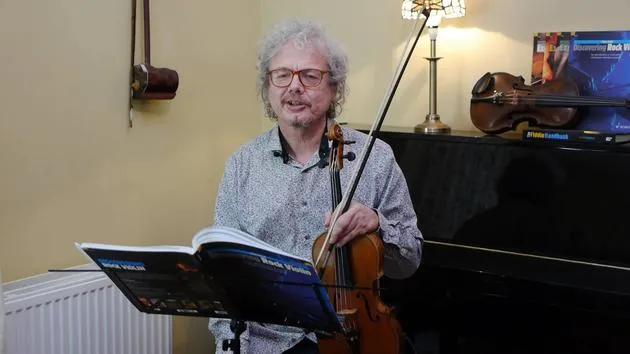
Chris HaighChris Haigh aborde les bases du violon rock, en se concentrant sur la façon de s'intégrer dans un groupe et de jouer le rythme plutôt que de faire des solos en permanence.
© 2011 Schott Music Ltd, London
Le contenu du cours
28 leçons (2h 28min) · 1 gratuites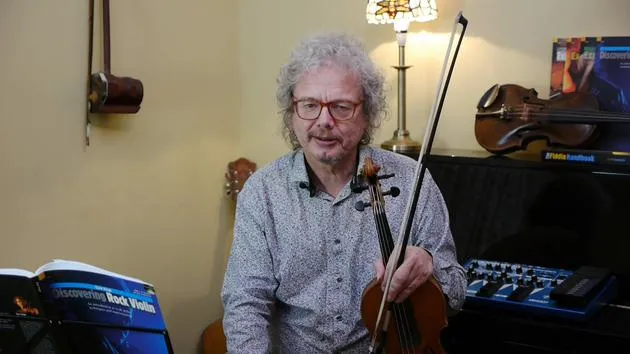
Transcription de la leçon
Rock Violin Basics
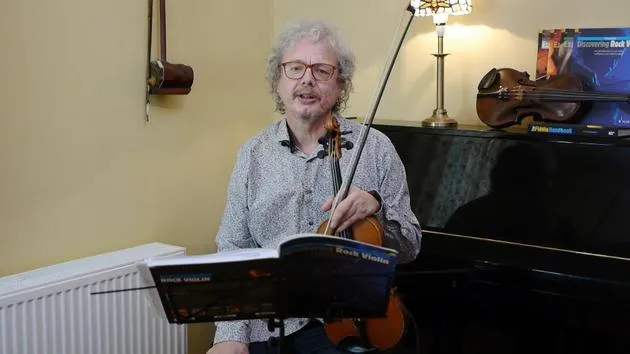
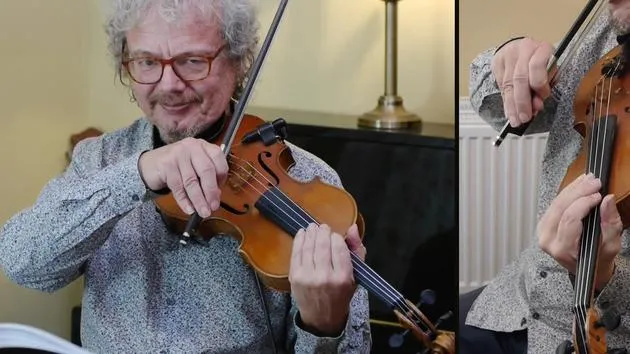
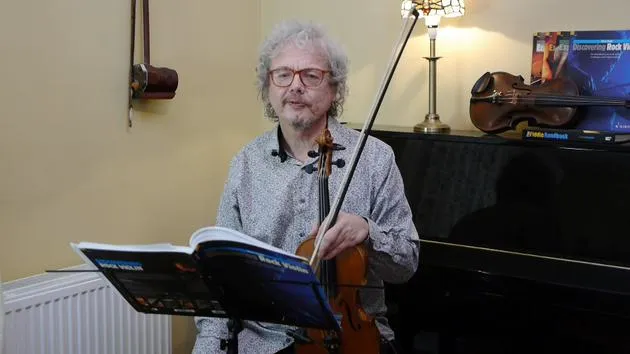
In this lesson, we're going to look at the very bare bones of rock violin playing. We'll interpret rock very loosely to cover various situations where you're playing in a band.
Performance Mindset
Some of you will want to turn up to 11 and shred right away, and there will be quite a lot of that towards the end of this course. However, if you expect that to define your rock violin career, be prepared for a short but glorious journey.
You've got to find ways of playing in a band where you're not at the front all the time, soloing constantly. Especially if you have a singer, they may quickly want to reduce your spotlight.
Playing as Part of the Rhythm Section
I've been in this situation and learned a lot from it. So let's explore some simple ways to be an effective part of the rhythm section.
Chord Sequence
Let's start off with a simple chord sequence.
- We've got three chords today: IV and V.
- In this case, we're working with A, D, and E.
Question: What can you do whilst those chords are playing?
-
Single Notes on the Roots
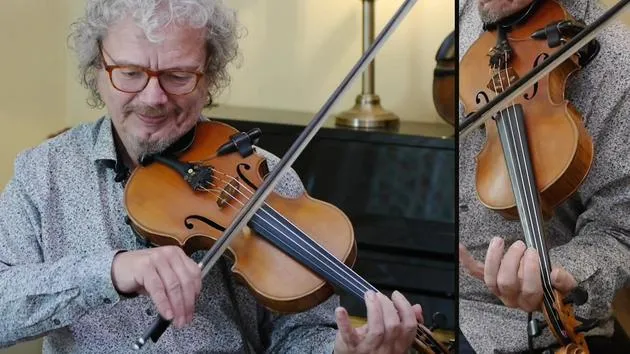
- First, we'll try playing single notes on the roots.
-
Eighth Notes
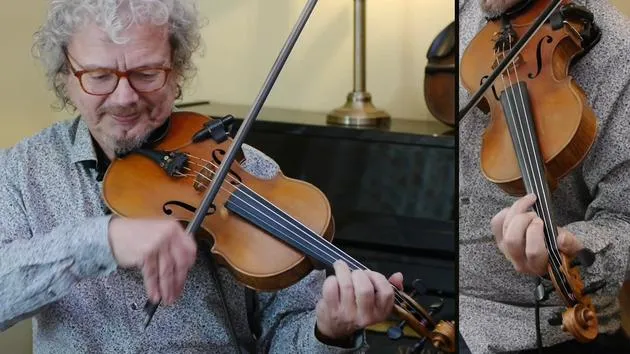
- Next, we'll play eighth notes. This gives us a lot more notes while still focusing on the roots.
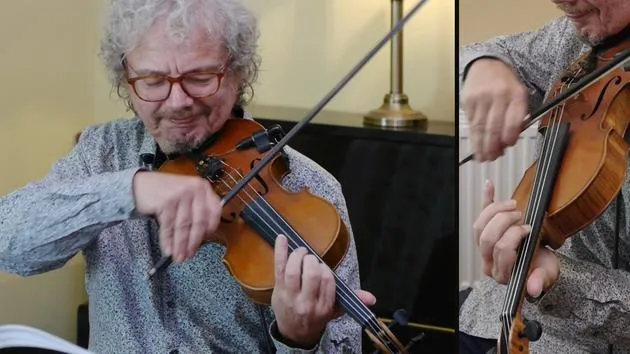
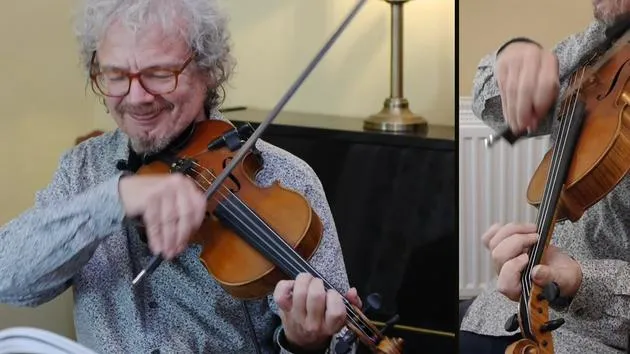
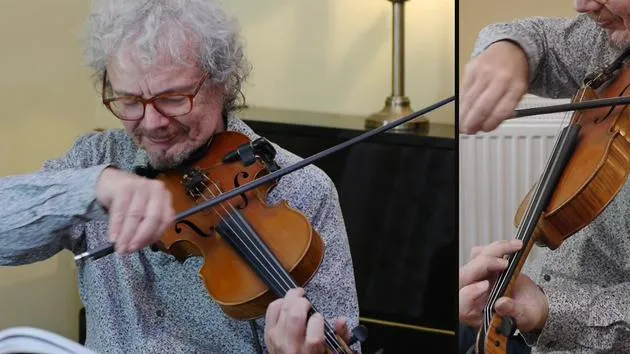
- Remember to strike down at the heel for a punchy rhythmic effect.
-
Accentuation
- Let's increase our accents:
- da da da da da da da da da da da da da.
- Again, maintain that heel strike.
- Let's increase our accents:
-
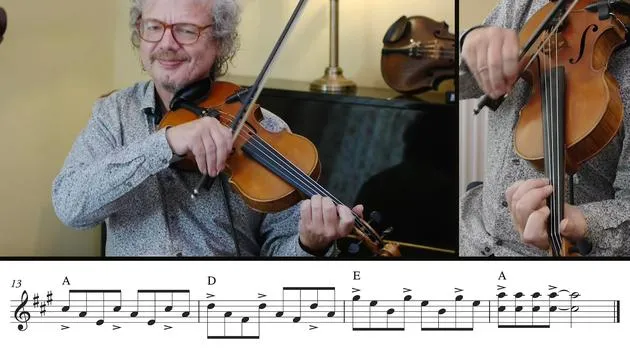
Playing Arpeggios
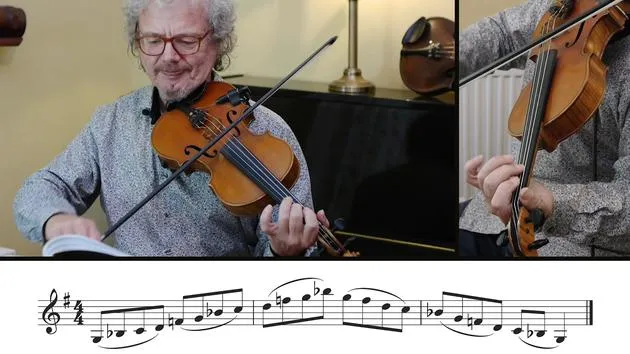
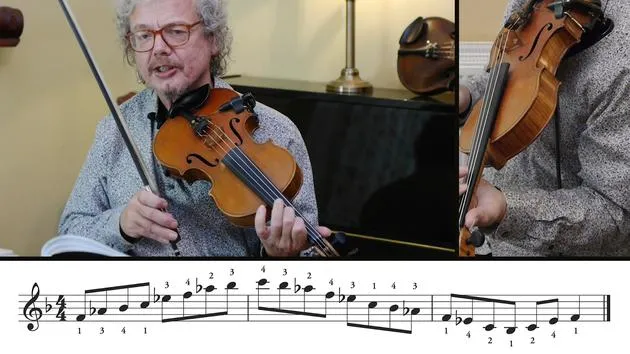
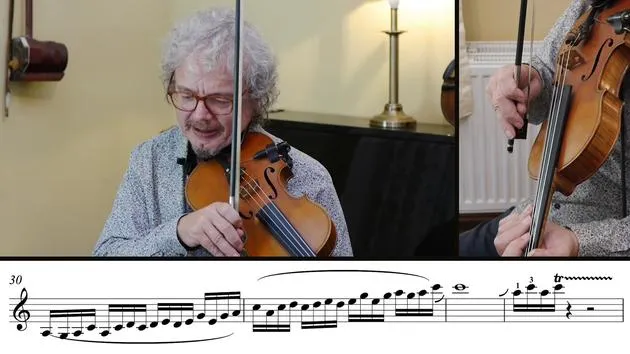
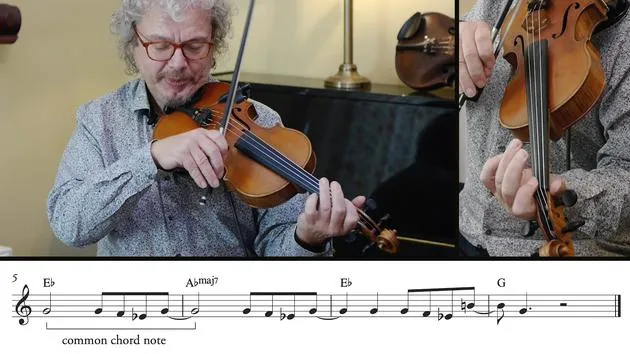
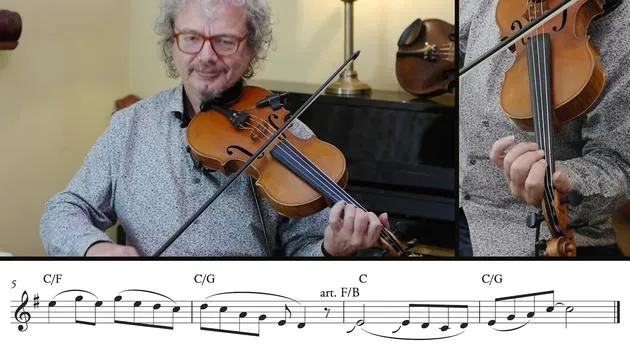
- This time, we'll move to playing arpeggios, which include the root, third, and fifth:
- Go up and down the arpeggio for each chord.
- Instead of going up and down, try going down and up.
- This time, we'll move to playing arpeggios, which include the root, third, and fifth:
-
Accents with Rhythm
- Now, let's use the roots again but focus on the accents:
- Hear all down bows: da da da.
- This consistency increases attack.
- Now, let's use the roots again but focus on the accents:
Two-Bar Patterns
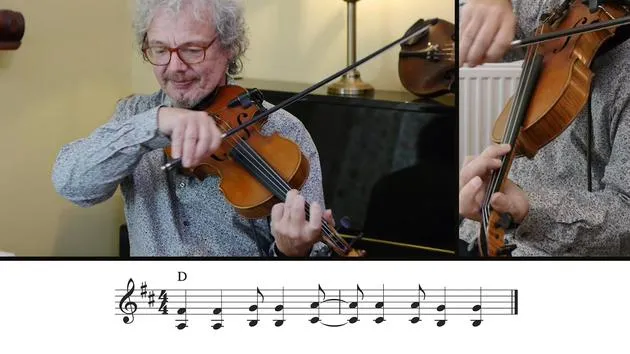
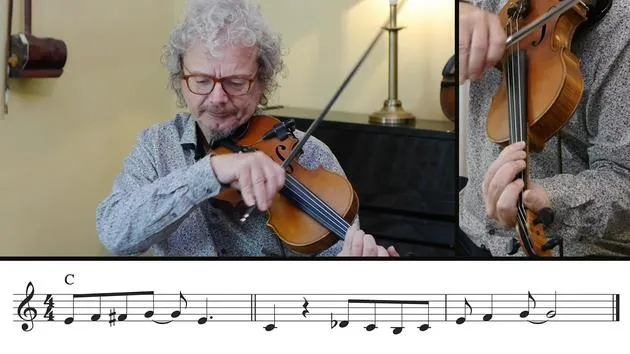
Now we'll shift gears with a two-bar long pattern:
- da da da da da da da da da da da da.
- This will involve a different chord sequence: two bars of A, followed by two bars of D.
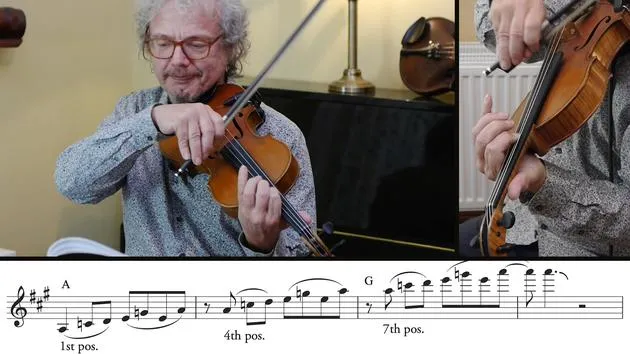
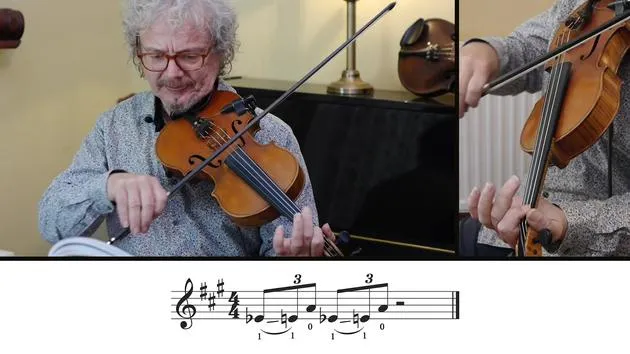
Next, let's create another two-bar pattern, differing between the two bars:
- You'll have off beats, and then a burst of notes at the end.
Application
With the chords, you can see we've explored various approaches to both the notes and rhythms.
- These notes and rhythms will lock in with the rhythm section, drums, bass, and guitar, keeping you busy and happy without overshadowing the singer.
Assignment
For this lesson, here are your tasks:
-
Practice Patterns
Review all the different patterns we've covered. Play them along with the backing tracks, ensuring you use the correct bowing and accentuation. -
Create Your Own Patterns
Using the backing tracks, experiment with creating your own similar patterns. -
Identify Songs
Listen for songs on the radio or in your collection that have a similar feel. Try creating patterns that suit those songs, no matter what key they happen to be in.
Happy practicing!
28 leçons
2h 28m de leçons vidéo structurées
Fonctions vidéo avancées
Ralentissez, bouclez un passage, suivez la partition
Mobile, tablette et ordinateur
Pratiquez où vous voulez
Satisfaction garantie à 100 %
Garantie remboursement 30 jours
Rencontrez votre guru
Rencontrez votre guru
Chris Haigh est violoniste professionnel depuis 25 ans et possède une expérience dans de nombreux genres. Il a joué sur plus de 75 albums, aux côtés d'artistes comme Alison Moyet, Bob Geldof, All About Eve, Michael Ball, David Soul, Oumou Sangare, The Quireboys, Riverdance, Morcheeba, James Galway et Steps.
Il a joué du swing et du jazz avec The Kimbara Brothers, Diz Disley, Le Jazz, The Hot Club of London et les Quecumbar Allstars, et dirige un ensemble de swing soviétique à sept musiciens, The Kremlinaires.
Chris donne des cours et des ateliers sur la technique du violon jazz et a enseigné le violon jazz aux universités de Middlesex, Brunel et Newcastle ainsi qu'au Truro College. Parmi ses ouvrages figurent neuf livres consacrés au violon, dont The Fiddle Handbook.
Il anime également Fiddling Around (fiddlingaround.co.uk), sans doute la source d'information sur le violon la plus complète et la plus consultée du web.







