



Pentatoniques mineures 1
Avec
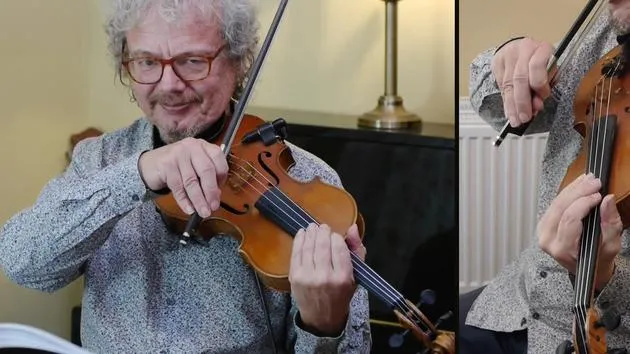
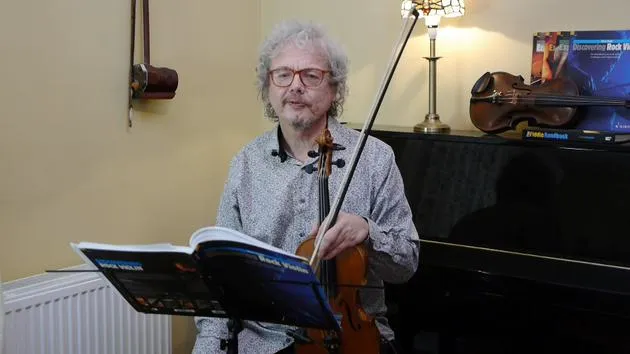
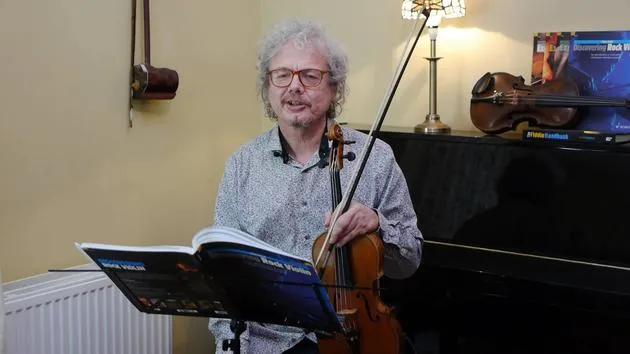
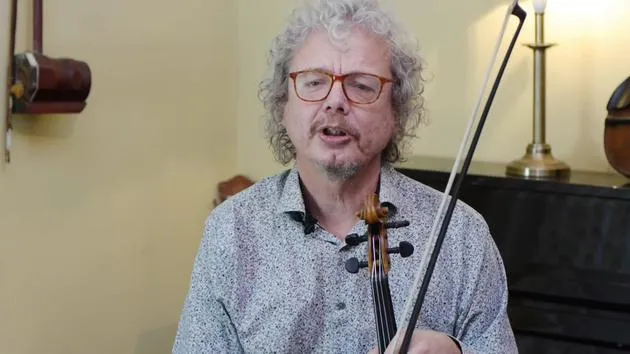
Chris HaighChris Haigh présente la gamme pentatonique mineure -la base du violon rock et blues- en mi mineur et dans d'autres tonalités, avec des coups d'archet en triolets et liés à travailler.
© 2011 Schott Music Ltd, London
Le contenu du cours
28 leçons (2h 28min) · 1 gratuites
Transcription de la leçon
Minor Pentatonic Scale Lesson
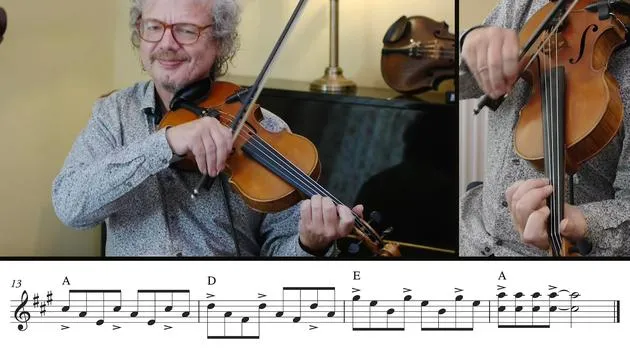
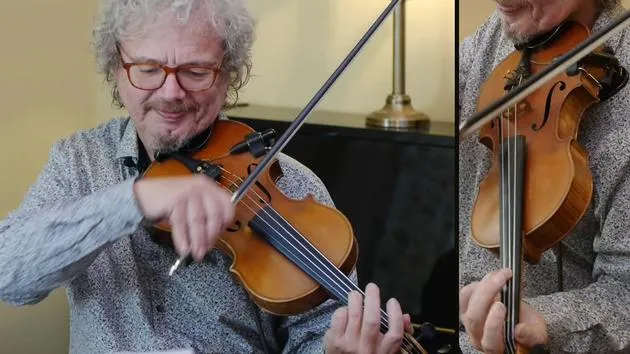
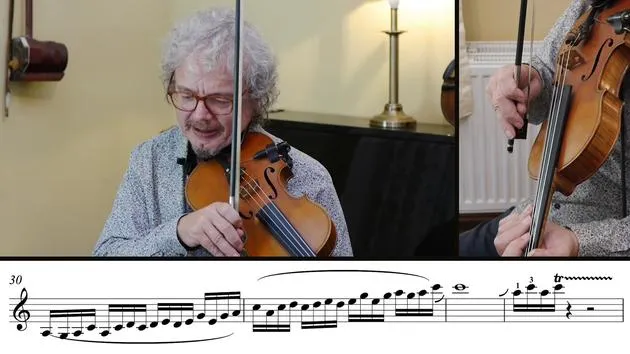
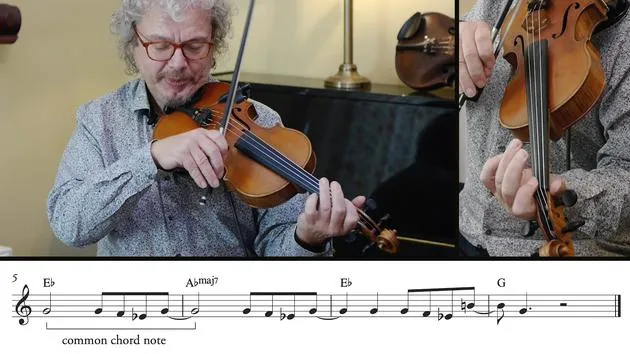
In this lesson, we're going to look at the minor pentatonic scale, which is one of the absolute foundations of rock and blues playing.
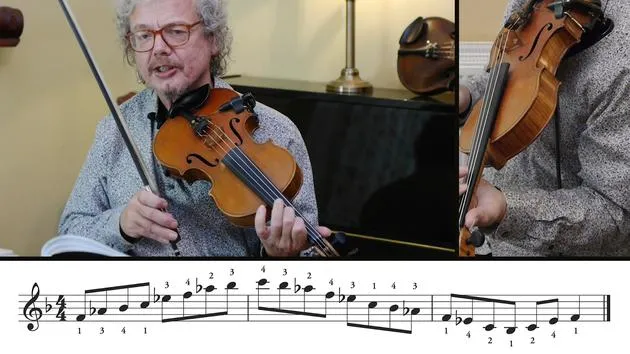
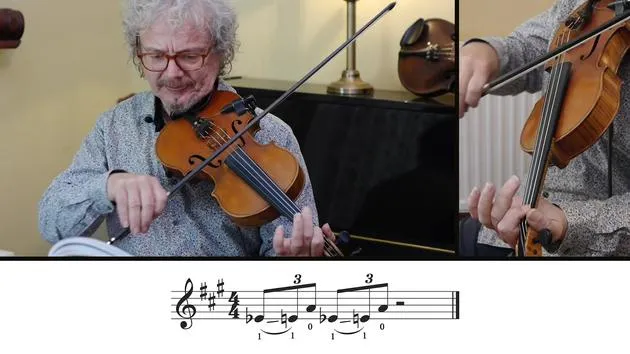
E Minor Pentatonic Scale Overview
Let's look at E minor:
- Root
- Flattened third
- Fourth
- Fifth
- Flattened seventh
This simple scale can be the foundation of a whole load of solos in itself. As such, you need to learn the pentatonic scale, specifically the minor pentatonic, in a variety of keys.
Here it is in G, and we also have it written out in several different keys. One of your tasks will be to learn all of those.
Using the Scales
There are lots of ways you can use these scales:
- Parts of the scales
- The whole scale
Rhythmic and Bowing Patterns
We have different rhythmic patterns and bowing patterns, including:
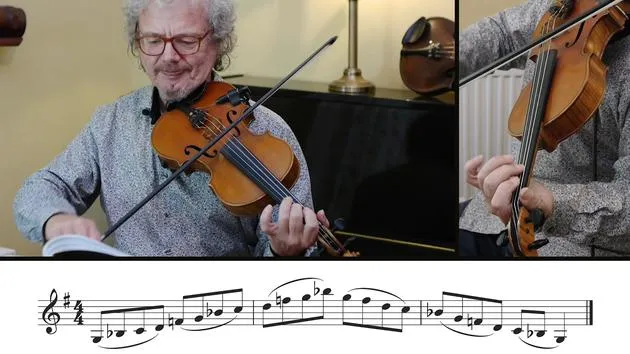
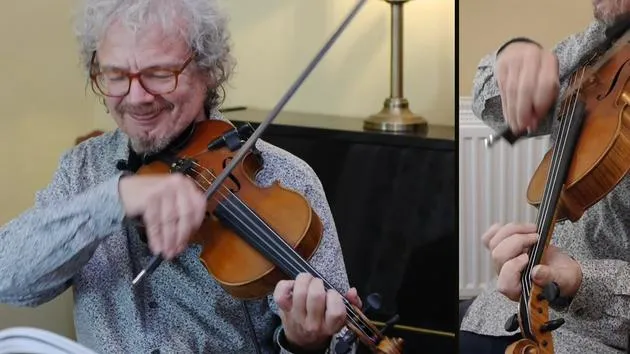
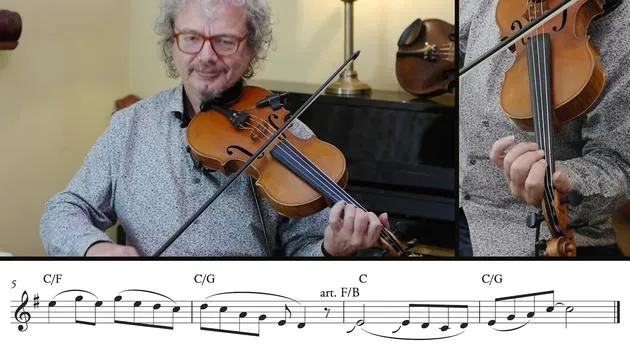
- Triplets bowed three to a bow:
- This is well worth playing slowly and then gradually getting faster.
Let's hear that one with some chords behind it.
You can see how the same lick was able to move easily between the different chords in the 12-bar sequence. We'll talk more about that sequence later.
Slurring Patterns
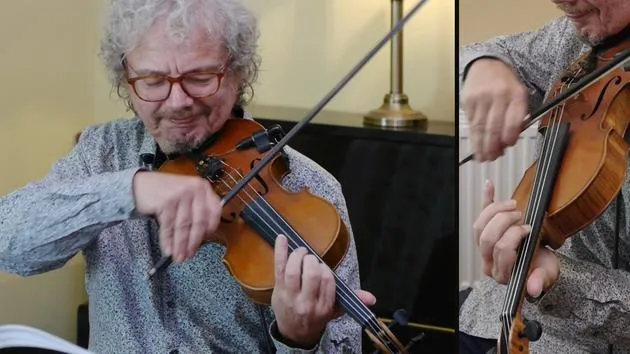
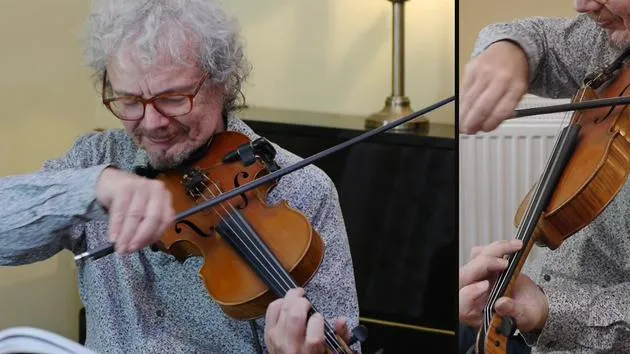
Here's another pattern, this time slurring four notes at a time. We're going to play with a long slur, which is useful if you're playing quite a lot faster.
Let me play a mixture of those three different things again with the backing.
Featured Player: Don Sugarcane Harris
Now, we're going to look at a specific player: Don Sugarcane Harris.
He was a black fiddle player in America in the 1970s, working with Frank Zappa, among others, and he produced some absolutely legendary solos.
Frank Zappa was quite happy for his musicians to play as long as they wanted, provided it was sounding funky. And boy, did he sound funky!
Listening Recommendations
Listen to his recordings on:
- Hot Rats (1969)
- Burnt Weenie Sandwich (1970)
You'll hear some amazing licks. I'm going to give you some examples of those licks now, along with some insights about the violin sound.
Practical Licks and Patterns
-
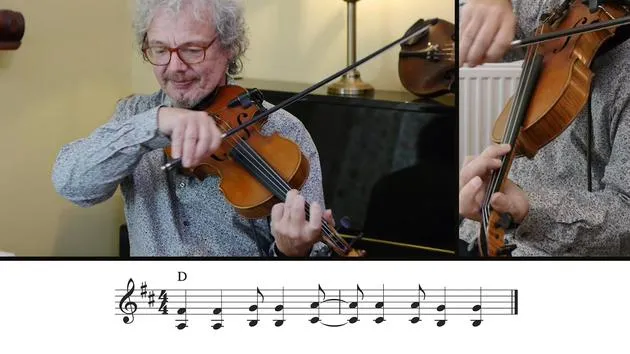
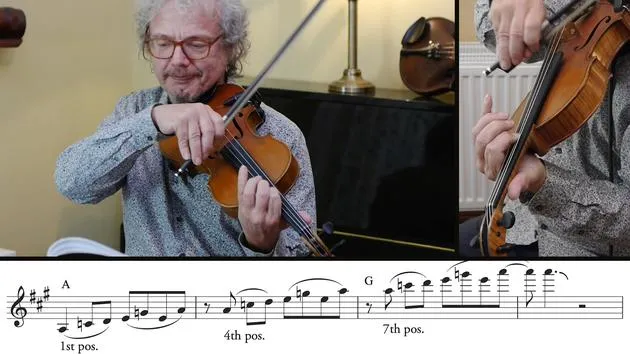
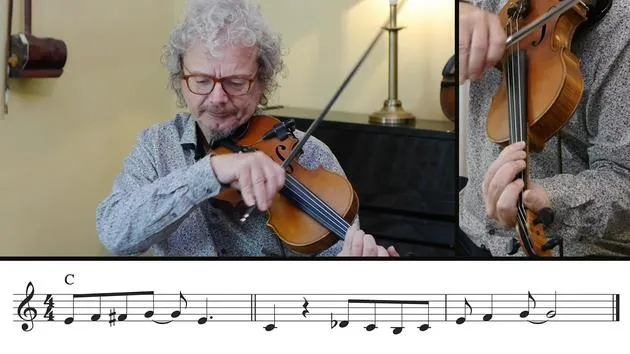
The first lick we're going to cover is not just going straight up and down the scale, but rather using patterns.
- Here's a D minor pentatonic lick with some backing.
-
Another example involves coming down the scale. Let's do that with the backing.
-
We also have four notes slurred to the bow. You can take the pattern all the way up, and here it is with eight notes to the bow.
-
Here it is in triplets.
Tips for Soloing
In a solo, you wouldn't typically play something all the way from bottom to top and back again. It's often better to use short sections repeated over and over again, rather than going all the way up and down the scale.
Interestingly, many of these patterns tend to work better going down than going up.
Here's another example of a lick, and I'll finish this lesson by playing the backing and demonstrating a selection of those licks.
Assignment
As your assignment for this lesson:
- Practice all of the pentatonics that I've listed.
- You might not enjoy this, but it will pay off in the long run.
- At least memorize the more important ones: G, D, A, and E.
- Practice all of the licks that I've shown you using the rootsy blues backing.
- Finally, using the backing, improvise using just the scale of the minor pentatonic.
See you in the next lesson!
28 leçons
2h 28m de leçons vidéo structurées
Fonctions vidéo avancées
Ralentissez, bouclez un passage, suivez la partition
Mobile, tablette et ordinateur
Pratiquez où vous voulez
Satisfaction garantie à 100 %
Garantie remboursement 30 jours
Rencontrez votre guru
Rencontrez votre guru
Chris Haigh est violoniste professionnel depuis 25 ans et possède une expérience dans de nombreux genres. Il a joué sur plus de 75 albums, aux côtés d'artistes comme Alison Moyet, Bob Geldof, All About Eve, Michael Ball, David Soul, Oumou Sangare, The Quireboys, Riverdance, Morcheeba, James Galway et Steps.
Il a joué du swing et du jazz avec The Kimbara Brothers, Diz Disley, Le Jazz, The Hot Club of London et les Quecumbar Allstars, et dirige un ensemble de swing soviétique à sept musiciens, The Kremlinaires.
Chris donne des cours et des ateliers sur la technique du violon jazz et a enseigné le violon jazz aux universités de Middlesex, Brunel et Newcastle ainsi qu'au Truro College. Parmi ses ouvrages figurent neuf livres consacrés au violon, dont The Fiddle Handbook.
Il anime également Fiddling Around (fiddlingaround.co.uk), sans doute la source d'information sur le violon la plus complète et la plus consultée du web.







