



Accords - Partie 2
Avec
Chris HaighChris Haigh montre comment gérer l'accord inattendu et non diatonique qui rompt une séquence par ailleurs sûre, et comment repérer à l'oreille l'accord intrus.
© 2011 Schott Music Ltd, London

Le contenu du cours
28 leçons (2h 28min) · 1 gratuites
Transcription de la leçon
Lesson on Dealing with Unexpected Chords
In the last lesson, we talked about diatonic chord sequences, which are the safest and, let's be honest, blandest type of chord sequence. However, quite often you will find an unexpected chord, or two or three, in a sequence. This can make improvisation more challenging.
Recognizing the Odd Chord
Listen and Identify
Let's listen to this little sequence and see if you can recognize the odd one out.
Hopefully, you recognized that the seventh chord, which was a D, was the odd one out.
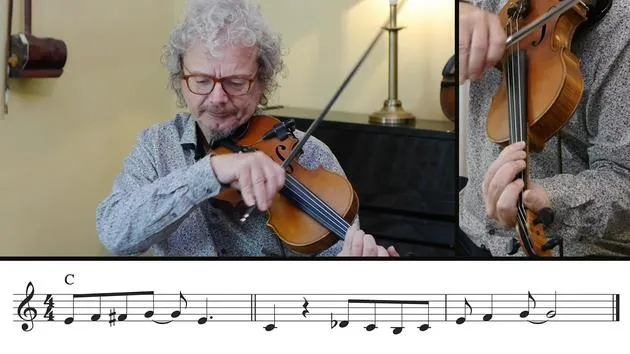
If you remember from what we talked about with diatonic chords, when C is the first chord, D minor would normally be the second chord. So, putting D major in there is unexpected because it has an F sharp, which is not part of the C major scale.
Strategies for Dealing with Unexpected Chords
We're going to look at various scenarios on how to handle this, including several drastic train crashes!
Playing a Simple Melody
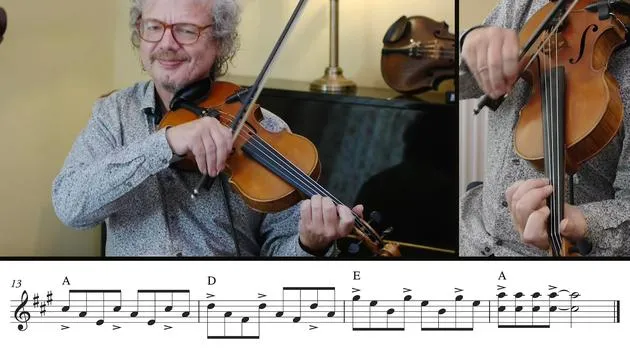
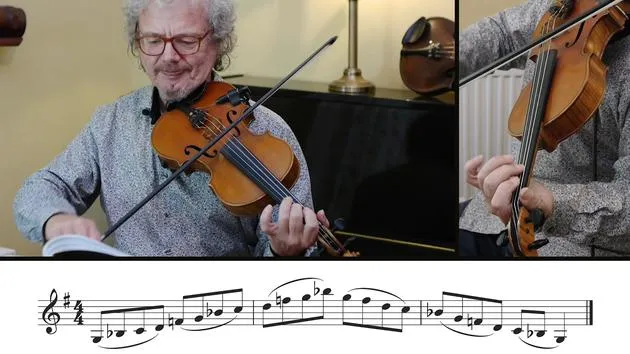
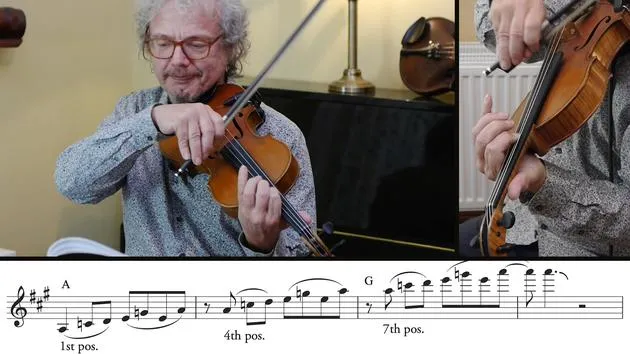
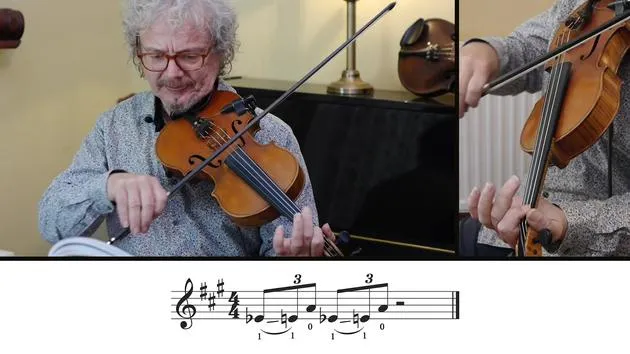
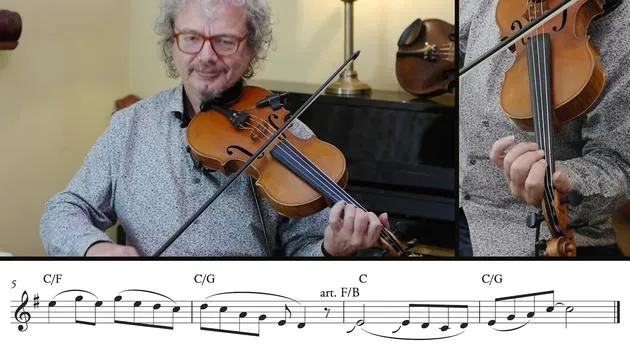
First of all, let's play a simple melody that outlines the chords and highlights the odd choice.
Notice how we included the F sharp. If we didn't know the D chord was coming, we wouldn't have known to put that in. But with that F sharp, it works fine.
Using the C Major Blues Scale
Now, let's try playing the C major blues scale over that sequence and see what happens when we get to the D chord.
Hopefully, you noticed that this really didn't work when we got to the D chord.
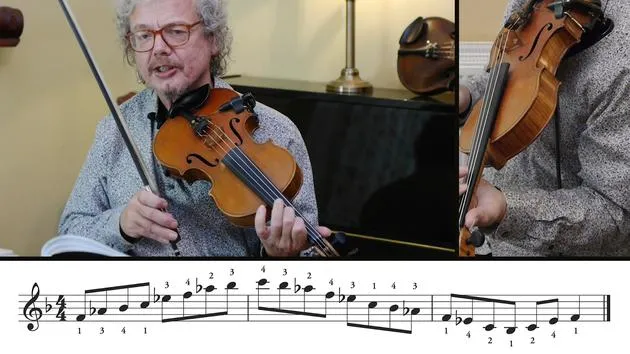
So, what could we have done to get around that? When we encounter a non-diatonic chord, if you're playing blues phrases, you really need to switch to the D blues scale.
So something like that.
Let's try that whole thing with the sequence.
I think you'll agree that worked a lot better!
Temporary Modulation
Sometimes you encounter not just one unexpected chord but a whole series that are outside of the diatonic sequence. This can lead to what's called temporary modulation, where you effectively go into a new key.
Example of Temporary Modulation
Let's listen to one of those sequences:
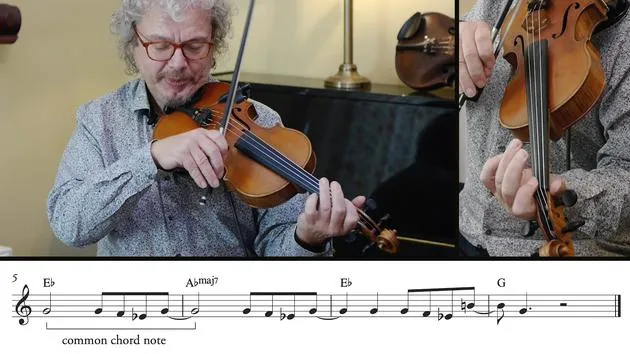
Did you hear that when it went to E flat, A flat major 7 E flat? That was really well outside!
The simplistic way of improvising here is for me always to go with the major pentatonic scale. If you noodled through the C major pentatonic scale and hit that E flat moment, you'd be in serious trouble, especially when the next two chords come in, making it clear there's no way out of your trap.
Key Takeaways
You really need to know what those chords are. Here are a couple of songs that feature this kind of sequence:
- Summer of '69
- Is This the Way to Amarillo?
I often find myself playing in covers bands, happily noodling along, but then those unexpected chords turn up. What I usually do is try to find a safe note that belongs to the original key, which will fit through them.
There will always be at least one note. You can hang your solo around that note until you get back to safety.
Example of a Safe Note
For instance, I used the G note, which is part of the C chord and also part of the E flat chord. After starting on the E flat chord, I felt safer inserting that E flat while still returning to the safety of that note.
This approach is a halfway house between ignorance and actually taking the time to analyze the chords.
The Correct Approach
Finally, let's review the correct way to handle unexpected chords. If you've done your homework, investigated the chords, and returned prepared, you'll make it sound like you actually know what you're doing, rather than just taking desperate evasive actions.
Your Assignment
Your assignment for this lesson is to play through the sequence we've just discussed and find different ways of dealing with those unexpected chords. Happy practicing!
28 leçons
2h 28m de leçons vidéo structurées
Fonctions vidéo avancées
Ralentissez, bouclez un passage, suivez la partition
Mobile, tablette et ordinateur
Pratiquez où vous voulez
Satisfaction garantie à 100 %
Garantie remboursement 30 jours
Rencontrez votre guru
Rencontrez votre guru
Chris Haigh est violoniste professionnel depuis 25 ans et possède une expérience dans de nombreux genres. Il a joué sur plus de 75 albums, aux côtés d'artistes comme Alison Moyet, Bob Geldof, All About Eve, Michael Ball, David Soul, Oumou Sangare, The Quireboys, Riverdance, Morcheeba, James Galway et Steps.
Il a joué du swing et du jazz avec The Kimbara Brothers, Diz Disley, Le Jazz, The Hot Club of London et les Quecumbar Allstars, et dirige un ensemble de swing soviétique à sept musiciens, The Kremlinaires.
Chris donne des cours et des ateliers sur la technique du violon jazz et a enseigné le violon jazz aux universités de Middlesex, Brunel et Newcastle ainsi qu'au Truro College. Parmi ses ouvrages figurent neuf livres consacrés au violon, dont The Fiddle Handbook.
Il anime également Fiddling Around (fiddlingaround.co.uk), sans doute la source d'information sur le violon la plus complète et la plus consultée du web.







