



Pentatonique majeure
Avec
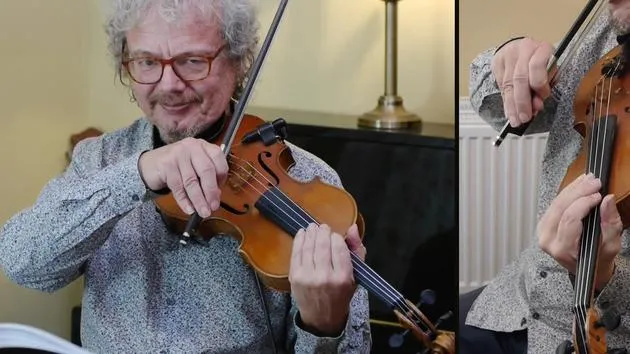
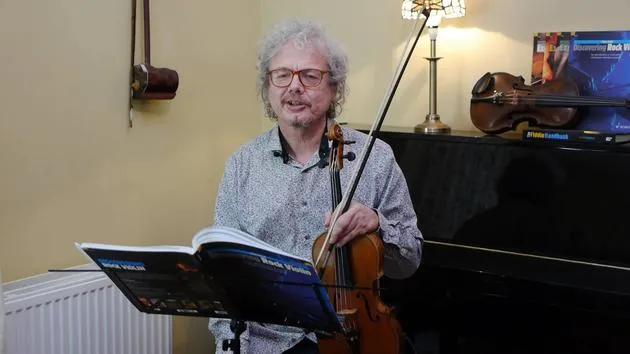
Chris HaighChris Haigh présente la gamme pentatonique majeure au violon et montre comment ses doigtés se relient nettement à la pentatonique mineure que tu connais déjà.
© 2011 Schott Music Ltd, London
Le contenu du cours
28 leçons (2h 28min) · 1 gratuites
Transcription de la leçon
Exploring the Major Pentatonic Scale
So far we've looked a lot at the minor pentatonic, and in this lesson, we're going to explore the major pentatonic.
Understanding the Connection
Now, you may think, "Oh no, this is a whole load more finger patterns to learn." But, in fact, the major pentatonic and the minor pentatonic link together very neatly indeed.
- If we look at the E minor pentatonic, sitting within that pattern is the major pentatonic.
- Just as a relative major key has a relative minor key, so the pentatonics have both minor and major forms.
New Finger Patterns
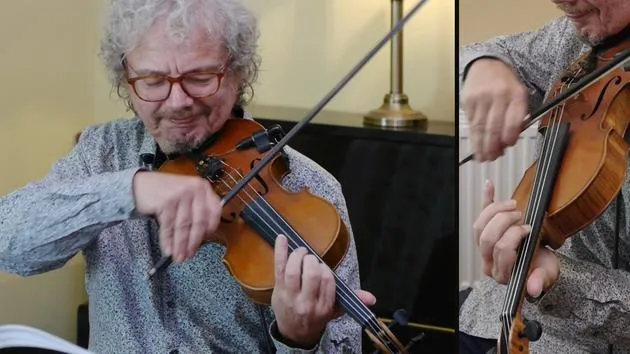
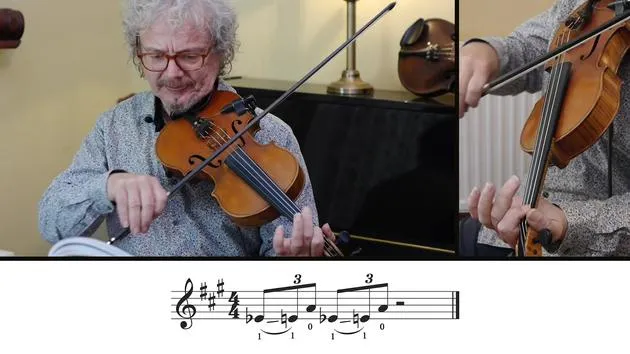
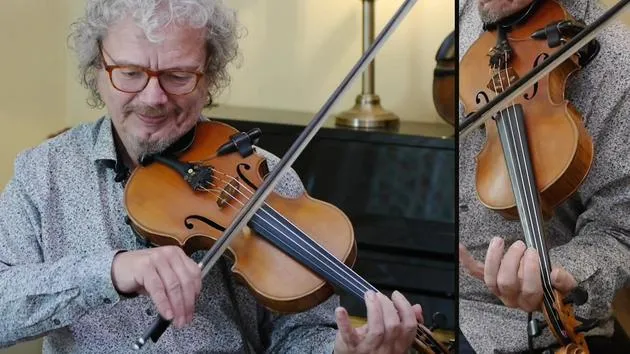
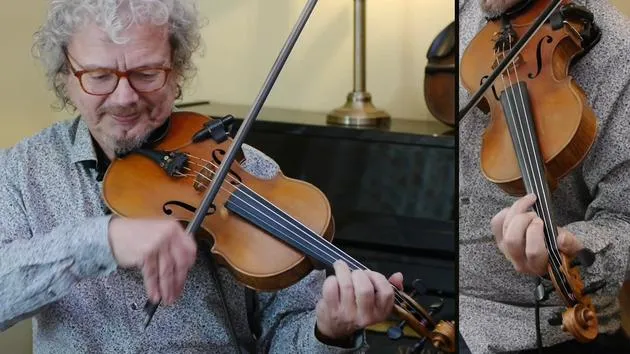
If we don't start on the first finger but instead start on the third finger, we've got a completely new scale. It's the major pentatonic, but it uses all the same fingers, which is very convenient indeed.
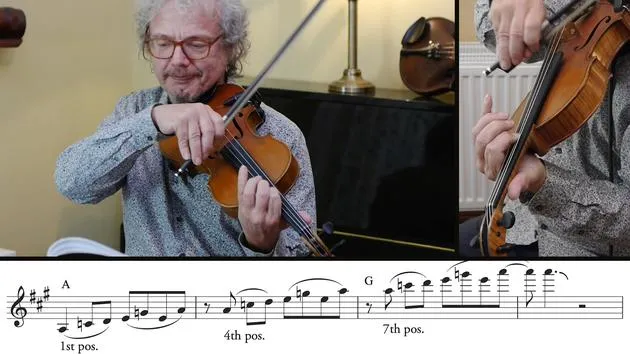
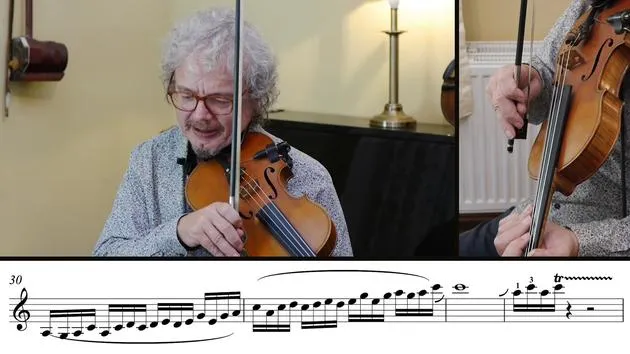
Let's go to the A major pentatonic, which is that.
Gentle Improvisation
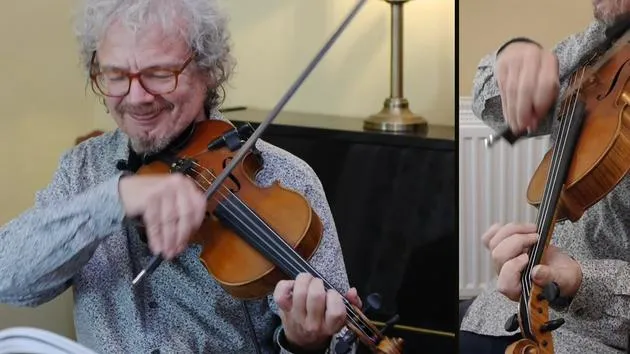
Let's do a gentle improvisation over this chord sequence.
- You can hear that this has a very different sound.
- It's a relaxed, soft, open, and flowing kind of sound, a quite folky sound.
You will hear this sound if you listen to a lot of Van Morrison. His sax playing seems to be almost entirely based on major pentatonic scales. On one of his albums, Tony Marcus played some lovely violin and viola, again using pretty much all of the major pentatonic scale. The 1979 album "Into the Mystic" is a great one, giving you this kind of feel.
Playing the Major Pentatonic Over Changing Chords
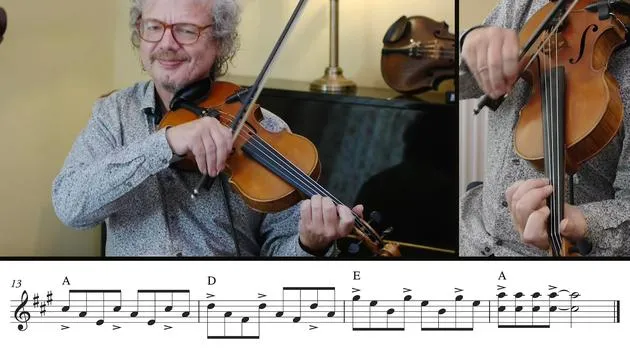
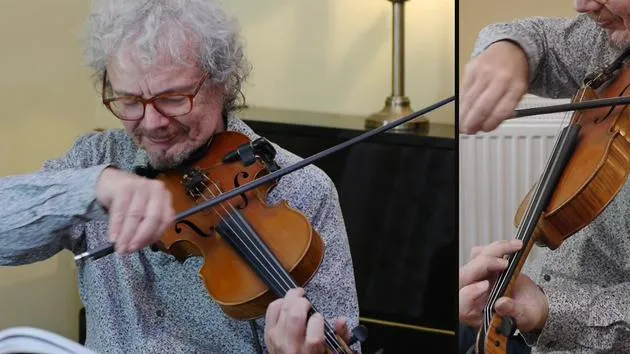
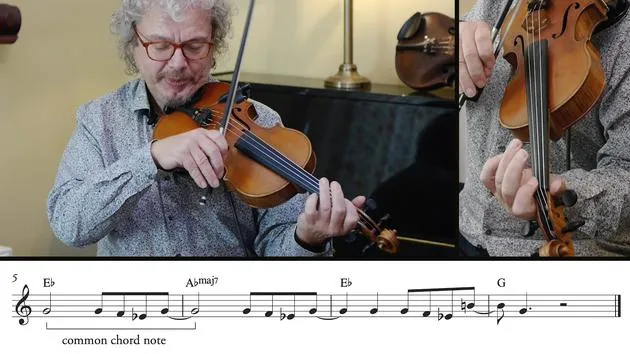
Now, let's see what it sounds like playing the A major pentatonic, utilizing the same lick over changing chords.
- You can hear how that same pattern works really neatly as the chords change.
- The chords are doing the work, making the lick sound more interesting without needing to change it at all as we go through.
Alternative Approaches
An alternative way to approach this is to use three different pentatonics:
- A Major Pentatonic
- D Major Pentatonic
- E Major Pentatonic
This is less of a cop-out; it's more interesting and slightly more challenging. However, we'll see whether it's actually a better approach.
I'd say that both methods work equally well, making it a good idea to have both as potential approaches you can use. You might do a mixture of licks that stay within the A pentatonic and some that move with the chords.
Review of Fingering
In the last lesson, we looked at the fingering for the minor pentatonic, and we'll do the same now with the major pentatonic.
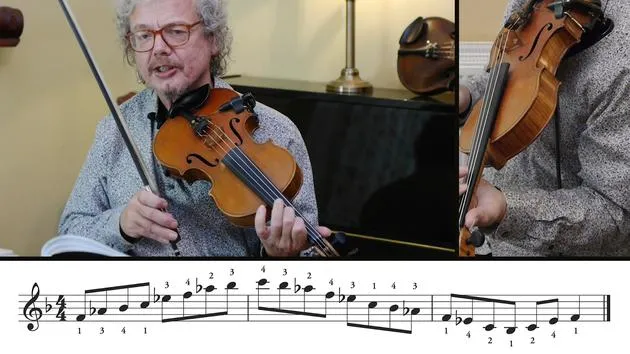
In A, we have:
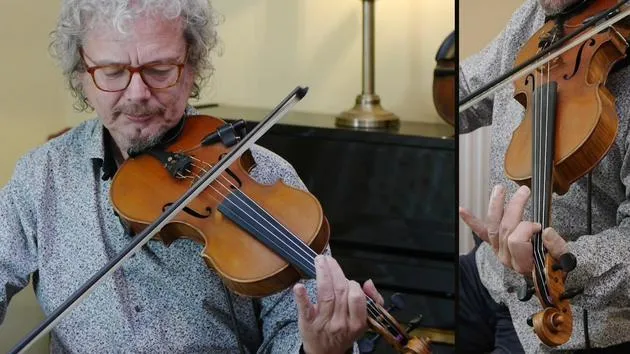
- 1, 2, 3, 1, 2, 4
That is your basic octave, which we can use in the same way as before to move up and down the neck: 1, 2, 3, 1, 2, 4.
Approaches to Using the Major Pentatonic Scale
Now, we will look at three different approaches to using the major pentatonic scale within a song:
-
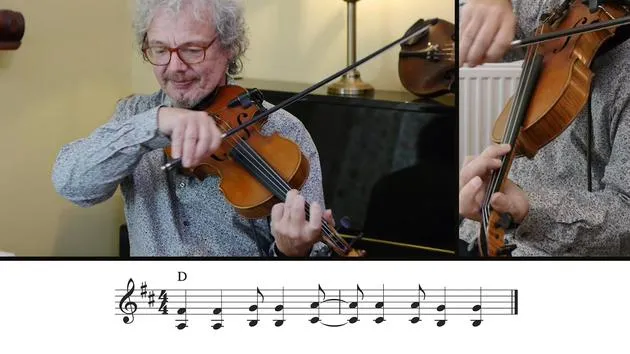
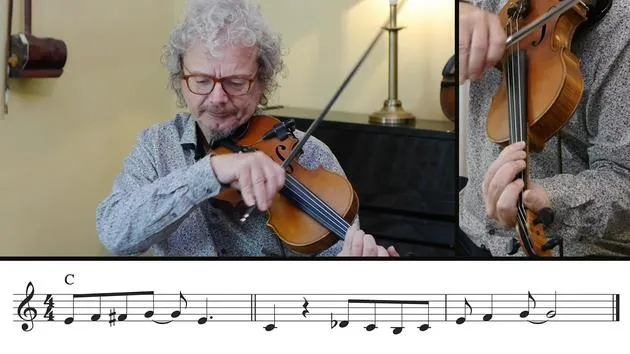
Using a Melody
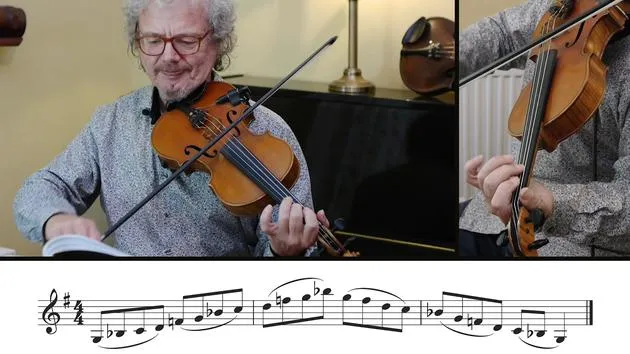
This could be part of a hook, an intro, or an outro.
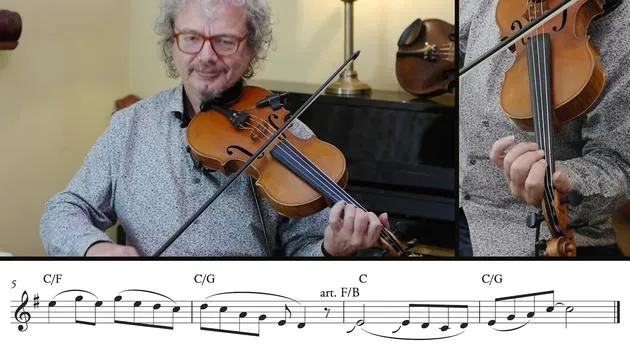
For instance, in the key of C, you might play something like this:"That's something that you could repeat several times."
-
Adjacent Patterns of Notes
You'll find that adjacent patterns of notes will almost always create something melodic from the major pentatonic scale. This is one reason why it's so useful. -
As Part of Sweeping Runs in a Solo
You can use pre-learned patterns to move quickly through a few bars, sounding interesting and confident.
Assignments for This Lesson
For your assignments this lesson:
- Look at the major pentatonic improvisation from Figure 2, 3, 9, and try playing that melody with backing.
- Make your own improvisation using just the A major pentatonic scale.
- Using the previous lesson's minor pentatonic runs and riffs, try turning those into major pentatonic riffs.
- Finally, learn Funkatonic.
Conclusion
Now, you may have been planning to go on holiday, redesign your garden, or decorate your house. But forget all that! You're going to learn Funkatonic, and then you're going to learn to improvise your own solo over it.
28 leçons
2h 28m de leçons vidéo structurées
Fonctions vidéo avancées
Ralentissez, bouclez un passage, suivez la partition
Mobile, tablette et ordinateur
Pratiquez où vous voulez
Satisfaction garantie à 100 %
Garantie remboursement 30 jours
Rencontrez votre guru
Rencontrez votre guru
Chris Haigh est violoniste professionnel depuis 25 ans et possède une expérience dans de nombreux genres. Il a joué sur plus de 75 albums, aux côtés d'artistes comme Alison Moyet, Bob Geldof, All About Eve, Michael Ball, David Soul, Oumou Sangare, The Quireboys, Riverdance, Morcheeba, James Galway et Steps.
Il a joué du swing et du jazz avec The Kimbara Brothers, Diz Disley, Le Jazz, The Hot Club of London et les Quecumbar Allstars, et dirige un ensemble de swing soviétique à sept musiciens, The Kremlinaires.
Chris donne des cours et des ateliers sur la technique du violon jazz et a enseigné le violon jazz aux universités de Middlesex, Brunel et Newcastle ainsi qu'au Truro College. Parmi ses ouvrages figurent neuf livres consacrés au violon, dont The Fiddle Handbook.
Il anime également Fiddling Around (fiddlingaround.co.uk), sans doute la source d'information sur le violon la plus complète et la plus consultée du web.







