



Generar ideas con MIDI - introducción al MIDI

Con
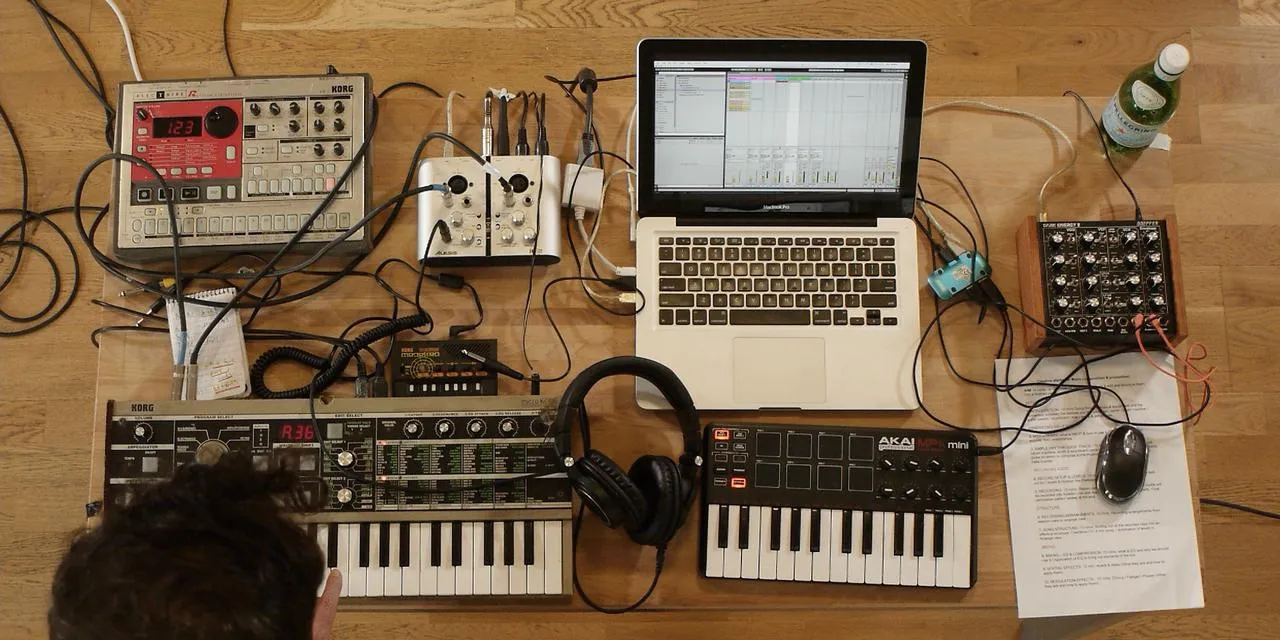
John WatsonJohn Watson explica qué es realmente el MIDI y cómo conectar un sintetizador como el MicroKorg para grabar y editar notas (en lugar de audio) en Ableton Live.
Qué incluye el curso
14 lecciones (1h 39m) · 2 gratis
01. Primeros pasos y configuración del equipo
11:07
02. Generar ideas con MIDI - introducción al MIDI
Estás aquí6:12
03. Grabar una guía rítmica sencilla
7:41
04. Grabar audio: configuración y niveles
6:21
05. Grabar audio
6:25
06. Usar un instrumento externo
3:27
07. Crear la línea de bajo
11:05
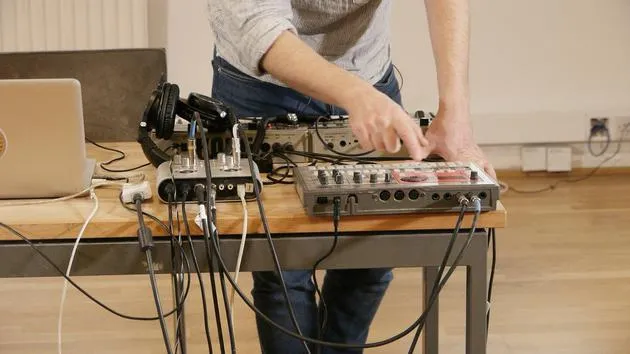
08. Añadir una parte rítmica más
2:50
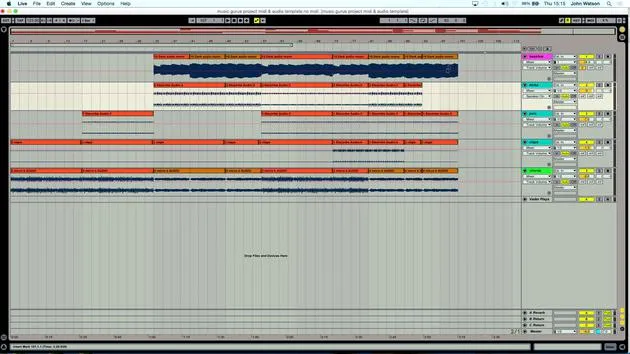
09. Premezcla y Vista de Sesión
9:59
10. Estructura de la canción y vista de arreglo
8:47
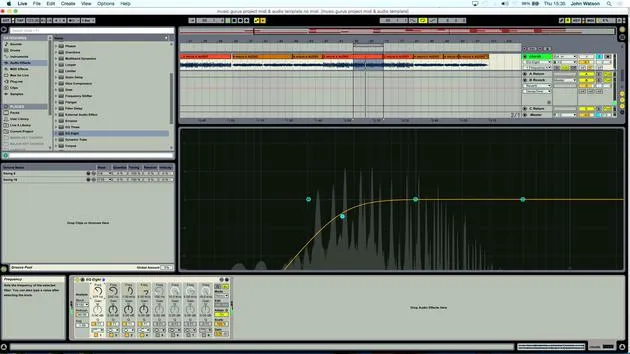
11. Mezcla: ecualización y compresión
7:37
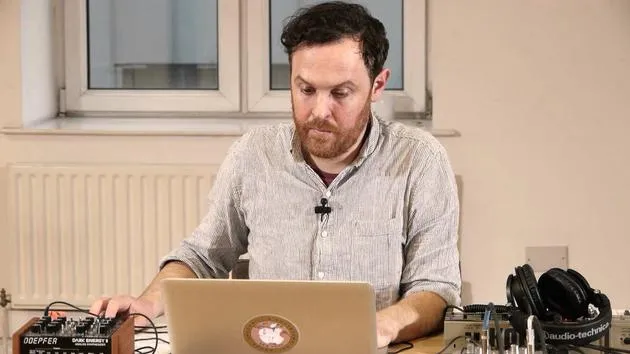
12. Efectos espaciales
4:40
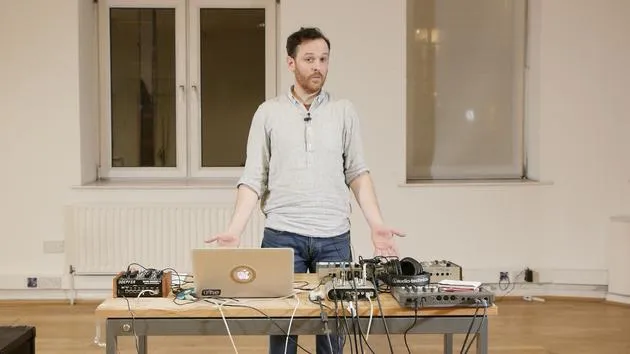
13. Efectos de modulación
5:26
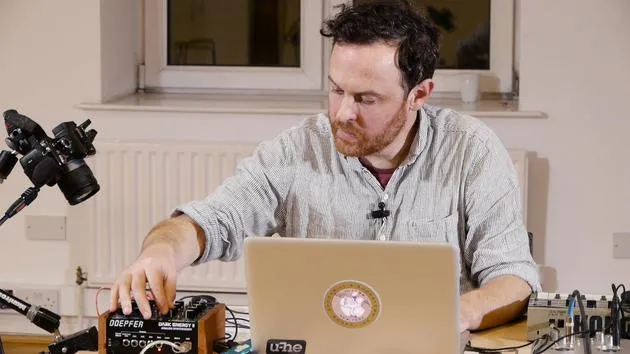
14. BONUS: Crear una línea de bajo con el Doepfer Dark Energy II
Lección gratis7:26
Transcripción de la lección
Lesson Two: Understanding MIDI and Making Music
Welcome to lesson two. In this session, I'm going to talk a little bit about MIDI: what it really means and how we can use it to create music.
Connecting Your Instruments
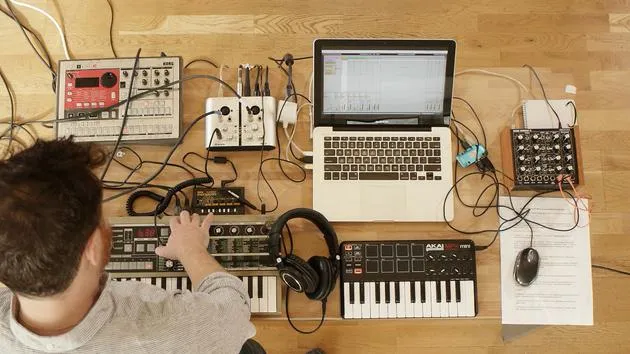
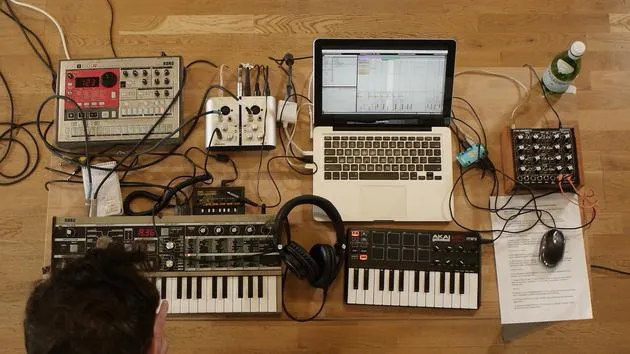
First off, I've got my MicroKorg synth that I was demonstrating earlier, and you heard me playing a few keys on it. But how do I connect it to the computer to play and record those notes, instead of just recording the audio output that I'm generating?
MIDI Connections
Here's the setup:
- My sound card has a MIDI In and a MIDI Out.
- Most modern synths and drum machines now have USB, but the old school MIDI needs a different type of connection.
So, what I've done is:
- Run MIDI Out from the Korg to MIDI In on my sound card.
- Run MIDI In to MIDI Out on the sound card.
This setup allows me to record notes with my synth connected like this.
Demonstrating MIDI Recording
Let's demonstrate this setup:
- Turn on the metronome.
- Hit Record and play some notes.
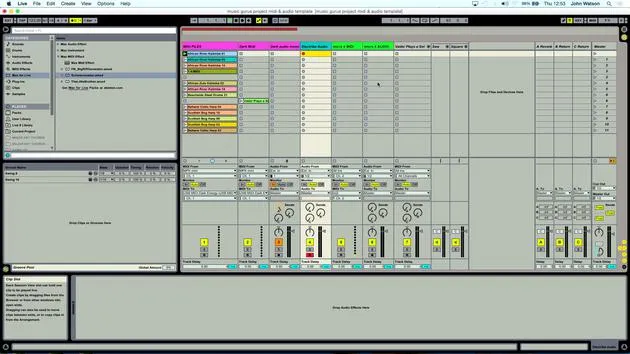
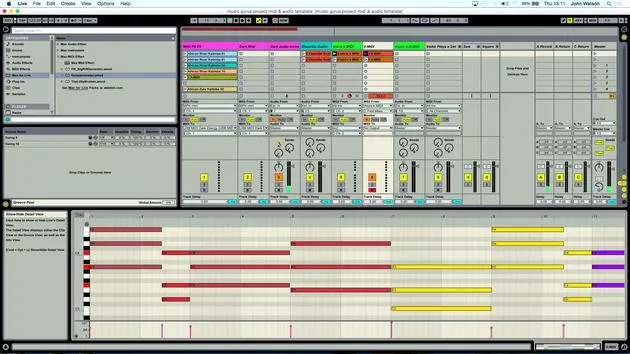
- After stopping the recording, double-click on the clip to view the series of notes that will play back through the MicroKorg.
Now, I'm turning the metronome off since I no longer need it.
If I play the track, I can confirm everything is working. Now, I like to generate a few ideas, maybe lay down something musical to start off with.
Using the Schwarzenegger Plugin
I'll be using a device that's free to get, created by producer Heinrich Schwartz, called the Schwarzenegger. This tool allows me to set up complex chords, which is great if you're not that confident in your music theory. It can really give you unique musical chords.
Setting Up the Schwarzenegger
- Load up the plugin.
- Earlier, we tested it and heard some notes from the MIDI keyboard, confirming that everything's working.
This plugin provides chords corresponding to the notes played in a particular scale. For example, I might decide to:
- Leave my black keys alone.
- Obtain a major chord for every white note I play on the keyboard.
The amount of notes in that chord can be adjusted using the Add Notes parameter. Currently, I have:
- A C Major
- An E Major
I can set it to a three-note chord system or expand it to a four-note chord system by adding an extra note.
Experimenting with Chords
I can also spread out the distance between notes in the chord. Let's turn on the spread and set it to 4. Here's what happens:
- The first note doesn't generate a chord.
- The second note gives us a different sound, which makes it easier to hear the four notes along with the spread.
By moving some of the notes into different octaves, I have:
- Adjusted the C note up two octaves.
This tool greatly helps in laying down musical ideas.
Recap
Just to recap:
- I have my MIDI track from the Korg, playing through the MIDI effect.
- The notes are inputted into the DAW, with an audio track set up next door.
I've color-coordinated them for easy identification. To check whether the audio is coming through, I can simply refer to the track.
- You can see the MIDI notes being recorded.
- The same applies for every MIDI track I set up.
The next stage is to actually start generating some ideas!
14 lecciones
1h 39m de lecciones en vídeo estructuradas
Funciones de vídeo avanzadas
Ralentiza, repite un pasaje, sigue la partitura
Móvil, tablet y ordenador
Practica donde quieras
Garantía de satisfacción 100%
30 días de garantía de devolución
Conoce a tu gurú
Conoce a tu gurú
Tras hacer prácticas con Dave Allen, productor de Depeche Mode y The Cure, John se sintió inspirado para estudiar Tecnología Musical en Londres. Su carrera musical despegó tras un exitoso fichaje por CookShop Records, con el que publicó 9 sencillos y un álbum en 2007 que recibió críticas entusiastas de Q, Uncut y Lowdown Magazine, además de sonar en XFM y Radio One.
John empezó a formarse como ingeniero de sonido en el estudio Bonafide en 2005, donde perfeccionó su talento, y ese mismo año fundó Jackdaw Recordings. Ha colaborado con numerosos artistas de éxito y, en 2007, comenzó a tocar para el músico pop Patrick Wolf, actuando en salas de primer nivel tanto en el Reino Unido como a nivel internacional, incluidos The Astoria y el Shepherds Bush Empire.
Desde su estudio londinense, John ahora compone música, con dos lanzamientos más en CookShop, se ocupa de la ingeniería de sonido para artistas destacados y crea diseño sonoro para anuncios de televisión, cine, teatro y vídeo corporativo.
Esa infrecuente combinación de compositor, productor e ingeniero de estudio en activo es justo lo que John aporta a su enseñanza. En Creative Composition & Production in Ableton Live y Creative Sampling & Production in Ableton Live, te muestra cómo transforma ideas en bruto en temas terminados y listos para publicar: la composición, el sampleo, el diseño sonoro y el saber hacer práctico de la ingeniería que hay detrás de un disco profesional.







