



Añadir una parte rítmica más
Con
John Watson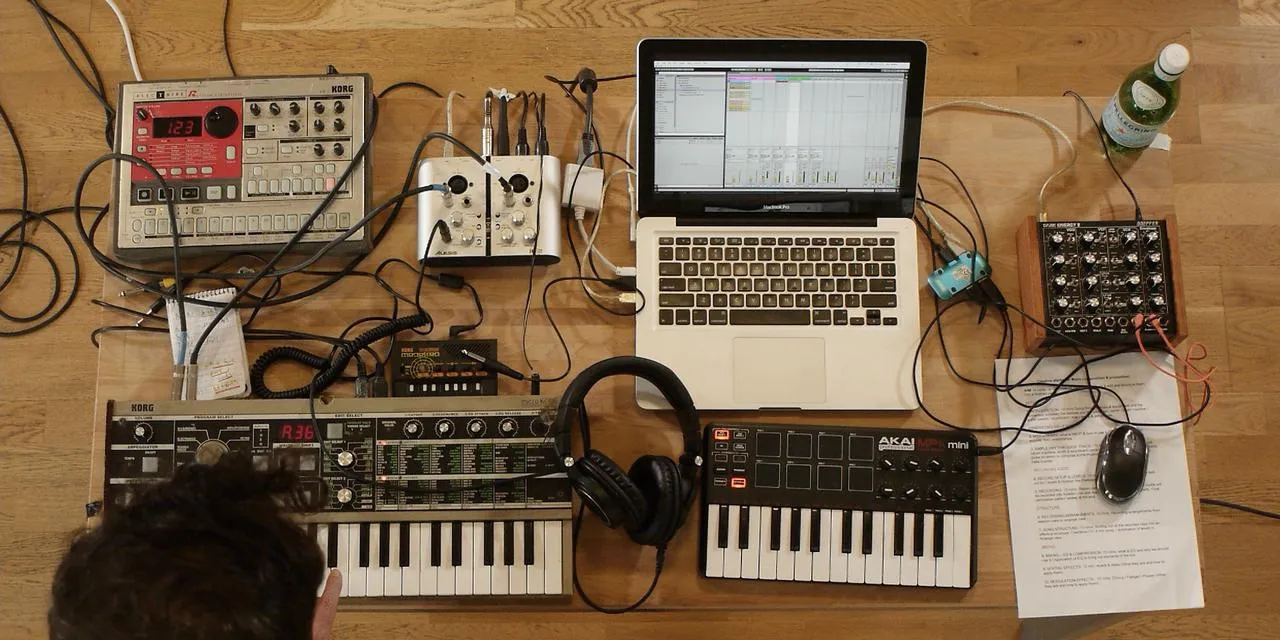
Qué incluye el curso
14 lecciones (1h 39m) · 2 gratis
01. Primeros pasos y configuración del equipo
11:07
02. Generar ideas con MIDI - introducción al MIDI
Lección gratis6:12
03. Grabar una guía rítmica sencilla
7:41
04. Grabar audio: configuración y niveles
6:21
05. Grabar audio
6:25
06. Usar un instrumento externo
3:27
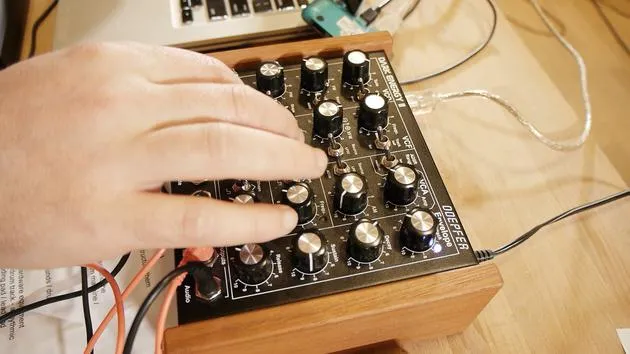
07. Crear la línea de bajo
11:05
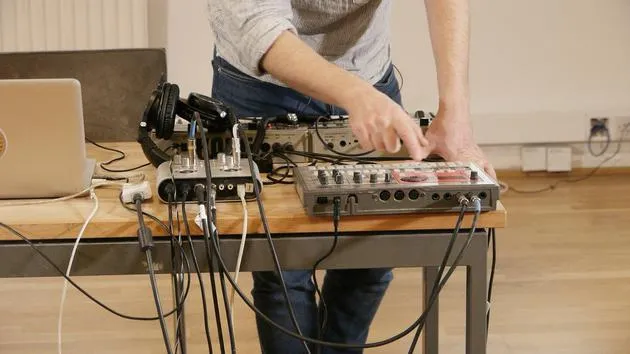
08. Añadir una parte rítmica más
Estás aquí2:50
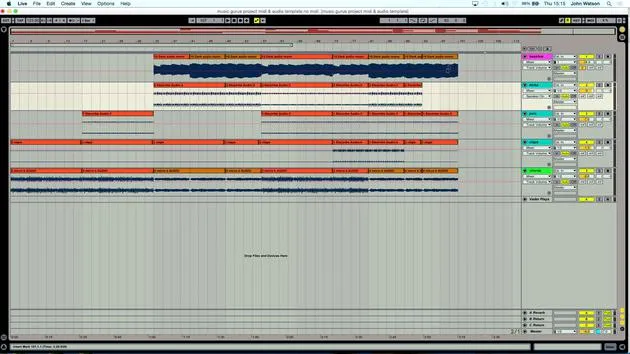
09. Premezcla y Vista de Sesión
9:59
10. Estructura de la canción y vista de arreglo
8:47
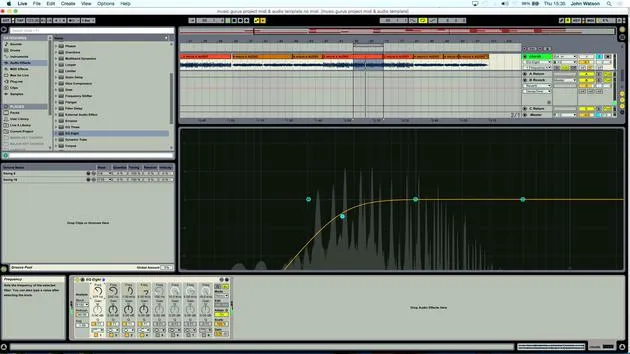
11. Mezcla: ecualización y compresión
7:37
12. Efectos espaciales
4:40
13. Efectos de modulación
5:26
14. BONUS: Crear una línea de bajo con el Doepfer Dark Energy II
Lección gratis7:26
Transcripción de la lección
Adding a Percussion Layer to Your Track
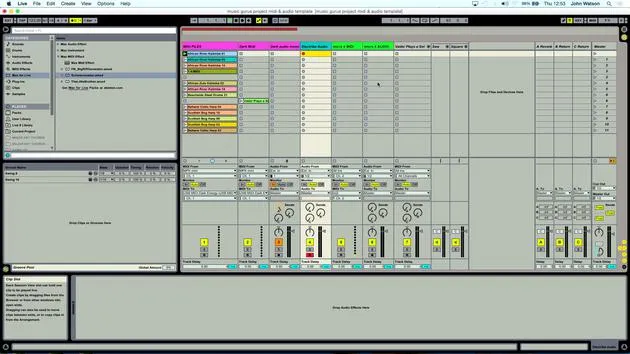
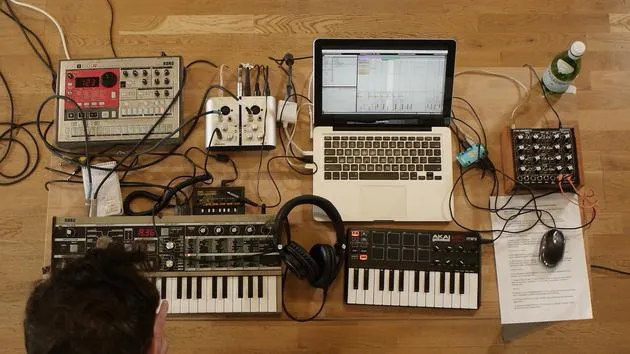
Okay, so I wanted to add one more percussion layer to my track here.
Reconnecting the Drum Machine
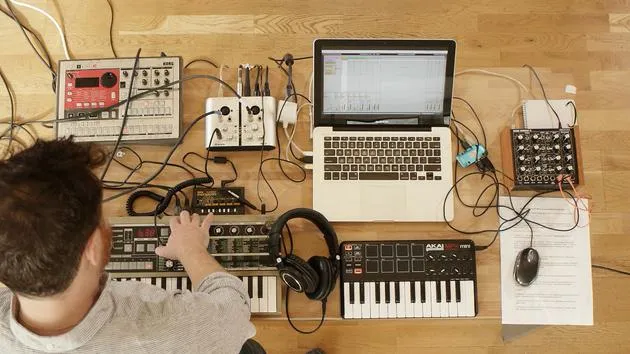
- I'm going to replug back in the drum machine like so.
- I'm just thinking about getting maybe a clap or a snare on the backbeat.
Existing Elements
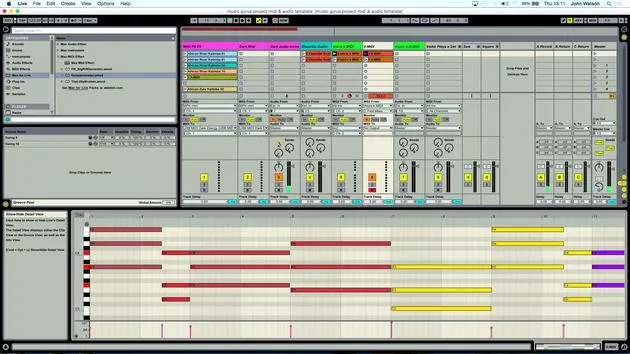
- I've got the kicks on every downbeat.
- I've got some percussion.
- I found this little pattern here.
Let me just arm the track so that we can hear it.
Adjusting the Kick Drum
I've already got a kick drum programmed in on a previous beat.
- I'm going to select the kick like so.
- I'm going to take down the level so that we're no longer hearing it.
- I also need to match the tempo here.
- I've got 123 beats per minute.
- I'm just going to scroll down and make sure that we're matching the same tempo.
There's another little sound in here that I don't want as well. So I'm just going to select it again and then turn down the level.
Current Elements
Really all we've got now is a little hi-hat and a clap, and that should work quite nicely.
Creating a Fresh Track
What I'm going to do here is come over to the previous drum track that I did again:
- I just duplicate it like so.
- I'm going to delete the clip inside.
- Now, I have a fresh track to record that part on.
Recording the New Layer
What I'm going to do is click record again.
- I get eight counts before I need to come in, two bars.
Okay, so I'm fairly confident I've got something in there. I'll have a little seat and then have a little tweak.
Listening Back
- I'll set the metronome up and we'll just have a little listen back.
- The first part is sounding okay.
Let's just loop that up here.
- I'm going to loop two bars.
- That sounds fine to me.
I'm just going to turn the clip volume up a little bit as well.
Finalizing Elements
Okay, so that there is going to be our claps.
I'm pretty happy now that we've got pretty much all the elements that we need to start structuring the track.
14 lecciones
1h 39m de lecciones en vídeo estructuradas
Funciones de vídeo avanzadas
Ralentiza, repite un pasaje, sigue la partitura
Móvil, tablet y ordenador
Practica donde quieras
Garantía de satisfacción 100%
30 días de garantía de devolución
Conoce a tu gurú
Conoce a tu gurú
Tras hacer prácticas con Dave Allen, productor de Depeche Mode y The Cure, John se sintió inspirado para estudiar Tecnología Musical en Londres. Su carrera musical despegó tras un exitoso fichaje por CookShop Records, con el que publicó 9 sencillos y un álbum en 2007 que recibió críticas entusiastas de Q, Uncut y Lowdown Magazine, además de sonar en XFM y Radio One.
John empezó a formarse como ingeniero de sonido en el estudio Bonafide en 2005, donde perfeccionó su talento, y ese mismo año fundó Jackdaw Recordings. Ha colaborado con numerosos artistas de éxito y, en 2007, comenzó a tocar para el músico pop Patrick Wolf, actuando en salas de primer nivel tanto en el Reino Unido como a nivel internacional, incluidos The Astoria y el Shepherds Bush Empire.
Desde su estudio londinense, John ahora compone música, con dos lanzamientos más en CookShop, se ocupa de la ingeniería de sonido para artistas destacados y crea diseño sonoro para anuncios de televisión, cine, teatro y vídeo corporativo.
Esa infrecuente combinación de compositor, productor e ingeniero de estudio en activo es justo lo que John aporta a su enseñanza. En Creative Composition & Production in Ableton Live y Creative Sampling & Production in Ableton Live, te muestra cómo transforma ideas en bruto en temas terminados y listos para publicar: la composición, el sampleo, el diseño sonoro y el saber hacer práctico de la ingeniería que hay detrás de un disco profesional.







