



Überblick über das Stück
Das steckt im Kurs
27 Lektionen (1h 57m) · 1 gratis
Transkript der Lektion
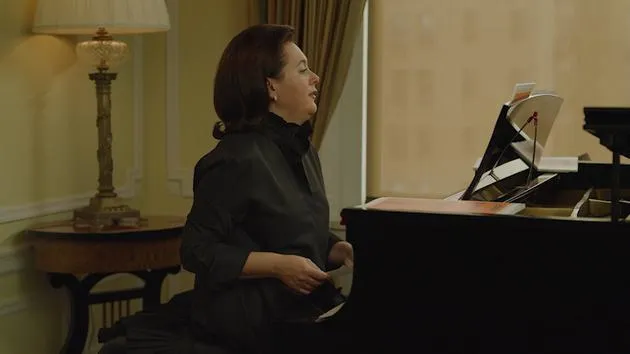
October: The Autumn Song
Here is a poem by Count Tolstoy which reads:
"Autumn, Our poor garden is all falling down. The yellowed leaves are flying in the wind."
Very sad picture.
Now, just to mention, because, of course, you know the Tolstoys. There were three Tolstoys in Russia:
- Leo Tolstoy - famous for writing War and Peace and Anna Karenina.
- Alexey Tolstoy - known for writing Peter the Great and Walking in Agony.
- Count Alexei Tolstoy - we call him the third Tolstoy. He wasn't as popular as the other two, but was also a wonderful writer and poet.
Overview of the Piece
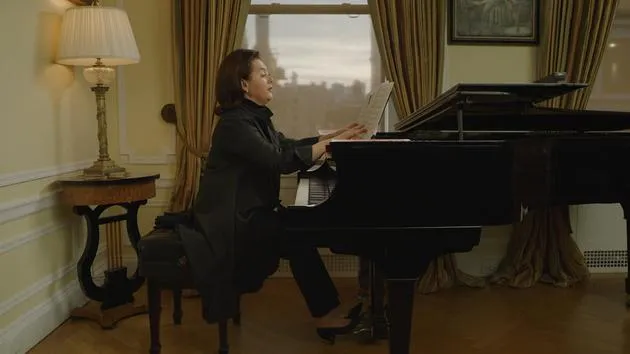
The October or the Autumn Song is not a very long piece, and it is not a very virtuosic piece like, for example, August, September, or November. However, it leaves the listener with the most profound and lasting impression.
- Mood: Very, very sad; melancholic.
- Context: October is a very sad month in Russia. It's not as beautiful as the fall or autumn here in the U.S. or maybe the U.K. The trees are bare, it's cold, it's raining, and it's extremely gloomy. Summer's gone, and winter is not yet here.
Tchaikovsky's Influence
As we know, Tchaikovsky was very prone to these feelings; he was a very lonely person, quite a depressive type. He was brooding and loved to be brooding. We are aware of his trials and tribulations in his personal life, and he wasn't a very happy individual.
"The Nature is crying. It's saying goodbye to the summer."
It is, of course, a song, but it is such a masterpiece, a gem. This piece is very popular and has been arranged for many instruments, performed countless times around the world in concerts.
- Performance Context: I often play it as an encore or program it in the main program. It's loved by amateur music lovers and students alike.
- Popularity: If there were a list of the 100 most popular piano miniatures, this piece would be at the top. It's one of my favorites, and I program it often.
Emotional Conveyance
Unlike the other pieces, Tchaikovsky isn't really describing anything specific here. There's no lark, no imitation, just this feeling of sadness. It evokes memories of something that has been lost.
- Challenge of Performance: It's important to convey that feeling, which can be difficult. Sometimes, pieces with fewer notes are the hardest to perform.
Musical Structure
The October is written in a simple ABA three-part form:
- First part: 16 measures.
- Second part: 16 measures (same as the first).
- Middle section: 21 measures with a climax in measures 21 and 22.
- Coda: 7 measures.
In examining the dynamic plan, it primarily consists of piano, mezzo piano, and pianissimo. There is a mezzo forte in measure 22, and the culmination features a crescendo in measure 21.
Tempo and Expression
Once we know the dynamic plan and structure, it's very important to consider the tempo indication, which is highly unusual:
Andante doloroso e molta cantabile
- Andante: We know it's a walking tempo, one of the slower tempos.
- Molta cantabile: Meaning the most singing way.
The standout term here is doloroso, which translates to "sorrowful" or "with sorrow." This carries significant connotation in the Christian culture, referring to Via Doloroso, the sorrowful path that Jesus walked to his execution. I don't think it's a coincidence that Tchaikovsky chose this term.
Tchaikovsky's Legacy
This choice of language is key to understanding this profound and deep piece where he perhaps shares very personal secrets with us. Tchaikovsky's untimely end echoes this sentiment, whether he got sick and died or chose to end his life, it was indeed tragic.
"He was still full of life."
In the same way that Mozart bid farewell with his Requiem, Tchaikovsky said goodbye with his famous Pathetique, or Sixth Symphony.
Technical Elements
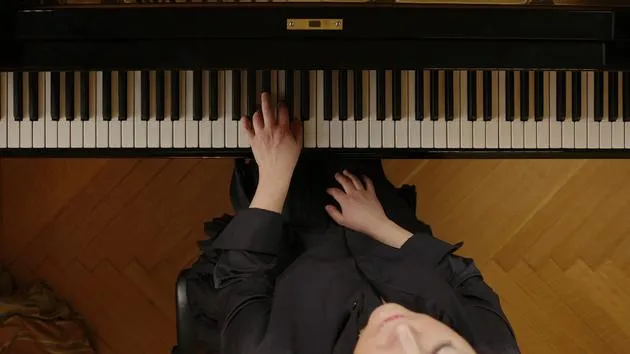
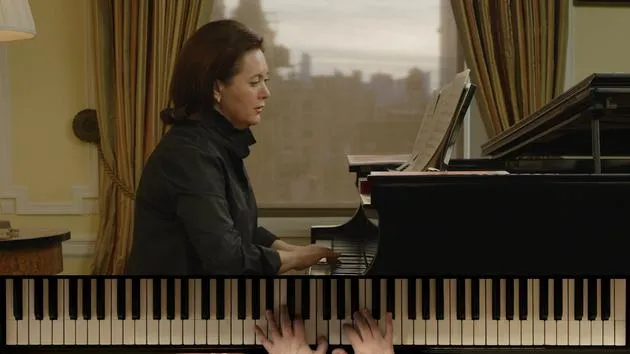
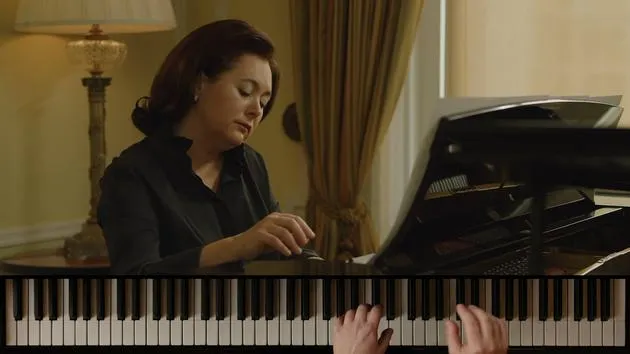
Returning to October, its seemingly simple structure and texture feature a melody in accompaniment. As with every melody, we should pay attention to the little slurs to create a long phrase toward D, continuing that second sentence.
Left Hand: It's vital that whenever the right hand has part of the accompaniment, all notes are audible but do not overshadow the melody.
- This point cannot be overstated; it's an essential principle of musical performance. Whenever there's a structure of accompaniment, the melody must never be overshadowed by the accompaniment.
27 Lektionen
1 Std. 57 Min. strukturierte Videolektionen
Erweiterte Videofunktionen
Verlangsamen, Passagen loopen, mitlesen
Handy, Tablet & Desktop
Üben, wo du willst
100 % Zufriedenheitsgarantie
30 Tage Geld-zurück-Garantie
Lern deinen Guru kennen

Lern deinen Guru kennen
Die in Russland geborene amerikanische Pianistin Julia Zilberquit hat als Rezitalistin, Kammermusikerin und Aufnahmekünstlerin große Anerkennung von der Kritik erhalten. The New York Times pries sie nach ihrer Aufführung von Cesar Francks sinfonischer Dichtung Les Djinns für Klavier und Orchester mit Leon Botstein und dem American Symphony Orchestra in der Carnegie Hall als "herausragende Solistin".
2014 veröffentlichte Warner Classics ihre CD Bach: Complete Solo Keyboard Concertos. Diese Aufnahme enthält die Erstaufführung zweier Bach-Vivaldi Concerti Grossi, die Frau Zilberquit für Klavier und Orchester bearbeitet hat, und wurde vom renommierten Gramophone Magazine als "herrliche Wiedergabe" gefeiert. Ihre Bearbeitung von Schostakowitschs Concertino für 2 Klaviere, Op. 94 für Klavier und Orchester wurde in der Carnegie Hall uraufgeführt; sie hat es weltweit mit großem kritischen Erfolg aufgeführt und mit Vladimir Spivakov und den Moscow Virtuosi aufgenommen. Zu weiteren Aufnahmen zählt eine Soloeinspielung, The Mystery of Bagatelles, veröffentlicht von Naxos. Die CD wurde von The Washington Post als "hervorragende Darbietung" gelobt und im Londoner Piano Magazine als "kühnes Programm, das mit ungewöhnlicher Klarheit und pointillistischer Leuchtkraft funkelt" beschrieben.
Ihre Rezitale fanden in bedeutenden Konzertsälen statt, darunter die Weill Recital Hall der New Yorker Carnegie Hall, das 92nd Street Y und die Alice Tully Hall im Lincoln Center. Zu ihren Engagements bei großen internationalen Musikfestivals zählen Auftritte in Seattle, Colmar (Frankreich), Klangbogen (Wien), Valery Gergievs "White Nights" (St. Petersburg), Richters "December Nights" (Moskau), "The Palaces of St. Petersburg", das Bard Music Festival in New York und das Penderecki Festival (Polen).
Julia Zilberquit stammt aus Moskau und wurde in eine Musikerfamilie hineingeboren. Sie schloss ihr Studium an der Moscow Gnessin School of Music und an The Juilliard School (Klasse von Bella Davidovich) ab. Sie lebt mit ihrem Mann, ihrem Sohn und ihrer Tochter in New York City.
In diesem Kurs schöpft sie aus dieser Kunstfertigkeit, um dich durch vier Sätze aus Tschaikowskis "Die Jahreszeiten" - März, April, Juni und Oktober - zu führen, damit du ihre Poesie und ihre Farbe am Klavier selbst gestalten kannst.







