Produktionshilfe bekommen, ohne Geld zu haben

Mit
Katie MeluaWie du Beratungs- und Mentoring-Beziehungen zu erfahrenen Produzenten aufbaust, wenn du am Anfang deiner Karriere stehst und kein Budget für die Produktion hast.
Das steckt im Kurs
40 Lektionen (2h 33m) · 1 gratis
01. Der Einstieg: Open Mics und unbezahlte Gigs
2:10
02. Zu lokalen Helden werden und Touren buchen
6:12
03. Kreativ werden bei Auftritten
3:44
04. Bühnenpräsenz – Jeremy von Everything Everything
2:21
05. Aus deinem Publikum Kapital schlagen
4:50
06. Direkt mit Fans in Kontakt treten
5:32
07. Dein Online-Publikum kennen und Daten effektiv nutzen
10:31
01. Was macht ein Produzent? – Andrew Hunt
3:41
02. Wie du einen Produzenten findest
5:08
03. Produktionshilfe bekommen, ohne Geld zu haben
Du bist hier3:43
04. Einen Deal mit einem Produzenten vereinbaren
3:43
05. Der Produktionsprozess Schritt für Schritt
11:34
06. Sich von erfahreneren Mitwirkenden nicht übergangen fühlen
1:17
Transkript der Lektion
Building Relationships with Producers
So, I think there will be a lot of artists who will listen to what I've been talking about and think:
- "Well, I can't get involved with the producer. I have no money, I have no budget."
That's not something you need to necessarily worry about. I have relationships with artists that, at the moment, there's no chance we're going to work together because they haven't got any money to afford to work with me. And that's just not viable for me. But it doesn't mean I can't start developing that relationship from now, so that when they are ready to make records with me, they can say:
- "Okay, I've managed to get some budget together so I can help them."
It's a gamble on my part because they might decide that, at a certain point, they're going to work with somebody else. But hopefully, my thinking is that you develop this relationship, and everything I'm coaching them and talking to them about aligns with their preferences. So it's kind of like:
- "Well, that's the person. Of course I'll work with them."
Communication and Collaboration
For a lot of artists, I communicate purely via email. They'll send me links to private SoundCloud accounts with just little ideas they've got. I'll respond with suggestions, saying:
- "I think you should be doing this" or "I think you should be doing that."
There are cases where artists have said, "Look, we'd love to work with you, but we simply haven't got the budget."
The Influence of Technology
Quite often, because the technology is so cheap now, people can get it on their own laptops. You can get free versions of Pro Tools and all sorts. I think this is a downside as well. Many artists have gotten so used to recording themselves in their bedrooms that they feel they can do it all themselves.
I really don't think that's advisable; while it's possible, it's not necessarily a good idea. I believe you always need someone to bounce ideas off, and that's always better. However, if that's the route you want to go and you're forced to record yourself, that doesn't mean you can't work with a producer.
Coaching and Remote Work
I can also coach you on better ways to make your recording. I can provide input like:
- "That's going to cost you loads less."
- "We won't have as good a record, I don't think," but I can say, "If that's what you want to do, don't record it like that. Try this and try that and use this."
You might be making a massive mistake, and I can coach remotely. However, I don't prefer that, because I don't believe there's any substitute for getting people in a room, particularly a producer and an artist, and getting really intense and immersed in what you're doing.
The Importance of Presence
My role is akin to that of a film director; I can observe and hear what we've set out to make as a record, and I can try to pull the best out from the artist. I don't think you can ever substitute that.
I'm not a fan of a lot of remote session setups where you send someone a track, and they just send you back a bass track. I don't really like any of that. You need to be in a room for me.
Finding Ways to Collaborate
But if you really need to, there are lots of ways that you can talk to the producer you want to work with. They can start helping you from that early process. Then, they can probably come on board at a later stage when you've got some ideas worked out, or after you've done a bit of recording.
Together, you can add to the project, or they can come in and help finish it off and mix it. Again, I'm not promoting this; it's not what I prefer to do. Yet, if there really isn't any other way and you genuinely want to collaborate, there's always a way.
There aren't any limits to how you can work with a producer, and every case is different. You can always find a way.
40 Lektionen
2 Std. 33 Min. strukturierte Videolektionen
Erweiterte Videofunktionen
Verlangsamen, Passagen loopen, mitlesen
Handy, Tablet & Desktop
Üben, wo du willst
100 % Zufriedenheitsgarantie
30 Tage Geld-zurück-Garantie
Lern deinen Guru kennen
Lern deinen Guru kennen
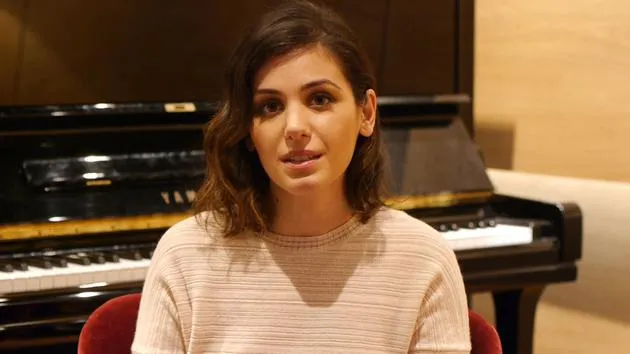
Katie Melua zählt zu den erfolgreichsten Künstlerinnen Großbritanniens – mit über 11 Millionen verkauften Alben weltweit und einer Reihe von Multi-Platin-Veröffentlichungen. Geboren 1984 als Ketevan Melua im georgischen Kutaissi, zog sie als Kind mit ihrer Familie nach Belfast und studierte später an der BRIT School in London, wo sie vom Songwriter und Produzenten Mike Batt entdeckt wurde.
Ihr Debütalbum 'Call Off the Search' (2003), veröffentlicht mit 19 Jahren, stand sechs Wochen auf Platz 1 der britischen Charts und wurde mit Sechsfach-Platin ausgezeichnet – angetrieben von der Hitsingle 'The Closest Thing to Crazy'. Der Nachfolger 'Piece by Piece' (2005) führte europaweit die Charts an und enthielt ihren bekanntesten Song 'Nine Million Bicycles'. 2006 schaffte sie es ins Guinness-Buch der Rekorde: mit dem tiefsten Unterwasserkonzert aller Zeiten, 303 Meter unter dem Meeresspiegel auf einer Gasplattform in der Nordsee.
Es folgte eine beeindruckende Serie von Top-Ten-Alben – 'Pictures' (2007), das von William Orbit produzierte 'The House' (2010), 'Secret Symphony' (2012) und 'Ketevan' (2013) –, in denen Melua einen Sound verfeinerte, der sich mühelos zwischen Jazz, Folk und klassischem Pop-Songwriting bewegt. 'In Winter' (2016), aufgenommen in Georgien mit dem Gori Women's Choir und von ihr selbst produziert, offenbarte eine neue Tiefe ihres Könnens.
Ihre jüngsten Werke sind ihre persönlichsten: 'Album No. 8' (2020) und 'Love & Money' (2023) erhielten einige der besten Kritiken ihrer Karriere, und 'Live at the Royal Albert Hall' (2024) feierte zwei Jahrzehnte an der Spitze der britischen Musik. Live bleibt sie eine fesselnde Künstlerin, die regelmäßig in Europa und darüber hinaus auf Tour ist.