



Arrangement & intro

With
Paul Whalley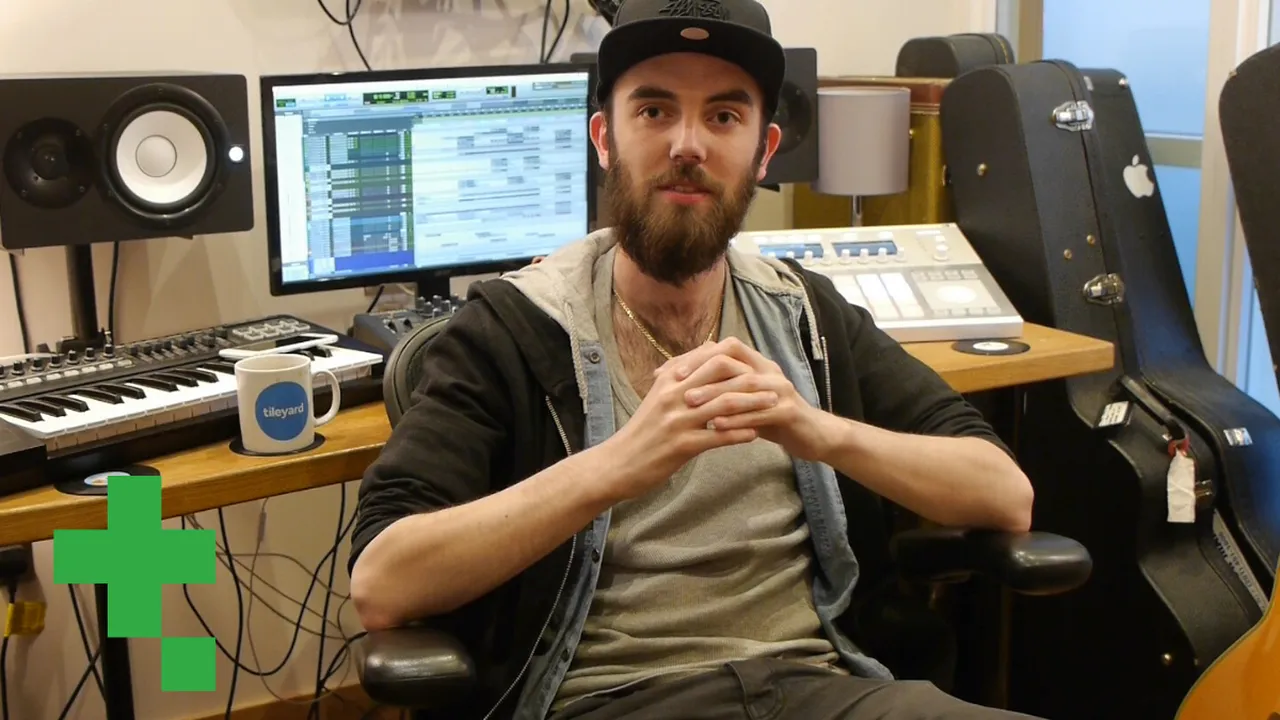
What's in the course
26 lessons (1h 43m) · 1 free
01. Guitar part - concepts
1:37
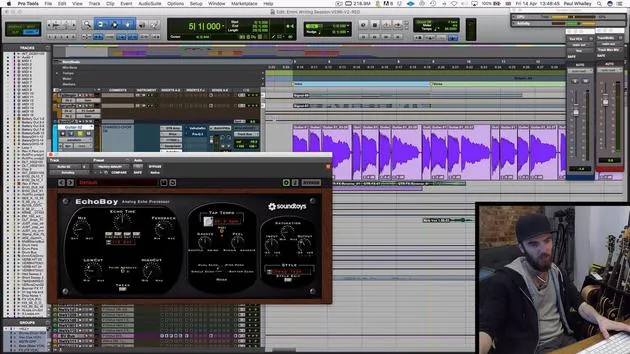
02. Guitar part
4:58

03. Vocals - concepts
1:22

04. ASSIGNMENT: Recreate the guitar production
0:37
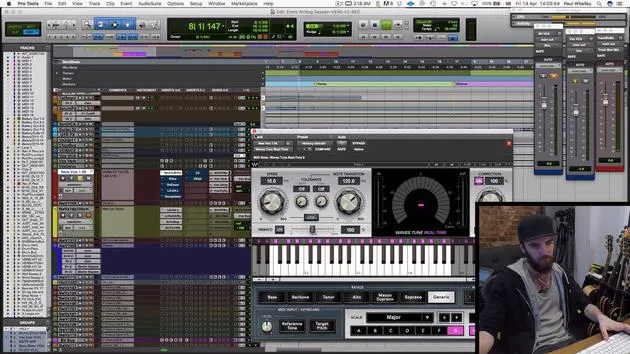
05. Vocals
9:42

06. CHALLENGE #1: BUILD THE VOCAL ARRANGEMENT AND HOOK
0:45
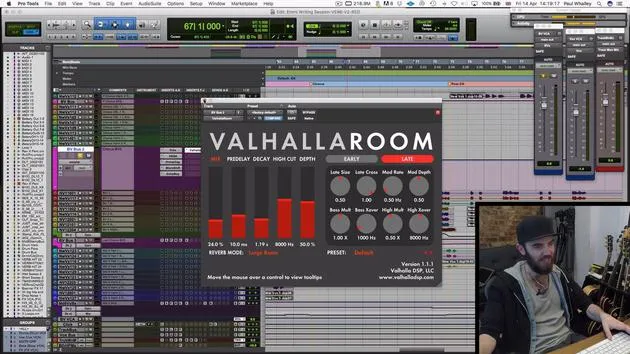
07. Backing vocals
4:07

08. Keys and synths - concepts
0:54
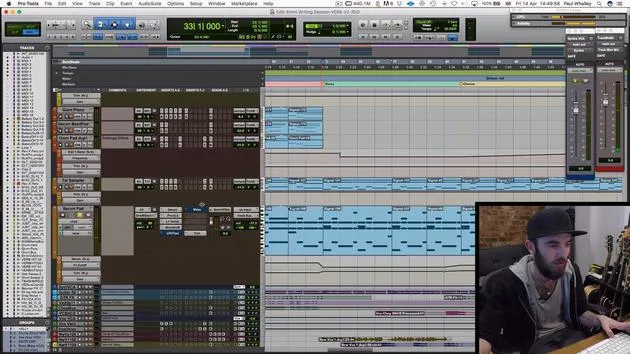
09. Keys & synthesizers
9:38

10. Bass - concepts
1:01
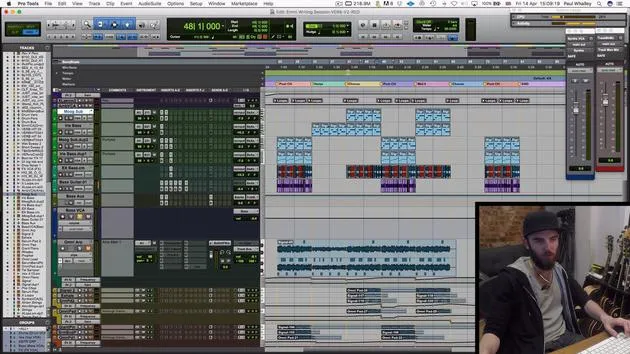
11. Bass
5:24

12. Drums - concepts
0:58
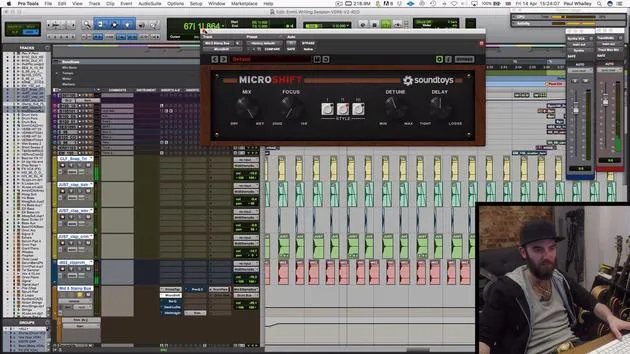
13. Drums
9:49

14. ASSIGNMENT: Recreate the drum production
0:32
15. Effects and Atmospheric parts - concepts
1:09
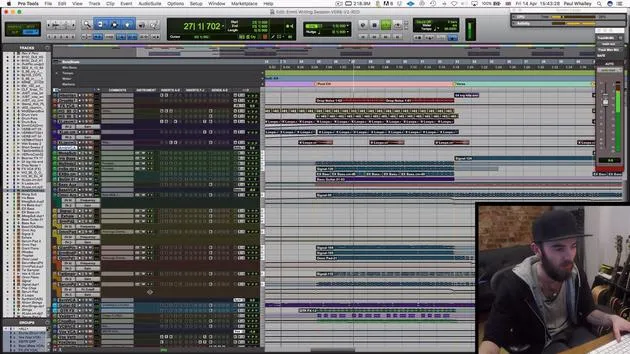
16. Effects and Atmospheric parts
5:53





Lesson transcript
Breaking Down the Song Structure
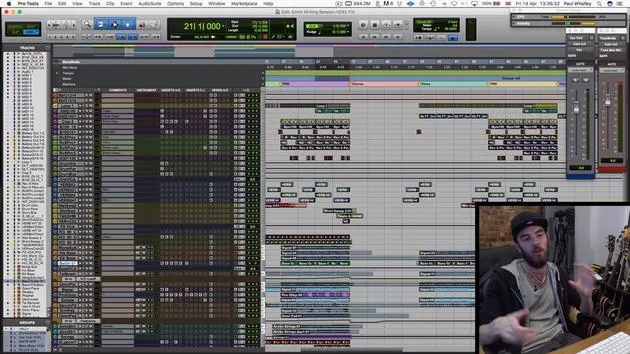
Hey, guys! So, we're going to be breaking down the arrangement and structure of this song now, really quickly. It might be a bit obvious to some people, but it's worth covering just to cover all the bases here.
Traditional Pop Song Structure
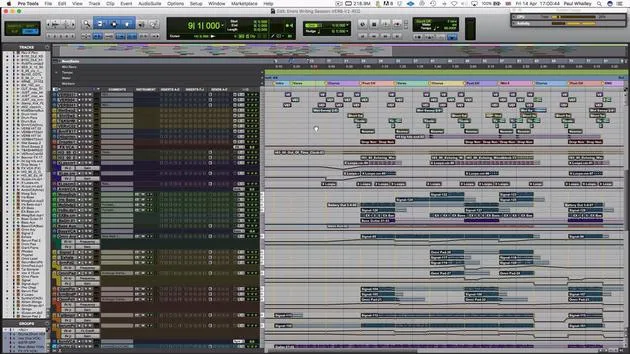
When writing this song, we followed a very traditional pop song structure:
- A Section
- B Section
- C Section
This then repeats around again: A, B, C, followed by a Middle 8, which is always good to have as a transitional section, change it up a bit, change the drum groove, and things.
After that, we have:
- Another Chorus
- The B Section
- Then C Section again.
Section Development
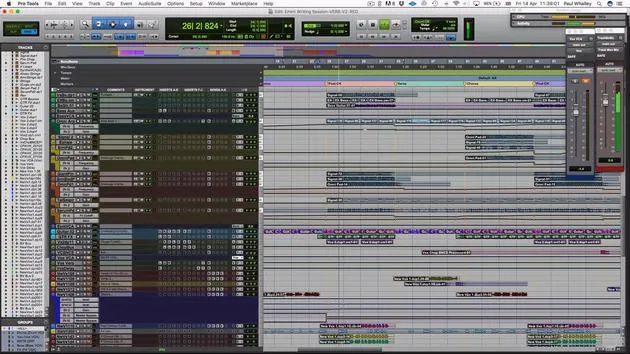
Now, what you'll notice (and you can see on screen and in the various project files) is that as each section goes, the two verses don't even look the same, or the two choruses, or so on.
A Useful Trick
One trick to use is to build these sections:
- Add a few layers
- Take away a few layers
Try to keep them similar, but add some interest for the listener.
For example:
- If I play you a bit of this first Chorus here, it has a very simple vocal, guitar, a couple of elements, percussion, and ambient effects.
- Now, we come along to the second Chorus, this is the second of the B sections. It sounds pretty different.
Note: Same melodies, same section, same chords, just developed a bit more because you've had all the sections of the song. This keeps the listener interested and hooked.
I'll be going into depth more in some of these in-depth tutorials about the individual layers of the song and how I develop some of those.
Post-Chorus Consistency
One more useful trick I found to do (which we've executed in a couple of different ways in this song) is that these post-chorus sections instrumentally are pretty much the same every time.
You can see there isn't a huge amount added or taken away, certainly in the instrumental track. But down here, you'll notice there's a huge amount more vocals that happen in each section.
Choir Section Idea
I chose to do this because we had this idea of adding a choir section and making it really big and powerful. I wanted to keep those sections coherent and the same so the listener doesn't feel like it's two different songs glued together.
Sometimes you can have all these great ideas and end up being really clever with it, but it just doesn't glue together coherently.
The Importance of the Middle 8
The middle 8 is a really important part of any song, your "Dre section." It's the point when most of your elements will change:
- Your vocal melody changes
- Maybe your chords change
- Your drum groove changes
But it's important to maintain some element of consistency here. Use a few elements that run throughout.
You can see here that some of the clap parts stay in, the bass parts stay in, but they're filtered down.
I've used the same bass sound I use for the choruses and the verses while they're playing a completely different part. This helps glue the whole thing together and make it coherent.
Finding the Best Flow
When we were writing this, we experimented with various different structures to try and find the best one and the best flow for all the melodies and different parts.
I think what we ended up with has a really nice and natural flow, and it still drags the attention of the listener.
The Introduction Section
There's one last little part we haven't really talked about, which is the Introduction Section. It's really good to have an introduction section to your song, it generally helps the listener get into it and sets the mood and tone for it all.
I'll just play this section here for you really quickly.
Intro Elements
So, all we've got there is:
- One guitar part
- The vocal chop melody that we've talked about earlier
- A couple of synthesizer elements
This helps to set the sonic landscape. It prefaces the whole thing, allows you to foreshadow what's coming in the rest of the record, and really draws the listener in.
The Make or Break Moment
Quite often, this can be make or break. When you're playing something in a meeting, you want to draw them in pretty much straight away and get them really interested in what's about to come up, but not oversell it or give away all your ideas up front.
Creative Structure
Take your time with the structure, refine some of the elements, and play around with:
- Putting different sections in different orders
- Taking away or pulling different elements into different sections
See if they work throughout.
Continuous Elements
Have a few elements that run all the way through, like:
- A guitar
- A couple of synthesizer parts
This helps glue your track together.
At the end of the day, there's no hard and fast rule with this. Just be creative with it and get something that flows really naturally and is coherent all the way through.
26 lessons
1h 43m of structured video lessons
Advanced video features
Slow down, loop a passage, follow along
Mobile, tablet & desktop
Practise wherever you are
100% satisfaction guarantee
30-day money-back guarantee
Meet your guru
Meet your guru
Paul Whalley is a multi-instrumentalist, producer and songwriter with a deliberately broad sound. He spent years on the road as a touring session musician with artists including Mumford & Sons and Ellie Goulding. Classically trained, he holds an undergraduate degree in instrumental performance and a Master's in composition from the Guildhall School of Music. Since moving from touring into production and songwriting he has worked with artists such as NAO, Wretch 32 and Nina Nesbitt, and played on top-40 records around the world, including Little Mix's 'Shout Out to My Ex'. He is based at Tileyard Studios in north London, where he writes and produces for major UK labels and develops new artists. On MusicGurus he and Emmi Green deconstruct a pop record from scratch - every arrangement and production decision laid bare - for songwriters and producers who want to hear how hit records are really built.







