



A short history of Publishing

With
Jay Mistry
What's in the course
21 lessons (4h 21m) · 1 free
01. Introduction with Harry Leckstein and Jay Mistry
11:37
02. A short history of Publishing
You are here6:10
03. Copyright (types of rights) & Royalties
Free lesson11:19
04. Advice for artists - getting paid & working with publishers
15:35
05. Advances, exclusivity & types of publishing deals
14:27
06. Getting started on your own
3:01
07. The Games market
2:55
08. Understanding Publishing Contracts
11:51
09. The world of Sync
8:23
10. Sonic branding & what is a brief. Case study - Ollie Raphael
3:54
11. Sync jargon decrypter & myth-buster
8:38
12. Understanding roles within TV & Film industry
11:43
13. Final words of advice
9:43

01. Interview with Ollie Raphael - Delicious Digital & working with Radio
11:38

02. Interview with Dan Mallender (Phase Music) - Music, promos & trailers for TV, Radio, Film, Gaming industries
16:04

03. Interview with Rachel Menzies - Music Supervision
11:19
04. Interview with Richard Ford (Anger Music) - Working with composers
16:23

05. Interview with Stuart Belsham - Discover PRS
37:15
06. Interview with Alessio Nanni (via Skype) - Pianist & Composer
15:02
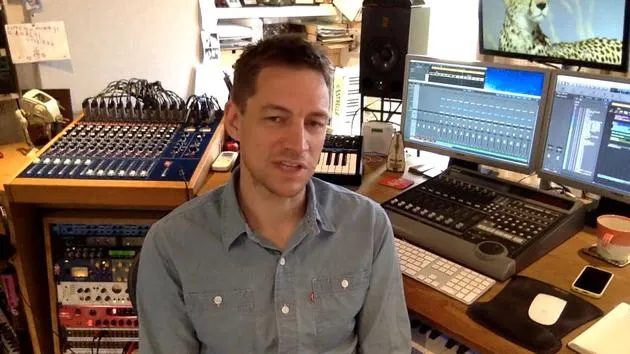
07. Interview with Rob Manning (via Skype) - Film & TV Composer
15:23

08. Interview with Xiaotian Shi (via Skype) - Film & TV Composer
18:40
Lesson transcript
A Brief History of the Modern Day Music Industry
The Beginnings
So let's go back and look at a very short history of the modern music industry. Where did it begin and what triggered it?
-
Music has been around for thousands of years.
-
It wasn't until the Renaissance period and the birth of printing that music and music publishing really came to the fore.
This was primarily because:
-
Before printing, music was handwritten, making it difficult to duplicate and access.
The Impact of Printing
- With the advent of printing, music became easier to reproduce.
- This led to the monetization of selling sheet music, essentially forming the basis of music publishing.
- The beginnings of copyright emerged around the time of Queen Anne and Henry VII when creators received recognition and royalties for their printed works.
Notable Figures
- King Henry VIII was a pioneer in protecting music printing, asserting that access to sheet music required payment.
- Copyright applies to a number of areas, including music, written words, and art.
Advances in Music Publishing
Originally, the focus was on the written word, as printing music was quite complex due to the scales and notations. However, as printing technology improved (through lithography, brass, and metal printing), duplicating music became more efficient and led to the establishment of a business model.
The Early 20th Century
Evolution of Music Monetization
Now, let's track forward to the early 20th century. In the last hundred years, several factors impacted publishing and copyright:
- With sheet music more accessible, music traveled further.
- Composers sought to monetize their work, leading to the formation of partnerships.
- The first notable partnerships were established by composers like Sassen from France and others from Italy and Germany.
The Rise of Copyright Importance
Copyright became essential for ensuring that creators were paid for their works.
"Music publishing or music is no different to a widget. If you invent it normally, there's a royalty involved whenever it comes to selling that widget."
Industrialization of the Music Industry
In the early part of the 20th century:
- The invention of shellac and vinyl propelled music's accessibility.
- This brought about the concept of duplication; for the first time, single recordings were manufactured in multiple copies.
Establishment of MCPS
- The Mechanical Copyright Protection Society (MCPS) was created, focusing on the royalties tied to the replication of records.
- It applies to various formats like CDs, 8-tracks, and MP3s today.
The Role of Broadcasting
This evolution meant that music could be disseminated widely, especially with the advent of radio and television.
- Music exposure increased through different media: radio, TV, and eventually online platforms.
Performance Royalties
-
The broadcasting of music introduced another royalty payment known as the performance rate.
-
Initially centered around live performances (like string quartets), this concept expanded to include various formats of music consumption today:
- Live performances
- Broadcast music
- Radio
As we move forward, the ways of generating performance income have diversified, reflecting the evolving landscape of the music industry.
21 lessons
4h 21m of structured video lessons
Advanced video features
Slow down, loop a passage, follow along
Mobile, tablet & desktop
Practise wherever you are
100% satisfaction guarantee
30-day money-back guarantee
Meet your guru
Meet your guru
Jay Mistry is a music industry veteran of 30 years and is fluent in most aspects of the music business.
Jay began his career at the Performing Right Society before joining BMG Music Publishing, where he was asked to set up the income tracking department from scratch. In 2003, he incorporated Musical Sleuth Ltd, the first independent royalty tracking service of its kind, which counted clients such as Eric Clapton and The Beatles.
Having mastered the intricacies of copyright and royalties, Jay was asked to become Director of Music Services at The Discovery Channel in 2009. His success at Discovery led New York entrepreneurs Jingle Punks to bring him in to set up and stabilise their US publishing operation while building their global collection network. Jay currently consults for a range of high-end composers, music libraries, film producers, publishers and tech platforms.
In A Guide To Music Publishing And Synchronization, Jay distils three decades on the inside of the business into clear, practical guidance, showing you how publishing, copyright, royalties and sync deals really work - and how to make them work for you.







