



Hall mic types & placement
With
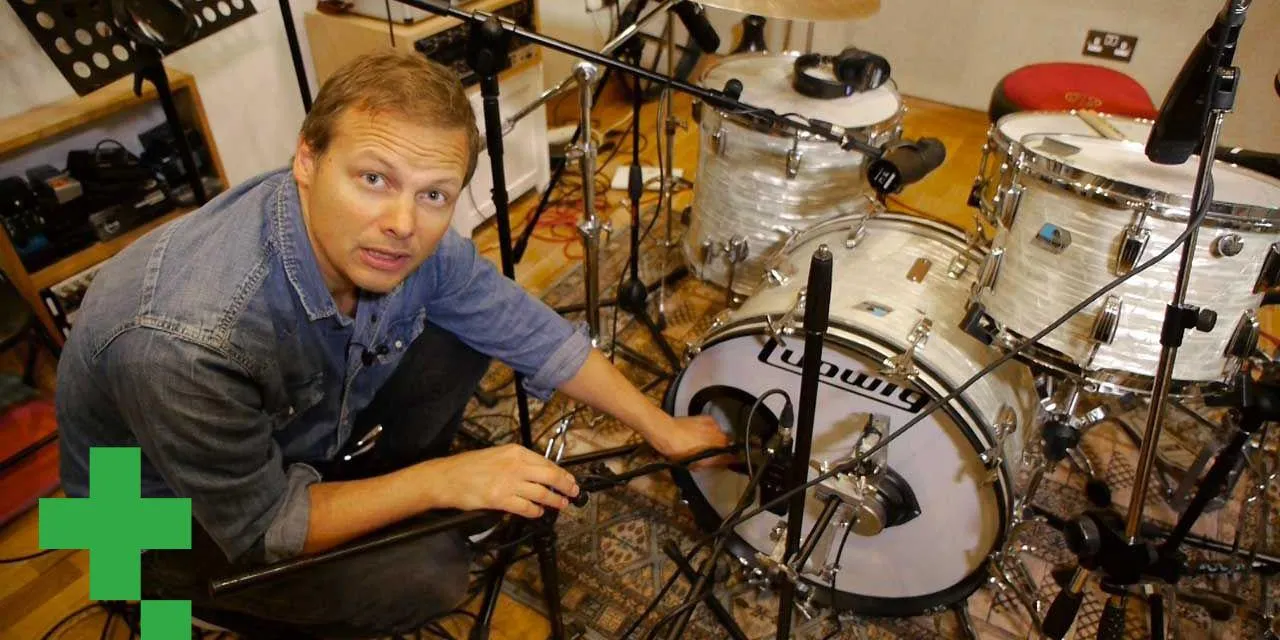
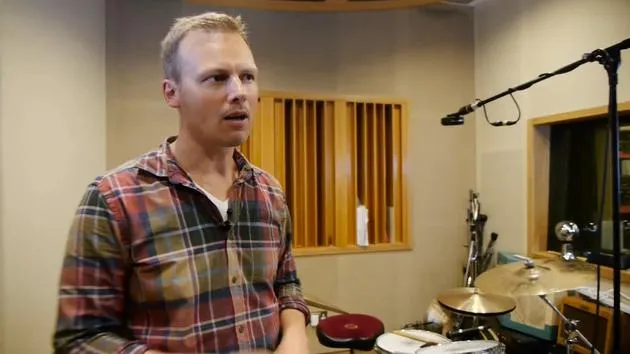
Nikolaj BjerreIn this lesson, Nik explains which microphones he uses to record a "hall sound" with natural reverb. The microphone he uses is an Aston Origin.
What's in the course
20 lessons (2h 11m) · 1 free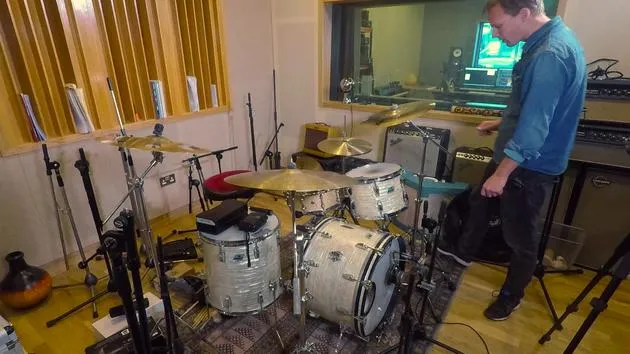
01. How to close-mic a drum kit, recording with a 13 microphone setup
14:49
02. Recap - how to record drums with 13 microphones
2:25
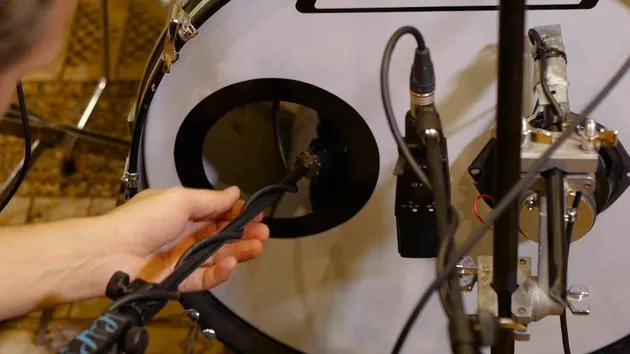
03. Mic types & placement
3:19
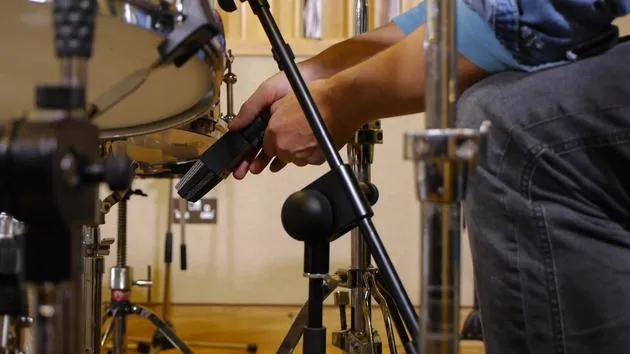
04. Mic types & placement
Free lesson7:33
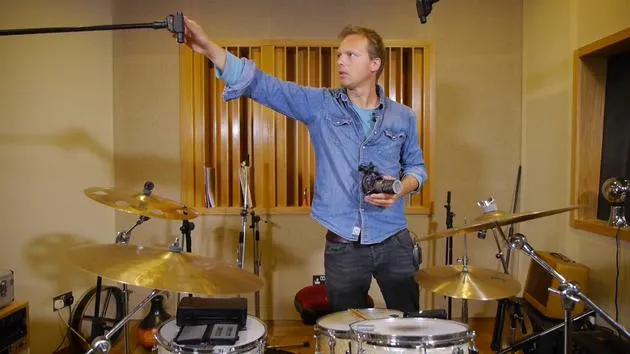
05. Overhead mic type & placement
3:50
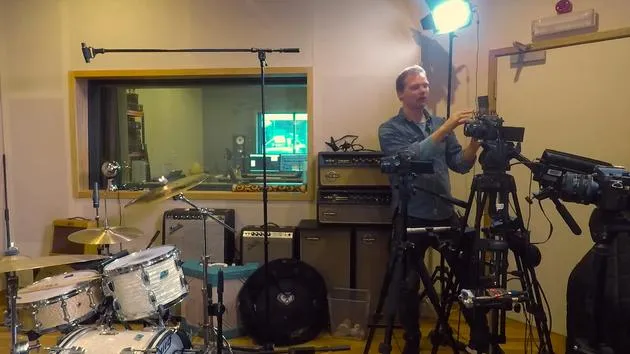
06. Room mics type & placement
1:46
07. Tom mics type & placement
5:27
08. Hall mic types & placement
You are here2:20
09. Setting preamp levels
15:29
10. Recording take #1
2:13
11. Take #1 adjustments
6:52
12. Recording take #2
2:09
13. Finalizing the recording and course wrap-up
4:41
Lesson transcript
Setting Up the Microphone
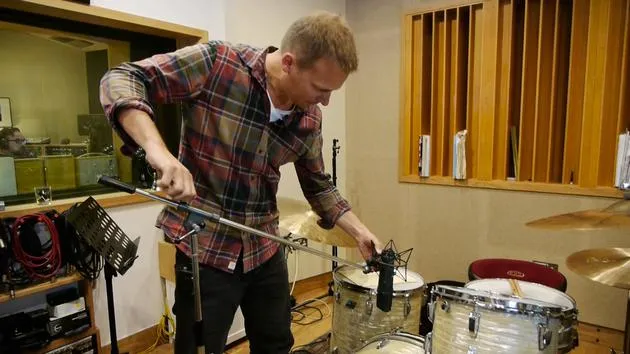
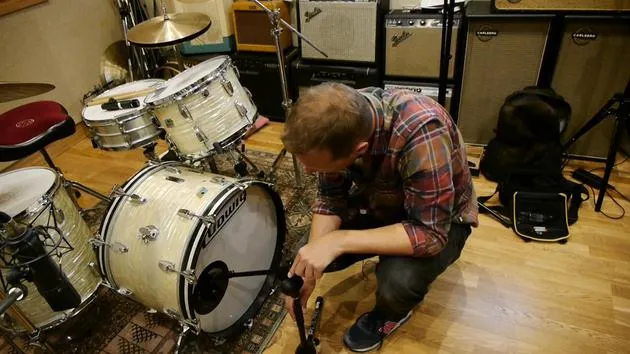
So here we go, the whole mic. We're going to set that up and we've got a mic stand ready.
Checking Reverb:
- I don't know if you can hear if I clap or make a noise. You hear that?
- There's quite a long reverb tail here, so that's useful.
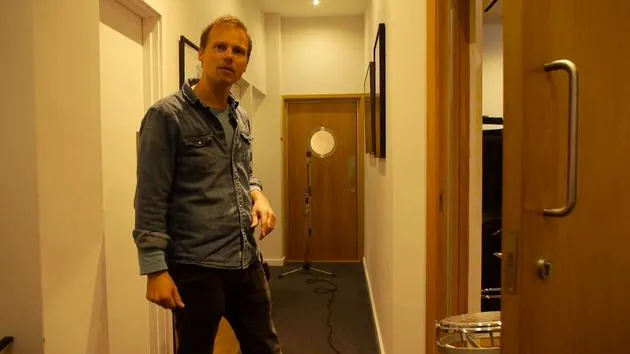
This is a good way to check if you want to use another space. Find the spot where there's a lot of reverb. I found this corner is great also because there's a hallway down here which you can't see, but it's there.
Positioning the Mic:
- I'm gonna position the mic and I'm pointing it down towards the hallway so we capture as much of the reverb as possible.
Doors and Sound Control:
- Another thing to remember is to keep the doors open into the drum room where you're recording the drums.
- Try and keep the doors as open as possible.
- You can also vary how much you open the door, and that will change the sound that comes out here.
- Probably the more you close it, the more muffled and less top end you'll get.
- It can almost be like a natural filter you can use if it's too bright or just too much cymbal bleeding through.
I tend to have the doors pretty all the way open, but you can experiment with that. It's a good way to play around with the sound.
Now, we're going to try and test all the mics and see how it sounds.
20 lessons
2h 11m of structured video lessons
Advanced video features
Slow down, loop a passage, follow along
Mobile, tablet & desktop
Practise wherever you are
100% satisfaction guarantee
30-day money-back guarantee
Meet your guru
Meet your guru
Nikolaj Bjerre is a Danish drummer and producer based at Tileyard Studios in London, who has worked with artists and bands including Lamb, the Ian Siegal Band, Ella Eyre and Heather Nova. His work spans live drumming, production, programming and writing, moving comfortably from organic, rootsy playing to cutting-edge electronic styles, and he is endorsed by Sabian, Hardcase and Protection Racket. In this course he shows you how to record live drums to a professional standard.







