



Goetz's studio setup
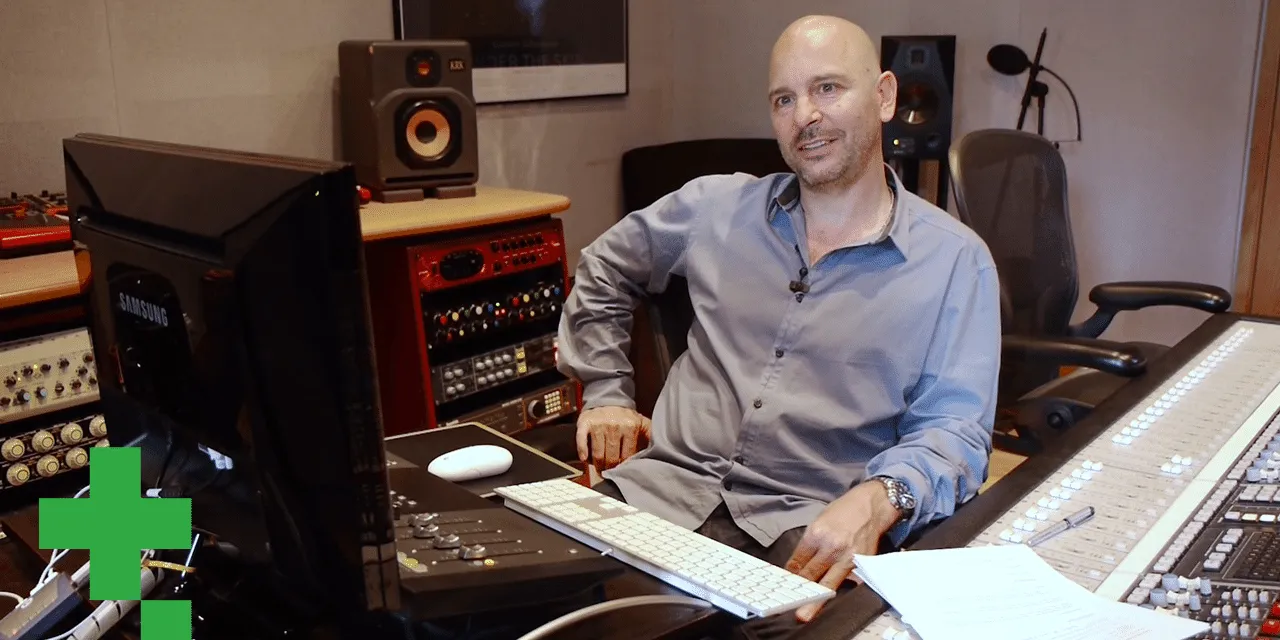
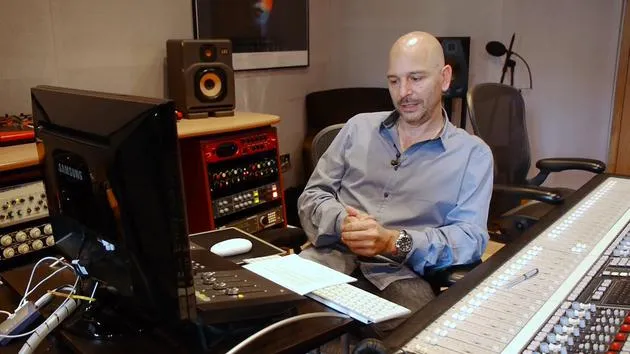
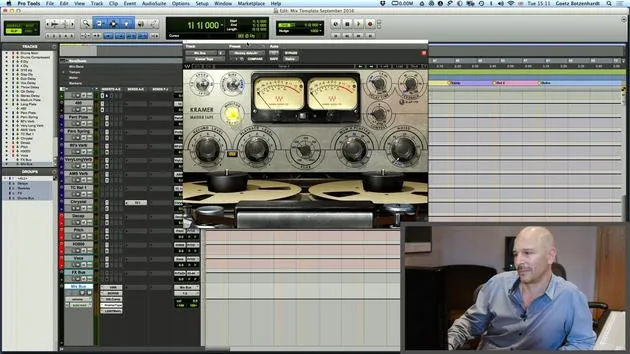
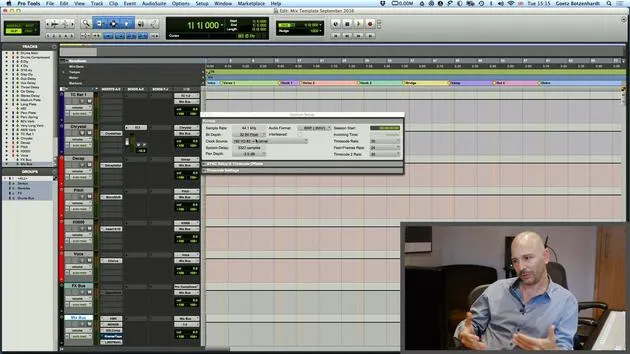
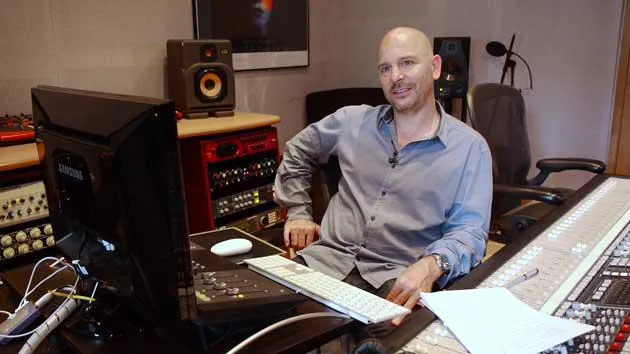
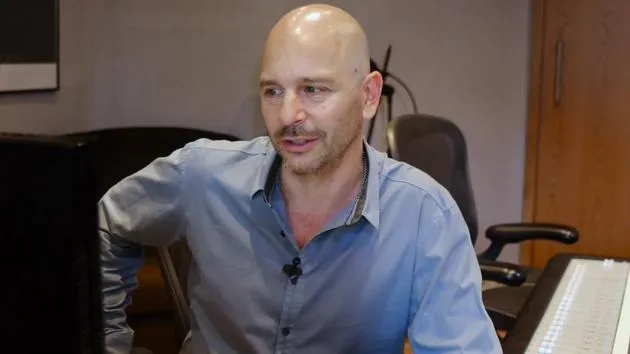
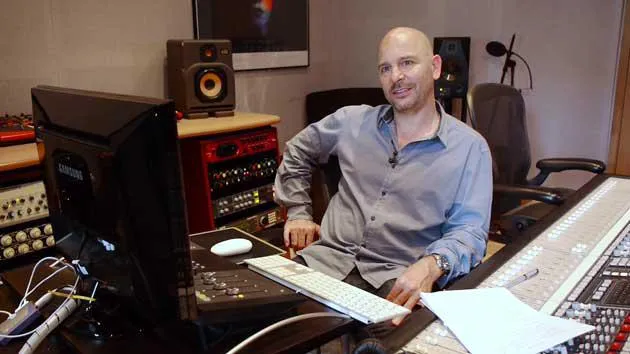
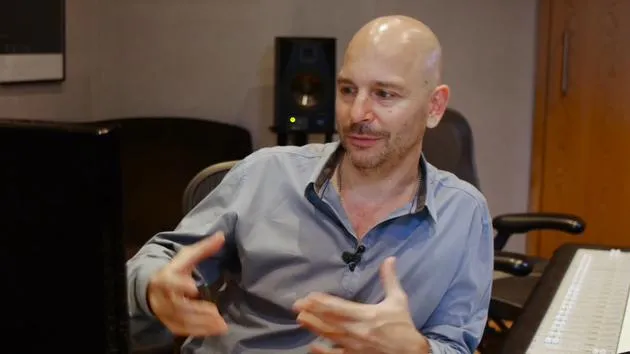
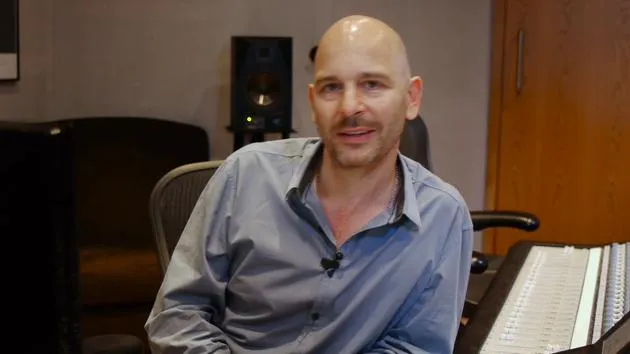
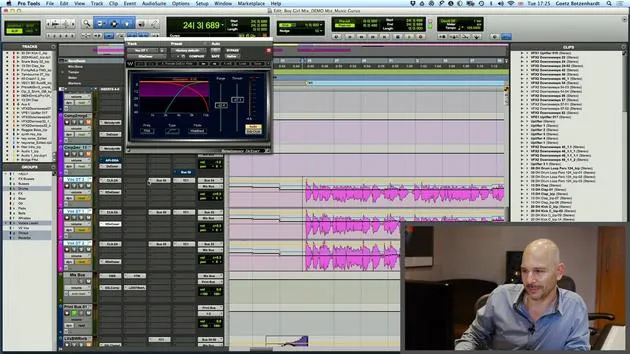
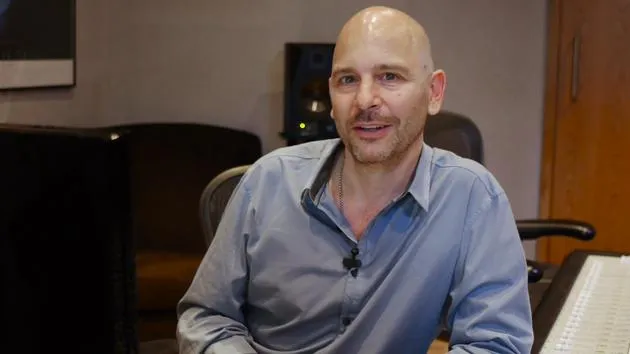
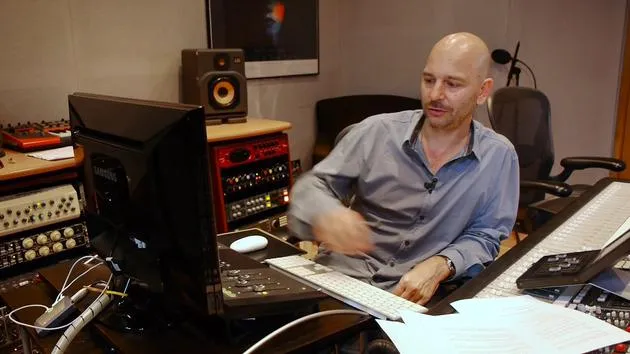
Goetz takes you on a tour of his state of the art studio and mix room at Tileyard Studios, featuring an SSL E4044 console, Adams 5.1 surround monitoring a 48 channel Pro Tools HDX system and choice outboard gear.
What's in the course
23 lessons (2h 35m) · 1 free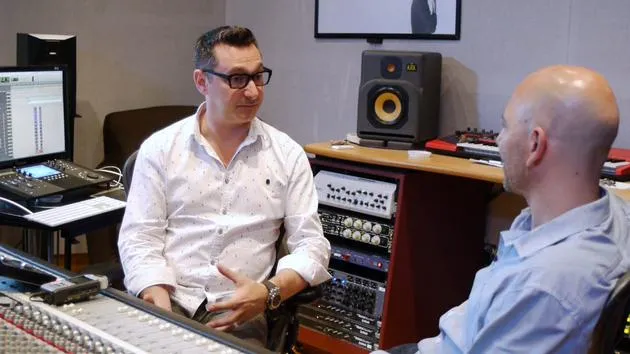
Lesson transcript
Monitoring
Choosing Monitors
Instructor: "Let's move on to the monitoring. What have you chosen and why have you chosen it?"
Response:
"Is it because it works very well with the SSL? Yeah. I mean, the main monitors there, Adams S3. I do like Adams a lot because they just sound beautiful. They've got this like a ribbon tweeter, which is quite unusual. It's a folded ribbon and it replicates the sound really well. You hear stuff that you don't hear on some of the other speakers. I find them quite true.
There are other good speakers as well. I quite like Dynaudios and Quested, but I'm not a big fan of Genelecs. I find Genelecs a bit flattering."
Surround Sound Setup
Instructor: "So, if you look around here..."
Response:
"The Adams, that's the 5.1 surround sound system. You have three speakers at the front, a sub, and two surround speakers, which is sort of the basic format that you need for mixing for cinema. A lot of TV stuff is in 5.1 now as well. Some cinemas have 7.1 now, which I haven't got yet.
But, I mean, it's quite full of music. If you have 7.1, it's basically an extra set of two surround speakers, so you can just replicate what's in the other."
Future of Surround Sound
Instructor: "Do you think, from a sound point of view, that might go even further when it comes to the VR sort of 360 kind of stuff for Oculus Rift?"
Response:
"I mean, the sound that's being mixed for VR... will it become more surround than 7.1? Everything always becomes more, doesn't it?
So what's next? There's a studio in Belgium called Galaxy that has speakers in the ceiling and in the floor."
Early Equipment
Instructor: "And what have we got behind us here?"
Response:
"These are some of the first set that I bought. Yeah, that's the first set. I'm still a big fan of them, KRK. They obviously sort of developed. These are 7,000. There's a big up here called 9,000, which a lot of other mix engineers use. Mark Stent and Jamie Wheatley and a lot of people have them.
A lot of my competitors got the slightly smaller version, the 7,000. But also, the NS10 is really important for me still. They are the sort of classic mix engineered speakers. Most studios have them sitting on the meter bridge.
And my latest acquisition? The Aurotone, it's also a classic piece of kit for mixing or checking mixes in mono."
Outboard Gear
Instructor: "Let's move on to a bit of outboard, shall we?"
Response:
"Okay, what have we got here? What was some of the first stuff you talked earlier about? The first few things that you bought?"
Eventide H3000
"Yes, the Eventide H3000. Amazing bit of kit. It does everything that a plugin does. Now, this has inside already got filters, delays, harmonizing. It has a lot of stuff inside.
That sort of really first got me to generate really just weird sounds. I came across it first when I was assisting for a famous producer called Flood, who just did Depeche Mode's Violator and U2's Achtung Baby.
The H2000 is all over Achtung Baby, so I thought I have to get myself one of those. I don't use it often enough nowadays because you can just do so much with plugins, and it's always easier because you don't have to get out of your chair. But I sort of more and more revert back to this one because I love the sound of it."
Mastering EQ
"The Eventide H3000, you can also get that as a plugin now. People interested in what it does and the sounds should just get it as a plugin. It's identical.
Next one, this is really important as well. This is a mastering program equalizer, as it's called. It goes over my mix bus. When I mix on the SSL, all it does is add top and bottom, or even a bit of middle, which is quite daring."
GML EQ
"The next bit of equipment, which for me is really important, is the GML EQ, GML standing for George Massenburg Ltd. It's quite an expensive piece of kit, but it's one of the best sounding equalizers around. It goes on the mix bus of the SSL and adds some top and some bottom.
The top end of it makes it sound like a radio record straight away, just adds that sparkle. Unlike the Eventide, you wouldn't find this as a plugin. There's a Massenberg EQ plugin which I have, and it doesn't quite sound the same, but it's close enough."
Manley EQ
"What else have we got here? Another program equalizer, the Manley. It's similar, only that it's got valves inside, so it sounds a lot warmer. It sounds great on strings but can also be used as a mastering EQ.
It's not quite as sharp as the GML, but sometimes I use them both."
Neve Compressors
"We've got a Neve stereo compressor which sometimes gets used for parallel compression. You mix your drums normally, but then you also send your drum mix to a compressor like this one. You compress it quite hard, then mix that in with the normal drums.
You get that compressed and pumping sound, but you still have your punch through, sort of kick and snare coming through normally. So you get the best of both worlds."
"Also, there's another Neve down here, the Neve 1073. It's just a really good mic preamp, two channels. It makes quite a big difference what preamp you use for your microphones."
Distressors
"Are you talking about vocal mics there or for instrumentation?"
"Yeah, it works great for everything, but on vocals, it's most important."
"The Distressors are quite fancy compressors that I use a lot on vocals. They're very versatile and help get vocals to come sit right in your face, which quite often you need."
Filter Bank
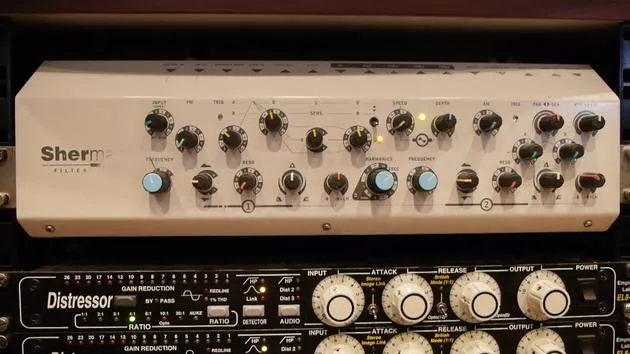
"Oh, and at the top there, that's a filter bank. That's just to scrunch up sounds. If you want to really up a sound, that's your ticket.
I find it quite weird. When I use it, as soon as I plug it in, I go, 'Oh, that sounds great!' But when I start to adjust it on the buttons, it often just gets worse and worse. It's best to plug it in and use it with the first sound that comes up."
Outboard Essentials
Instructor: "What's interesting is that it's not an enormous amount of outboard, but what's there you seem to return to again and again. Is that what gives you the Gertz B sound?"
Response:
"Yes, and I mean, you can do so much with plugins now. There are some amazing plugins around these days, like Waves and Soundtoys. You really don't need banks and banks of outboard anymore. Just get yourself a few choice things and use them."
DBX120A
"One more thing I'd like to mention is the DBX120A, which is basically for modeling low frequencies. If you have a frequency, say 100 hertz, this will actually generate frequencies below harmonics, like 50 hertz, 25 hertz."
"You can get some very low, powerful sounds that can be put into the sub to make the floor shake in a cinema. That's basically for cinematic mixing."
Digital Interface and Software
Instructor: "So, what digital interface do you use, if any?"
Response:
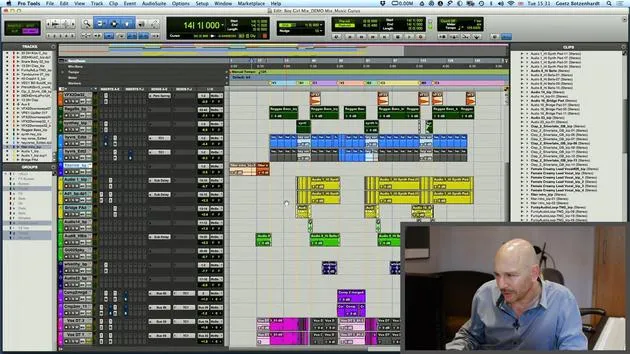
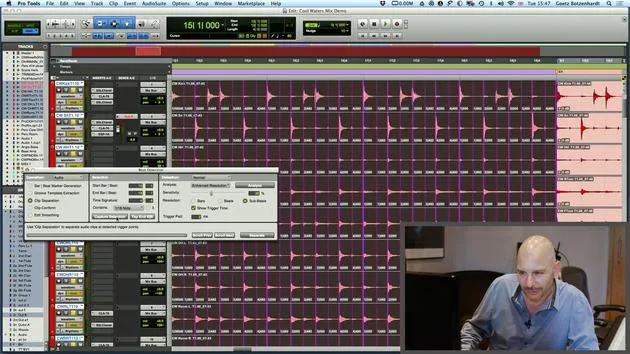
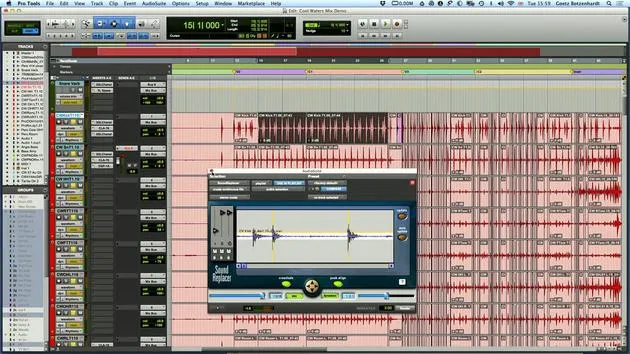
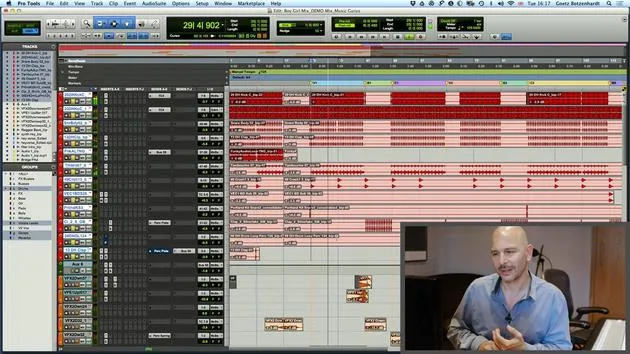
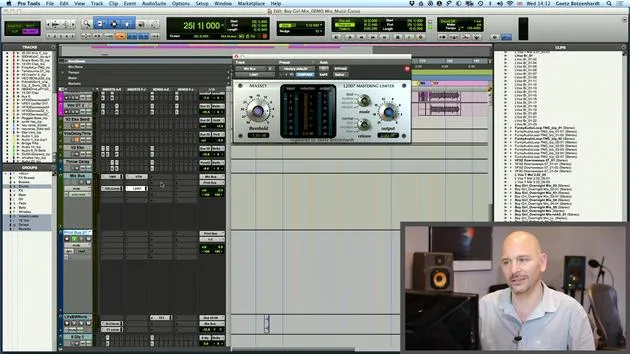
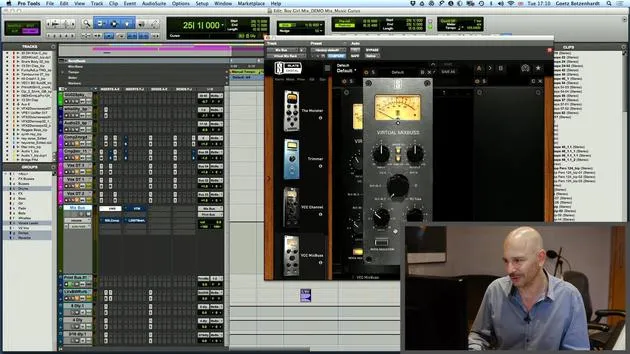
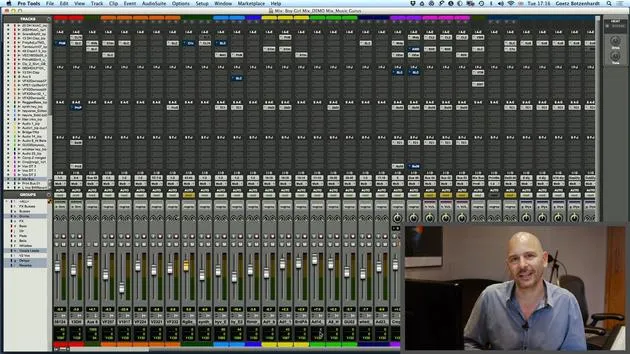
"I use Pro Tools and Logic. A lot of the mixing work is done in Pro Tools these days. I've got a Pro Tools HDX Rig running Pro Tools 11. It has 48 inputs and outputs.
The interface is an Avid HDI, and I've got two Lynx as well, which I like a lot. They all sound great, all three of them."
"Pro Tools HDX is the full-blown, most expensive Pro Tools hardware you can get, where you get a card that goes into your computer, which helps with processing. The interfaces are more expensive, but there is a consumer-based version of Pro Tools now, which costs only several hundred pounds, as opposed to thousands."
"But unfortunately, I need the expensive version because I get a lot of sessions from big studios that I need to open."
Conclusion
Instructor: "Well, listen, thank you so much for taking us through the equipment."
Response:
"I think what would be great is if we can get a list from you, a sort of tech spec of your room, which I'm sure people will be interested in."
"Brilliant! If it's okay now, I'll step away, and I'm going to leave our audience in your capable hands. Can you explain a little about what you'll take people through?"
Response:
"Right. I'm going to explain how to mix a pop record. We'll go through the process, structure, preparation, techniques, and equipment. We'll use an example track as well. I'll provide as much advice as I can, whether you're mixing in your bedroom on a laptop with Logic or in a nice studio like I have. It applies to anyone who wants to mix a record that sounds great on the radio."
Instructor: "Gert, thank you very much. Look forward to hearing the rest of the course."
Response: "You're welcome."
23 lessons
2h 35m of structured video lessons
Advanced video features
Slow down, loop a passage, follow along
Mobile, tablet & desktop
Practise wherever you are
100% satisfaction guarantee
30-day money-back guarantee
Meet your guru
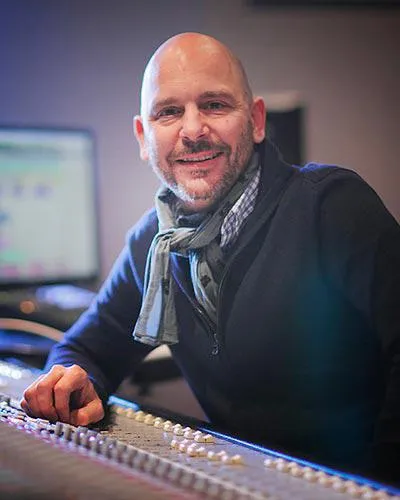
Meet your guru
In the early nineties, Goetz Botzenhardt trained at Swanyard Recording Studios, assisting top producers like Flood, Alan Moulder and Tom Lord-Alge, and cut his teeth recording and mixing the dance and Acid Jazz bands of the 90s - Incognito, Galliano, Soul II Soul and many others.
At Swanyard he met Rollo Armstrong and the two quickly formed a creative partnership, leading to many big dance records and remixes and, soon after, to recording and mixing the first two acclaimed Faithless albums and Dido's multi-platinum 'No Angel'.
Ranging across genres, he recorded and mixed the Sugababes' debut album 'One Touch', including their first hit 'Overload', and has mixed for The Cardigans, Bjork, The Cinematic Orchestra, Craig David, the Pet Shop Boys and Hikaru Utada, one of Japan's most successful artists.
More recently he expanded into film and TV, working extensively with composers Christian Henson, Martin Phipps and Anne Nikitin, and mixing Daniel Pemberton's Golden Globe-nominated score for 'Steve Jobs', directed by Danny Boyle. Away from film he produced Tanita Tikaram's 'Closer to the People', mixed tracks for Sigala, Ella Eyre, Breton, Planet Funk and Tito Jackson, and in 2016 mixed Peabo Bryson's album with Jimmy Jam and Terry Lewis. A full list of his work is on his discography and filmography pages at goetz-botzenhardt.com.
Goetz works from his own studio and mix room, built around an SSL E4044 console, Adam 5.1 surround monitoring, a 48-channel Pro Tools HDX system and choice outboard gear. In his courses he takes you inside that room to show how he mixes across two very different worlds: in Mixing for Film & TV Score, how he balances and shapes orchestral and hybrid scores to serve the picture; and in Mixing Commercial Pop Music, how he builds punchy, radio-ready pop mixes from the multitrack up.







