



Preparation before getting down to mixing
Goetz Botzenhardt covers what to sort out before you start mixing, and why to treat the mix as a creative process rather than just a technical one.
What's in the course
23 lessons (2h 35m) · 1 free
Lesson transcript
Mixing Course: Preparation and Process
Introduction
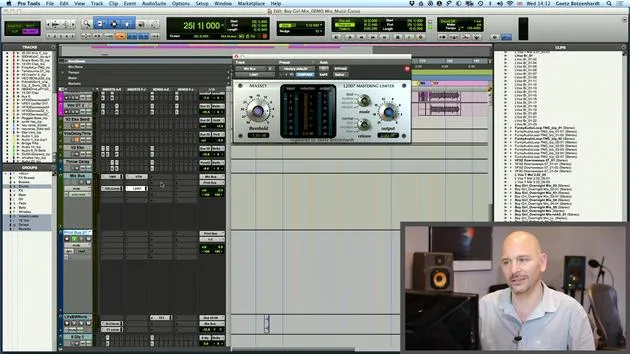
Okay, so, hello again. This is the main part of our mixing course.
I just want to say a few words before we start, which for me is really important.
As much as mixing is a technical process, and there's really a lot of detail that has to be worked on, never forget that it's a very creative thing as well.
- Instead of just inching towards the finish line with your mix, try the overarching thing: create a great sound.
- Throw some mad sounds in there, don't be scared!
- You can always rein it back in later.
What gets you noticed really is if you make something unique. If you come up with something crazy that no one's heard before, then you're much more likely to be played on the radio.
Now, having said that, if you work on somebody else's record, don't forget to be respectful to the artist. For instance, if it's a female solo artist, the most essential thing is her voice, make it shine!
Step-by-Step Mixing Process
Now, I'm going to go through the mixing process step by step.
1. Preparation
Listening to the Demo:
- One really important thing is to listen to the demo or the rough mix.
- Whether you're the producer yourself or someone else is producing, there will already be a version of the song that people have heard, friends of the artist, the manager, or the A&R person.
- This version is likely a good one, so analyze what works about it.
Communicating with the Artist:
- Have a conversation with the artist:
- "Here's our rough mix. What do you like about it? What areas do you think we can improve on?"
- This dialogue helps establish a benchmark and offers rough ideas of where they want to go with it.
Staying True to the Original:
- Ensure your mix isn't worse than what's already there.
- You'd be surprised how many times people produce mixes that lead to the label saying, "Oh no, I prefer the demo!"
2. Genre Benchmarking
Another thing I do before I start mixing is determine the genre of the song.
- I create a playlist on Tidal or iTunes with songs of a similar genre that I like the sound of.
- This helps establish a benchmark to strive for, aim to make our mix at least as good as theirs, if not better.
Client Input:
- I also ask the client or artist if they have any other songs they like.
- "Do you have a little playlist for me?" This is really helpful.
3. The Sketch of the Mix
Once I've sorted those things in my head, I do a little sketch of the mix.
For example, if a song sounds like an Amy Winehouse track, it should probably sound quite retro.
- Think about what reverbs am I going to use.
- Use things that were around at that time: plate reverb, spring reverbs, and stay away from modern stuff.
- Analyze what makes those records work.
4. Analyzing Raw Material
Now, we move to the second part of preparation: the raw material you've been sent.
- Ideally, you get a download link with nicely labeled files, vocals already comped, and no crazy noises or clicks.
- Unfortunately, that's not always the case. Sometimes clients send multiple takes or don't label things properly.
Clarification with Clients:
- Investigate what you've got and if there are problems, go back to the clients.
- Ask them to print or label things again.
- If you're confused about various vocal takes, reach out and clarify.
5. Finalizing Preparation
Don't be afraid to go back to the client if there's any grey area.
- There's no point starting the mix if you're unclear about what you're working with.
- If there's a problem, go back to the client, and don't start until everything is clarified.
Conclusion of Preparation
This was the first step of preparation.
Now, we're moving on to Preparation Part Two.
While it might seem a bit boring that you're still not ready to start, I want to explain something technical.
Good mixing involves ample preparation. The more creative preparation we've discussed is absolutely vital.
Remember, if you have prepared your mix well, it's going to be really easy to make it sound good!
If you don't follow these steps, you're going to encounter a whole load of problems later on, which is what we want to avoid.
23 lessons
2h 35m of structured video lessons
Advanced video features
Slow down, loop a passage, follow along
Mobile, tablet & desktop
Practise wherever you are
100% satisfaction guarantee
30-day money-back guarantee
Meet your guru
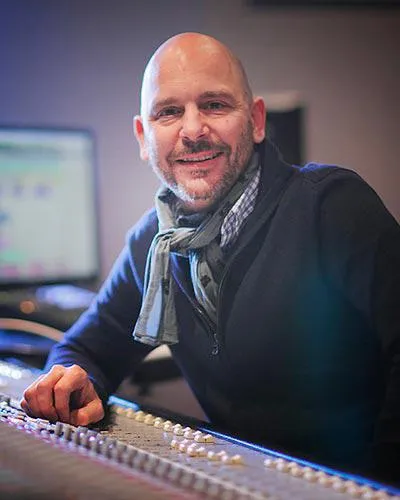
Meet your guru
In the early nineties, Goetz Botzenhardt trained at Swanyard Recording Studios, assisting top producers like Flood, Alan Moulder and Tom Lord-Alge, and cut his teeth recording and mixing the dance and Acid Jazz bands of the 90s - Incognito, Galliano, Soul II Soul and many others.
At Swanyard he met Rollo Armstrong and the two quickly formed a creative partnership, leading to many big dance records and remixes and, soon after, to recording and mixing the first two acclaimed Faithless albums and Dido's multi-platinum 'No Angel'.
Ranging across genres, he recorded and mixed the Sugababes' debut album 'One Touch', including their first hit 'Overload', and has mixed for The Cardigans, Bjork, The Cinematic Orchestra, Craig David, the Pet Shop Boys and Hikaru Utada, one of Japan's most successful artists.
More recently he expanded into film and TV, working extensively with composers Christian Henson, Martin Phipps and Anne Nikitin, and mixing Daniel Pemberton's Golden Globe-nominated score for 'Steve Jobs', directed by Danny Boyle. Away from film he produced Tanita Tikaram's 'Closer to the People', mixed tracks for Sigala, Ella Eyre, Breton, Planet Funk and Tito Jackson, and in 2016 mixed Peabo Bryson's album with Jimmy Jam and Terry Lewis. A full list of his work is on his discography and filmography pages at goetz-botzenhardt.com.
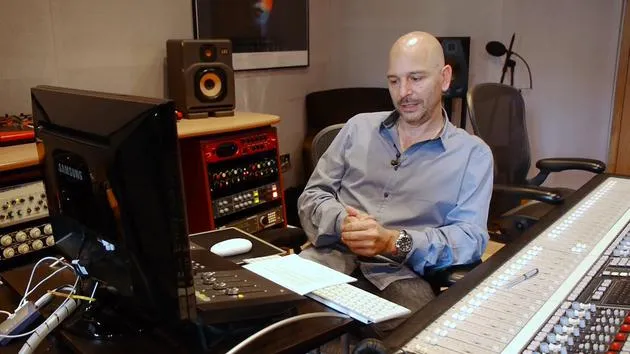
Goetz works from his own studio and mix room, built around an SSL E4044 console, Adam 5.1 surround monitoring, a 48-channel Pro Tools HDX system and choice outboard gear. In his courses he takes you inside that room to show how he mixes across two very different worlds: in Mixing for Film & TV Score, how he balances and shapes orchestral and hybrid scores to serve the picture; and in Mixing Commercial Pop Music, how he builds punchy, radio-ready pop mixes from the multitrack up.







