



Comment utiliser un médiator

Avec
Tommy Webb
Le contenu du cours
47 leçons (1h 40min) · 1 gratuites
01. Bienvenue dans le cours
1:41
02. Rencontre ton professeur
0:40
03. Guide de la guitare
6:52
04. S'asseoir avec ta guitare (acoustique)
3:29
05. S'asseoir avec ta guitare (électrique)
0:49
06. Comment accorder ta guitare
4:57
07. Comment utiliser un médiator
Tu es ici2:49
08. Produis ton premier son à la guitare
2:45
09. Comment gratter la guitare
2:02
10. Comment lire la musique - Tablature
Leçon gratuite1:52
11. Comment lire la musique : la notation
3:03
12. Valeurs de note et rythme
5:08
01. Introduction aux riffs et mélodies rock
1:47
02. Comment obtenir un son frété propre
3:19
03. Riff avec les notes Mi et Sol
3:30
04. Riff avec les notes E et G (interprétation)
1:10
05. Riff qui accentue la note forte
1:34
06. Riff accentuant la note forte (interprétation)
0:58
07. Riff avec des blanches
1:44
08. Riff en blanches (interprétation)
0:50
01. Introduction au rock partie 2 et ma Gibson Les Paul
1:10
02. Riff combinant blanches et noires
1:36
03. Riff combinant blanches et noires (interprétation)
0:56
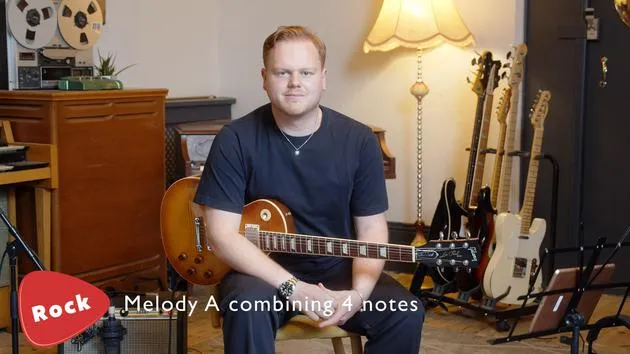
04. Mélodie A en combinant 4 notes
4:00
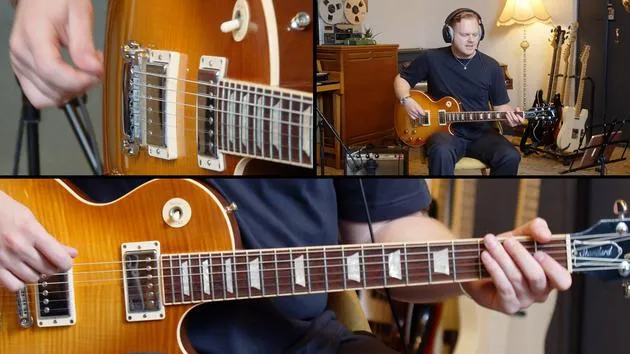
05. Mélodie A combinant 4 notes (interprétation)
0:57
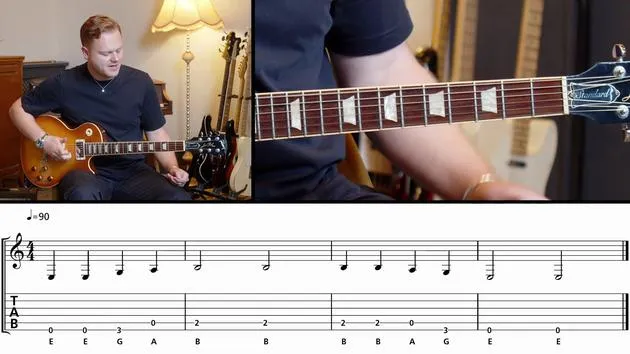
06. Mélodie B combinant 4 notes
2:32
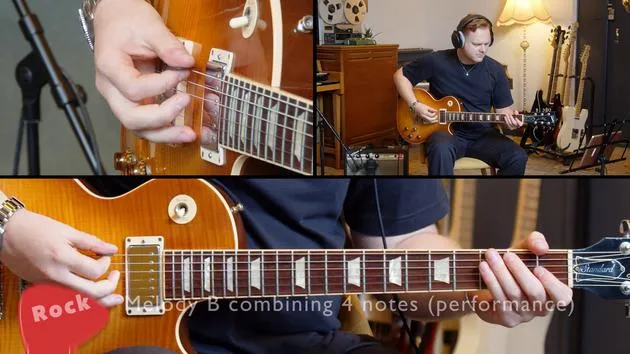
07. Mélodie B combinant 4 notes (interprétation)
0:55
08. Rock City - mesures 3 et 4
2:18
09. Rock City - mesures 3 et 4 (interprétation)
0:58
10. Bravo pour la section Rock
0:17
01. Introduction à la section pop et aux silences
1:14
02. Riff avec silence sur le temps 3
3:36
03. Riff avec silence sur le temps 3 (interprétation)
1:04
04. Riff avec la note fa et des silences
2:53
05. Riff avec la note F et silences (interprétation)
1:05
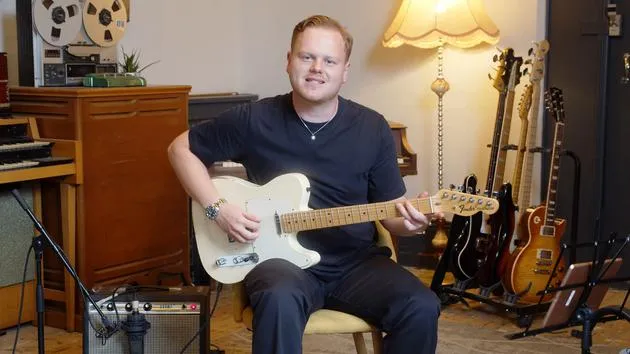
06. Mélodie avec la note C et des silences
4:59
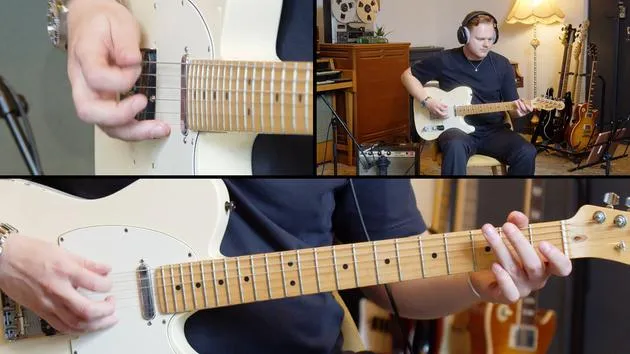
07. Mélodie avec la note Do et des silences (performance)
0:54
08. Résumé de Pop partie 1
0:55
01. Qu'est-ce qu'une Fender Telecaster
1:05
02. Mélodie avec une note Ré
3:51
03. Mélodie avec une note D (interprétation)
1:10
04. Mélodie avec des rondes
2:34
05. Mélodie en rondes (interprétation)
0:57
06. Riff combinant des valeurs de notes
2:32
07. Riff combinant des valeurs de notes (interprétation)
1:03
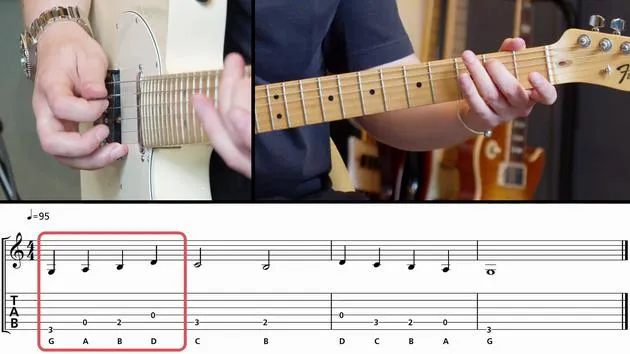
08. Party People mesures 13-16
2:23
09. Party People mesures 13-16 (interprétation)
1:22
Transcription de la leçon
Understanding the Pick
We also need to talk about the pick. This is what we use to pluck the strings.
Why Use a Pick?
- We can use our fingers, but the pick is for a more rock/pop style.
- Using a pick allows for a lot more speed.
Types of Picks
- Picks are typically made of:
- Plastic
- Sometimes bone or glass
In general, we're going to be using plastic picks. You might find your picks a bit larger than mine and thinner. However, my personal preference is a short, thick pick.
How to Hold the Pick
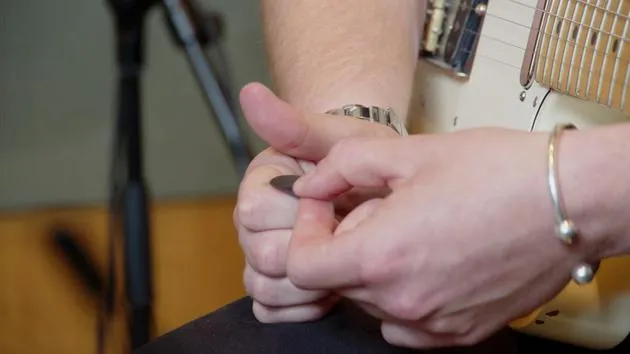
To hold the pick:
- Extend your strumming hand and keep your fingers straight.
- Curl your fingers to create a Y shape.
- Place the pick into that Y shape with the tip coming out.
- Use your thumb to clamp down on the pick.
You can adjust the pick a little in your fingers for comfort. As a general rule, this is how we want to hold the pick.
Playing Speed and Tip Visibility
As we progress, you'll notice that the songs we learn become faster.
- It's hard to play quickly with the pick showing a lot of your tip.
- Aim for as small a tip as you can‚ maybe half a centimeter showing from your finger.
- This gives you accuracy and helps prevent the pick from getting caught in the other strings.
Example
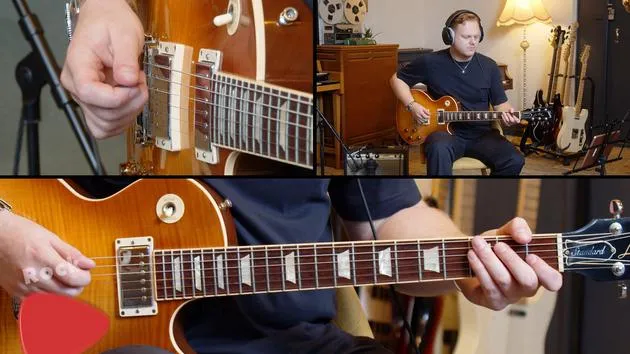
Here's an example of this concept:
-
Large Tip: Notice how I'm getting caught up in the strings, reducing my accuracy.
- For instance, I'm accidentally hitting the G string.
-
Small Tip: By bringing the tip closer into my fingers and showing only a little bit, my accuracy improves significantly.
Grip and Angle
When holding the pick, remember:
- Don't grip it too hard; just keep it in place.
- Avoid being too loose, or you might drop the pick while strumming.
- A medium grip is ideal, allowing you to brush through the strings without getting caught.
Angle of Attack
The angle you hit the strings is personal preference:
- Some people play with a flat angle (the pick resting flat on the strings).
- I find I can play faster with a slight angle.
- This technique allows me to brush and glide off the strings rather than getting caught.
Sound Variation
When I play the guitar, I can achieve different sounds based on where I pluck the strings, similar to the guitar pickups:
- Neck Pickups: Warmer sound (closer to the neck).
- Bridge Pickups: More twangy and harsh sound (closer to the bridge).
Listening Example
- Playing closer to the neck yields a rounded, mellow sound.
- Moving closer to the bridge creates a brighter, harsher tone.
This is ultimately your personal preference, but throughout the course, I recommend playing around the middle position, as it provides the most even sound‚ somewhere in this area.
47 leçons
1h 40m de leçons vidéo structurées
Fonctions vidéo avancées
Ralentissez, bouclez un passage, suivez la partition
Mobile, tablette et ordinateur
Pratiquez où vous voulez
Satisfaction garantie à 100 %
Garantie remboursement 30 jours
Rencontrez votre guru
Rencontrez votre guru
Tommy Webb est un guitariste basé à Londres, titulaire d'une licence avec mention (BA Hons) en guitare de l'Academy of Contemporary Music de Guildford, où il a étudié auprès de Sandy Beales (One Direction, Wheatus) et Nicolas Meier (Jeff Beck). Son propre jeu circule librement entre rock, pop, indie, hip-hop, country et metal - précisément le terrain que couvrent ses méthodes de guitare.
Tommy a travaillé avec un large éventail d'artistes et de groupes à travers le pays, dont Jarki Monno et Indira May, partageant scènes et sessions avec les guitaristes Paul Murray (Jess Glynne, Zak Abel) et Adam Chetwood (Paolo Nutini, Mark Ronson), ainsi que les batteurs Alex Woodward (Black Honey), Luke Robinson et “Bambi Music” (N-Dubz, Lethal Bizzle, Wretch 32, Tinie Tempah).
Sur scène, il s'est produit au Jazz Cafe en première partie de la chanteuse soul Jocelyn Brown, ainsi que dans des salles et festivals comme Ronnie Scott's, Troy Bar, The Watford Colosseum, Camden Assembly, Kensington Roof Gardens, Notting Hill Arts Club, Meraki Festival et Sundown Festival.
Sur disque et à la radio, Tommy a enregistré des sessions live pour BBC Three Counties Introducing, Vibe FM et Pulse 88, avec des morceaux diffusés sur BBC Radio 1 et Radio 2. Il a enregistré dans des studios comme South Lanes Brighton, Hempstead Road et Titan Studios, auprès de producteurs tels que Steph Carter (Gallows, Lyoness) et TMS / Froe Barnes (Lewis Capaldi, Dua Lipa).
Dans ses méthodes de guitare, Tommy vous transmet tout ce savoir-faire de musicien en activité - en enseignant les techniques, les sonorités et le feeling qui se cachent derrière des styles bien réels, du rock et de la pop à l'indie, au hip-hop, au country et au metal - pour que vous puissiez jouer la musique que vous aimez vraiment.







