



Comment lire la musique : la notation

Avec
Tommy Webb
Le contenu du cours
47 leçons (1h 40min) · 1 gratuites
01. Bienvenue dans le cours
1:41
02. Rencontre ton professeur
0:40
03. Guide de la guitare
6:52
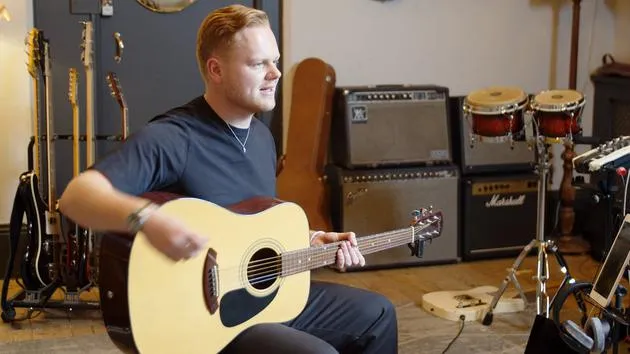
04. S'asseoir avec ta guitare (acoustique)
3:29
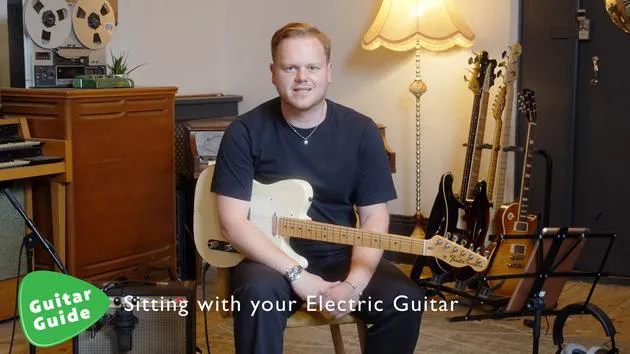
05. S'asseoir avec ta guitare (électrique)
0:49
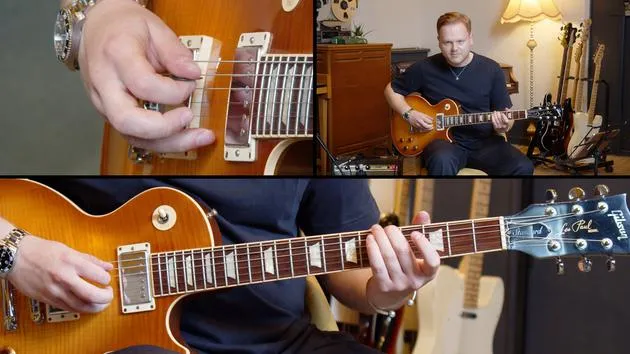
06. Comment accorder ta guitare
4:57
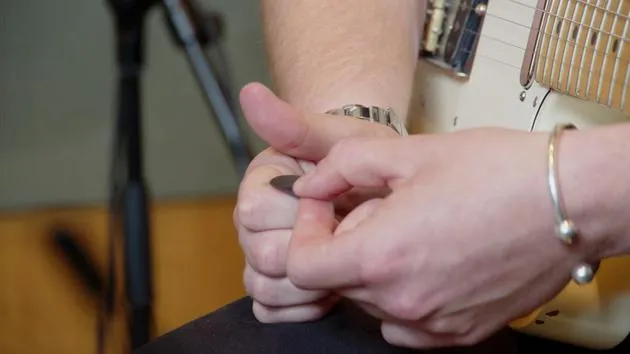
07. Comment utiliser un médiator
2:49
08. Produis ton premier son à la guitare
2:45
09. Comment gratter la guitare
2:02
10. Comment lire la musique - Tablature
Leçon gratuite1:52
11. Comment lire la musique : la notation
Tu es ici3:03
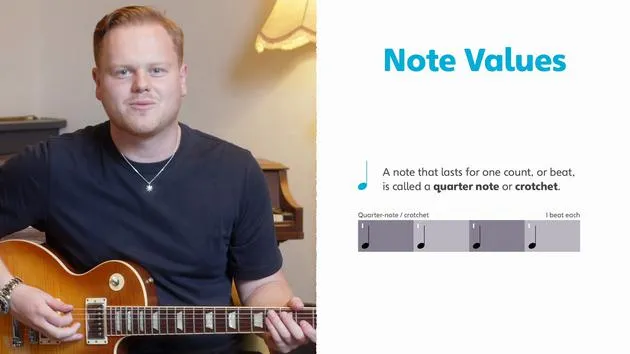
12. Valeurs de note et rythme
5:08
01. Introduction aux riffs et mélodies rock
1:47
02. Comment obtenir un son frété propre
3:19
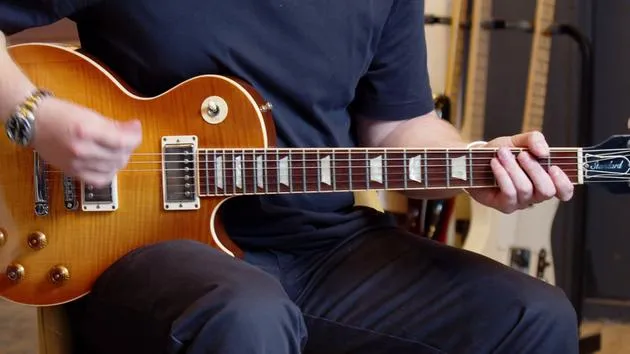
03. Riff avec les notes Mi et Sol
3:30
04. Riff avec les notes E et G (interprétation)
1:10
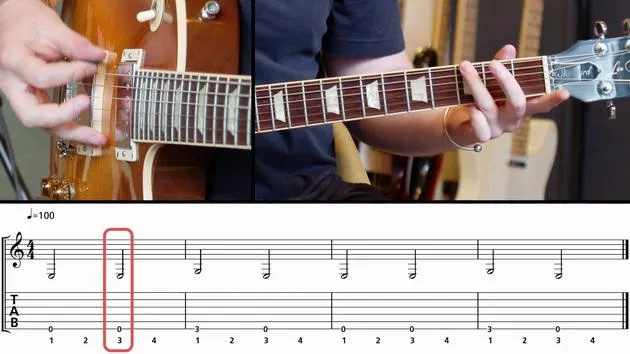
05. Riff qui accentue la note forte
1:34
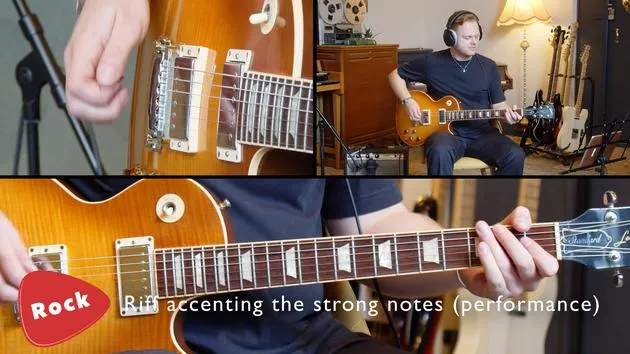
06. Riff accentuant la note forte (interprétation)
0:58
07. Riff avec des blanches
1:44
08. Riff en blanches (interprétation)
0:50
01. Introduction au rock partie 2 et ma Gibson Les Paul
1:10
02. Riff combinant blanches et noires
1:36
03. Riff combinant blanches et noires (interprétation)
0:56
04. Mélodie A en combinant 4 notes
4:00
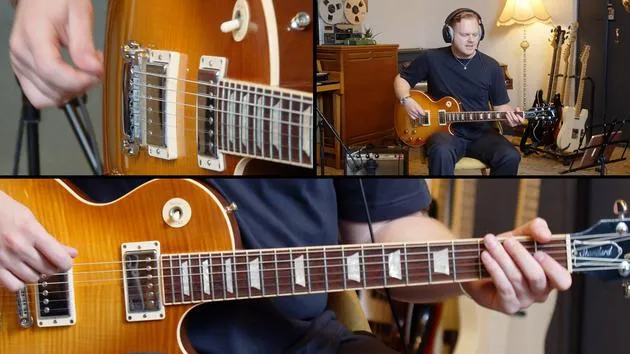
05. Mélodie A combinant 4 notes (interprétation)
0:57
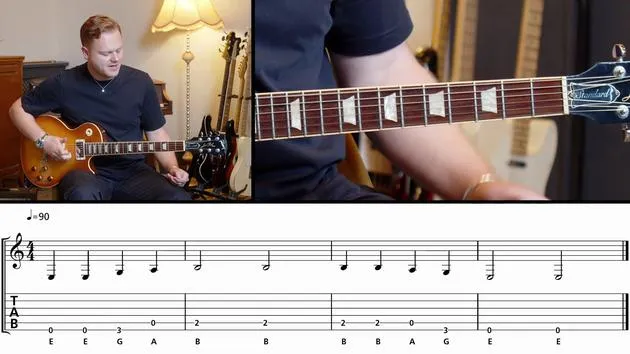
06. Mélodie B combinant 4 notes
2:32
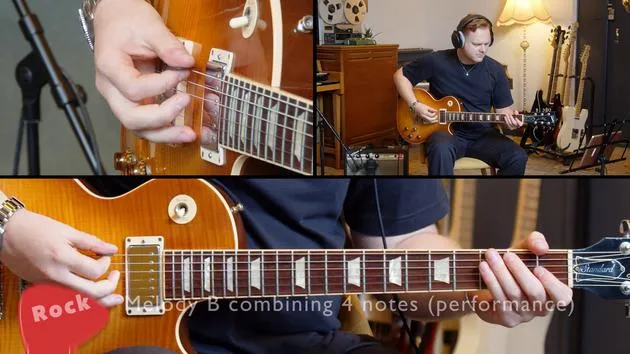
07. Mélodie B combinant 4 notes (interprétation)
0:55
08. Rock City - mesures 3 et 4
2:18
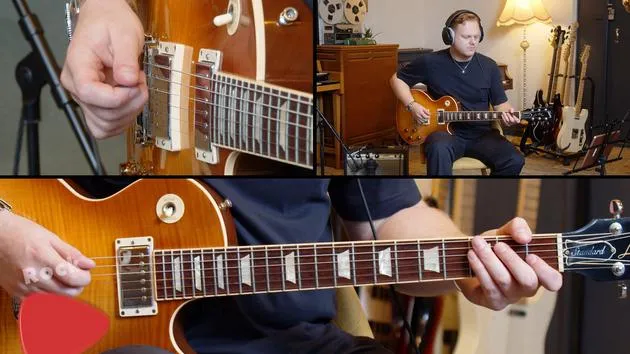
09. Rock City - mesures 3 et 4 (interprétation)
0:58
10. Bravo pour la section Rock
0:17
01. Introduction à la section pop et aux silences
1:14
02. Riff avec silence sur le temps 3
3:36
03. Riff avec silence sur le temps 3 (interprétation)
1:04
04. Riff avec la note fa et des silences
2:53
05. Riff avec la note F et silences (interprétation)
1:05
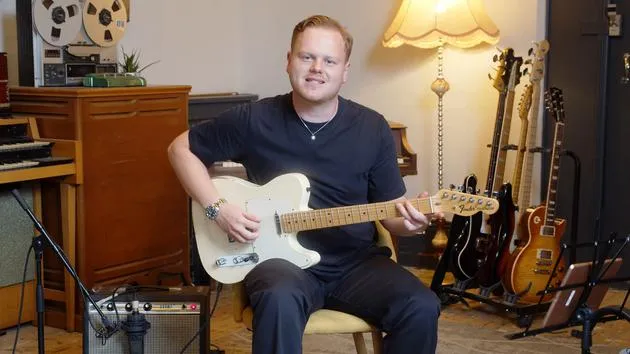
06. Mélodie avec la note C et des silences
4:59
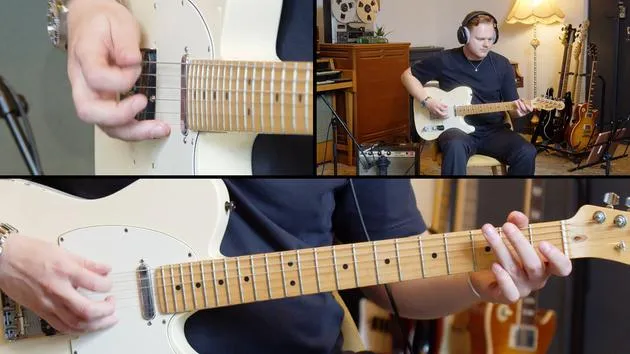
07. Mélodie avec la note Do et des silences (performance)
0:54
08. Résumé de Pop partie 1
0:55
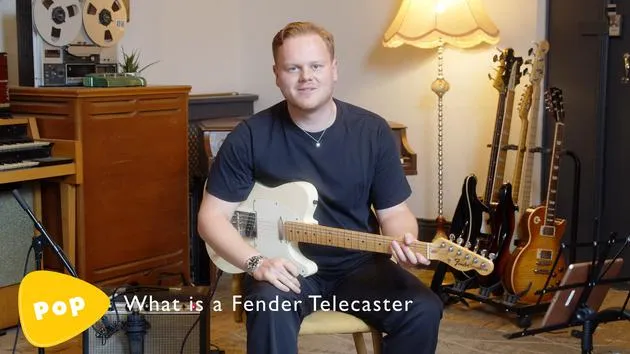
01. Qu'est-ce qu'une Fender Telecaster
1:05
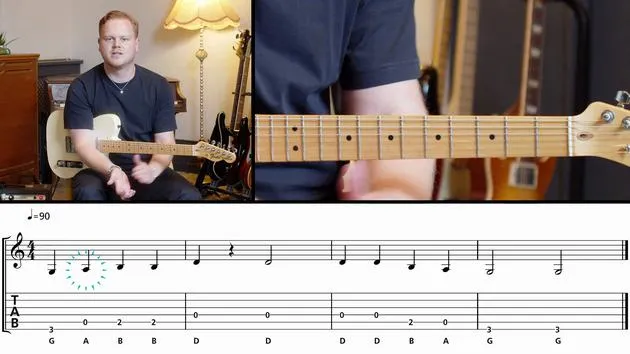
02. Mélodie avec une note Ré
3:51
03. Mélodie avec une note D (interprétation)
1:10
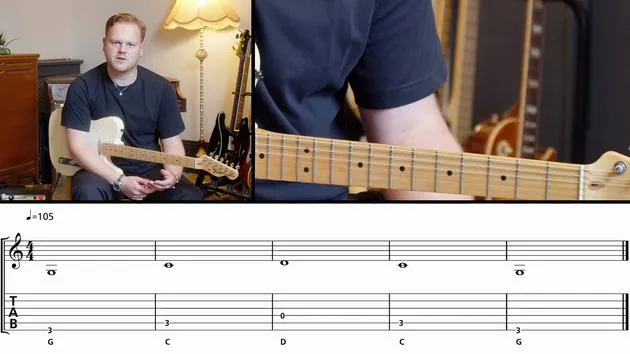
04. Mélodie avec des rondes
2:34
05. Mélodie en rondes (interprétation)
0:57
06. Riff combinant des valeurs de notes
2:32
07. Riff combinant des valeurs de notes (interprétation)
1:03
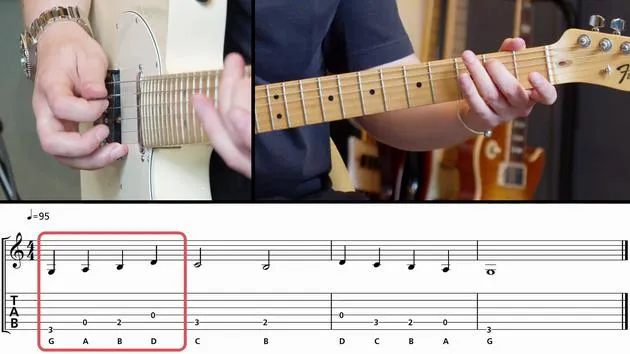
08. Party People mesures 13-16
2:23
09. Party People mesures 13-16 (interprétation)
1:22
Transcription de la leçon
Understanding Tempo, Bar Lines, and Time Signatures
We're now looking at tempo, bar lines, and time signatures.
Tempo
- Definition: The tempo is the speed of the song, measured in beats per minute (BPM).
- Examples:
- A slow tempo would be slower beats.
- A fast tempo would have beats coming by faster.
You can hear whether the music is coming faster or slower, and that's determined by the tempo.
Bar Lines
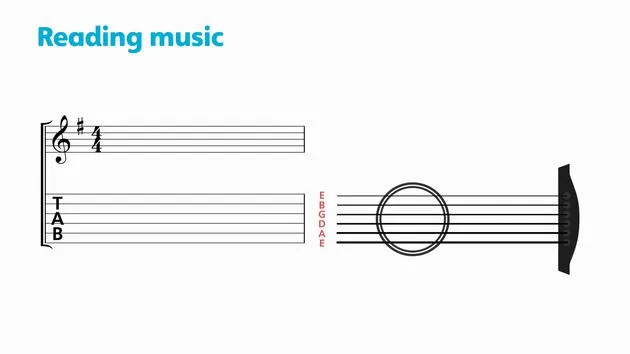
As we said earlier, we were looking at the tab and the stave, which is a long line. These are broken into sections by bar lines, as we saw earlier.
- Diagram:
- The tab music and the stave run along in a line,
- The bar lines come down, acting as a full stop at the end of a sentence.
Time Signatures
The time signature tells us how many beats are in a bar.
-
Top Number: Specifies how many of the notes we have.
- Example: In a 4/4 time signature, we have four beats: 1, 2, 3, 4.
-
Bottom Number: Represents what type of beat it is. However, we will come onto that later.
You might hear a drummer count in with their sticks at the start of a song: 1, 2, 3, 4. This sets the tempo and the time signature of the piece.
Clef
Looking at some other elements when reading music, we've got the clef. This comes at the start of each line and indicates which set of notes we have on each string.
- For the guitar, we will only be reading the treble clef, which tells us which pitch we have on each line and in between each line.
Notes
We can find notes represented as dots on or between the lines. These dots tell us which pitch we need to play, indicating where on the guitar to find those notes.
Remembering the Notes
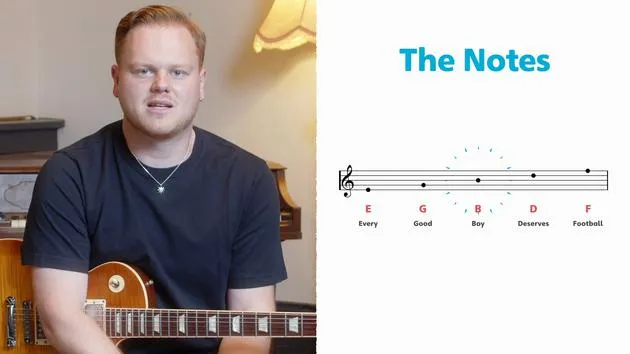
To remember what the dots are called, we use two phrases:
-
Lines: For notes with a line going through them, use the phrase:
- "Every Good Boy Deserves Football."
- This phrase corresponds to the five lines on the stave:
- Bottom to top:
- E (Every)
- G (Good)
- B (Boy)
- D (Deserves)
- F (Football)
- Bottom to top:
-
Spaces: For pitches in between the lines, remember the word:
- "FACE."
- This has four letters, corresponding to the four spaces:
- Bottom to top:
- F, A, C, E.
- Bottom to top:
Using these two examples, you'll be able to identify all the notes on the stave.
Applying to Guitar
You can try translating this onto your guitar by working with the tab to determine which note corresponds to which letter and what they're called.
47 leçons
1h 40m de leçons vidéo structurées
Fonctions vidéo avancées
Ralentissez, bouclez un passage, suivez la partition
Mobile, tablette et ordinateur
Pratiquez où vous voulez
Satisfaction garantie à 100 %
Garantie remboursement 30 jours
Rencontrez votre guru
Rencontrez votre guru
Tommy Webb est un guitariste basé à Londres, titulaire d'une licence avec mention (BA Hons) en guitare de l'Academy of Contemporary Music de Guildford, où il a étudié auprès de Sandy Beales (One Direction, Wheatus) et Nicolas Meier (Jeff Beck). Son propre jeu circule librement entre rock, pop, indie, hip-hop, country et metal - précisément le terrain que couvrent ses méthodes de guitare.
Tommy a travaillé avec un large éventail d'artistes et de groupes à travers le pays, dont Jarki Monno et Indira May, partageant scènes et sessions avec les guitaristes Paul Murray (Jess Glynne, Zak Abel) et Adam Chetwood (Paolo Nutini, Mark Ronson), ainsi que les batteurs Alex Woodward (Black Honey), Luke Robinson et “Bambi Music” (N-Dubz, Lethal Bizzle, Wretch 32, Tinie Tempah).
Sur scène, il s'est produit au Jazz Cafe en première partie de la chanteuse soul Jocelyn Brown, ainsi que dans des salles et festivals comme Ronnie Scott's, Troy Bar, The Watford Colosseum, Camden Assembly, Kensington Roof Gardens, Notting Hill Arts Club, Meraki Festival et Sundown Festival.
Sur disque et à la radio, Tommy a enregistré des sessions live pour BBC Three Counties Introducing, Vibe FM et Pulse 88, avec des morceaux diffusés sur BBC Radio 1 et Radio 2. Il a enregistré dans des studios comme South Lanes Brighton, Hempstead Road et Titan Studios, auprès de producteurs tels que Steph Carter (Gallows, Lyoness) et TMS / Froe Barnes (Lewis Capaldi, Dua Lipa).
Dans ses méthodes de guitare, Tommy vous transmet tout ce savoir-faire de musicien en activité - en enseignant les techniques, les sonorités et le feeling qui se cachent derrière des styles bien réels, du rock et de la pop à l'indie, au hip-hop, au country et au metal - pour que vous puissiez jouer la musique que vous aimez vraiment.







