



Guide de la guitare

Avec
Tommy Webb
Le contenu du cours
47 leçons (1h 40min) · 1 gratuites
01. Bienvenue dans le cours
1:41
02. Rencontre ton professeur
0:40
03. Guide de la guitare
Tu es ici6:52
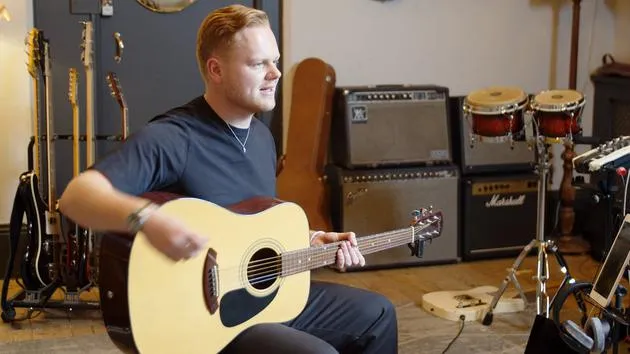
04. S'asseoir avec ta guitare (acoustique)
3:29
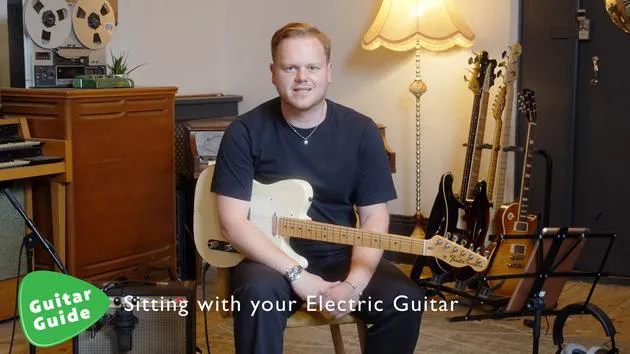
05. S'asseoir avec ta guitare (électrique)
0:49
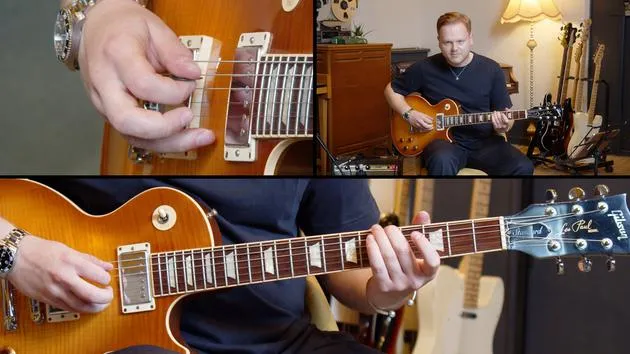
06. Comment accorder ta guitare
4:57
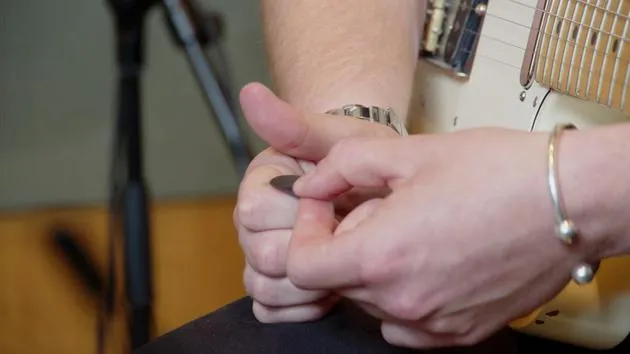
07. Comment utiliser un médiator
2:49
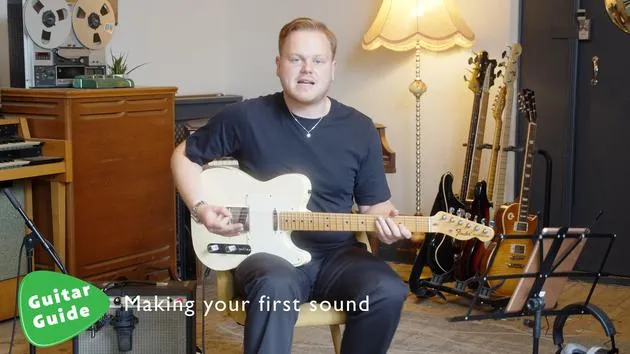
08. Produis ton premier son à la guitare
2:45
09. Comment gratter la guitare
2:02
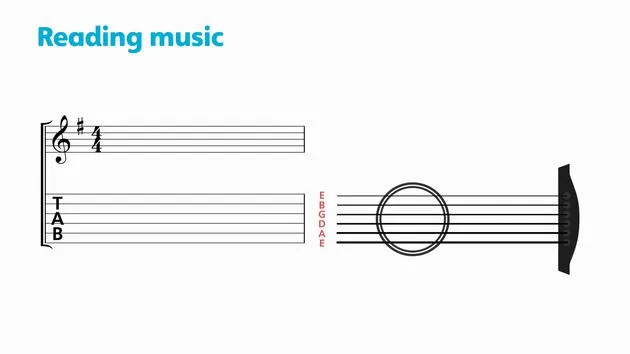
10. Comment lire la musique - Tablature
Leçon gratuite1:52
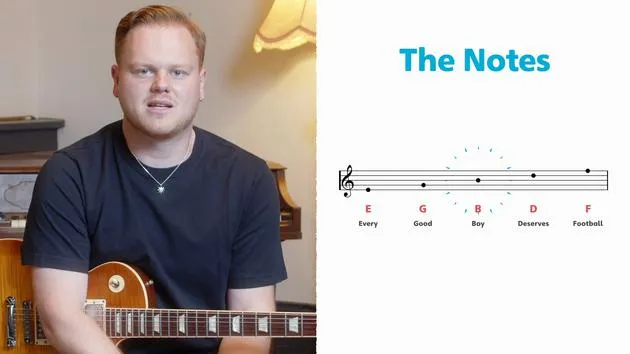
11. Comment lire la musique : la notation
3:03
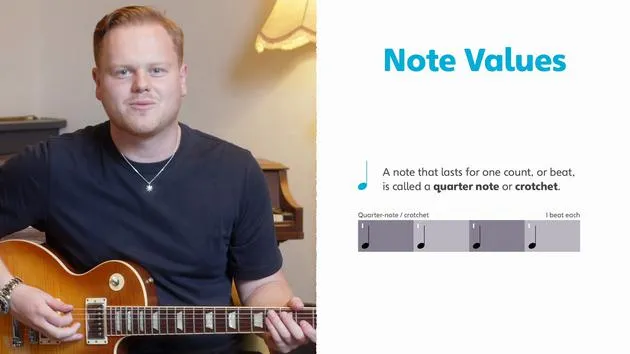
12. Valeurs de note et rythme
5:08
01. Introduction aux riffs et mélodies rock
1:47
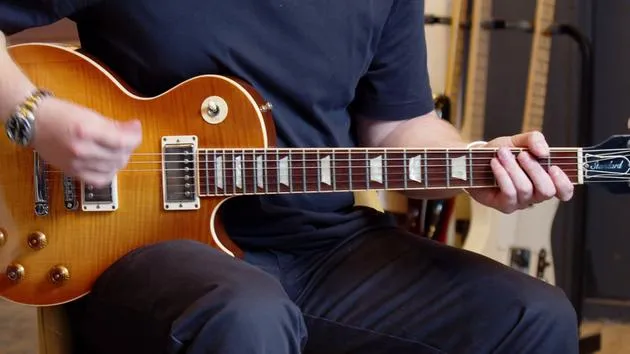
02. Comment obtenir un son frété propre
3:19
03. Riff avec les notes Mi et Sol
3:30
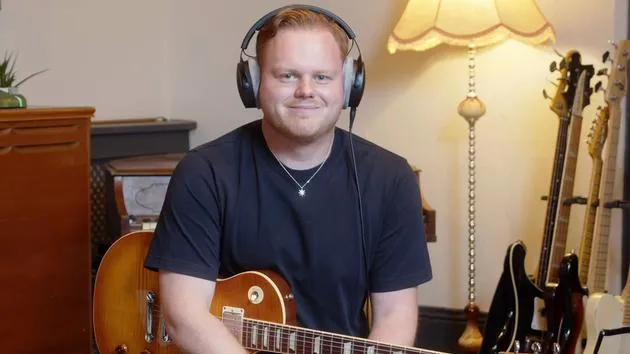
04. Riff avec les notes E et G (interprétation)
1:10
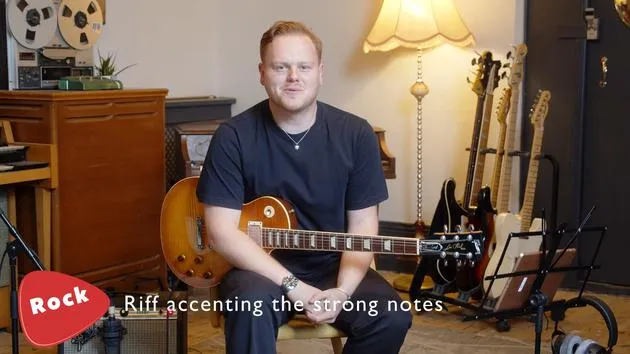
05. Riff qui accentue la note forte
1:34
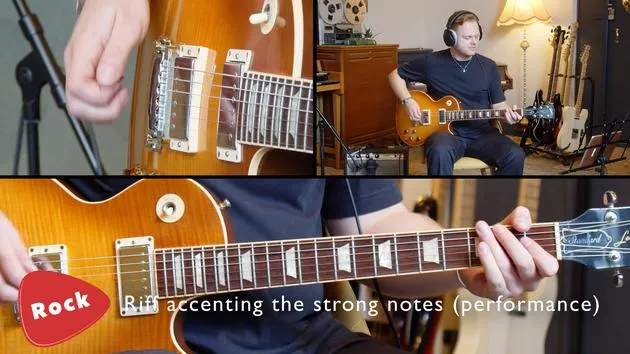
06. Riff accentuant la note forte (interprétation)
0:58
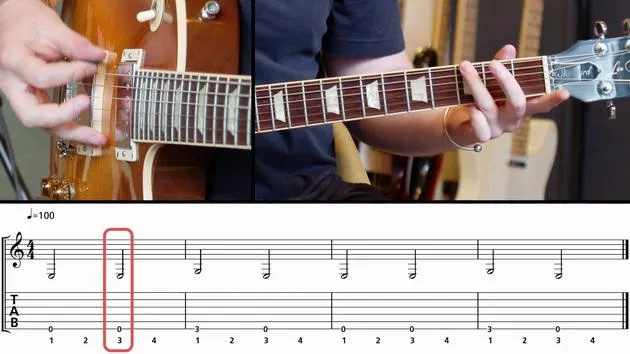
07. Riff avec des blanches
1:44
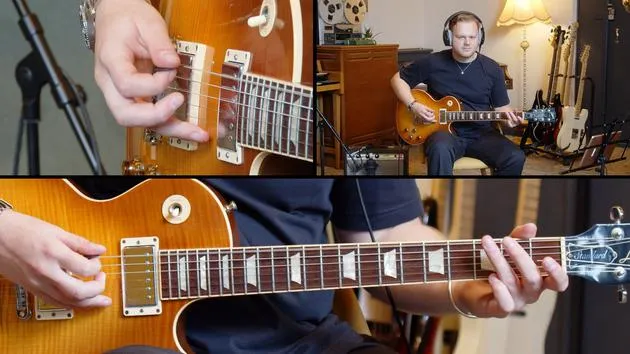
08. Riff en blanches (interprétation)
0:50
01. Introduction au rock partie 2 et ma Gibson Les Paul
1:10
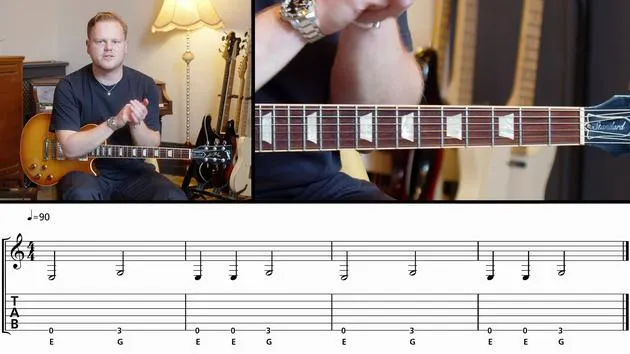
02. Riff combinant blanches et noires
1:36
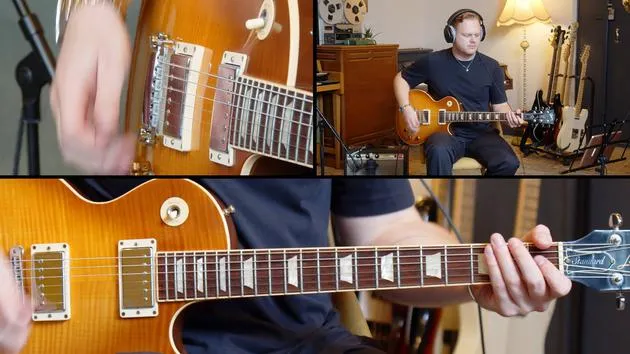
03. Riff combinant blanches et noires (interprétation)
0:56
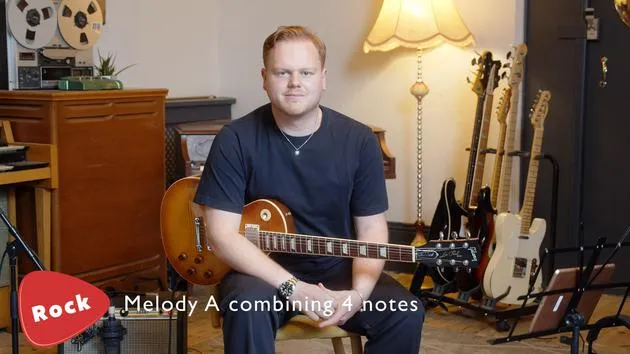
04. Mélodie A en combinant 4 notes
4:00
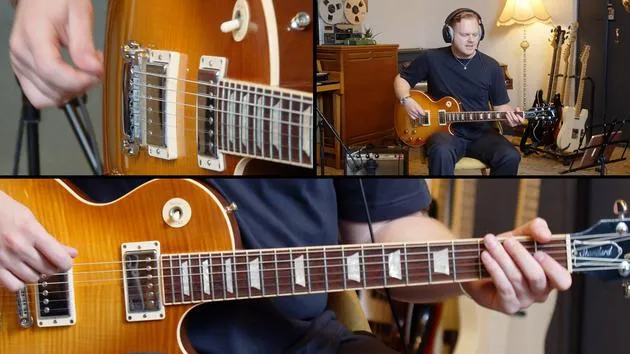
05. Mélodie A combinant 4 notes (interprétation)
0:57
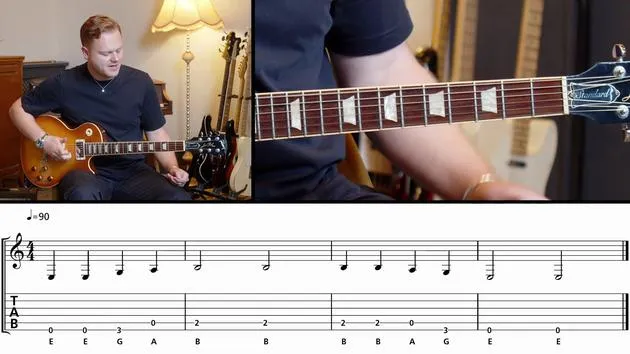
06. Mélodie B combinant 4 notes
2:32
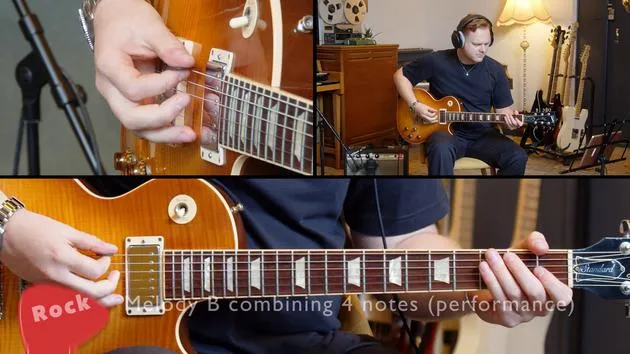
07. Mélodie B combinant 4 notes (interprétation)
0:55
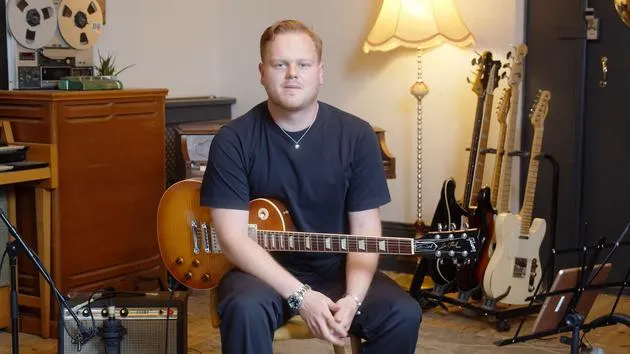
08. Rock City - mesures 3 et 4
2:18
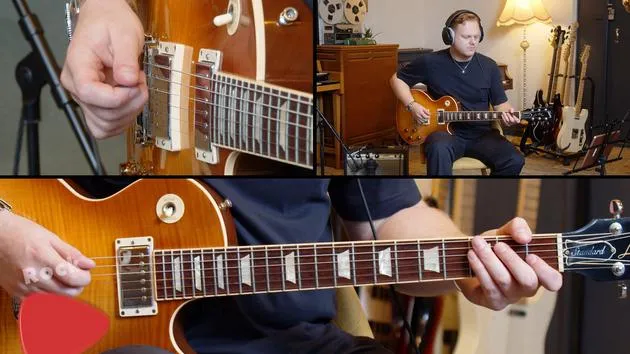
09. Rock City - mesures 3 et 4 (interprétation)
0:58
10. Bravo pour la section Rock
0:17
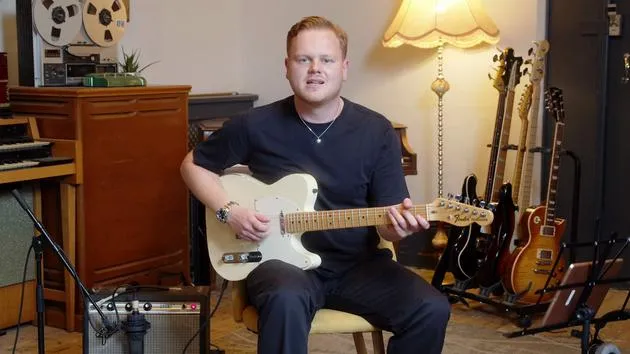
01. Introduction à la section pop et aux silences
1:14
02. Riff avec silence sur le temps 3
3:36
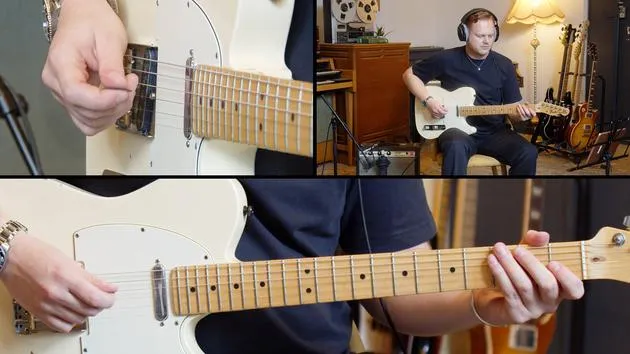
03. Riff avec silence sur le temps 3 (interprétation)
1:04
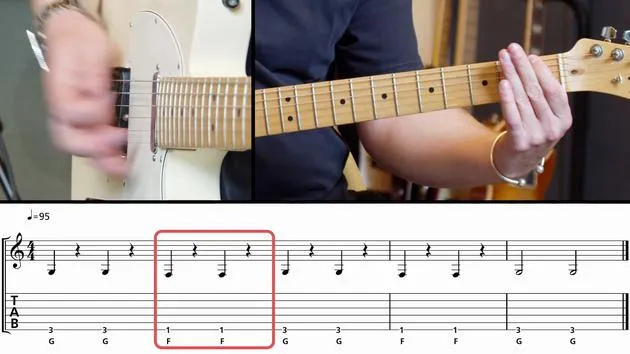
04. Riff avec la note fa et des silences
2:53
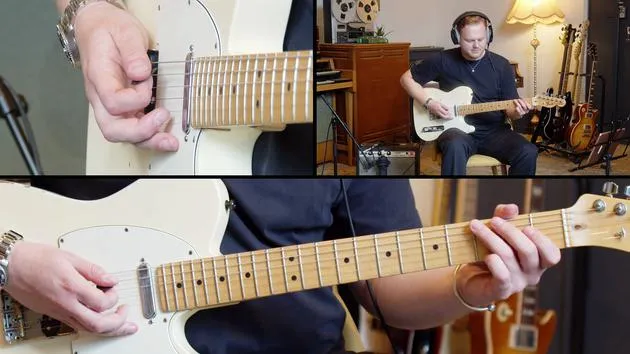
05. Riff avec la note F et silences (interprétation)
1:05
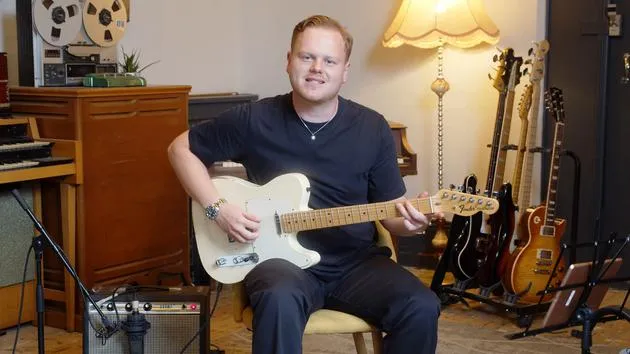
06. Mélodie avec la note C et des silences
4:59
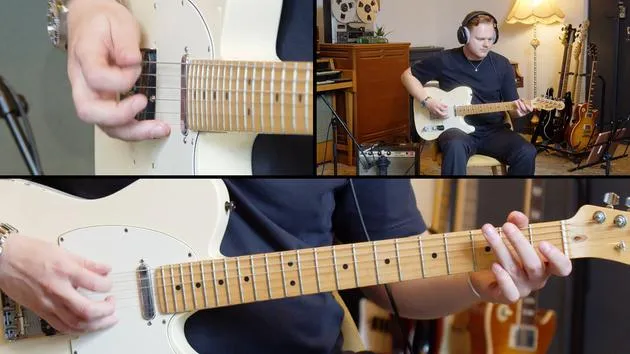
07. Mélodie avec la note Do et des silences (performance)
0:54
08. Résumé de Pop partie 1
0:55
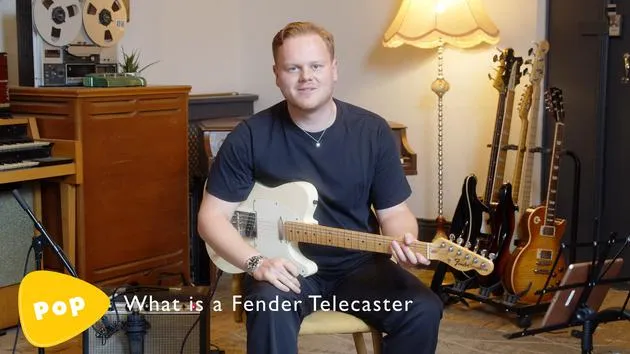
01. Qu'est-ce qu'une Fender Telecaster
1:05
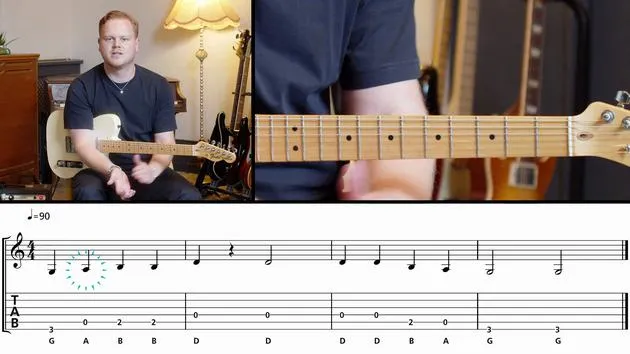
02. Mélodie avec une note Ré
3:51
03. Mélodie avec une note D (interprétation)
1:10
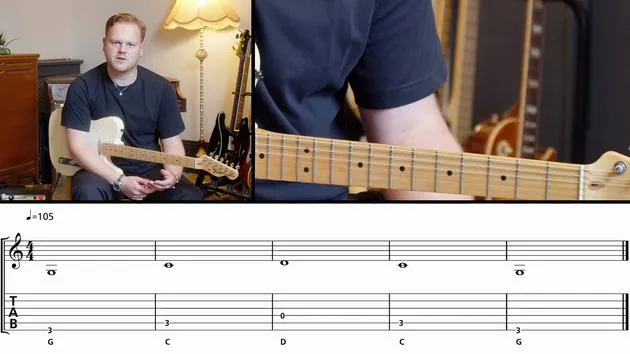
04. Mélodie avec des rondes
2:34
05. Mélodie en rondes (interprétation)
0:57
06. Riff combinant des valeurs de notes
2:32
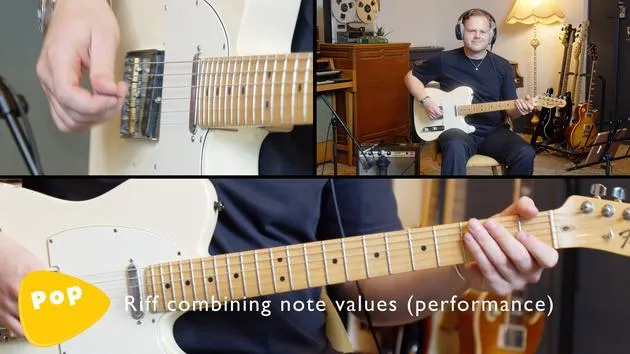
07. Riff combinant des valeurs de notes (interprétation)
1:03
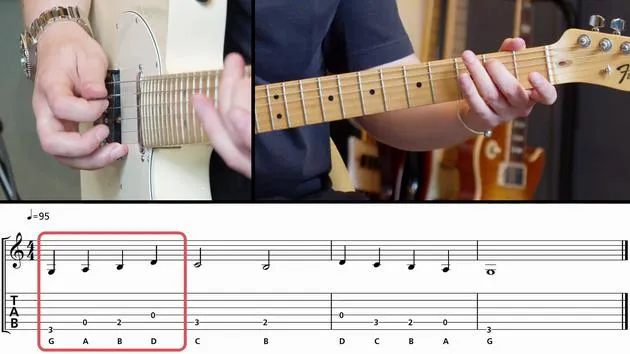
08. Party People mesures 13-16
2:23
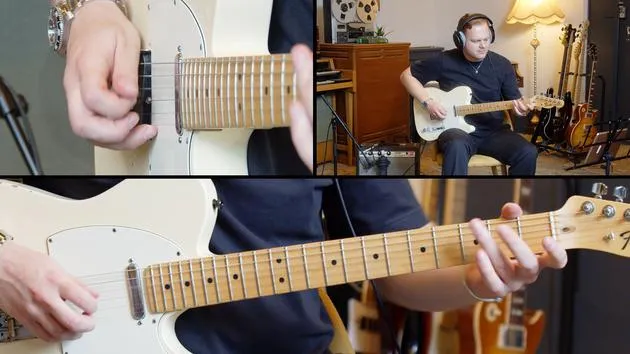
09. Party People mesures 13-16 (interprétation)
1:22
Transcription de la leçon
Understanding Your First Guitar
So you've just bought your first guitar! Before we dive into learning pieces and how to play, let's familiarize ourselves with the different parts of the instrument.
Connecting Your Guitar
If you have an electric guitar like this, you probably have an amplifier (amp) as well. To connect your guitar to the amp, you'll be using a jack lead. Here's how:
- Plug the jack lead into the input jack located at the bottom of your guitar or on the body of certain models.
- Connect the other end to your amp where it says "input."
Now you should be able to hear sound coming through the amp nicely and clearly.
The Main Areas of a Guitar
Every guitar consists of three main areas:
- Body
- Neck
- Head
This is true for both acoustic and electric guitars.
The Body
-
Sound Production: The body is where the main sound comes from.
- On an acoustic guitar, the body is thicker and has a sound hole, which projects the volume of the instrument.
- Electric guitars lack this feature, which is why we use an amplifier to transfer sound through the cable.
-
Scratch Plate:
- Not all electric guitars have a scratch plate, but yours probably does.
- The scratch plate protects your guitar from wear caused by playing with a pick over time.
-
Volume and Tone Knobs:
-
Volume Knob: Controls the output signal to the amplifier.
- When rolled all the way off, no sound comes through.
- As you raise the volume, you hear the classic guitar sound.
-
Tone Knob:
- Adjusts the amount of high-end in your sound.
- If you play a chord and adjust the tone, you'll notice a significant difference:
- Lowering the tone can give a darker, "underwater" sound.
- Raising it brings back clarity.
-
Pickup Selector
-
Pickups:
- These are magnetic devices that capture the sound of the strings and send the signal through the guitar and to the amp.
-
Functionality:
- The pickup selector acts similarly to a tone knob.
- Different pickups provide distinct sounds:
- Neck Pickup: Often bassier, as it's closer to the neck.
- Bridge Pickup: Treblier and often harsher, as it's closer to the bridge.
The Bridge
- This is where the strings are mounted to the body of the guitar.
The Strings
-
The Source of Sound: The strings are what produce sound. Without them, the guitar is just a piece of wood.
-
Configuration:
- Six strings:
- The lowest (thickest) is closest to the head.
- The thinnest (highest) is closest to the floor.
- As you pluck down the strings, the pitch increases.
- Six strings:
The Neck and Frets
- The neck is where you find all the pitches on the frets.
What is a Fret?
-
A fret is the metal strip running vertically down the neck that gives us the ability to change pitch when we press down on the strings.
-
Playing Technique:
- Push down just behind the metal fret on the wooden gap to get the clearest note.
- Avoid touching the metal strip, as it causes the note to sound rattly.
Getting the Note Right
-
Pressure:
- Ensure you apply enough pressure for a clean note.
- Too soft will result in a muted sound, while too hard can change the pitch or cause discomfort.
-
Practice:
- Move up and down the neck and experiment with different strings, as some may require more pressure than others.
The Nut
- This part keeps the spacing of the strings accurate as they run through.
The Head and Tuning Pegs
-
Tuning Pegs:
- This is where the strings go through, helping keep your guitar in tune.
-
Importance of Tuning:
- Playing with other musicians or backing tracks is difficult if your guitar is out of tune.
-
Example:
- If the lowest string is out of tune, it can make everything else sound bad.
- Simply turn the pegs to find the correct note.
Conclusion
That's all about the different parts of the guitar!
Action Step: Pause this video, examine your guitar, and try to label the parts. Rewind to check if you got them right!
Next up, we'll cover how to sit with your guitar, how to hold a pick, and eventually how to play some notes.
47 leçons
1h 40m de leçons vidéo structurées
Fonctions vidéo avancées
Ralentissez, bouclez un passage, suivez la partition
Mobile, tablette et ordinateur
Pratiquez où vous voulez
Satisfaction garantie à 100 %
Garantie remboursement 30 jours
Rencontrez votre guru
Rencontrez votre guru
Tommy Webb est un guitariste basé à Londres, titulaire d'une licence avec mention (BA Hons) en guitare de l'Academy of Contemporary Music de Guildford, où il a étudié auprès de Sandy Beales (One Direction, Wheatus) et Nicolas Meier (Jeff Beck). Son propre jeu circule librement entre rock, pop, indie, hip-hop, country et metal - précisément le terrain que couvrent ses méthodes de guitare.
Tommy a travaillé avec un large éventail d'artistes et de groupes à travers le pays, dont Jarki Monno et Indira May, partageant scènes et sessions avec les guitaristes Paul Murray (Jess Glynne, Zak Abel) et Adam Chetwood (Paolo Nutini, Mark Ronson), ainsi que les batteurs Alex Woodward (Black Honey), Luke Robinson et “Bambi Music” (N-Dubz, Lethal Bizzle, Wretch 32, Tinie Tempah).
Sur scène, il s'est produit au Jazz Cafe en première partie de la chanteuse soul Jocelyn Brown, ainsi que dans des salles et festivals comme Ronnie Scott's, Troy Bar, The Watford Colosseum, Camden Assembly, Kensington Roof Gardens, Notting Hill Arts Club, Meraki Festival et Sundown Festival.
Sur disque et à la radio, Tommy a enregistré des sessions live pour BBC Three Counties Introducing, Vibe FM et Pulse 88, avec des morceaux diffusés sur BBC Radio 1 et Radio 2. Il a enregistré dans des studios comme South Lanes Brighton, Hempstead Road et Titan Studios, auprès de producteurs tels que Steph Carter (Gallows, Lyoness) et TMS / Froe Barnes (Lewis Capaldi, Dua Lipa).
Dans ses méthodes de guitare, Tommy vous transmet tout ce savoir-faire de musicien en activité - en enseignant les techniques, les sonorités et le feeling qui se cachent derrière des styles bien réels, du rock et de la pop à l'indie, au hip-hop, au country et au metal - pour que vous puissiez jouer la musique que vous aimez vraiment.







