Contrat de disque

Avec
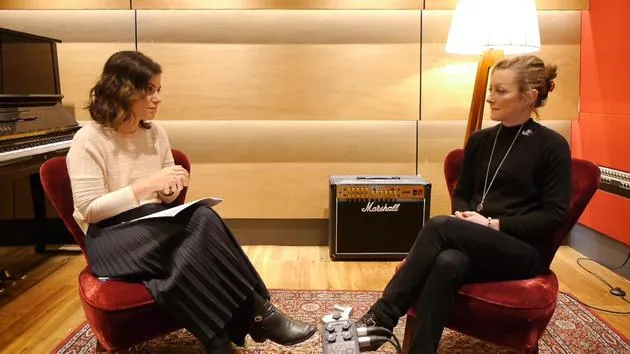
Imogen HeapUn regard en termes simples sur le fonctionnement des contrats de disque : licence contre cession des droits d'auteur, et ce que signifie un contrat 360 (droits annexes) pour les revenus au-delà de la musique, comme le merchandising.
Le contenu du cours
44 leçons (2h 11min) · 1 gratuites
01. Rencontre les managers, pourquoi tu en as besoin et ce qu'ils font
2:35
02. Trouver un management : ce que recherchent les managers
Leçon gratuite4:39
03. La nature de la relation artiste-manager
5:18

04. Se comporter en professionnel
2:50
05. Qui ensuite ? Construire ton équipe
2:14
06. Commission habituelle des managers
2:56
01. Comprendre ton activité et ses investisseurs
3:51
02. Le financement par les amis et la famille
1:55
03. Financement par subventions
2:41
04. Le crowdfunding
4:18
05. Le modèle de Pledge Music
5:01
06. Sponsoring et partenariats de marque
3:03
07. Financement par emprunt
2:51
08. Investissement en capital
2:35












Transcription de la leçon
Understanding Record Contracts: A Guide for Artists
Fundamentally, as I said, it's about you as an artist providing recording services to the record label. The label will then tend to own the copyright in the result of those services.
Ownership Types
- License: This is sort of owning it for a period of time.
- Assignment: This is a complete transfer of ownership to the label, meaning the artist won't own it anymore.
That's the fundamentals. But then, there are a lot more things to consider.
360 Degree Deals
A lot of people have heard of 360-degree deals, or all rights or ancillary rights deals. What these really are is record labels seeking to take an interest or cut of income from artists' other income sources.
Common Income Sources
- Live Income: A percentage cut from live performances.
- Merchandising: A cut from merchandise sales.
- Publishing: Occasionally, a look at publishing as well.
Justification for 360 Deals
Record labels are essentially investors in new talent. They have the infrastructure to release recordings and are looking for a return on their investment.
So, they not only want artist recording services to create recordings but also want to secure their investment. They might say, "we also want to have something else coming from the artist," such as:
- A cut of your live income
- A cut of your merchandising
The Artist's Perspective
It won't be surprising to feel that many labels can seem quite greedy, wanting everything from the artist for little return. This brings up an important point:
Value Exchange
What is actually being taken and what value is passing either way? As an artist, you shouldn't just think:
"I just want to be signed; I'll give all these really valuable things."
Instead, consider the following:
- You can offer your recording services.
- You can agree to a cut of your live income.
- You can allow a cut of your publishing.
Think About What the Label Offers
You must also assess what the label is going to do for you as an artist. Look for:
- Commitment to Release: When will they release your recordings?
- Promotion: What kind of budget will they allocate for promotion?
- Research Their Team: Look into their distributors and press teams.
Key Negotiation Points
It's essential to get as much of this information in the record contract as possible. Many labels will boast:
"We have a great team, great distributors, great press teams, we'll make a success of it,"
but won't commit to it in writing.
Conclusion
When negotiating, think about this: If you, as an artist, are going to give all these valuable, often exclusive rights to a record label, you want reassurance that they will make the best use of these rights and collaborate with the right people.
44 leçons
2h 11m de leçons vidéo structurées
Fonctions vidéo avancées
Ralentissez, bouclez un passage, suivez la partition
Mobile, tablette et ordinateur
Pratiquez où vous voulez
Satisfaction garantie à 100 %
Garantie remboursement 30 jours
Rencontrez votre guru
Rencontrez votre guru
Imogen Heap est une chanteuse, autrice-compositrice, productrice et technologue anglaise récompensée aux Grammy Awards, dont l'influence traverse deux décennies de pop, d'électro et de musique de film — ainsi qu'une grande partie de la technologie que les artistes d'aujourd'hui tiennent pour acquise.
Née à Londres en 1977 et formée classiquement au piano, au violoncelle et à la clarinette, elle publie son premier album 'iMegaphone' en 1998 avant de former le duo Frou Frou avec le producteur Guy Sigsworth, dont la chanson 'Let Go' touche un public mondial grâce au film Garden State. Son album 'Speak for Yourself' (2005), entièrement écrit et produit par ses soins, contient 'Hide and Seek', morceau a cappella devenu culte, qui propulsera plus tard le nº 1 de Jason Derulo 'Whatcha Say' et 'Goodnight n Go' d'Ariana Grande, et continue de conquérir de nouvelles générations d'auditeurs.
'Ellipse' (2009) remporte le Grammy dans la catégorie Best Engineered Album, Non-Classical — enregistré dans son studio personnel — et elle coécrit et produit ensuite 'Clean' sur '1989' de Taylor Swift, sacré album de l'année aux Grammy. Elle a également composé la musique de la pièce 'Harry Potter and the Cursed Child'.
Innovatrice infatigable, Heap a développé les gants gestuels MI.MU — salués par trois doctorats honorifiques — et fondé Mycelia et The Creative Passport, des initiatives qui bâtissent un écosystème de données plus équitable pour les artistes. En 2024, elle revient avec 'What Have You Done to Me?', créé avec Mogen, son alter ego vocal issu de l'IA, tandis que la résurgence virale de 'Headlock' fait découvrir sa musique à des millions de nouveaux fans.