La nature de la relation artiste-manager

Avec
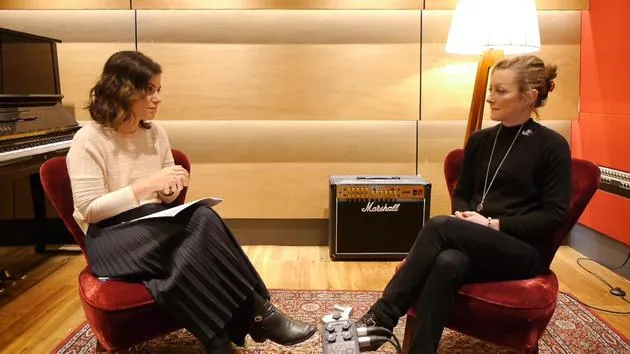
Imogen HeapCe qui fait la force d'une relation artiste-manager : trouver quelqu'un qui partage ta vision et surmonter les désaccords qui viennent inévitablement avec.
Le contenu du cours
44 leçons (2h 11min) · 1 gratuites
01. Rencontre les managers, pourquoi tu en as besoin et ce qu'ils font
2:35
02. Trouver un management : ce que recherchent les managers
Leçon gratuite4:39
03. La nature de la relation artiste-manager
Tu es ici5:18
04. Se comporter en professionnel
2:50
05. Qui ensuite ? Construire ton équipe
2:14
06. Commission habituelle des managers
2:56
01. Comprendre ton activité et ses investisseurs
3:51
02. Le financement par les amis et la famille
1:55
03. Financement par subventions
2:41
04. Le crowdfunding
4:18

05. Le modèle de Pledge Music
5:01
06. Sponsoring et partenariats de marque
3:03
07. Financement par emprunt
2:51
08. Investissement en capital
2:35
Transcription de la leçon
The Art of Management: Building Relationships in Music
I think management is a very personal relationship. If you can't form a personal working relationship with that person, it's going to be really hard.
Shared Vision
It's about having that shared vision still. So, I don't know whether it is an entrepreneurial thing, but it is about:
- Having a shared vision with an artist
- Understanding them
- Working with them to deliver what they want
This can be accomplished in many ways. Some people are desk bangers and shout and scream at everyone, while others are very quiet and do things in completely different ways.
The Manager-Artist Dynamic
It's down to:
- The relationship with the artist
- The relationship with all the people outside
In the slightly more old-fashioned artist manager setup, it was maybe more of a dictatorship within that management-artist relationship. The manager often called the shots as a facilitator and had, I guess, a self-perceived power within that relationship. However, it doesn't really work like that for me.
Most people who work in modern artist management recognize that the artist is the center point for all of the power and decision-making within that relationship.
Navigating Conflicts
The most difficult challenge is when you're doing business with someone and it's not necessarily the record label. Very often, it is the record label, but it could be somebody else. You're representing the interests of the artist, but you may actually disagree with the artist while agreeing with the other side.
- What the other people are saying is completely sane and rational, and it's exactly the right thing that you should be doing.
- For whatever reason, the artist may not see that.
This creates a difficult situation because, very often, the artist interprets your position as being against them. They may think, "You're supposed to be on my side. You're supposed to be looking after my interests. Why are you siding with the other side?"
The Role of the Manager
The most important part of being an artist manager is remembering all the time that you work for the artist as a client. You are:
- Offering a service
- Commissioning off their income based on that service
Ultimately, the decision is always in the artist's hands about what option they take.
If there are a series of options in front of them and you're advising them on the right direction, but they disagree with you, you need to respectfully take that on board and go in the direction that they want to go.
Strategies for Resolution
For the most part, we're always on the same page, but as is human nature, sometimes that's not the case. I think the way to overcome it is to build a foundation of impartiality over time.
- You can't dismiss everything the artist says.
- You should say, "Okay, let's think about what it is you're trying to do here. Let's deconstruct it and talk about it rationally."
Keeping things on rational terms is essential, avoiding getting too personal or emotional.
From the artist's point of view, it's important to:
- Be open to criticism
- Be open to fresh ideas
- Recognize that other people may have a greater understanding of certain things
Prioritizing Disputes
When dealing with disputes, remember to prioritize their importance. Some arguments are more significant than others. One of the most common and most difficult arguments to resolve is picking a single.
An artist may have recorded 10 tracks for an album, and you would hope they love all of them equally. However, they often don't. It's always the obvious singles that they may not favor as much.
If a record label says that's the single, the artist might often say, "No, no, not that one."
- You have to be patient.
- You also have to be impartial.
One critical piece of advice for any artist is: The labels are the ones investing. They have promo teams who need to work it, radio, TV, and within the media in general.
If it's their decision, you have to hold them to it and ensure they deliver on it.
Finding Common Ground
In the end, you have to find your way of working and establish common ground. Remember, you can't have everything your own way. Ultimately, it's about individuals, human beings, figuring it out together.
At the end of the day, it's difficult, almost like being married. You should be as one; if you're not, it probably isn't going to work.
44 leçons
2h 11m de leçons vidéo structurées
Fonctions vidéo avancées
Ralentissez, bouclez un passage, suivez la partition
Mobile, tablette et ordinateur
Pratiquez où vous voulez
Satisfaction garantie à 100 %
Garantie remboursement 30 jours
Rencontrez votre guru
Rencontrez votre guru
Imogen Heap est une chanteuse, autrice-compositrice, productrice et technologue anglaise récompensée aux Grammy Awards, dont l'influence traverse deux décennies de pop, d'électro et de musique de film — ainsi qu'une grande partie de la technologie que les artistes d'aujourd'hui tiennent pour acquise.
Née à Londres en 1977 et formée classiquement au piano, au violoncelle et à la clarinette, elle publie son premier album 'iMegaphone' en 1998 avant de former le duo Frou Frou avec le producteur Guy Sigsworth, dont la chanson 'Let Go' touche un public mondial grâce au film Garden State. Son album 'Speak for Yourself' (2005), entièrement écrit et produit par ses soins, contient 'Hide and Seek', morceau a cappella devenu culte, qui propulsera plus tard le nº 1 de Jason Derulo 'Whatcha Say' et 'Goodnight n Go' d'Ariana Grande, et continue de conquérir de nouvelles générations d'auditeurs.
'Ellipse' (2009) remporte le Grammy dans la catégorie Best Engineered Album, Non-Classical — enregistré dans son studio personnel — et elle coécrit et produit ensuite 'Clean' sur '1989' de Taylor Swift, sacré album de l'année aux Grammy. Elle a également composé la musique de la pièce 'Harry Potter and the Cursed Child'.
Innovatrice infatigable, Heap a développé les gants gestuels MI.MU — salués par trois doctorats honorifiques — et fondé Mycelia et The Creative Passport, des initiatives qui bâtissent un écosystème de données plus équitable pour les artistes. En 2024, elle revient avec 'What Have You Done to Me?', créé avec Mogen, son alter ego vocal issu de l'IA, tandis que la résurgence virale de 'Headlock' fait découvrir sa musique à des millions de nouveaux fans.