



Structure et techniques de travail
Avec
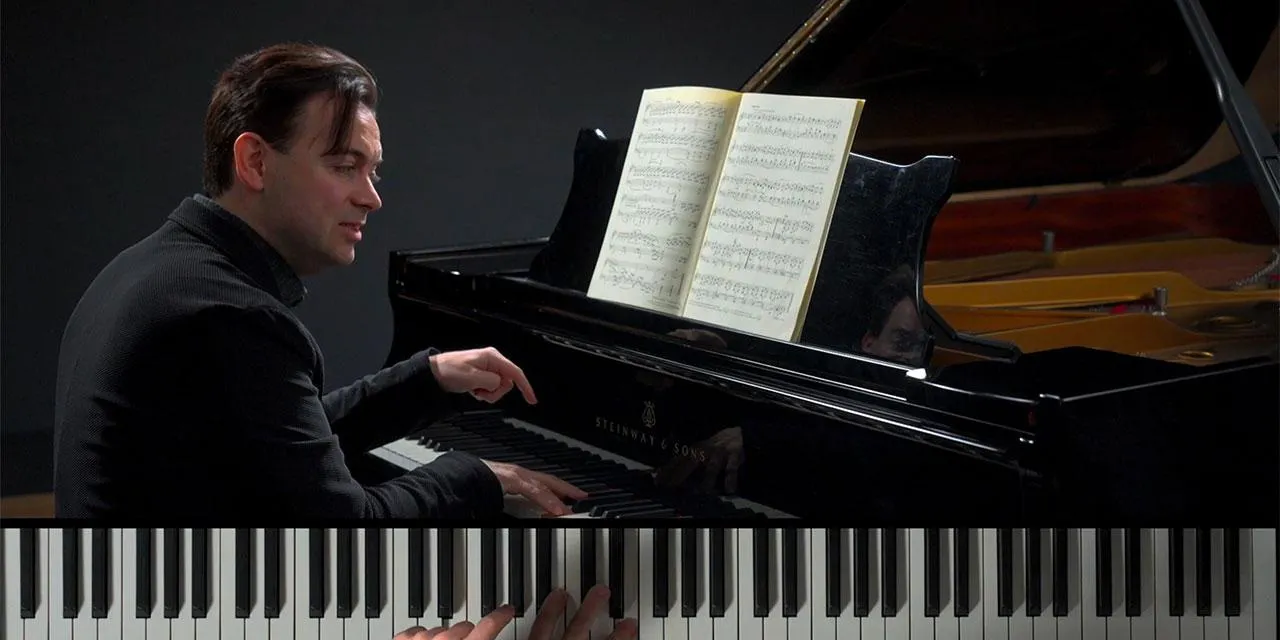
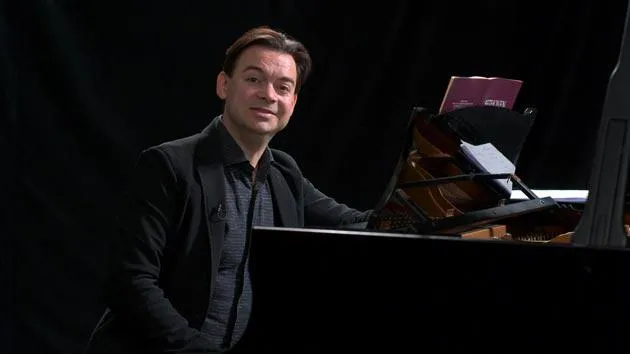
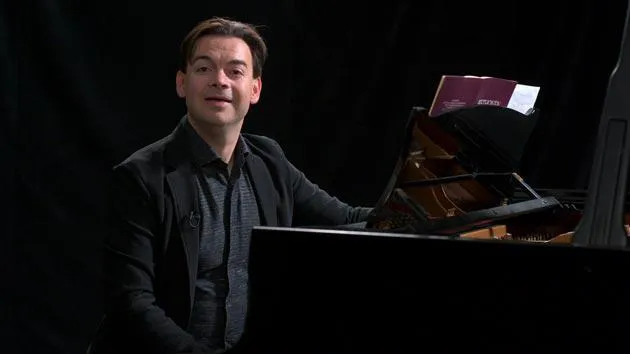
Dejan LazićDejan Lazić décompose la forme du troisième mouvement virtuose et montre comment travailler les figures rapides de la main droite - doigté, position de la main et économie d'énergie à travers le plus difficile des trois mouvements.
Le contenu du cours
20 leçons (2h 4min) · 1 gratuites
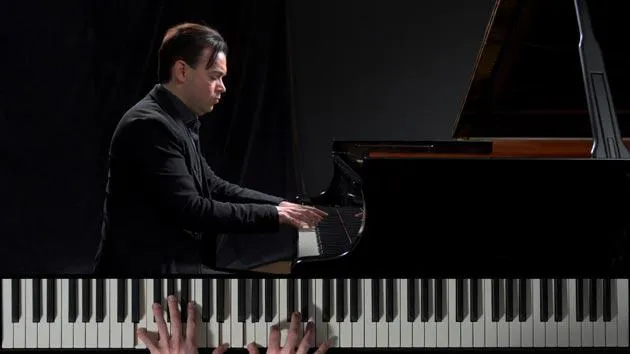
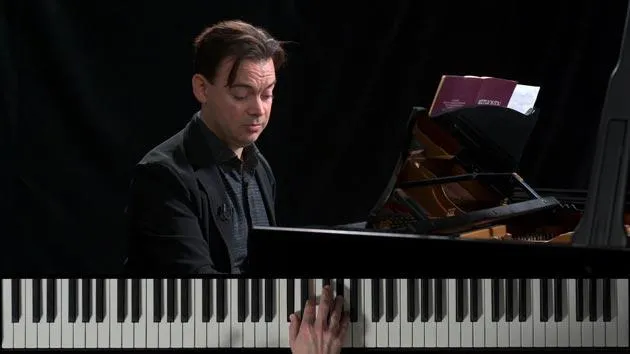
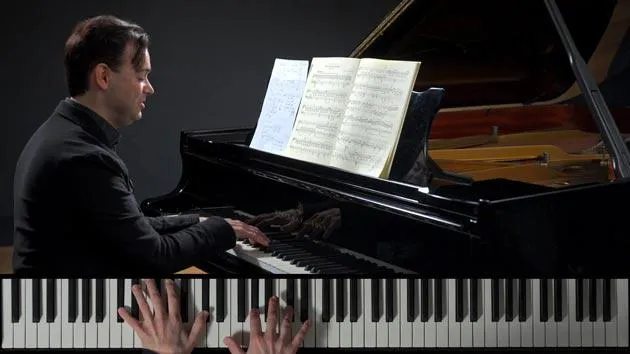
Transcription de la leçon
Beethoven's Moonlight Sonata: Third Movement
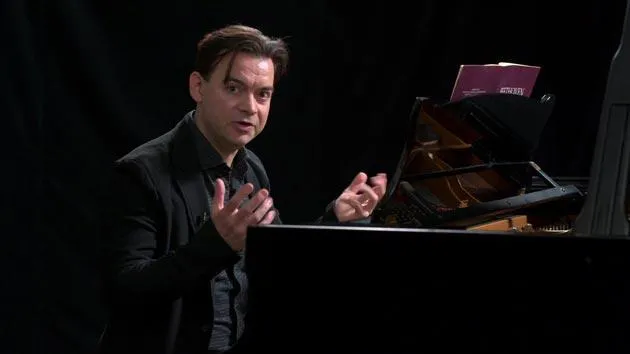
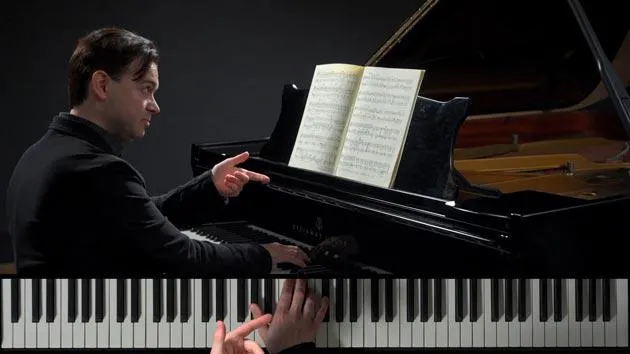
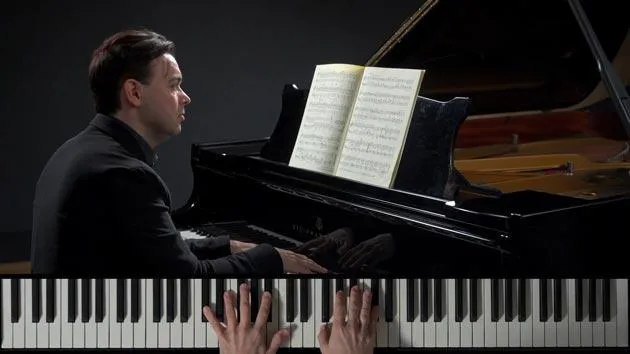
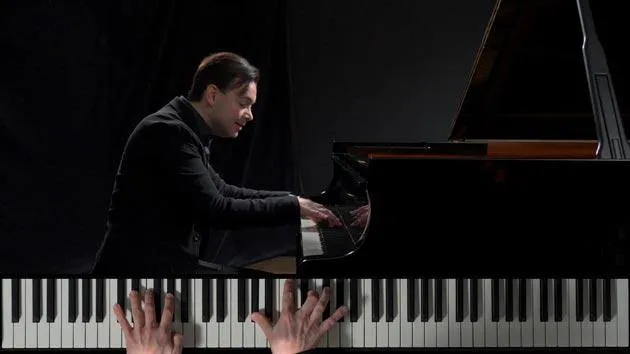
Hi, everyone! We're back with Beethoven and his Moonlight Sonata. Let's dive immediately into the opening of the third movement, which is the most virtuosic one. In a sense, virtuosity here does mean fast; you need fast fingers.
Practicing Fast Passages
I'll try to show you how to:
- Practice those passages
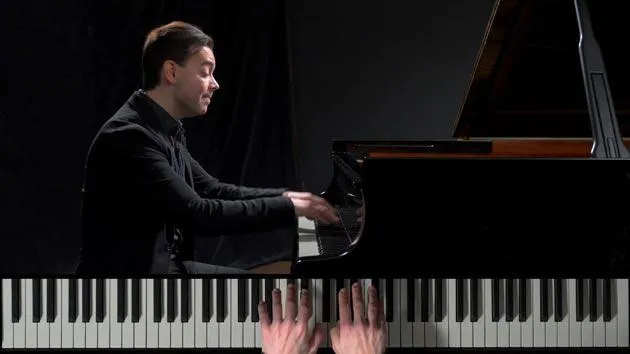
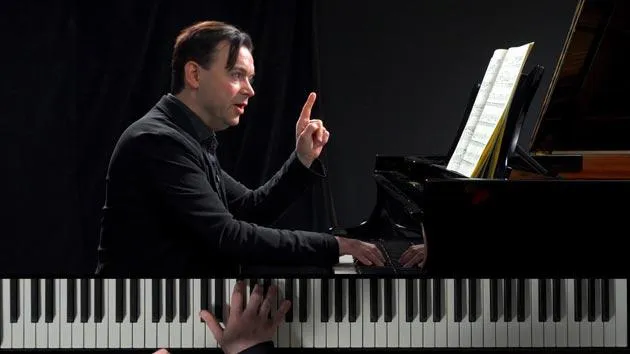
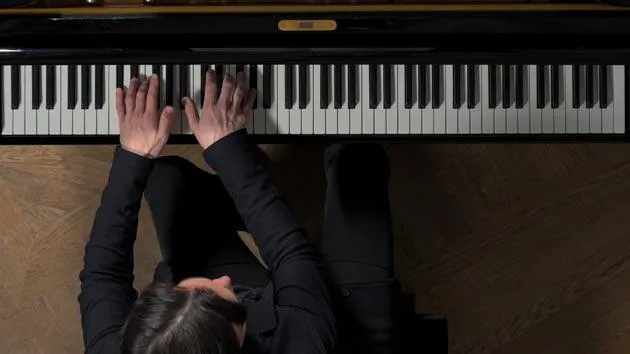
- Use proper hand position
- Manage finger interconnection between 3 and 4
This is very important because, for these passages, you will always need fingers 1, 2, and 5. But for the third note in a row, you will have to decide between three or four.
Look here:
- First broken chord
- Second broken chord
These are all inversions of C sharp minor.
Fingerings to Remember
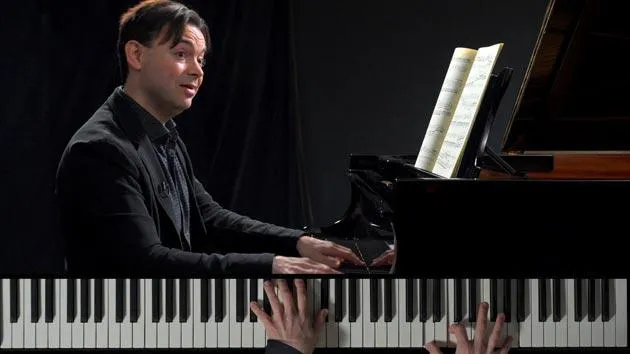
- With an upper octave, I use 3,
- Then again 3, now 4,
- And then we repeat the whole thing again: 3, 3, 4.
So, it's essential to practice slowly, regardless of whether you're a beginner or an advanced student, whether you're already a concert pianist.
I started playing this piece back in the 80s, and I still feel challenged by it every time anew. Whenever you come back to it, always remember to practice slowly because every figure matters.
For instance, here we have the broken C sharp minor chord right at the beginning.
Then we go to the dominant:
- For this one, I'm using third in the middle, fourth, fourth, and then again: 3, 4, 4 (the other way around).
- Next, we reach C sharp major, which acts here as A dominant to F sharp minor.
Structure of the Piece
We have groups of two bars, two bars, two bars. The first six bars are divided into pairs:
- Once you get those three figures right and repeat them, you're set.
- And again, the same principle for the third time around.
So, this is how you practice:
- Know the exact chord.
- Break that chord.
Bar Seven
In bar seven, we have only one bar, meaning we have just that one position. We also have repeats and a new harmony with A in the bass.
This is very important, and it recurs throughout the piece.
Whenever this motif returns, think of it as an engine. The tempo indication is presto agitato, meaning it's very fast and agitated.
Left Hand Technique
When you have the left hand really short, imagine a bassoon player. Everything is in piano except for this very last outburst of sforzando.
Then again, piano outburst and repeat the same.
We are really here agitated yet very soft.
Practicing Dynamics
- Remember to practice slowly, and you can increase the tempo.
- You can even practice with accents to emphasize crucial moments.
Over time, once you've sorted out all:
- Fingering issues
- Balance issues
- Proper harmonies
You can then increase the tempo.
Key Dynamics to Remember
- Stay in piano,
- Transition to sforzando, piano, sforzando, piano,
- In bar seven, we have a crescendo that spans two bars, bringing us finally to forte.
I will play this first beat until the fermata. Here, you finally reach forte!
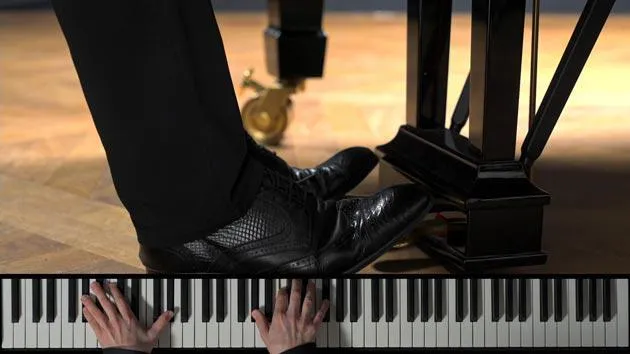
Remember that pedal tone issue from the first movement with the low bass line G sharp? It comes up again here.
So listen:
- I didn't play forte the rest so you can concentrate.
Again, it's the same thematic material that Beethoven uses, connecting movements 1 and 3.
Finally, when we reach this G sharp, we start a new french piano.
Looking Ahead
In the next lesson, we'll explore:
- Alberti basses
- The return of this famous Neapolitan chord
- Much more!
I look forward to welcoming you back then!
20 leçons
2h 4m de leçons vidéo structurées
Fonctions vidéo avancées
Ralentissez, bouclez un passage, suivez la partition
Mobile, tablette et ordinateur
Pratiquez où vous voulez
Satisfaction garantie à 100 %
Garantie remboursement 30 jours
Rencontrez votre guru
Rencontrez votre guru
Les interprétations neuves du répertoire par Dejan Lazić l'ont imposé comme l'un des solistes les plus singuliers et les plus inhabituels de sa génération. Il se produit régulièrement avec les plus grands orchestres du monde, notamment les orchestres symphoniques de Boston et de Chicago, le Budapest Festival Orchestra, le Royal Concertgebouw Orchestra, le London Philharmonic, le Philharmonia Orchestra, le NDR Elbphilharmonie Orchester, ainsi que les orchestres de chambre d'Australie, de Bâle et des Pays-Bas, et il a noué d'étroites collaborations avec des chefs tels que Giovanni Antonini, Iván Fischer, Michael Francis, Andris Nelsons, Ivan Repušić, Thomas Søndergård, Robert Spano, John Storgårds, Krzysztof Urbański et Jan Willem de Vriend.
Dejan Lazić a publié de nombreux CD chez Channel Classics et Onyx Classics, ainsi qu'un enregistrement du Triple Concerto de Beethoven pour Sony Classical. Son enregistrement en direct du Concerto pour piano n° 2 de Rachmaninov avec le London Philharmonic Orchestra et Kirill Petrenko a reçu le prix allemand "Echo Klassik". Il jouit également d'un large public en Extrême-Orient et déploie une intense activité de récitaliste et de chambriste, se produisant régulièrement dans de grands festivals internationaux.
Les compositions de Dejan Lazić reçoivent une reconnaissance croissante, et il a été engagé comme compositeur par le groupe d'édition Sikorski Music Publishing en 2015. Son arrangement du Concerto pour violon de Brahms en Concerto pour piano "n° 3" a été créé et enregistré avec l'Atlanta Symphony Orchestra et Robert Spano en 2009 et connaît depuis un grand succès continu, aux BBC Proms, au Concertgebouw d'Amsterdam, au Festival de Pâques de Hambourg et au Festival Chopin de Varsovie, sur les deux continents américains et au Japon. Son Concerto pour piano dans le style istrien (Op. 18) a été créé à l'Aspen Music Festival en 2014 et a depuis été joué dans toute l'Europe et aux États-Unis. Parmi ses autres œuvres figurent diverses pièces orchestrales, de chambre et pour piano, des cadences, ainsi que plusieurs arrangements d'œuvres de Mozart, Schubert, R. Strauss, Wagner et Debussy.
Dejan Lazić est né à Zagreb, en Croatie, dans une famille de musiciens. Il a grandi à Salzbourg, en Autriche, où il a étudié au Mozarteum (piano, clarinette et composition). Ses premières rencontres avec Zoltán Kocsis et Imre Rohmann au Festival Bartók de Hongrie ont été décisives pour sa carrière artistique, tout comme l'influence considérable de Peter Eötvös. Dejan Lazić vit à Amsterdam.
Dans Master Moonlight Sonata by Beethoven, Dejan partage la réflexion qui sous-tend ces interprétations acclamées, te guidant à travers les trois mouvements de l'une des œuvres les plus aimées du répertoire pianistique afin que tu puisses la façonner avec une véritable compréhension plutôt que par imitation. www.dejanlazic.com







