



Introduction

Avec
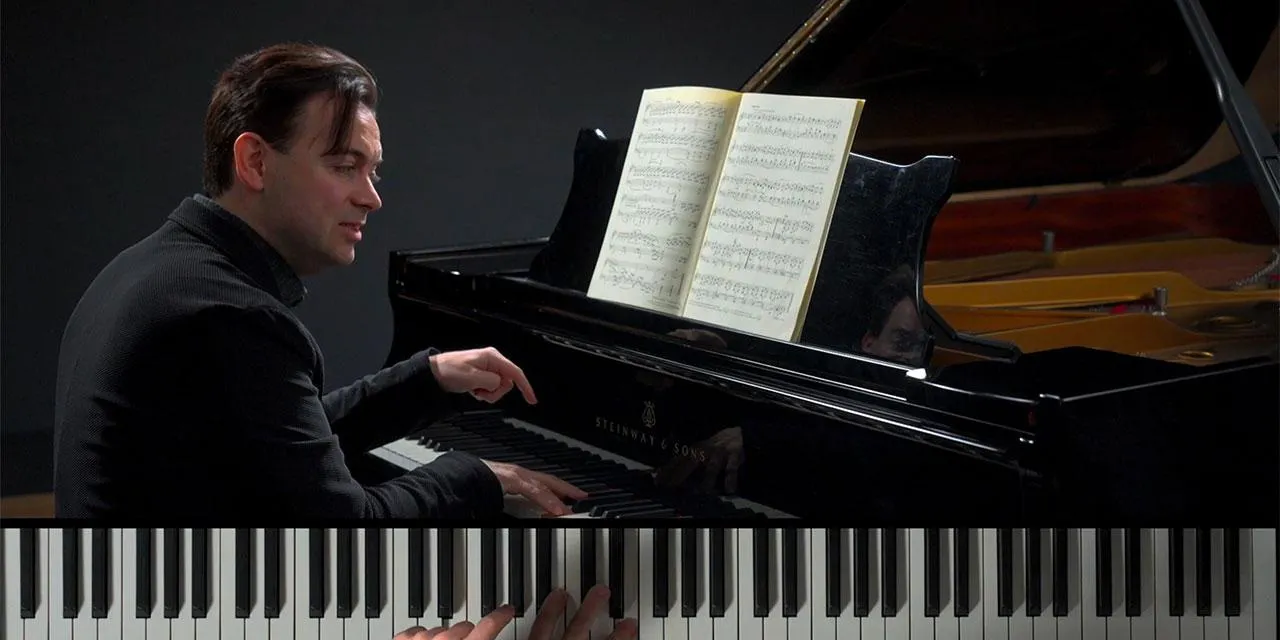
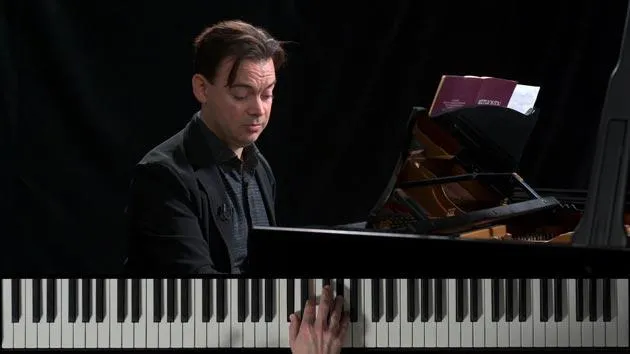
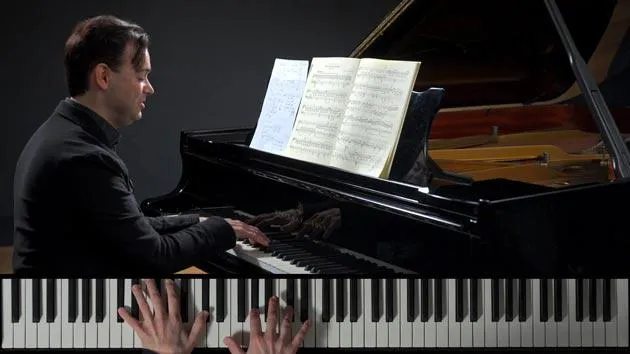
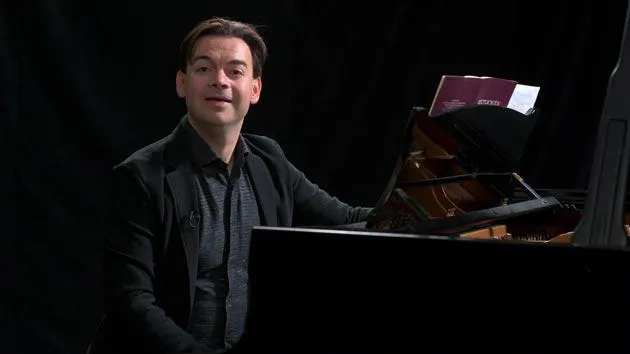
Dejan LazićDejan Lazić présente le premier mouvement de la Sonate au Clair de Lune de Beethoven, avec l'histoire derrière son surnom et l'atmosphère en do dièse mineur qui la caractérise.
Le contenu du cours
20 leçons (2h 4min) · 1 gratuites
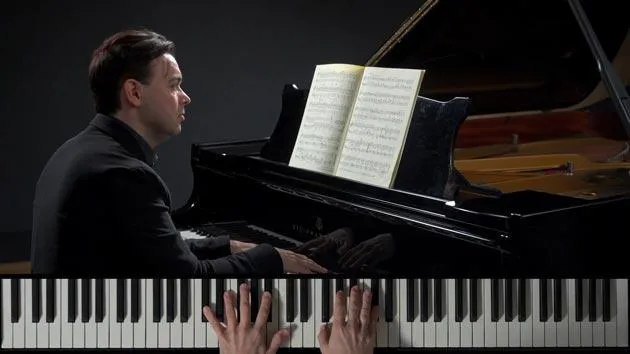
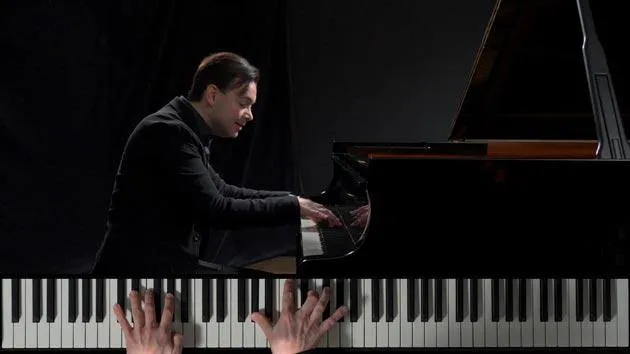
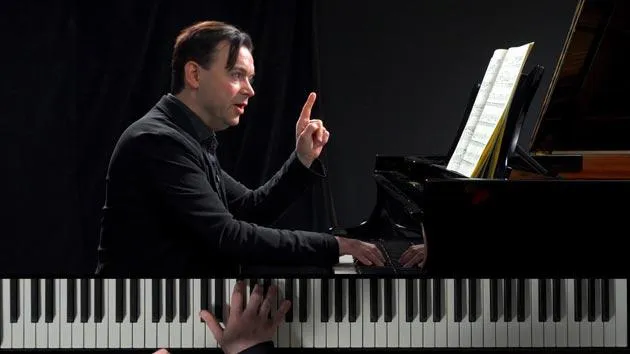
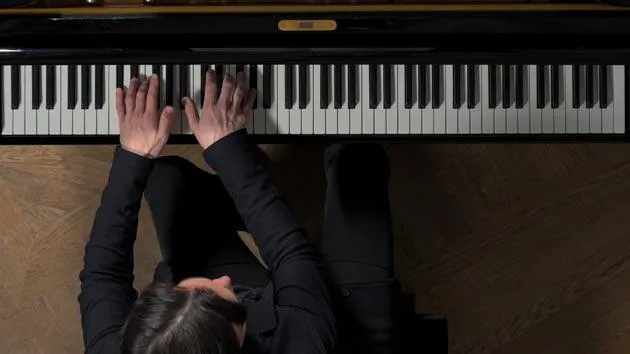
Transcription de la leçon
Welcome to the Moonlight Course: Exploring Beethoven's Famous "Moonlight Sonata"
Hello and welcome back to the Moonlight Course, focusing on Beethoven's famous "Moonlight Sonata."
Background of This Great Work
Before we start, let's dive into a bit of the background of this exceptional piece:
-
Title Origin: The name "Moonlight Sonata" wasn't given by Beethoven. It was bestowed five years after his death by a German critic and poet, Ludwig Rellstab. He was inspired by the serene beauty of Lake Lucerne in Switzerland, imagining moonlight shimmering on its surface.
-
Rejection of the Title: Many musicians later rejected this title; for instance, the very opening motive evokes:
- A punctuated rhythm
- An adagio in a very slow pace
- A minor key, which gives it somber, dark qualities
Structure of the Sonata
The piece features three movements, each with distinct characteristics:
-
First Movement:
- Begins with those famous triplets, creating a melody that appears to come from nowhere.
- In C-sharp minor.
-
Second Movement:
- Called the "flower between the two abysses" by Franz Liszt.
- This is the only movement with major qualities, specifically in D-flat major, which gives it a much more cheerful essence.
-
Third Movement:
- A dramatic outburst of passion and technical challenge, in stark contrast to the previous movements.
The Importance of Pedalization
In our lessons, we will explore the entire work movement by movement, focusing on different aspects, such as pedalization:
-
Beethoven's Instructions: The first remark in Italian states:
"Si deve sonare tutto questo pezzo delicatissimamente e senza sordino,"
which translates to:
"One should play this piece with utmost delicacy and without sustained pedal."
-
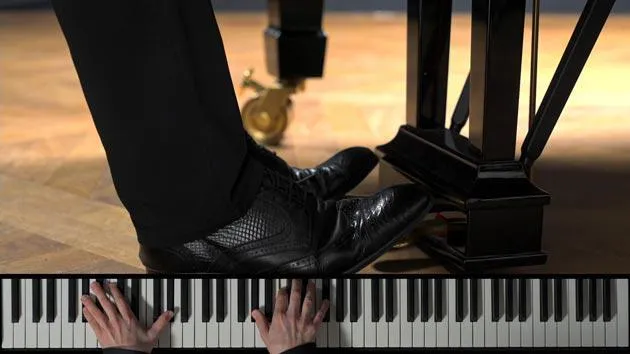
This means the whole piece should be played through with one pedal. With modern instruments, like the Steinway we have, adaptations may be necessary on a case-by-case basis.
Personal Connection
This piece was cherished by many musicians and composers. It was written for Giulietta Guicciardi, a pupil of Beethoven, who was also considered a love interest.
Title of the Sonata
Unlike the "Moonlight" title, Beethoven did give this sonata a title: Sonata Quasi Una Fantasia, meaning "Sonata in the manner of a Fantasy." This highlights the unconventional structure of the three movements:
- First Movement: Slow, soft (Adagio sostenuto sempre pianissimo)
- Second Movement: A minuet-like dance
- Third Movement: Fast and impassioned
Conclusion
I look forward to delving deeper into this wonderful sonata with you, exploring all of its intricate details and uncovering what Beethoven truly meant with this remarkable work.
20 leçons
2h 4m de leçons vidéo structurées
Fonctions vidéo avancées
Ralentissez, bouclez un passage, suivez la partition
Mobile, tablette et ordinateur
Pratiquez où vous voulez
Satisfaction garantie à 100 %
Garantie remboursement 30 jours
Rencontrez votre guru
Rencontrez votre guru
Les interprétations neuves du répertoire par Dejan Lazić l'ont imposé comme l'un des solistes les plus singuliers et les plus inhabituels de sa génération. Il se produit régulièrement avec les plus grands orchestres du monde, notamment les orchestres symphoniques de Boston et de Chicago, le Budapest Festival Orchestra, le Royal Concertgebouw Orchestra, le London Philharmonic, le Philharmonia Orchestra, le NDR Elbphilharmonie Orchester, ainsi que les orchestres de chambre d'Australie, de Bâle et des Pays-Bas, et il a noué d'étroites collaborations avec des chefs tels que Giovanni Antonini, Iván Fischer, Michael Francis, Andris Nelsons, Ivan Repušić, Thomas Søndergård, Robert Spano, John Storgårds, Krzysztof Urbański et Jan Willem de Vriend.
Dejan Lazić a publié de nombreux CD chez Channel Classics et Onyx Classics, ainsi qu'un enregistrement du Triple Concerto de Beethoven pour Sony Classical. Son enregistrement en direct du Concerto pour piano n° 2 de Rachmaninov avec le London Philharmonic Orchestra et Kirill Petrenko a reçu le prix allemand "Echo Klassik". Il jouit également d'un large public en Extrême-Orient et déploie une intense activité de récitaliste et de chambriste, se produisant régulièrement dans de grands festivals internationaux.
Les compositions de Dejan Lazić reçoivent une reconnaissance croissante, et il a été engagé comme compositeur par le groupe d'édition Sikorski Music Publishing en 2015. Son arrangement du Concerto pour violon de Brahms en Concerto pour piano "n° 3" a été créé et enregistré avec l'Atlanta Symphony Orchestra et Robert Spano en 2009 et connaît depuis un grand succès continu, aux BBC Proms, au Concertgebouw d'Amsterdam, au Festival de Pâques de Hambourg et au Festival Chopin de Varsovie, sur les deux continents américains et au Japon. Son Concerto pour piano dans le style istrien (Op. 18) a été créé à l'Aspen Music Festival en 2014 et a depuis été joué dans toute l'Europe et aux États-Unis. Parmi ses autres œuvres figurent diverses pièces orchestrales, de chambre et pour piano, des cadences, ainsi que plusieurs arrangements d'œuvres de Mozart, Schubert, R. Strauss, Wagner et Debussy.
Dejan Lazić est né à Zagreb, en Croatie, dans une famille de musiciens. Il a grandi à Salzbourg, en Autriche, où il a étudié au Mozarteum (piano, clarinette et composition). Ses premières rencontres avec Zoltán Kocsis et Imre Rohmann au Festival Bartók de Hongrie ont été décisives pour sa carrière artistique, tout comme l'influence considérable de Peter Eötvös. Dejan Lazić vit à Amsterdam.
Dans Master Moonlight Sonata by Beethoven, Dejan partage la réflexion qui sous-tend ces interprétations acclamées, te guidant à travers les trois mouvements de l'une des œuvres les plus aimées du répertoire pianistique afin que tu puisses la façonner avec une véritable compréhension plutôt que par imitation. www.dejanlazic.com







