



Équilibre

Avec
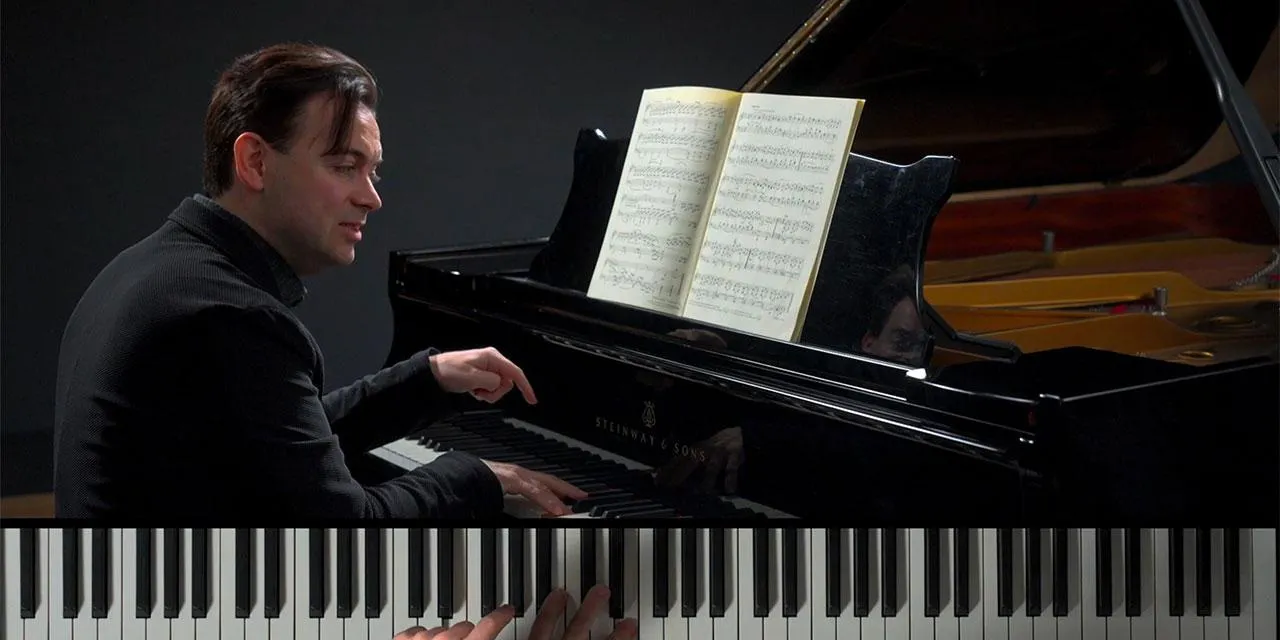
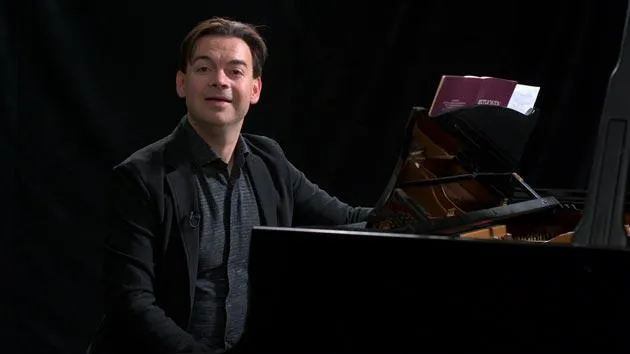
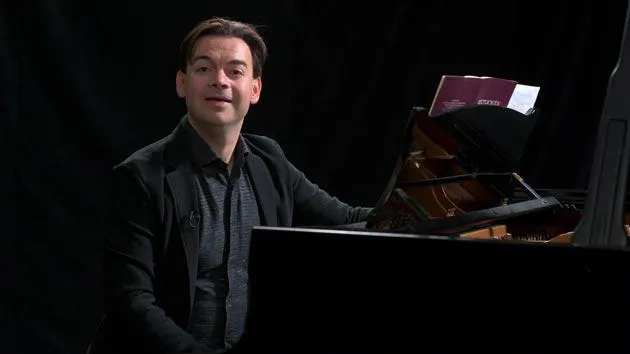
Dejan LazićDans cette leçon, Dejan montre comment obtenir au mieux un bon équilibre entre les rôles des deux mains.
Le contenu du cours
20 leçons (2h 4min) · 1 gratuites
Transcription de la leçon
Understanding Balance in Beethoven's Moonlight Sonata's Second Movement
Hi, everyone.
Let's talk about balance in this second movement of Beethoven's Moonlight Sonata.
The Challenge of Two Hands
Of course, having two hands is sometimes a burden. When playing the piano, we should, for instance, in the first movement, obey three main features:
- Two features in the right hand:
- The melody
- The accompaniment (the triplets)
- The basis in the left hand.
Yet, it should all sound equal, not one more dominant than the other.
Phrasing and Voicing
Now, in the second movement, when we address matters of balance, we also talked about:
- Phrasing
- Voicing
- Balance between the voices and between the hands.
This is not always the exact same thing.
Demonstration of the Trio
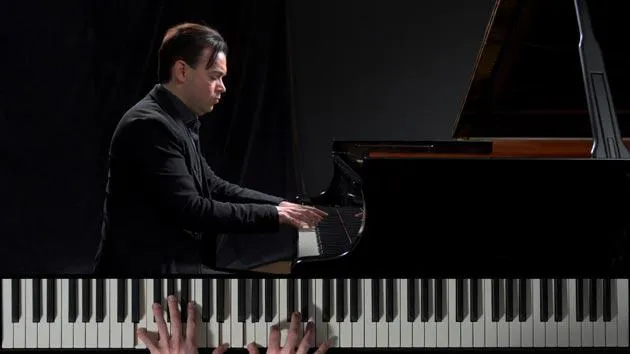
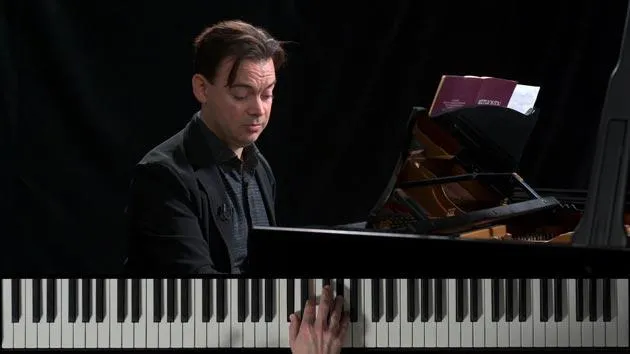
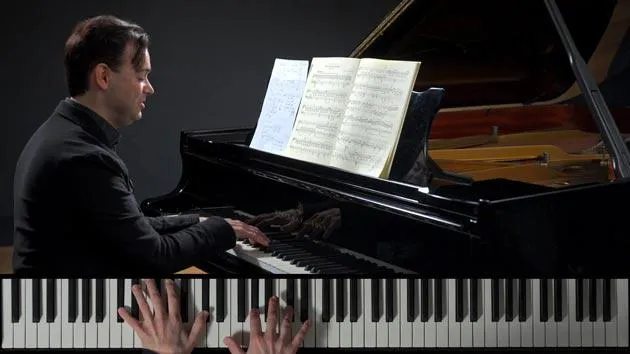
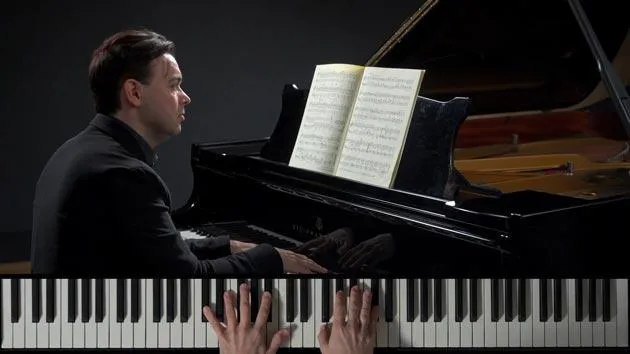
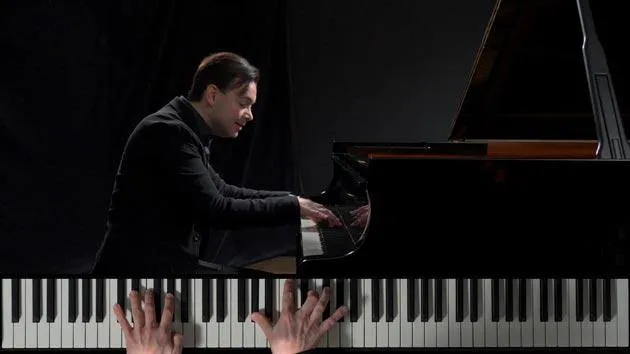
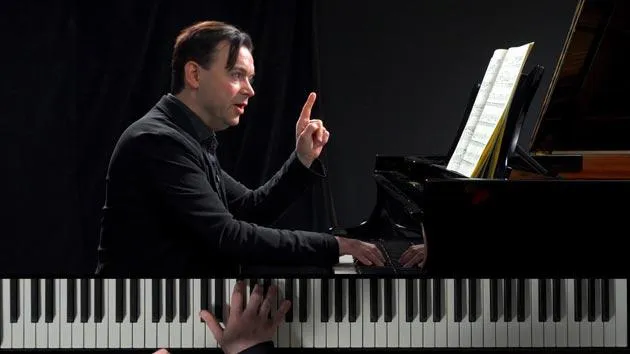
I can demonstrate the trio, the middle section of this movement, which goes like this:
"This is complete contrast to... as if there's a lack of bass."
So, this is the trio, almost like bagpipes.
The Dynamics of the Trio
- This balance here is a flat because Beethoven writes for forte piano in the left hand, but only a flat.
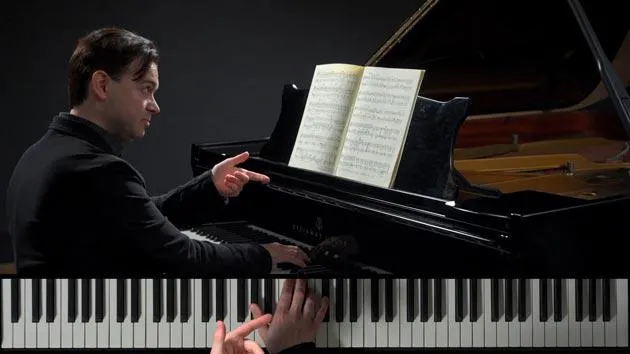
- It's very clearly marked in the score that this fortepiano goes for A flat and not for the lower D flat.
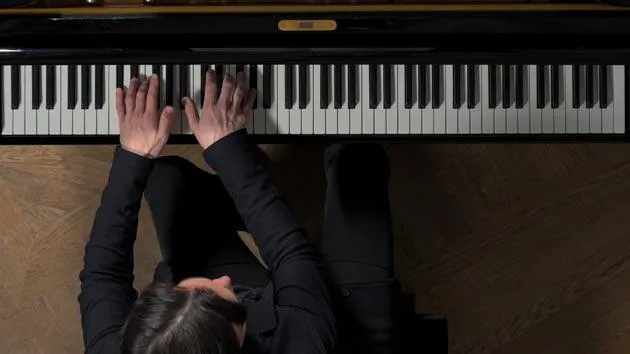
So, only for your thumb.
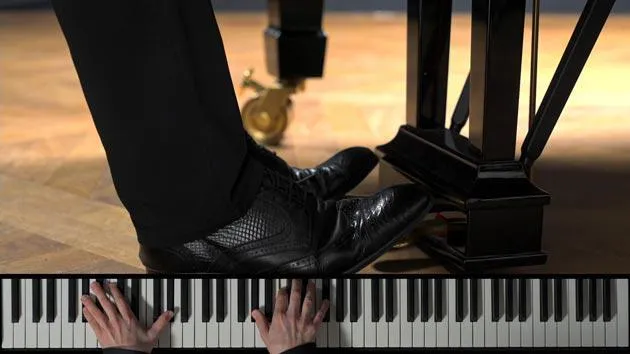
Please play it with your thumb, because obviously, you could also play it with the second finger, but we said the thumb is naturally the most robust of all fingers. This way, you can easily put weight on the thumb and not on any of the other fingers, creating a more bagpipe-like sound in the right hand.
Syncopes and Sforzanti
However, those syncopes have sforzanti (SF mark).
So it's not forte piano; it's sforzanto. It's faster, more into the bone.
"And then no sforzanto. And again here. Yes, yes, yes. And again."
See, that's the difference.
The Pianissimo Dynamics
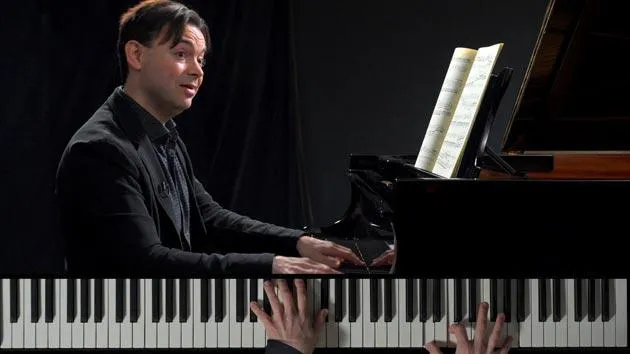
All of a sudden, we have pianissimo, very soft in both hands. Here again, we've got this forte piano just in the left hand, but only for the thumb.
To avoid playing it too loudly, make sure to balance your hands and not play the right hand too loudly. If you play this too loudly, then you cover the thumb's forte piano.
So, try to be as pianissimo in the right hand, allowing the D flat forte piano to shine through.
"After forte, it returns to piano."
This is a proper balance where you will never lose the character of the piece. It will be in strong contrast to the main section, which is very lyrical, gracious, and dolce (sweet).
Conclusion
So, you can play with all these features. Even though this movement is relatively short, it is really compressed with all these amazing features.
It's just like:
"The best dish where you can taste a little bit of everything, even a bit of sugar, a bit of salt in the sauce."
There's really everything that Beethoven's rich personality and artistry could put on one page. So, have fun!
20 leçons
2h 4m de leçons vidéo structurées
Fonctions vidéo avancées
Ralentissez, bouclez un passage, suivez la partition
Mobile, tablette et ordinateur
Pratiquez où vous voulez
Satisfaction garantie à 100 %
Garantie remboursement 30 jours
Rencontrez votre guru
Rencontrez votre guru
Les interprétations neuves du répertoire par Dejan Lazić l'ont imposé comme l'un des solistes les plus singuliers et les plus inhabituels de sa génération. Il se produit régulièrement avec les plus grands orchestres du monde, notamment les orchestres symphoniques de Boston et de Chicago, le Budapest Festival Orchestra, le Royal Concertgebouw Orchestra, le London Philharmonic, le Philharmonia Orchestra, le NDR Elbphilharmonie Orchester, ainsi que les orchestres de chambre d'Australie, de Bâle et des Pays-Bas, et il a noué d'étroites collaborations avec des chefs tels que Giovanni Antonini, Iván Fischer, Michael Francis, Andris Nelsons, Ivan Repušić, Thomas Søndergård, Robert Spano, John Storgårds, Krzysztof Urbański et Jan Willem de Vriend.
Dejan Lazić a publié de nombreux CD chez Channel Classics et Onyx Classics, ainsi qu'un enregistrement du Triple Concerto de Beethoven pour Sony Classical. Son enregistrement en direct du Concerto pour piano n° 2 de Rachmaninov avec le London Philharmonic Orchestra et Kirill Petrenko a reçu le prix allemand "Echo Klassik". Il jouit également d'un large public en Extrême-Orient et déploie une intense activité de récitaliste et de chambriste, se produisant régulièrement dans de grands festivals internationaux.
Les compositions de Dejan Lazić reçoivent une reconnaissance croissante, et il a été engagé comme compositeur par le groupe d'édition Sikorski Music Publishing en 2015. Son arrangement du Concerto pour violon de Brahms en Concerto pour piano "n° 3" a été créé et enregistré avec l'Atlanta Symphony Orchestra et Robert Spano en 2009 et connaît depuis un grand succès continu, aux BBC Proms, au Concertgebouw d'Amsterdam, au Festival de Pâques de Hambourg et au Festival Chopin de Varsovie, sur les deux continents américains et au Japon. Son Concerto pour piano dans le style istrien (Op. 18) a été créé à l'Aspen Music Festival en 2014 et a depuis été joué dans toute l'Europe et aux États-Unis. Parmi ses autres œuvres figurent diverses pièces orchestrales, de chambre et pour piano, des cadences, ainsi que plusieurs arrangements d'œuvres de Mozart, Schubert, R. Strauss, Wagner et Debussy.
Dejan Lazić est né à Zagreb, en Croatie, dans une famille de musiciens. Il a grandi à Salzbourg, en Autriche, où il a étudié au Mozarteum (piano, clarinette et composition). Ses premières rencontres avec Zoltán Kocsis et Imre Rohmann au Festival Bartók de Hongrie ont été décisives pour sa carrière artistique, tout comme l'influence considérable de Peter Eötvös. Dejan Lazić vit à Amsterdam.
Dans Master Moonlight Sonata by Beethoven, Dejan partage la réflexion qui sous-tend ces interprétations acclamées, te guidant à travers les trois mouvements de l'une des œuvres les plus aimées du répertoire pianistique afin que tu puisses la façonner avec une véritable compréhension plutôt que par imitation. www.dejanlazic.com







