



Échauffement vocal avec des sirènes

Lesson time: (5min 3sec)
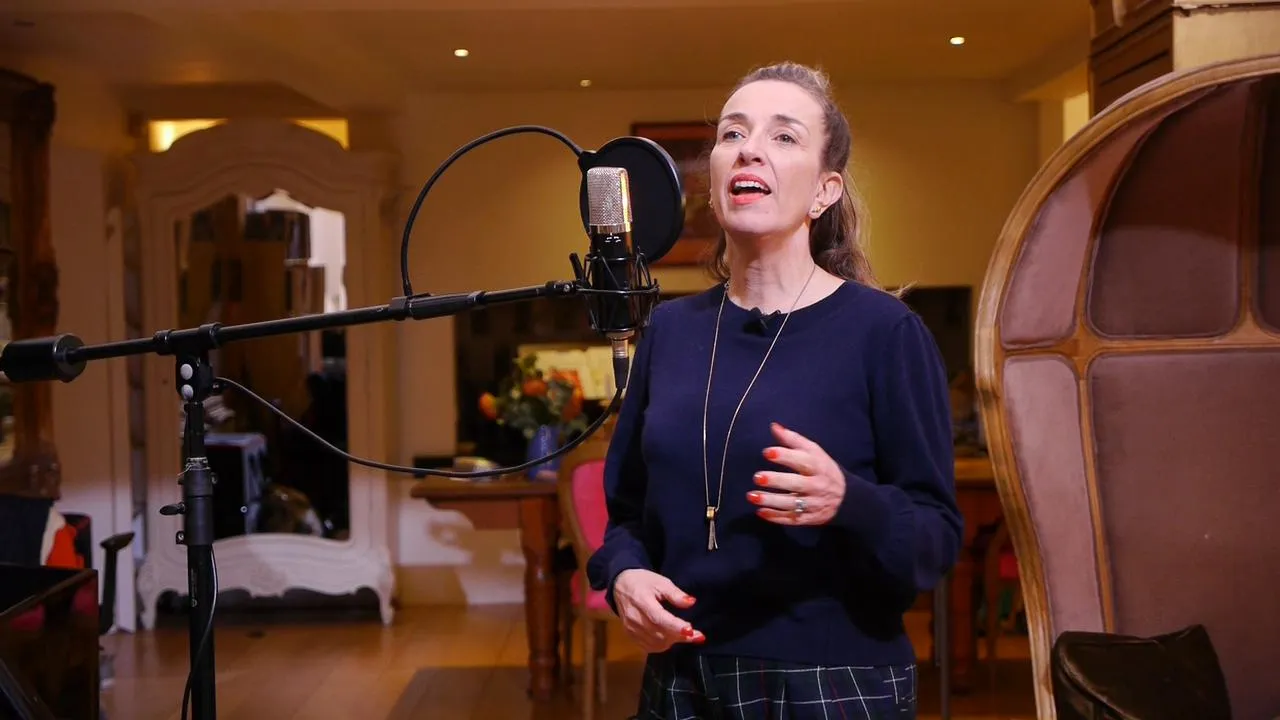
Juliet Russell partage des exercices d'échauffement en douceur pour protéger ta voix, en utilisant des fricatives sonores, des sirènes et des vibrations des lèvres pour détendre les cordes vocales avant de chanter.
Course preview
This lesson is part of the course Les compétences essentielles pour les chanteurs
Watch a preview of the full course below.
Lesson transcript:
Warming Up the Voice
In this lesson, we're going to look at warming up the voice. Now, a lot of vocal warm-ups basically involve making funny noises, but there are some really good reasons to warm up your voice.
The Importance of Vocal Care
The care and maintenance of your voice is of utmost importance. Even though our larynx is doing an amazing job and our vocal folds do an amazing job, they need care. Warming up helps us develop healthy habits with our voice.
- Always Warm Up Before Singing: It's crucial to make this a habit.
- Cool Down After Singing: This is equally important for maintaining vocal health.
Think of singing like being a sports star: you wouldn't just suddenly run 100 meters; you'd stretch and warm up first. It's the same principle for the voice.
Voiced Fricatives
We've previously looked at unvoiced fricatives and now we're going to add voicing to those fricatives.
- Where we had an S, we're going to do a Z.
- Where we had a SH, we're going to do a ZH.
- Where we had an F, we'll do a V.
Voiced fricatives are a really nice way of warming up the voice, and we use them in something called sirens.
Sirens
Now, why are they called sirens? Simply because they sound like a siren. The great thing about sirens is that we can work within our own range.
Remember: Every voice is unique, your voice is as unique as your fingerprint!
- Find Your Comfortable Range: Work with where you feel comfortable.
- Register Breaks: For some people, you may notice a register break when you do a siren. There are different registers within the voice, but it's still one voice. With practice, we can learn to smooth out those register breaks.
Note: Sometimes, a register break is desirable, like when singing "Zombie, Zombie." It uses that quick change. However, you may sometimes prefer a smooth transition, which we'll discuss later.
Practicing Sirens
So, to start off, we'll use a Z sound. Here's how to do it:
- Find a Low, Comfortable Note: Start by sliding up.
- Demonstration: I'm going to sing it to demonstrate, but you don't have to match my notes. Your range will be different, so focus on comfort.
Remember: A siren is basically a slide up and down.
- Try it out with a Z:
- Just have a little go at that sound.
- Or in your range, you might want to go Z, whatever feels comfortable.
Conducting the Exercise
- Play around with that sound; you can even try a V.
- If your voice cuts out or there's a gap, the best approach is to go slightly underneath it and slower.
Take Your Time: The most important thing here is to warm up all the notes across your range.
Additional Sounds for Warm-Up
There are other sounds that work really well with sirens:
-
NG Sound:
- Play around with the sound at the end of "sing" (N N).
- Aim for a pleasant resonance, not too nasal or blocked.
-
Lip Bubbles:
- Some people find this easier with hands on their cheeks: Brr.
- Just have fun experimenting with it!
-
R Sound:
- This can be a bit tricky, but if you can do it, it's really useful!
Transition to Structured Sirens
Now, we're going to move over to the piano. It's exciting because we're going to do a few more structured sirens, starting with smaller increments and gradually building up.
About the instructor
Juliet Russell est chanteuse, compositrice, coach vocale et cheffe de chœur. Elle a à cœur d'aider les individus et les communautés à développer leur voix et leur créativité. Coach vocale sur The Voice et The Voice Kids d'ITV et sur le Michael McIntyre’s Big Show de la BBC, Juliet a également travaillé avec des artistes lauréats de Grammy, Brit, MTV Europe et MOBO Awards. Elle a collaboré et joué avec des artistes novateurs comme Damon Albarn, Imogen Heap, Paloma Faith, alt-J, Yoko Ono, Seal et Ringo Starr. En 2015, avec le soutien de l'Arts Council of England, elle a mené en tournée son album Earth Meets Sky, réunissant musiciens locaux et chœurs communautaires pour créer dix concerts uniques à travers le Royaume-Uni. On lui commande régulièrement de nouvelles pièces chorales et des arrangements vocaux, et elle s'est produite à l'échelle nationale et internationale. Attachée au développement des artistes, Juliet accompagne et coache des artistes émergents, en travaillant avec des sociétés de management, des maisons de disques et d'édition ainsi qu'avec des artistes indépendants. Elle possède un studio vocal en plein cœur de la vibrante Brick Lane à Londres. Juliet a été directrice artistique fondatrice de Sense of Sound et directrice créative de Sing Up Greenwich et de Sing Late au V&A. Elle dirige le Portobello Live Choir, un chœur communautaire de l'ouest de Londres, et le chœur professionnel Assemble, et elle est formatrice pour le programme Singing for Lung Health de la British Lung Foundation. read more