



Combien de temps s'entraîner

Lesson time: (3min 42sec)
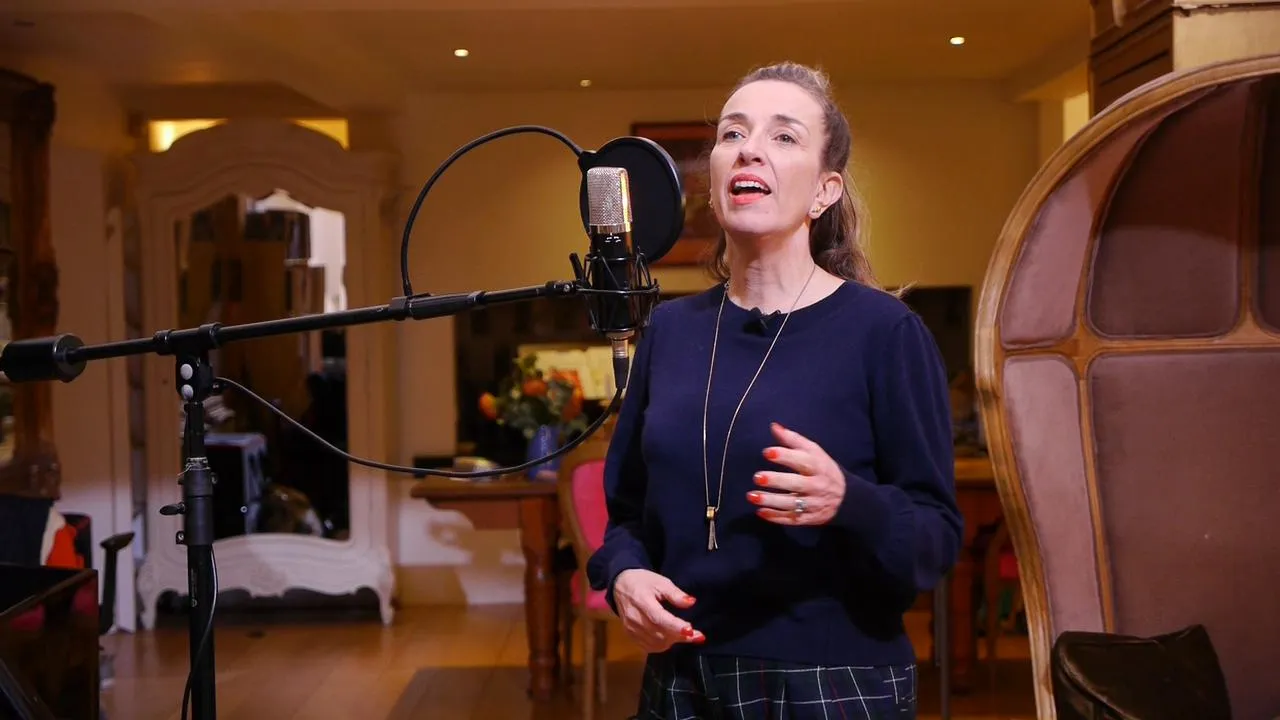
Juliet Russell explique comment travailler ton chant : à quelle fréquence chanter et comment rester motivé à mesure que ta voix se développe.
Course preview
This lesson is part of the course Les compétences essentielles pour les chanteurs
Watch a preview of the full course below.
Lesson transcript:
Welcome to Your Singing Course!
I really hope you're finding this course useful, that you're learning lots about singing, and that you're truly enjoying discovering what your voice can do. It's truly one of the most exciting journeys you can undertake!
Practice Plans
With the lessons, everything is designed with a practice plan in place. After we've learned a new concept, make sure to:
- Go to that practice plan
- Give yourself time to really sit with it
- Practice consistently
Over time, you will notice an increase in your skills.
Improving Your Singing
There are two key points to consider regarding your singing:
-
Improving Your Pitch:
- This is achieved primarily through enhancing your ear.
- However, it's mostly about improving your fine motor skills.
-
The Importance of Practice:
- Practice is essential; it builds on your foundational skills.
- It allows you to notice:
- What's changing in your voice
- What you find difficult
- What you find easy
Foundational Skills
Each lesson has a practice plan, and some skills are foundational:
- Physical Posture and Alignment:
- Essential for effective singing.
- Sirens:
- Should be a fundamental part of your warm-up routine.
- Voice Fricatives:
- Useful for various exercises.
Exercise Types
-
Scaling Exercises:
- Used for pitch differentiation.
-
Staccato Exercises:
- Help develop fine motor skills.
Recommended Routine
The foundation exercises I recommend are:
- Posture and Alignment
- Sirens
Always incorporate these into your routine and make sure to cool down after each session. For other exercises, feel free to mix and match. If you're working on something specific, apply relevant exercises to your songs.
For example:
- Five Note Scales:
- "Da da da da da da da da da."
- Long Scale Exercises:
- "Yeah, yeah, yeah, yeah, yeah, yeah, yeah, yeah."
Progression matters; exercises are designed to help you move incrementally.
Making Practice Enjoyable
When you first start practicing, remember that it shouldn't feel like a chore.
It should support your learning!
As you progress as a singer, I hope you feel motivated to practice.
Helpful Tips
-
Keep a Singing Journal:
- It doesn't have to be complicated. Use a notebook to write down your experiences.
- For example:
- "Today, this felt really easy."
- "I've noticed improvement in my E sound, which feels a bit breathier."
Start to notice what's going on in your own voice.
-
Make Practice Manageable:
- Warming up doesn't require a lot of time; 10 minutes of sirens and scales is often enough, especially at this stage.
-
Try to find time in your routine for daily practice. While three times a week is fine, remember:
- Your progress often relates to how much you practice.
- Keep it fun and realistic for your lifestyle.
Remember, there's no judgment about how often you practice. It's wonderful to support your learning with regular practice!
About the instructor
Juliet Russell est chanteuse, compositrice, coach vocale et cheffe de chœur. Elle a à cœur d'aider les individus et les communautés à développer leur voix et leur créativité. Coach vocale sur The Voice et The Voice Kids d'ITV et sur le Michael McIntyre’s Big Show de la BBC, Juliet a également travaillé avec des artistes lauréats de Grammy, Brit, MTV Europe et MOBO Awards. Elle a collaboré et joué avec des artistes novateurs comme Damon Albarn, Imogen Heap, Paloma Faith, alt-J, Yoko Ono, Seal et Ringo Starr. En 2015, avec le soutien de l'Arts Council of England, elle a mené en tournée son album Earth Meets Sky, réunissant musiciens locaux et chœurs communautaires pour créer dix concerts uniques à travers le Royaume-Uni. On lui commande régulièrement de nouvelles pièces chorales et des arrangements vocaux, et elle s'est produite à l'échelle nationale et internationale. Attachée au développement des artistes, Juliet accompagne et coache des artistes émergents, en travaillant avec des sociétés de management, des maisons de disques et d'édition ainsi qu'avec des artistes indépendants. Elle possède un studio vocal en plein cœur de la vibrante Brick Lane à Londres. Juliet a été directrice artistique fondatrice de Sense of Sound et directrice créative de Sing Up Greenwich et de Sing Late au V&A. Elle dirige le Portobello Live Choir, un chœur communautaire de l'ouest de Londres, et le chœur professionnel Assemble, et elle est formatrice pour le programme Singing for Lung Health de la British Lung Foundation. read more