



Différents registres

Lesson time: (3min 48sec)
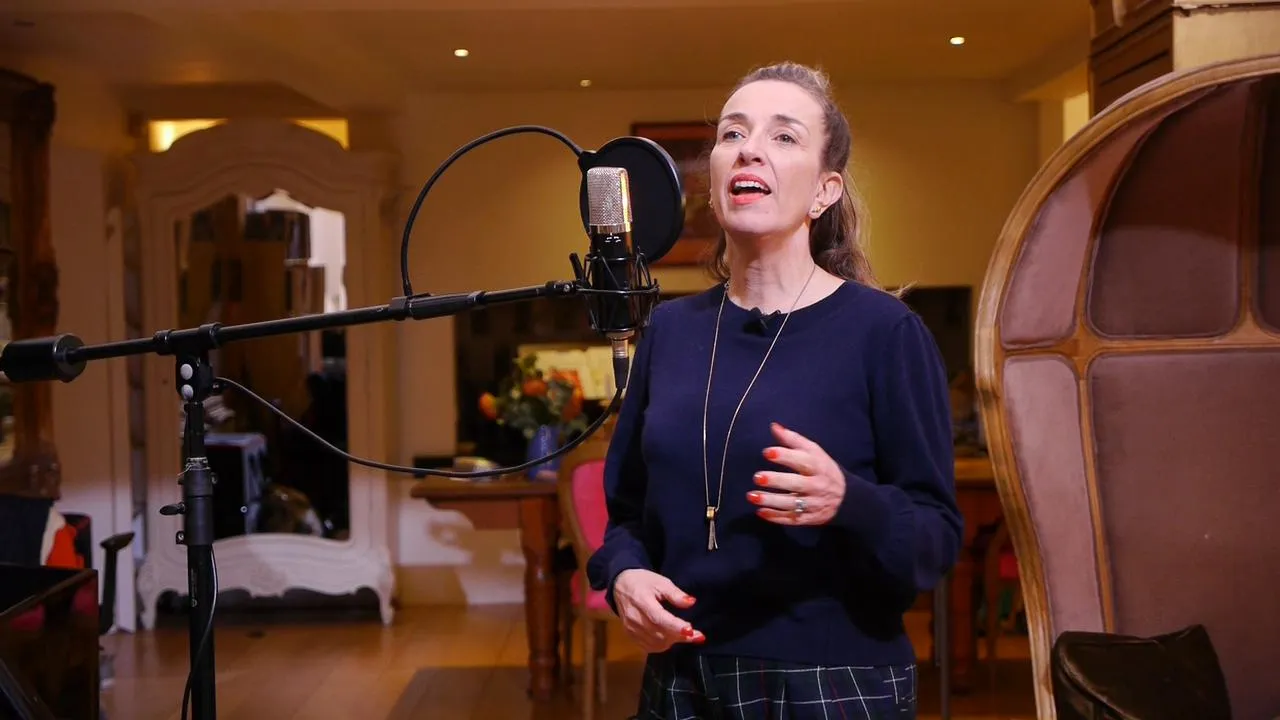
Juliet explique que nous avons deux registres principaux – pli épais et pli fin et nous guide à travers des exercices pour les découvrir.
Course preview
This lesson is part of the course Les compétences essentielles pour les chanteurs
Watch a preview of the full course below.
Lesson transcript:
Understanding Vocal Registers
In this lesson, I want to talk to you about vocal registers. For most of us, especially those working with popular singing styles or contemporary commercial styles, I will concentrate on the two main registers.
The Main Two Registers
There are technically four registers, but the main two are:
-
Thick Fold Setting: This is very close to your speaking voice. For example, if you say "oh, oh, oh," it's probably quite close to your speaking voice.
-
Thin Folds: This quality can be accessed by making a sound like "woo, woo, woo, woo," where you feel that thinner quality.
Using Sirens to Smooth Transitions
When we worked on our sirens, we were moving smoothly through the registers, and we will do so eventually. With registers, some people feel that they have a gap between the two.
- By using our sirens, we learn how to control the muscles in a way that makes that feeling more flexible, reducing the gap.
- This gap is often referred to as a break or passaggio, which means transition or change. However, refering to it as a break can be unhelpful since it suggests something is broken. You may feel or hear a difference in the sound.
Be Playful with Your Voice
Another important point is to be playful with your voice in a safe way. Sometimes, when we're being playful, we might:
- Imitate a whining dog, which allows us to naturally access the thin fold quality.
- Some people might call this head voice or falsetto. There can be varying definitions depending on different teachers and schools of thought.
Here are a few additional terms you might hear:
- Speaking Voice
- Speech Quality
- Modal Voice
- Lower Register
- Thick Folds
- Chest Voice
Different people use different terminology, and that's fine. It's good to be familiar with a few terms!
Coordinating Voice Quality
The key takeaway is understanding the changeover between the muscles that give us access to the lower voice quality and the higher one.
- The easiest way to get used to that feeling of change is through using sirens. This method helps smooth the movement of the muscles through coordination.
- For most singers, the ultimate goal is to use your voice efficiently, flexibly, and with versatility, allowing you to call on various aspects of your voice suitable for what you want to sing and communicate.
Expressive Effect of Register Differences
Sometimes we can use this difference in quality between registers for expressive effect. For example:
- In "Zombie" by The Cranberries, there's a very clear register break that is used to great effect.
- Singers like Tom Yorke from Radiohead might use the thinner fold quality to enhance the musical or emotional aspects of their singing.
There's nothing wrong with having a difference in those sounds, but sometimes we want to learn to smooth them over to make the transition less audible.
Conclusion
The main thing to remember from this lesson is that sirens are a pathway to move smoothly between registers and help us develop more flexible vocal musculature.
- Don't worry if it doesn't come right away; over time, it will happen.
- Also, be playful with your voice! Experiment with sounds like little puppy whines or expressing "oh, woo."
Each expression brings out different aspects of your voice, helping you understand how many colors you have to paint with as you grow more accustomed to singing and exploring.
About the instructor
Juliet Russell est chanteuse, compositrice, coach vocale et cheffe de chœur. Elle a à cœur d'aider les individus et les communautés à développer leur voix et leur créativité. Coach vocale sur The Voice et The Voice Kids d'ITV et sur le Michael McIntyre’s Big Show de la BBC, Juliet a également travaillé avec des artistes lauréats de Grammy, Brit, MTV Europe et MOBO Awards. Elle a collaboré et joué avec des artistes novateurs comme Damon Albarn, Imogen Heap, Paloma Faith, alt-J, Yoko Ono, Seal et Ringo Starr. En 2015, avec le soutien de l'Arts Council of England, elle a mené en tournée son album Earth Meets Sky, réunissant musiciens locaux et chœurs communautaires pour créer dix concerts uniques à travers le Royaume-Uni. On lui commande régulièrement de nouvelles pièces chorales et des arrangements vocaux, et elle s'est produite à l'échelle nationale et internationale. Attachée au développement des artistes, Juliet accompagne et coache des artistes émergents, en travaillant avec des sociétés de management, des maisons de disques et d'édition ainsi qu'avec des artistes indépendants. Elle possède un studio vocal en plein cœur de la vibrante Brick Lane à Londres. Juliet a été directrice artistique fondatrice de Sense of Sound et directrice créative de Sing Up Greenwich et de Sing Late au V&A. Elle dirige le Portobello Live Choir, un chœur communautaire de l'ouest de Londres, et le chœur professionnel Assemble, et elle est formatrice pour le programme Singing for Lung Health de la British Lung Foundation. read more