Trabajar con directores musicales
Con
Sister Bliss
Qué incluye el curso
20 lecciones (1h 18m) · 1 gratis
01. Hacer que la electrónica tenga sentido en directo
12:56
02. Ampliar las pistas de estudio
7:24
03. Crear espacio
6:12
04. Sintetizado vs. en directo
4:17
05. Diseño de sonido del espectáculo
7:28
06. Ensayos y preparación
8:56
07. Trabajar con músicos de sesión
7:50
08. Trabajar con directores musicales
Estás aquí
09. Incorporar la filmación en el escenario
3:24
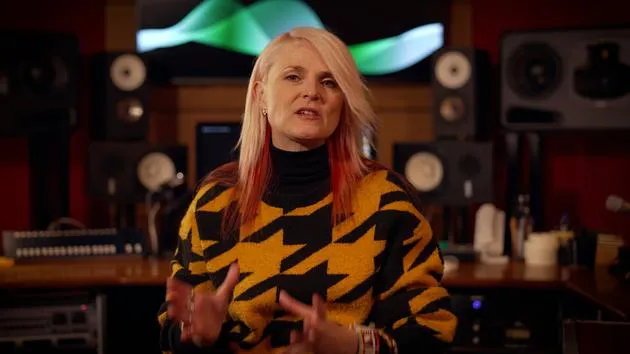
10. Diseño visual
7:59
11. Adaptar tu setlist
5:18
12. La importancia del equipo
13. Ingeniero de sala
3:30
14. Emisiones en directo
3:03
15. Calidad de grabación
16. Giras internacionales
17. Puntualidad y logística
18. Cuando las cosas salen mal
19. Audiciones
20. El estrés y la salud personal
Transcripción de la lección
Transitioning from Studio to Live Performance
Sometimes it's quite a daunting thing to go from the studio to live if you've not really had any experience in this area.
The Role of Musical Directors (MDs)
There are people called MDs, or musical directors, who can make that job easy for you. They can:
- Take the things you've done in the studio
- Rearrange your stems
- Help point you in the right direction on what to embellish
- Suggest live musicians who can play parts that were recorded and so forth.
Early Experiences
We started off actually using a guy who was going to be our drummer, called Andy Gangardine. He ended up getting poached by the Spice Girls, so he only came to one rehearsal.
I think he might have started programming one song because he was au fait with the MPC, and we didn't really know how to work it. We used different sequences in the studio, not an MPC.
Literally, after one rehearsal, he disappeared off with the Spice Girls. I believe he's now with Chase and Status. This is his usual show, as well as his own band, The Baes.
He's an amazing drummer and an amazing MD, very experienced, having worked with loads of bands. We thought we needed that expertise.
Assembling the Band
After Andy, we started cobbling it together ourselves. Our MD was essentially Rollo. As we went on with different tours, Andy Treacy, our drummer, also did a lot of programming and helped with MD duties.
Ultimately, Rollo, who produced the records, was a non-instrumentalist. He could really listen to everything with clear ears, which was incredibly useful.
Rehearsals with Rollo
He would come to rehearsals, and we would rehearse the songs up to a certain point. Then he'd work out the bits he liked and didn't like, which is pretty much how I've worked with him in the studio for the last 30 years.
We would sit there bickering and arguing over hi-hats and things like that. Rollo brought that dynamic to the studio, which was really, really helpful. It allowed us to reflect on our playing from both the inside and the outside almost simultaneously.
Unique Approach
I don't know many producers that would do this ? produce a record and then come back to produce a live band. This is quite an unusual situation, but you can employ MDs from the outside.
There are definitely quite a few around, and they'll be up to speed on the best ways for electronic artists, in particular, to translate studio work into the live arena.
Challenges of Electronic Music
It is always the most complex musical form. In my eyes, it's different from a band where you sit in a room and play a song that gets recorded. Electronic music just doesn't work that way.
The layering, coming back to bits of music at different times, the overdubbing, and the complexity of beats and filtering create challenges.
Live Performance Solutions
How on earth do you recreate that in the live arena? Well, obviously now we live in a world of Ableton and other methods.
With tools like Novation and Kontakt, as well as other great samplers, we can take the sounds we've created in the studio and present them in a live setting much more effectively.
20 lecciones
1h 18m de lecciones en vídeo estructuradas
Funciones de vídeo avanzadas
Ralentiza, repite un pasaje, sigue la partitura
Móvil, tablet y ordenador
Practica donde quieras
Garantía de satisfacción 100%
30 días de garantía de devolución
Conoce a tu gurú
Conoce a tu gurú
'Sister Bliss nunca dejó de escribir música. Es una consumada compositora para cine y televisión, DJ de club y defensora de las industrias creativas'. Billboard
Una de las artistas de música dance británicas de más éxito de los últimos 25 años, Ayalah Bentovim, alias Sister Bliss, es la fuerza musical que hay detrás de Faithless.
Junto al icónico cantante Maxi Jazz y el productor Rollo Armstrong, formó Faithless: uno de los proyectos electrónicos de mayor éxito de su generación, con una trayectoria de más de dos décadas que incluyó 8 álbumes (3 de ellos número 1) y seis singles entre los diez primeros. Hasta la fecha, Faithless ha vendido más de 15 millones de discos en todo el mundo y ha actuado en directo ante millones de personas por todo el planeta, encabezando festivales, estadios y pabellones. La banda ha colaborado con artistas como Jazzie B, Boy George, Cat Power y Dido, sin conformarse nunca y moviéndose con soltura por una ecléctica variedad de géneros.
A lo largo de una carrera de 25 años que la llevó de la escena underground de los clubes británicos a conciertos con todas las entradas agotadas en pabellones y actuaciones como cabeza de cartel en festivales de todo el mundo, Sister Bliss se ha convertido en una de las artistas electrónicas femeninas con más trayectoria e influencia de la música dance británica.
Llega tras publicar el primer álbum de estudio de Faithless en diez años, el muy esperado 'All Blessed', la carta de amor de Faithless a la música electrónica que los muestra en su mejor momento. El álbum alcanzó el número 6 en las listas y los singles, junto con sus remixes de estreno, obtuvieron un amplio apoyo en BBC Radio 1, Radio 2 y BBC 6, así como en Kiss FM y Capital.
Multiinstrumentista de formación clásica, también ha compuesto la banda sonora de numerosas producciones de televisión, cine y teatro. Entre sus créditos figuran la película Knife Fight de 2012, protagonizada por Rob Lowe y dirigida por el dos veces ganador del Óscar Bill Guttentag, encargos para Sex & The City 2, Chasing Amy, The Beach de Danny Boyle, A Life Less Ordinary, la aclamada película británica The Hide, Crossing The Line y los dramas televisivos ganadores del BAFTA Life Begins (ITV) y The Poison Tree (ITV).
Para el teatro, Bliss ha compuesto música para The Black Album y The Emperor Jones en el National Theatre de Londres, además de componer una pieza original para la London Sinfonietta, que se interpretó en el Fuse Festival del Reino Unido.
Recientemente tuvo un papel protagonista en el gran programa de máxima audiencia de BBC1 'This is My Song', asesorando a los participantes y produciendo sus grabaciones finales.
En 2019 publicó un nuevo álbum en colaboración con Rollo y Dido bajo el nombre 'R PLUS' - 'The Last Summer', tras un verano repleto de actuaciones como cabeza de cartel en sesiones de DJ en festivales de todo el mundo, incluidas actuaciones en Bestival, Exit Festival, Glastonbury, Creamfields, Ibiza y más allá.
Su exitosísimo programa de radio y pódcast semanal 'Sister Bliss in Session' se distribuye a más de 100 emisoras y 43 países de todo el mundo. Recientemente presentó como invitada el aclamado programa de Gilles Peterson en BBC 6 Music y sustituye con regularidad a Ana Matronic en el programa Dance Devotion de BBC Radio 2.
También ha presentado una serie de 5 partes en la emisora Scala Radio de Bauer Media, tendiendo puentes entre la música clásica y la electrónica, que ganó el premio Bronce en los New York Festival Radio Awards, compitiendo contra 30 países.
Actualmente imparte clases en el máster MA de Tileyard Studios, con módulos sobre composición, producción y escritura por encargo comercial, y tutoriza a estudiantes de máster de forma individual: el mismo conocimiento práctico que comparte en Studio to Stage, donde desglosa exactamente cómo Faithless convirtió sus discos en un espectáculo en directo capaz de llenar estadios.