



Das Mundstück
Mit
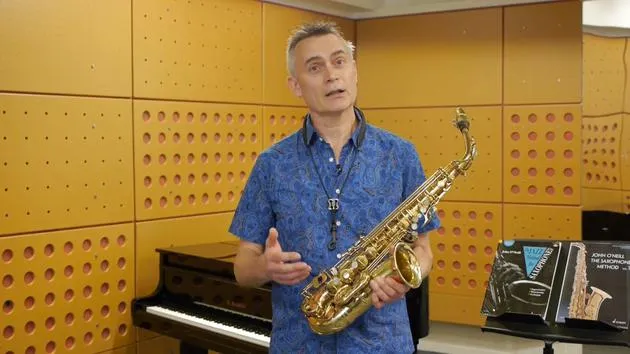
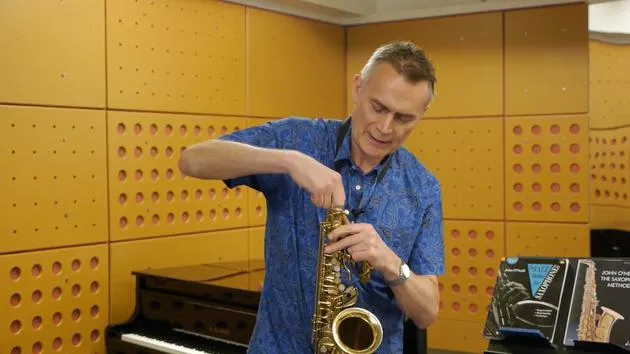
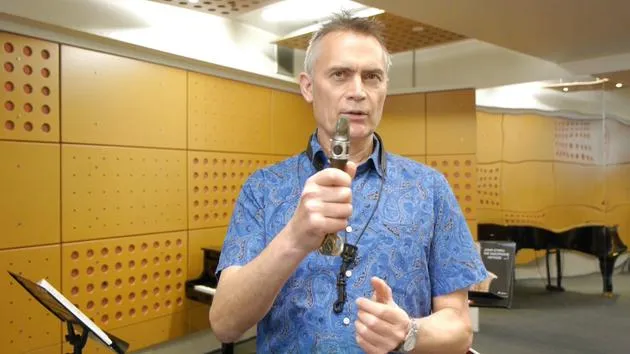
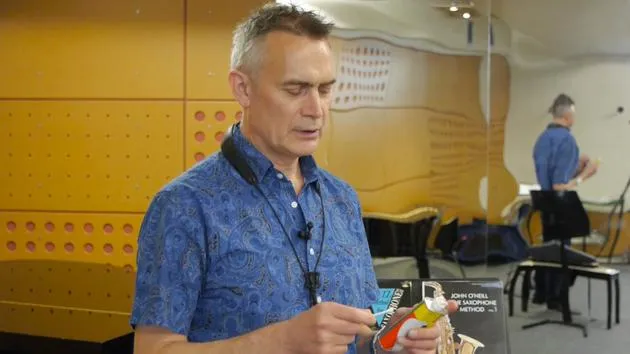
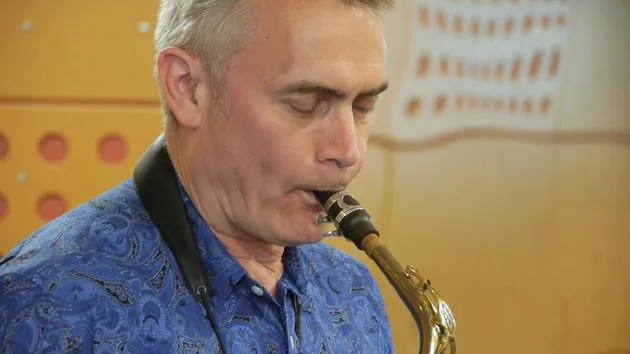
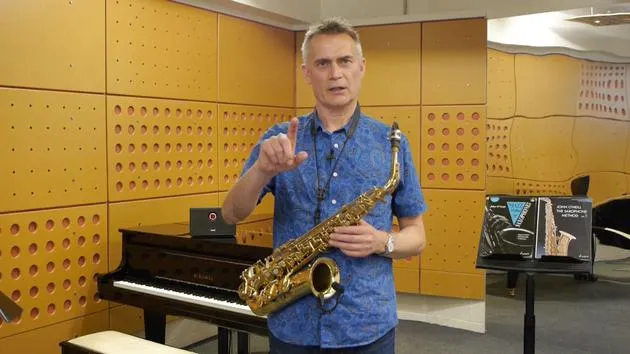
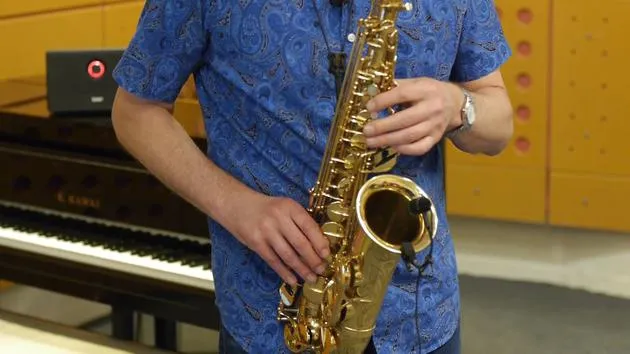
John O'NeillIn diesem Video erklärt John, wie du dein Mundstück und deine Blätter einrichtest und pflegst. Er geht auch auf die Wissenschaft des Klangs ein und wie das Blatt schwingt. Tipps, was du kaufen und worauf du bei einem Blatt achten solltest.
Das steckt im Kurs
25 Lektionen (2h 10m) · 1 gratis
01. Haltung
13:20
02. Fingersatz
4:10
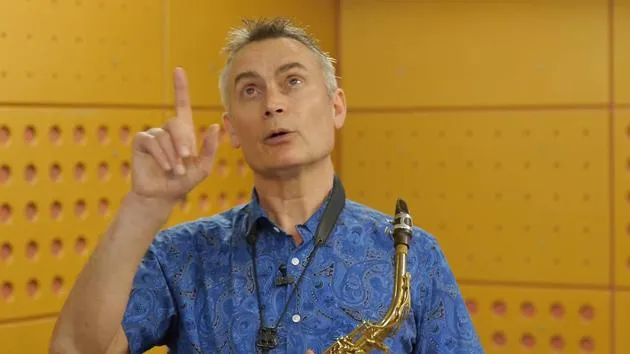
03. Die Atmung
4:12
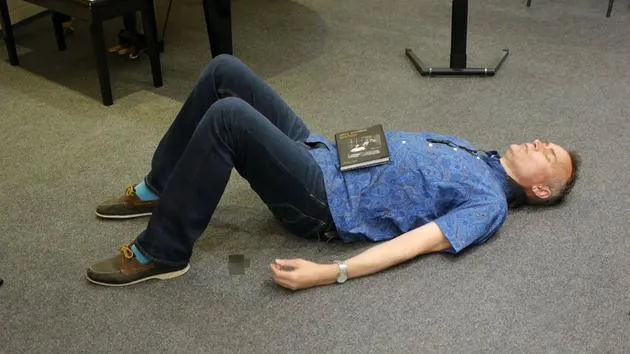
04. Atemübung Nr. 1
3:24
05. Atemübung Nr. 2
4:34
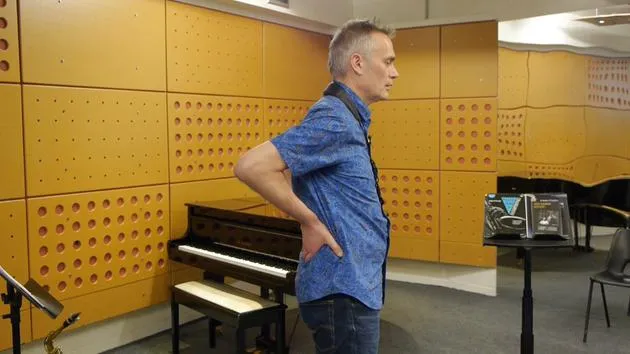
06. Atemübung Nr. 3
2:29
07. Atemübung #4
1:27
08. Atemübung Nr. 5
2:27
09. Der Ansatz und deine erste Note
9:46
10. Fehlersuche bei deinem ersten Ton
9:34
11. Deinen Klang entwickeln
3:43
12. Zungenstoß-Übung #1
4:36
13. Zungenstoß-Übung Nr. 2
6:49
14. Abschließende Gedanken & Üben
1:57
Transkript der Lektion
The Importance of the Mouthpiece in Saxophone Playing
Today, I'm going to talk about the mouthpiece.
Key Points about the Mouthpiece:
-
Sound Production:
- While the saxophone itself is an important part of the equipment, the mouthpiece is even more crucial as this is where the sound is produced.
- The wrong mouthpiece on an expensive saxophone will not yield good results.
- Conversely, a good mouthpiece on an inexpensive saxophone can produce impressive results.
-
Mouthpieces for New Instruments:
- If you buy a new, especially high-end instrument, the mouthpiece included is often decent.
- There's usually no need to change it in the short term, provided you have the right reed, which I will discuss later.
Buying a Mouthpiece
If you're planning to buy a mouthpiece, especially for a second-hand instrument that may not have come with one or has a poor-quality mouthpiece, consider the following:
Metal vs. Ebonite Mouthpieces
-
Material Differences:
- Metal mouthpieces are made of a different material; they are not intrinsically better than Ebonite mouthpieces.
- Myths persist that metal mouthpieces produce a much bigger sound. For example, many alto players using Ebonite mouthpieces can achieve a huge sound.
-
Sound Characteristics:
- You may have heard a player like David Sanborn, performing in a jazz-rock style with an abrasive sound. However, that sound is not solely due to the use of a metal mouthpiece.
- Most alto players actually use Ebonite mouthpieces, which are a kind of hardened rubber.
Key Factors in Mouthpiece Design
- Reed Fit:
- The reed fits on the mouthpiece as follows:
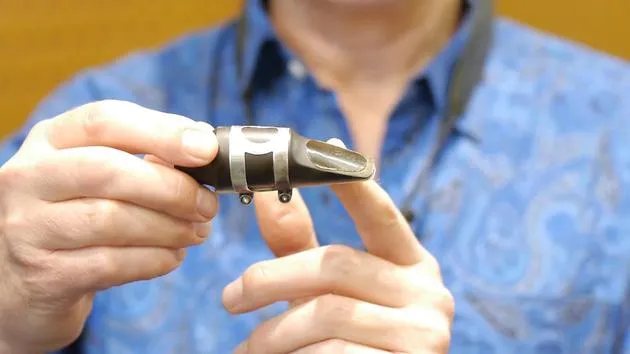
- The two most important aspects to consider are the tip opening and the lay of the mouthpiece.
Tip Opening
- The tip opening is the gap between the lip of the mouthpiece and the reed.
- A wider gap makes it more challenging to make the reed vibrate.
- A narrower gap allows for easier vibration.
- For beginners, a medium or medium-closed tip opening is recommended.
Lay of the Mouthpiece
- If you hold the mouthpiece to the side, observe where daylight stops between the reed and the mouthpiece; this distance is called the length of the lay.
- A longer lay allows the reed to vibrate more easily, while a shorter lay makes vibration more difficult.
- However, a longer lay may be harder to control.
Recommendations for Beginners
- A classic mouthpiece for alto players is the Meyer 5M, which has a medium tip opening and medium lay. Several famous players, like Phil Woods and Cannonball Adderley, have used it.
- Another excellent option for beginners is the Yamaha 4C mouthpiece.
- This mouthpiece comes with Yamaha student instruments but works well on almost any saxophone.
- It is relatively inexpensive and while it is made of plastic (which can break if dropped on a hard surface), it is very easy to play.
- This mouthpiece will serve you well for the first couple of years of playing, at least.
Feel free to reach out if you have any questions about selecting mouthpieces or reeds!
25 Lektionen
2 Std. 10 Min. strukturierte Videolektionen
Erweiterte Videofunktionen
Verlangsamen, Passagen loopen, mitlesen
Handy, Tablet & Desktop
Üben, wo du willst
100 % Zufriedenheitsgarantie
30 Tage Geld-zurück-Garantie
Lern deinen Guru kennen
Lern deinen Guru kennen
John O'Neill ist der Saxofonist hinter The Jazz Method for Saxophone, der bei Schott erschienenen Reihe, die einer ganzen Generation von Musikern weltweit das Improvisieren beigebracht hat. Erstmals 1991 veröffentlicht, zählt sie neben seinen begleitenden Methoden für Klarinette und Flöte bis heute zu den meistverkauften Jazz-Lehrwerken, die je geschrieben wurden.
Zum Saxofon kam er mit zwanzig Jahren, während er am Trinity College in Oxford Französisch und Deutsch studierte, nachdem er John Coltrane gehört hatte. Anschließend studierte er beim großen britischen Tenoristen Don Rendell und lernte Improvisation bei Lee Konitz, Warne Marsh und Peter Ind, den direkten Erben des legendären Lehrers Lennie Tristano. Seit 1979 professioneller Musiker, ist er auf Jazz und Bossa Nova spezialisiert und hat in Londons führenden Clubs gespielt, darunter im Ronnie Scott's, und komponiert zugleich Musik für Film, Fernsehen, Theater und Tanz.
Als ausgebildeter Lehrer mit jahrzehntelanger Erfahrung hat John Saxofon, Klarinette und Flöte privat und an Schulen unterrichtet, im Jazz-Studiengang des Trinity College of Music in London sowie bei Sommerkursen in Spanien und der Tschechischen Republik. Von seinem Zuhause im Norden Londons aus tritt er nach wie vor auf und unterrichtet.







