



Der Ansatz und deine erste Note
Mit
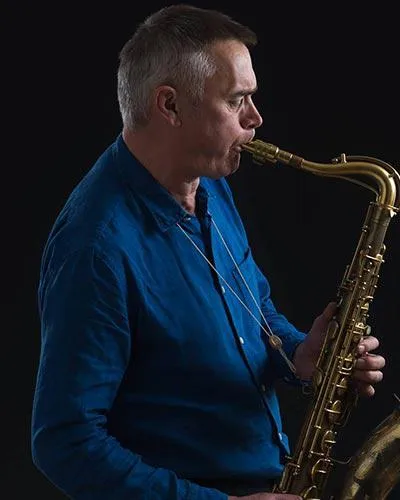
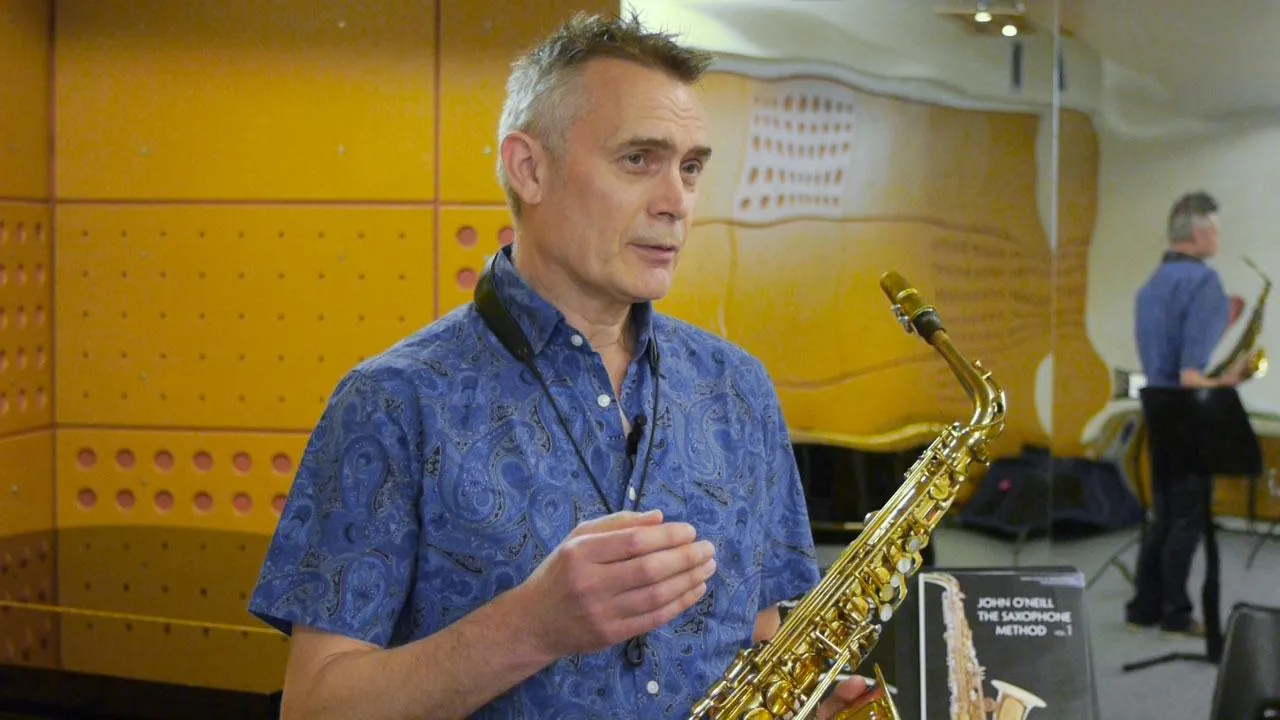
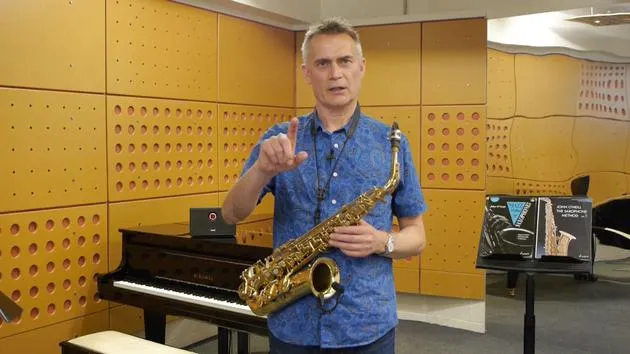
John O'NeillJohn O'Neill zeigt dir, wie du einen guten Saxofon-Ansatz bildest, indem du ihn dir als Trichter für deine Luft vorstellst, damit deine erste Note sauber klingt.
Das steckt im Kurs
25 Lektionen (2h 10m) · 1 gratis
01. Haltung
13:20
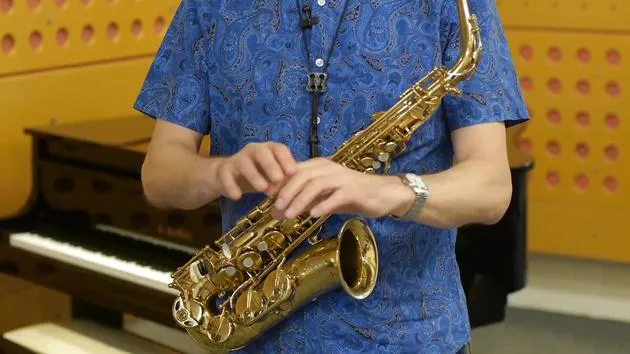
02. Fingersatz
4:10
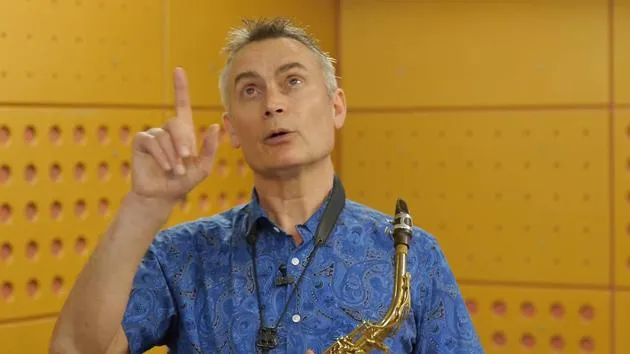
03. Die Atmung
4:12
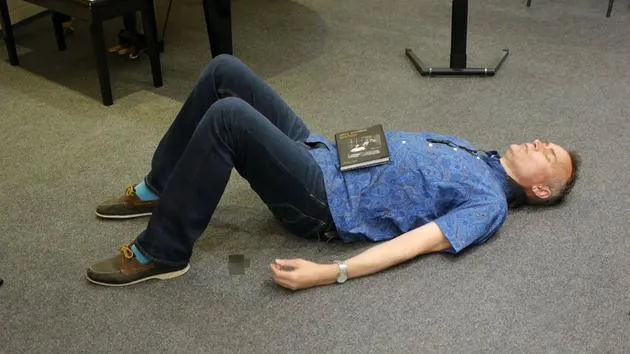
04. Atemübung Nr. 1
3:24
05. Atemübung Nr. 2
4:34
06. Atemübung Nr. 3
2:29
07. Atemübung #4
1:27
08. Atemübung Nr. 5
2:27
09. Der Ansatz und deine erste Note
Du bist hier9:46
10. Fehlersuche bei deinem ersten Ton
9:34
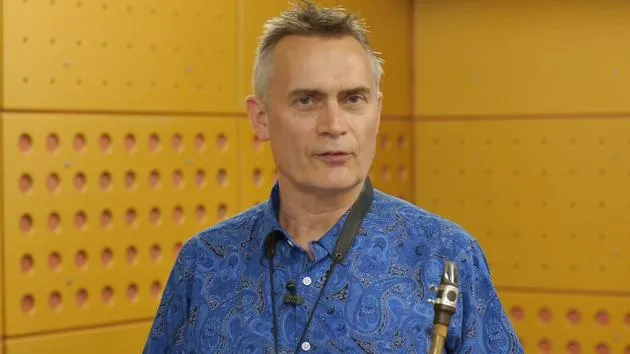
11. Deinen Klang entwickeln
3:43
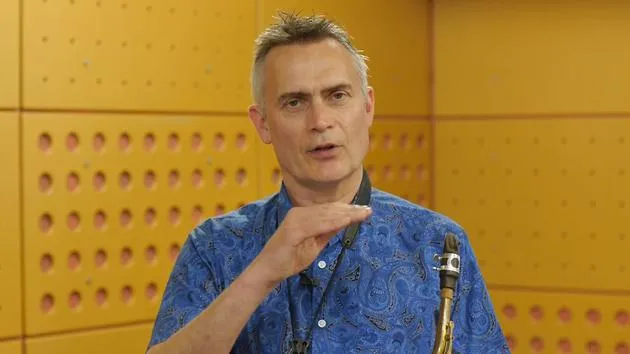
12. Zungenstoß-Übung #1
4:36
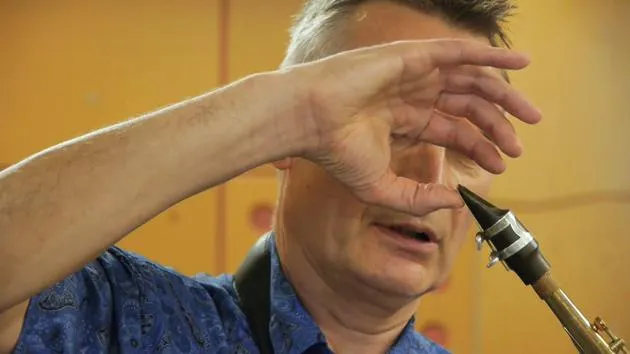
13. Zungenstoß-Übung Nr. 2
6:49
14. Abschließende Gedanken & Üben
1:57
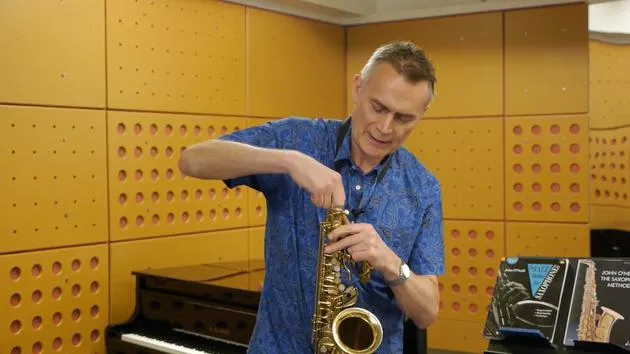
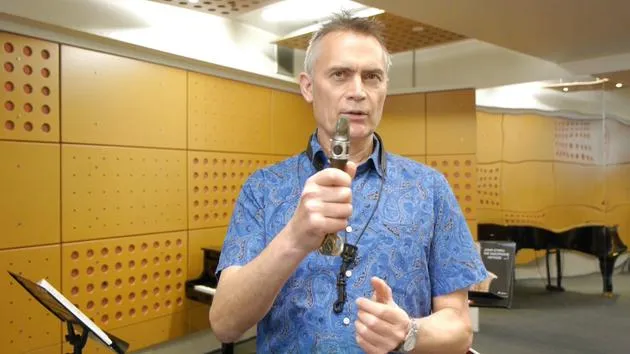
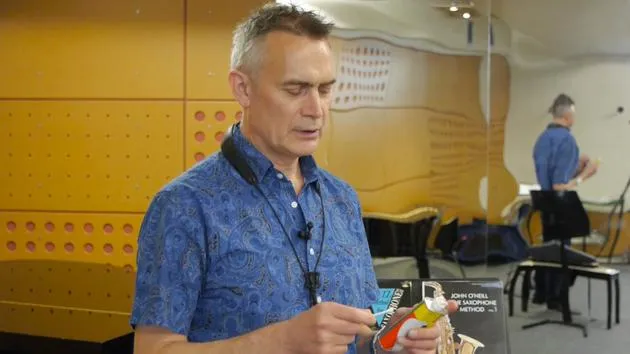
Transkript der Lektion
Understanding Embouchure
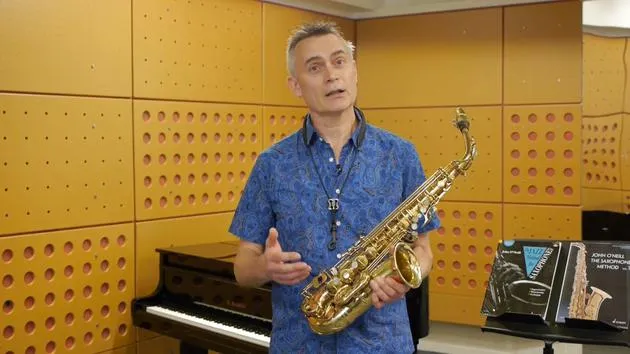
Embouchure is, I believe, a French word that means where a river opens out into the sea. For saxophone players, it's best to think of it as a funnel for your breath.
Importance of Embouchure
What's really important here is to understand that even if you've got your breathing right and mastered those breathing exercises I've already shown you, if you don't get your embouchure right, you can sabotage everything. In this lesson, I'm going to share a few simple and memorable tips to help you create a good embouchure, leading to a good sound.
The Science of Sound Production
One of the first things I explain to my students is the science behind sound production.
- Remember when I talked about different aspects of the mouthpiece?
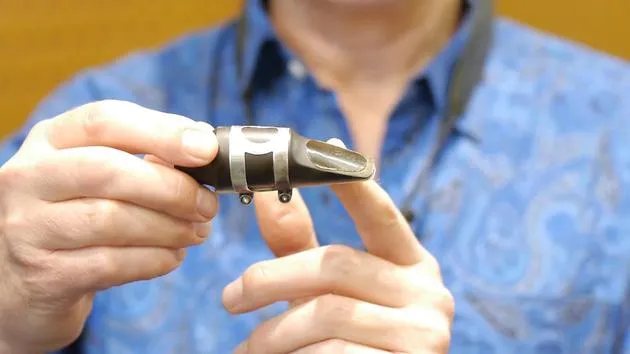
- I discussed tip opening and the free vibrating length of the reed.
The length from the point where you can no longer see daylight between the reed and the mouthpiece to the end of the mouthpiece represents the free vibrating length of the reed.
Lower Lip Position
To create an effective sound, your lower lip needs to be positioned precisely where that vibration begins.
A common problem I encounter with new students, especially those who have been playing for a while without improving their sound, is that their teeth are perched right on the end of the mouthpiece.
- We all have different bite characteristics.
- A normal bite is when your top teeth are just slightly in front of your lower teeth.
- I have a pronounced overbite, meaning my top teeth protrude a bit more.
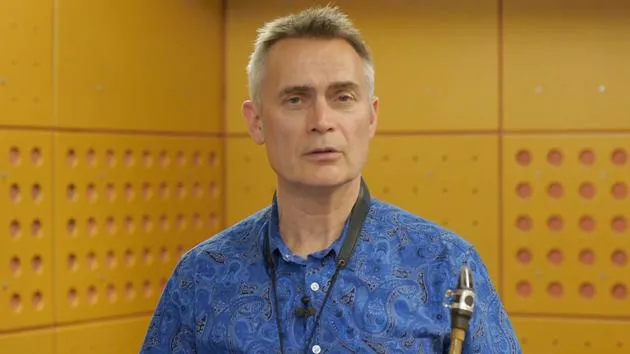
For me, this means that to get my lower lip to that ideal point where the reed meets the mouthpiece, I need to position my top teeth a little further forward. So, while you might see a lot of mouthpiece in my mouth, it's not just about that, it's about where my lower lip is positioned.
Key Principles for a Good Embouchure
There are three important principles to remember:
-
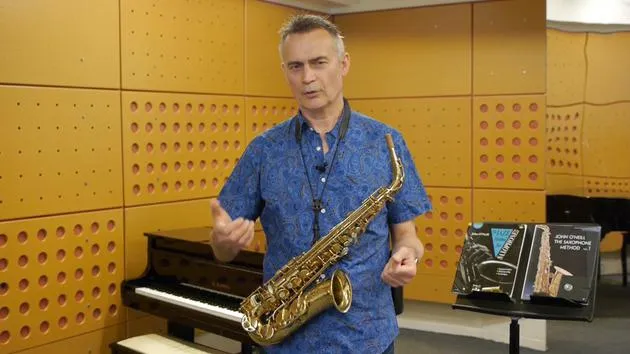
Anchor Your Front Teeth
- During our discussion on posture, I mentioned nodding my head down onto the top of the mouthpiece.
- Many people touch their teeth very lightly on the mouthpiece, creating instability.
- We need stability, so your teeth should be firmly anchored on the top of the mouthpiece.
-
Tuck Your Lip In
- Slightly tuck your lip in, and to do this, imagine you're making an "F" or a "TH" sound.
- While there is a school of thought that advocates for a "lip out" embouchure, I recommend the lip-in style for beginners.
-
Mouth Corners In
- The most important principle is to remember that the corners of your mouth must come in towards the center.
- Visualize the shape of your mouth when you whistle; the corners move inward.
Activating Lower Lip Muscles
Your lower lip should be relaxed naturally. If you grab hold of it while completely relaxed, it won't work for playing the saxophone. We need to activate the muscles in the lower lip, which can be done through the muscles at the corners of your mouth.
- The musculature in your face is complex, stretching around your lips, nose, and even up towards the corners of your eyes.
- Think of your mouth corners as an elastic band. When pushed in towards the center, the muscles in the lower lip firm up.
Exercise to Practice Embouchure
I often recommend a practical exercise:
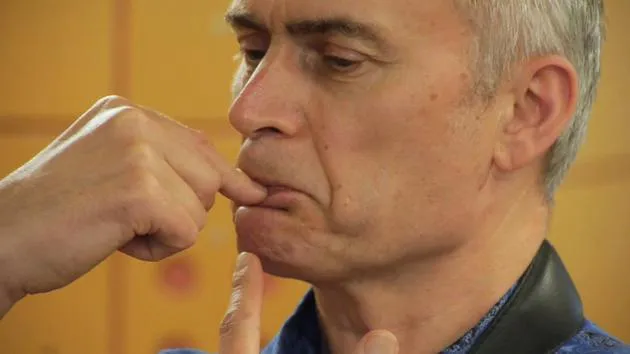
- Push down on your lower lip and try to resist the downward pressure with your finger.
- Turn to the side slightly while doing this, keep your chin down to stretch the area between your lip and chin.
- Maintain resistance with your muscles.
Avoid the Incorrect Approach:
- If your chin pushes up towards your finger, you're not using the muscles correctly, this will not produce a good embouchure or sound.
Applying These Principles on Saxophone
Now that we've covered the three key points, let's think of them as hooks to simplify the learning process:
- Anchor - Visualize an anchor.
- F Shape - Tuck your lip in.
- Whistling - Imagine the feeling of whistling.
Alternative Shapes: If you can't whistle, think of an "O" shape or the sensation of gripping a large straw with your lips.
Remember, the saxophone embouchure relies on your lip muscles, not on your teeth or jaw structure.
Demonstration
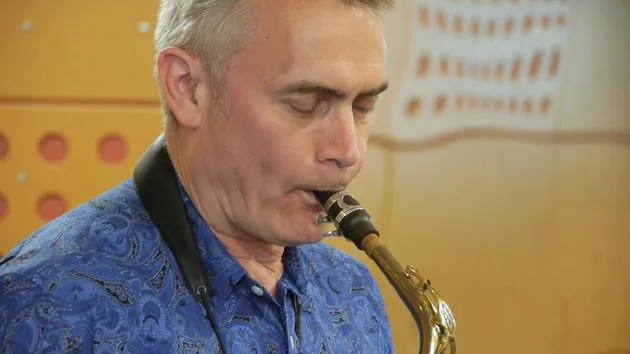
Now, I'll demonstrate creating an embouchure and producing a sound.
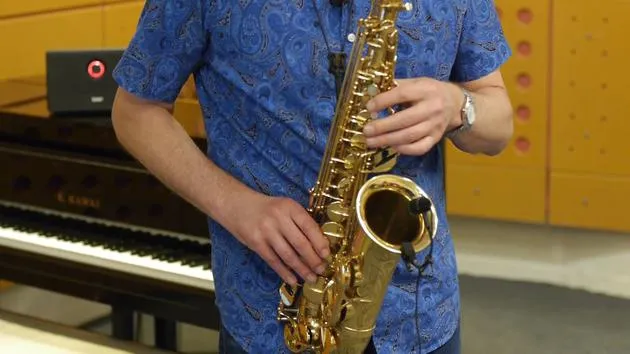
- Finger the note B with the index finger of your left hand.
- Keep the three crucial points in mind.
- To start, it doesn't matter if you use your tongue, just breathe into the saxophone, aiming to create as long and steady a note as possible.
25 Lektionen
2 Std. 10 Min. strukturierte Videolektionen
Erweiterte Videofunktionen
Verlangsamen, Passagen loopen, mitlesen
Handy, Tablet & Desktop
Üben, wo du willst
100 % Zufriedenheitsgarantie
30 Tage Geld-zurück-Garantie
Lern deinen Guru kennen
Lern deinen Guru kennen
John O'Neill ist der Saxofonist hinter The Jazz Method for Saxophone, der bei Schott erschienenen Reihe, die einer ganzen Generation von Musikern weltweit das Improvisieren beigebracht hat. Erstmals 1991 veröffentlicht, zählt sie neben seinen begleitenden Methoden für Klarinette und Flöte bis heute zu den meistverkauften Jazz-Lehrwerken, die je geschrieben wurden.
Zum Saxofon kam er mit zwanzig Jahren, während er am Trinity College in Oxford Französisch und Deutsch studierte, nachdem er John Coltrane gehört hatte. Anschließend studierte er beim großen britischen Tenoristen Don Rendell und lernte Improvisation bei Lee Konitz, Warne Marsh und Peter Ind, den direkten Erben des legendären Lehrers Lennie Tristano. Seit 1979 professioneller Musiker, ist er auf Jazz und Bossa Nova spezialisiert und hat in Londons führenden Clubs gespielt, darunter im Ronnie Scott's, und komponiert zugleich Musik für Film, Fernsehen, Theater und Tanz.
Als ausgebildeter Lehrer mit jahrzehntelanger Erfahrung hat John Saxofon, Klarinette und Flöte privat und an Schulen unterrichtet, im Jazz-Studiengang des Trinity College of Music in London sowie bei Sommerkursen in Spanien und der Tschechischen Republik. Von seinem Zuhause im Norden Londons aus tritt er nach wie vor auf und unterrichtet.







