



Die Ausrüstung
Lesson time: (10min 51sec)
Course preview
This lesson is part of the course The Saxophone Method Vol. 1: Grundlagentechniken
Watch a preview of the full course below.
Lesson transcript:
Equipment for Saxophone Playing
So in this video, I'm going to talk about the equipment. Sometimes, what happens is people come to me for a lesson and they're struggling with their sound. I always check the equipment first. The reason being, through past experience, sometimes you ask them to do some exercises and then you discover halfway through the lesson, the instrument just doesn't work properly.
Importance of Checking Your Instrument
These days, I make a point of trying the instrument and checking it out straight away. If you already have an instrument, it's really important that you get it checked out thoroughly.
- The ideal person to do this, if you have a teacher, is your teacher.
- Alternatively, it could be a friend who plays really well or a professional player.
- Ideally, you would get it checked out by a technician.
Of course, if you've bought a new instrument, that should have been done already before you took it away from the shop. But even with new instruments, sometimes you discover they develop little problems.
Common Problems with Saxophones
Let me just say a few words about the kind of problems that can make playing the saxophone really difficult. Here's my saxophone. Think of it as just a long conical tube with holes in it.
In order to function properly, when you close these keys (which you'll see there are pads underneath), these holes need to be absolutely sealed perfectly so that there's no air leaking from anywhere in the tube.
- If I press my fingers down and close the keys, a tiny leak due to one of the pads not seating properly higher up the instrument can cause serious problems, especially noticeable down at the bottom.
- This is one of the most common problems. When people start playing, they find they're struggling with the low notes.
- While there can be technical problems with the embouchure or breathing, sometimes it is indeed a problem with the instrument.
Recommendations for Buying a Saxophone
First thing's first: get your instrument checked out and make sure that it's working properly.
Now, it may be that you're renting a saxophone to begin with. If you're thinking of buying one, I always say:
- Buy the best instrument that you can afford.
- Some people may say they'll start with a cheap student model because they're unsure if they will continue. In my experience, most people do not give up the saxophone within a few weeks or months. The most common point of giving up, if they're going to, is usually after two or three years.
So my recommendation is: if you can afford to buy a really nice instrument, do so, because you won't regret it.
Quality Brands to Consider
There are lots of good instruments out there. Some of the best manufacturers are:
- Selmer
- Yamaha
- Yasagwa
- Carworth
When considering a student instrument, the one I've always recommended is a Yamaha. They have good quality control and rarely present issues. Additionally, they hold a good resale value.
Choosing a Dealer
If you're choosing a dealer to buy your saxophone, keep in mind:
- The guarantee they give you on the instrument is only as good as the repair person at the back of the shop.
- For example, if you bought a new saxophone and it develops a fault, they will likely not send it back to the manufacturer. Instead, it will typically require a minor adjustment by the repair technician.
Before buying from any shop, try to find out about the technician's experience and qualifications:
- Ideally, talk to the technician to gain insights about the instrument from a build quality perspective.
- Experienced technicians will know how often particular makes of saxophones come back for repairs, giving you an idea of reliability.
Buying Secondhand Instruments
Another attractive option is to buy a secondhand instrument. The great advantage of this is:
- A good quality secondhand saxophone will not only hold its value but may increase over time.
- For example, my first great saxophone was a Selmer Mark 6 tenor that I bought in 1975 for £250. Over 20 years later, I sold it for tenfold its original value.
Instruments can be a good investment, providing both financial return and personal enjoyment.
Vintage American Saxophones
When considering secondhand options, you may come across vintage American saxophones:
- Notable brands include Buescher, Martin, King, and Con.
- These instruments are wonderful and well-regarded by very famous players.
If you're an inexperienced player buying secondhand, it's crucial to enlist the help of your teacher or an experienced professional player to check that the instrument is working well.
Caring for Your Saxophone
There's no reason why a vintage saxophone can't work perfectly. My current tenor, for instance, is a 1928 Con. Just remember to avoid buying a soft case, as they do not protect your instrument.
- Saxophones may look robust, but they are incredibly fragile.
- For instance, dropping your saxophone from a certain height can throw the action out of adjustment.
Proper Handling and Storage
When traveling with your saxophone:
- Avoid putting it in the boot of your car; instead, treat it like a passenger on the backseat.
- I advise my students, especially younger ones, to treat the saxophone as if it were a baby, being careful not to bash it against door frames.
Choosing the Right Case
If you're buying a shaped case:
- It needs to be strong.
- For example, I use a flight case that is tough enough to withstand being sat on, ensuring maximum protection.
However, I would never put my case in the hold of an aircraft. If I'm traveling, my saxophone always goes in the overhead locker.
Final Thoughts
Baggage handlers tend to throw saxophone cases around, so treat your instrument with the utmost care to ensure it remains in good working order for years to come.
About the instructor
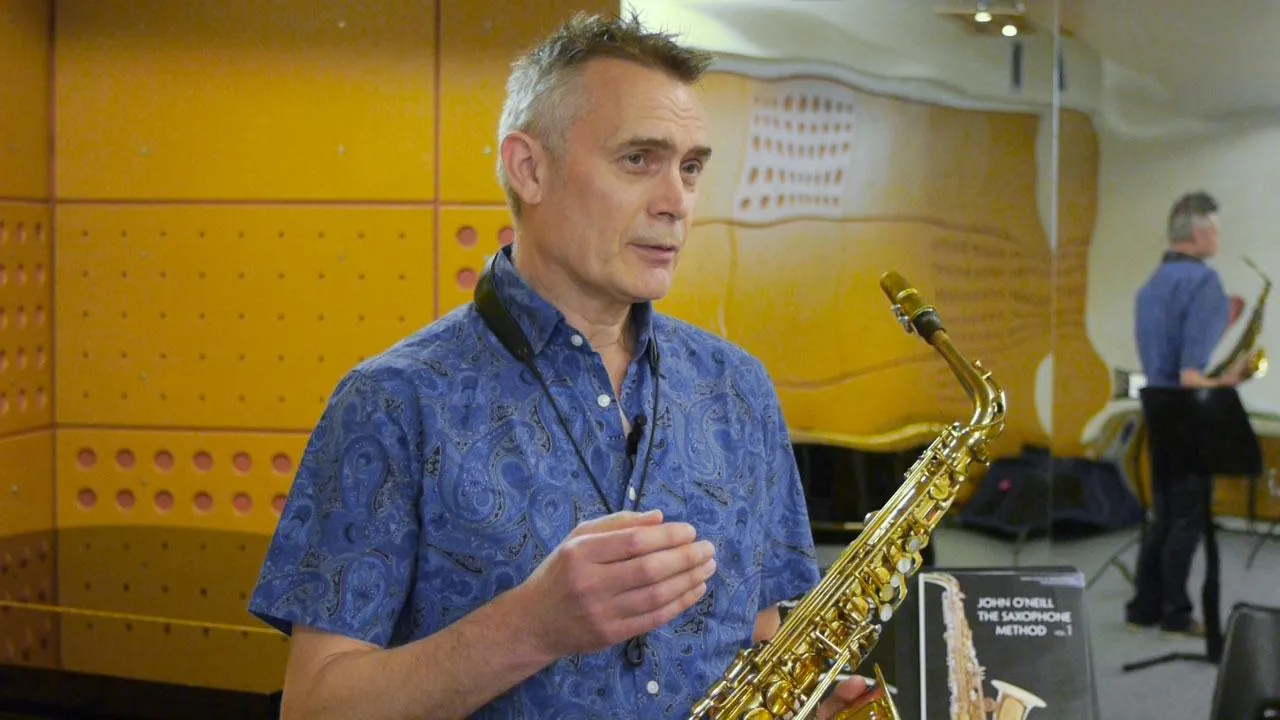
John O'Neill ist der Saxofonist hinter The Jazz Method for Saxophone, der bei Schott erschienenen Reihe, die einer ganzen Generation von Musikern weltweit das Improvisieren beigebracht hat. Erstmals 1991 veröffentlicht, zählt sie neben seinen begleitenden Methoden für Klarinette und Flöte bis heute zu den meistverkauften Jazz-Lehrwerken, die je geschrieben wurden.Zum Saxofon kam er mit zwanzig Jahren, während er am Trinity College in Oxford Französisch und Deutsch studierte, nachdem er John Coltrane gehört hatte. Anschließend studierte er beim großen britischen Tenoristen Don Rendell und lernte Improvisation bei Lee Konitz, Warne Marsh und Peter Ind, den direkten Erben des legendären Lehrers Lennie Tristano. Seit 1979 professioneller Musiker, ist er auf Jazz und Bossa Nova spezialisiert und hat in Londons führenden Clubs gespielt, darunter im Ronnie Scott's, und komponiert zugleich Musik für Film, Fernsehen, Theater und Tanz.Als ausgebildeter Lehrer mit jahrzehntelanger Erfahrung hat John Saxofon, Klarinette und Flöte privat und an Schulen unterrichtet, im Jazz-Studiengang des Trinity College of Music in London sowie bei Sommerkursen in Spanien und der Tschechischen Republik. Von seinem Zuhause im Norden Londons aus tritt er nach wie vor auf und unterrichtet. read more