



Fingersatz
Lesson time: (4min 10sec)
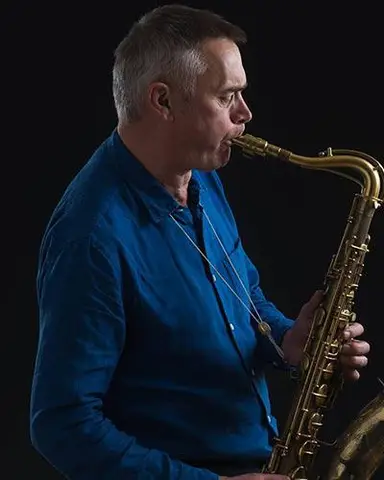
John O'Neill zeigt dir, wie du das Saxofon mit entspannten, gerundeten Fingern hältst, als hieltest du einen Tennisball, und wie leicht du die Klappen drückst.
Course preview
This lesson is part of the course The Saxophone Method Vol. 1: Grundlagentechniken
Watch a preview of the full course below.
Lesson transcript:
Fingering Techniques for Saxophone
When it comes to fingering, I generally tell my students to imagine that they're holding a tennis ball in each hand. This is important because I want the fingers to be:
- Nicely curving
- Not flat
- Not contracted like claws
- Just gently curving
Visualization of Proper Fingering
Let me demonstrate what I mean by this.
- If I'm fingering a low C and I take my hands off the saxophone, one after the other, you'll see that you could fit a tennis ball into my hand.
- The same applies to my left hand; if I lift it up, you can see that a tennis ball would fit comfortably there.
Key Insight: The fingers must be gently curving. Let the springs do the work for you!
Understanding Key Pressure
All keys operate on a spring mechanism, which means:
- If you relax, the spring will push your finger away from the key.
- Many beginners make the mistake of pressing much too hard and applying excessive pressure.
If the saxophone is well-adjusted (which it should be if it's new, and ideally in good condition if it's secondhand), you only need to use very moderate pressure to ensure that the pad seals correctly.
Important Note: If pressing hard is necessary to make a note sound, this is a sign that the instrument is not in good adjustment. You should take it to a technician for adjustments.
The Right Approach to Key Action
Rather than thinking about pressing down, consider allowing the springs to do the work by pushing your fingers away from the keys.
- As you play, notice how my fingers stay very close to the keys, touching or almost touching.
- It's a very light action, similar to a hammer action initiated at the knuckle joint.
Common Mistakes in Finger Positioning
I often see players using flat fingers, in this kind of position:
- This is not good!
- You will never be able to play quickly with your hands in that position.
Remember: Curve your fingers gently.
The Importance of Relaxation
As I mentioned earlier about the neck and shoulders, it's virtually impossible to have relaxed hands and fingers if your arms, neck, and shoulders are tense.
- It's crucial to stand correctly:
- Get your shoulders relaxed.
- Keep your neck relaxed.
This allows your wrists, hands, and fingers to be relaxed while playing.
Practice Tips for Fingering
One last point about fingering relates to your practice habits:
- Practice slowly.
- Playing at a slower tempo helps to relax your fingers.
- Trying to play too fast too quickly can encourage tension in your fingers.
Surprisingly, by practicing more slowly, you'll actually be able to play faster. I know that sounds strange, but it's true.
About the instructor
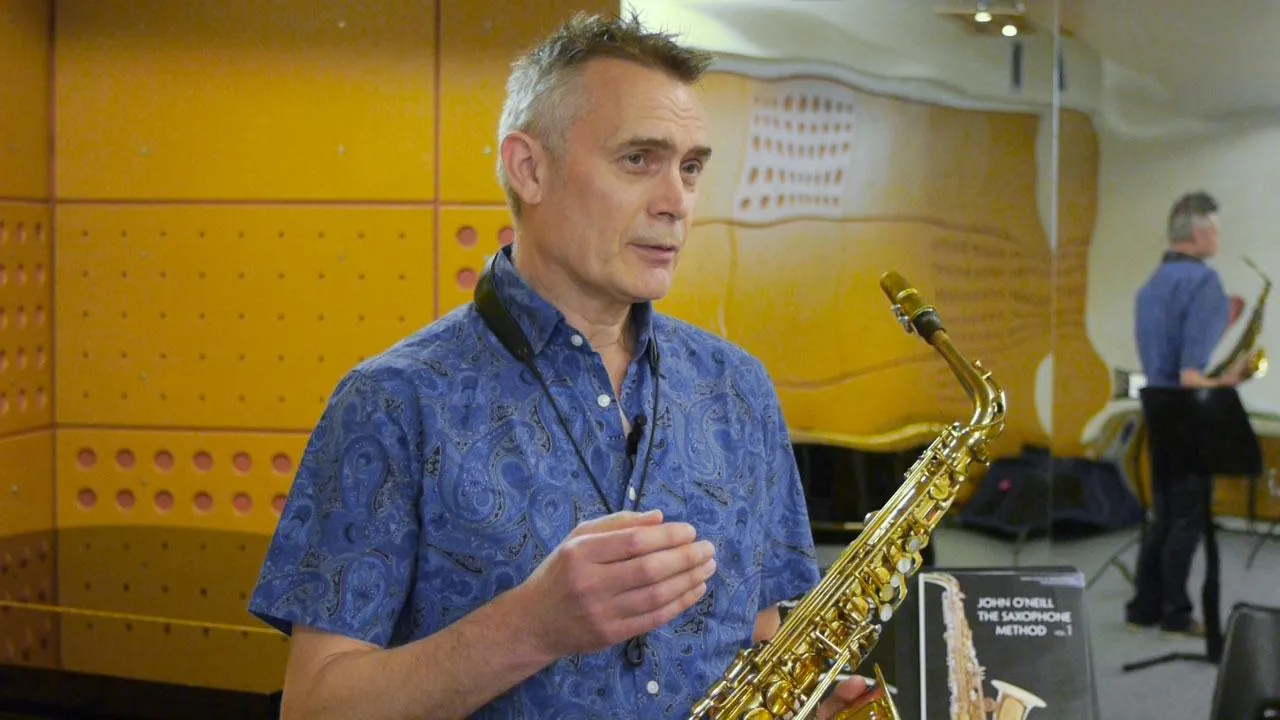
John O'Neill ist der Saxofonist hinter The Jazz Method for Saxophone, der bei Schott erschienenen Reihe, die einer ganzen Generation von Musikern weltweit das Improvisieren beigebracht hat. Erstmals 1991 veröffentlicht, zählt sie neben seinen begleitenden Methoden für Klarinette und Flöte bis heute zu den meistverkauften Jazz-Lehrwerken, die je geschrieben wurden.Zum Saxofon kam er mit zwanzig Jahren, während er am Trinity College in Oxford Französisch und Deutsch studierte, nachdem er John Coltrane gehört hatte. Anschließend studierte er beim großen britischen Tenoristen Don Rendell und lernte Improvisation bei Lee Konitz, Warne Marsh und Peter Ind, den direkten Erben des legendären Lehrers Lennie Tristano. Seit 1979 professioneller Musiker, ist er auf Jazz und Bossa Nova spezialisiert und hat in Londons führenden Clubs gespielt, darunter im Ronnie Scott's, und komponiert zugleich Musik für Film, Fernsehen, Theater und Tanz.Als ausgebildeter Lehrer mit jahrzehntelanger Erfahrung hat John Saxofon, Klarinette und Flöte privat und an Schulen unterrichtet, im Jazz-Studiengang des Trinity College of Music in London sowie bei Sommerkursen in Spanien und der Tschechischen Republik. Von seinem Zuhause im Norden Londons aus tritt er nach wie vor auf und unterrichtet. read more