



Die Atmung
Mit
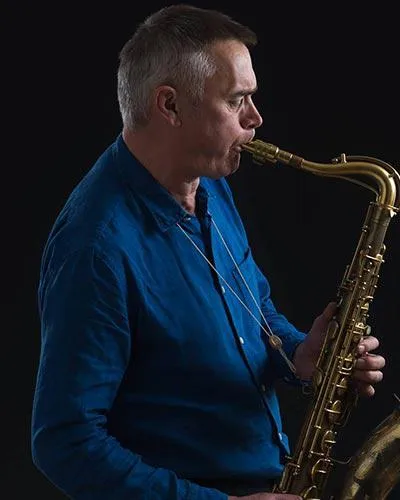
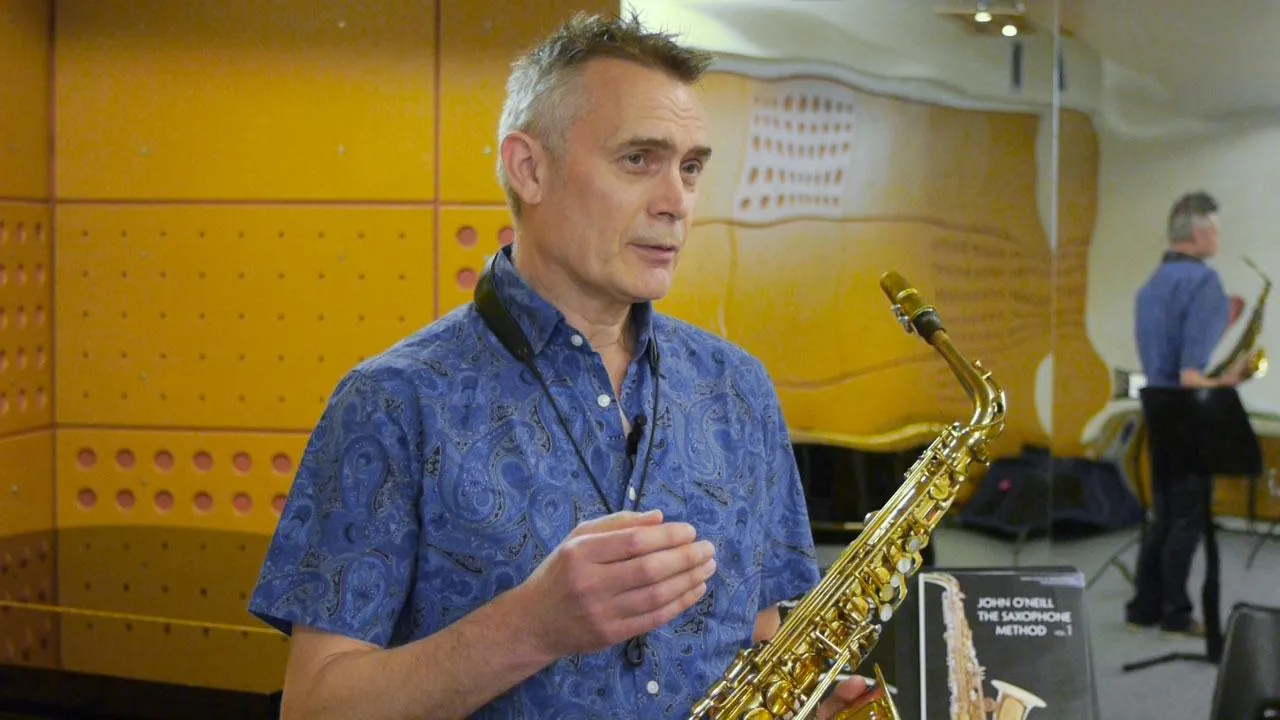
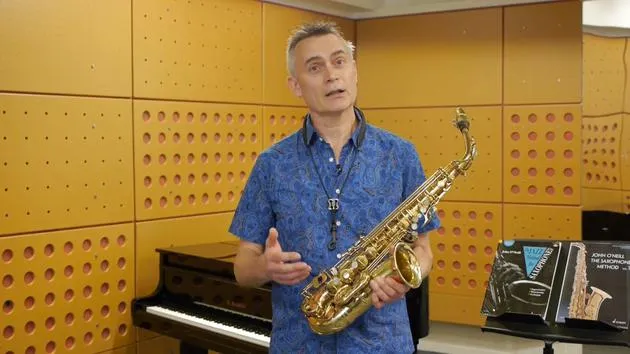
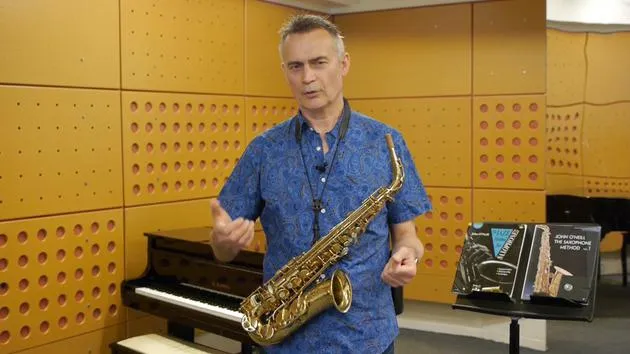
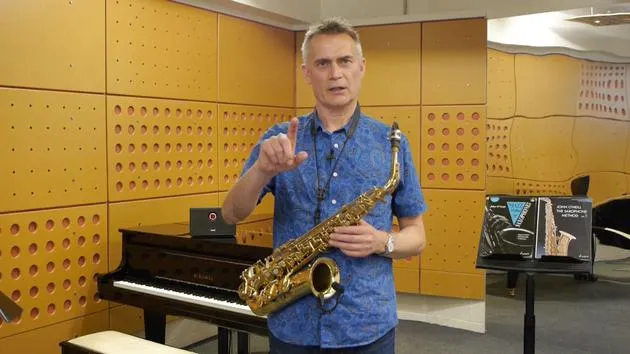
John O'NeillJohn O'Neill erklärt, warum das Saxofon eigentlich ein Ateminstrument ist und warum das Kontrollieren deines Atems der Schlüssel zu einem guten Klang ist.
Das steckt im Kurs
25 Lektionen (2h 10m) · 1 gratis
01. Haltung
13:20
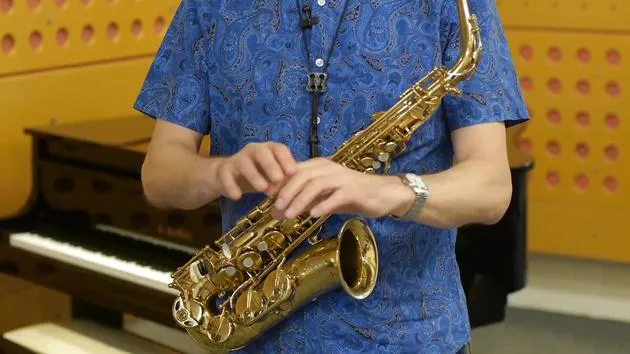
02. Fingersatz
4:10
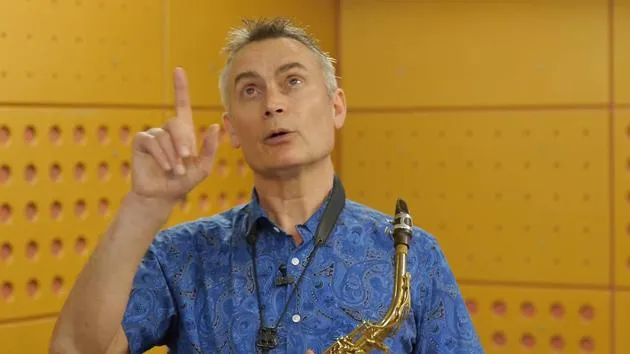
03. Die Atmung
Du bist hier4:12
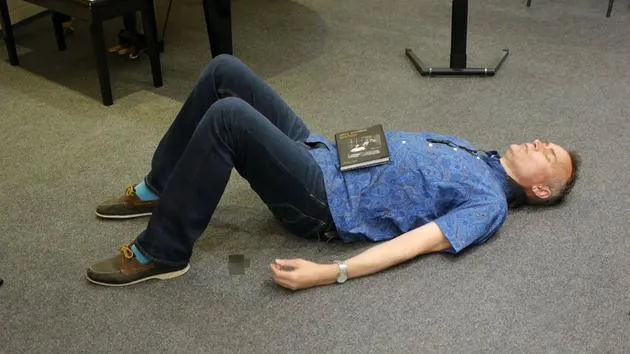
04. Atemübung Nr. 1
3:24
05. Atemübung Nr. 2
4:34
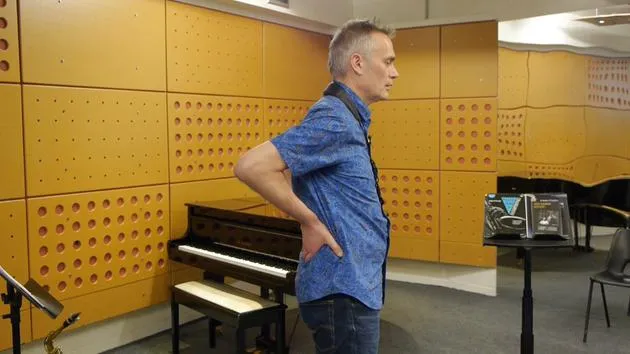
06. Atemübung Nr. 3
2:29
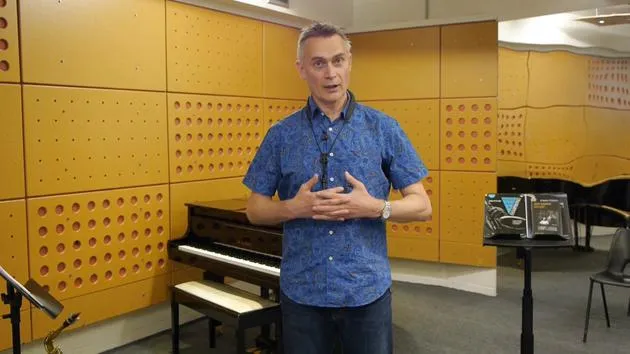
07. Atemübung #4
1:27
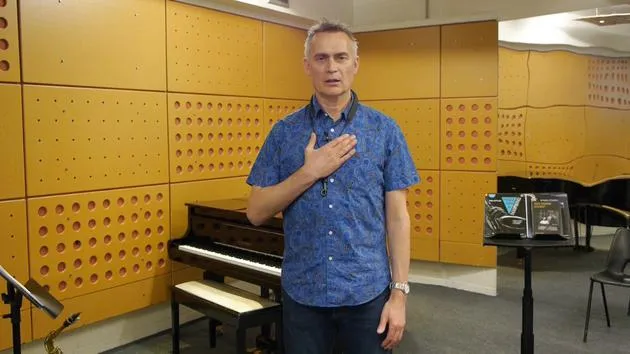
08. Atemübung Nr. 5
2:27
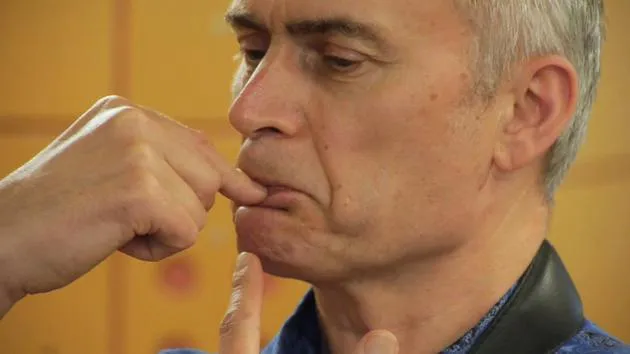
09. Der Ansatz und deine erste Note
9:46
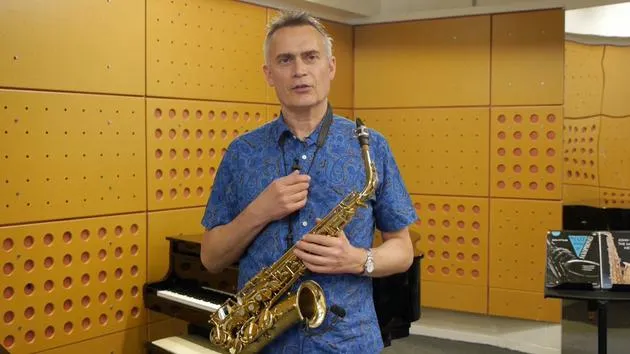
10. Fehlersuche bei deinem ersten Ton
9:34
11. Deinen Klang entwickeln
3:43
12. Zungenstoß-Übung #1
4:36
13. Zungenstoß-Übung Nr. 2
6:49
14. Abschließende Gedanken & Üben
1:57
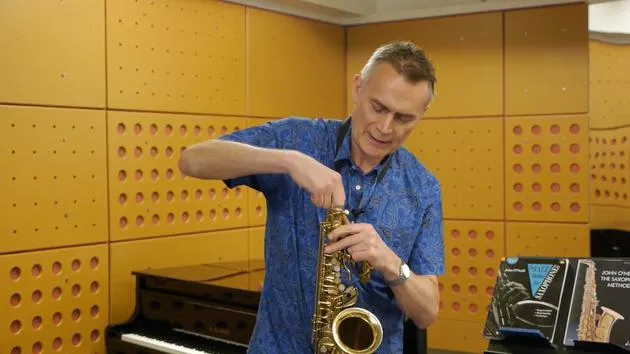
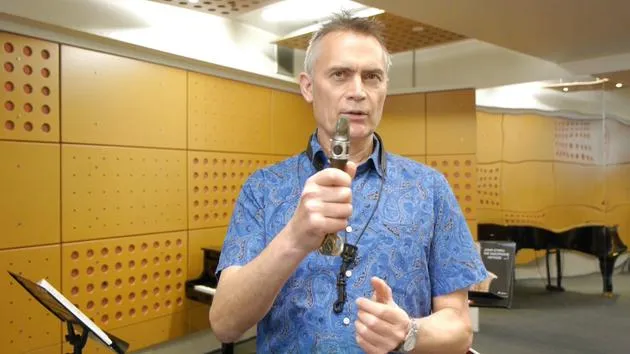
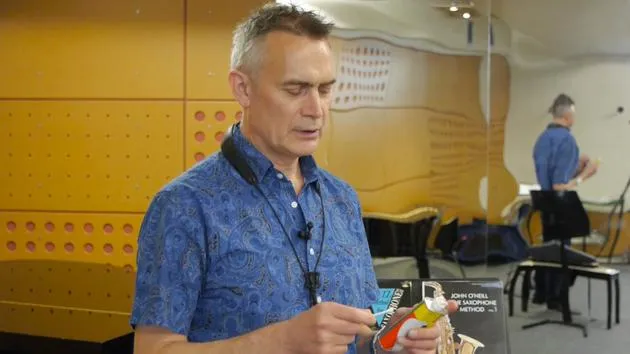
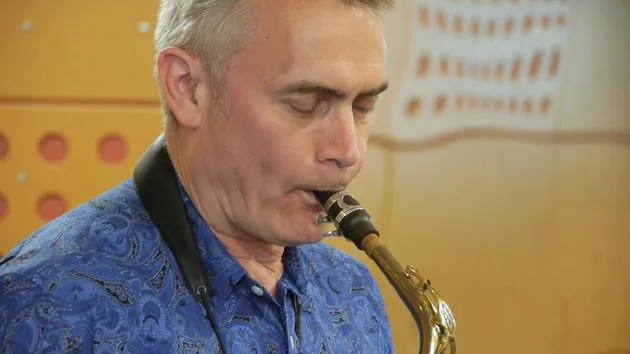
Transkript der Lektion
Understanding the Saxophone as a Breath Instrument
The saxophone is a wind instrument. So what does that mean?
It means it's a breath instrument. In fact, I'd really prefer it if they would refer to it as a breath instrument because it focuses you on what the essential thing is:
Learning to control your breath is absolutely key to playing the saxophone.
Common Experiences
Well, maybe some of you have had the experience where your friend says, "Oh, can I play your saxophone?"
They try to blow it and they do something like this:
They go...
And that's a very common experience. The reason they don't get a great sound, of course, is because they're not controlling their breath.
The Balloon Analogy
Think of it like a balloon:
- You blow up a balloon. What happens if you let it go?
- Within a few seconds, the balloon flies around the room and then lands on the floor.
- Now imagine blowing up the same balloon and putting your fingers on the neck of the balloon so the air comes out really slowly.
- Then the balloon gradually, gradually, gradually deflates.
So what we're looking at here is learning to control the breath.
A Common Misconception
A big misconception about playing the saxophone, or any woodwind instrument for that matter, is that you need a large volume of air to make a good sound.
No, you don't need a large volume of air. What you need is to learn to control a small quantity of air.
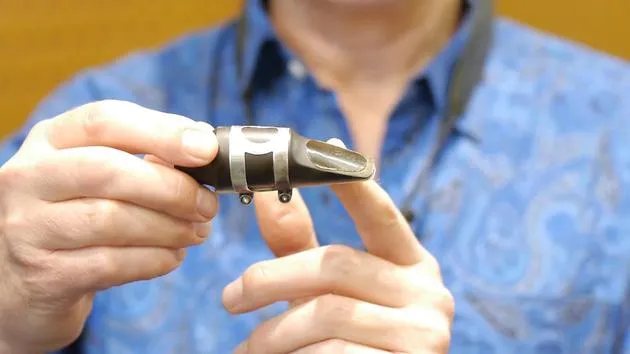
Don't forget, the sound is being generated from the reed vibrating on the mouthpiece. So even if I take the crook off of the saxophone, I'm still going to get a sound. w
Helpful Imagery
I think there are a couple of images that I tend to use to help people with this idea of controlling small quantities of air:
1. The Birthday Cake
Imagine a birthday cake with 20 candles on it.
- How are you going to blow so that you can blow the candles out in one go?
- This won't work because the candles will flicker, and many of them will still be lit.
What works effectively is this kind of breath. Even a small child can learn to do that.
2. The Floating Feather
Another image I use is imagining a small feather floating down from the ceiling.
- You're blowing to try and keep it in the air.
- It wouldn't work to blow hard.
What you need is a steady exhalation of a small quantity of air.
3. Air Escaping from a Tire
Finally, another image is air escaping from a bicycle or car tire.
- If you press on the valve, it can help you realize that although a small quantity of air is escaping, it's coming out under pressure.
- Imagine pressing on that bicycle tire's valve and getting that little, very concentrated escape of a small quantity of air.
In conclusion, understanding how to control your breath will greatly improve your saxophone playing experience!
25 Lektionen
2 Std. 10 Min. strukturierte Videolektionen
Erweiterte Videofunktionen
Verlangsamen, Passagen loopen, mitlesen
Handy, Tablet & Desktop
Üben, wo du willst
100 % Zufriedenheitsgarantie
30 Tage Geld-zurück-Garantie
Lern deinen Guru kennen
Lern deinen Guru kennen
John O'Neill ist der Saxofonist hinter The Jazz Method for Saxophone, der bei Schott erschienenen Reihe, die einer ganzen Generation von Musikern weltweit das Improvisieren beigebracht hat. Erstmals 1991 veröffentlicht, zählt sie neben seinen begleitenden Methoden für Klarinette und Flöte bis heute zu den meistverkauften Jazz-Lehrwerken, die je geschrieben wurden.
Zum Saxofon kam er mit zwanzig Jahren, während er am Trinity College in Oxford Französisch und Deutsch studierte, nachdem er John Coltrane gehört hatte. Anschließend studierte er beim großen britischen Tenoristen Don Rendell und lernte Improvisation bei Lee Konitz, Warne Marsh und Peter Ind, den direkten Erben des legendären Lehrers Lennie Tristano. Seit 1979 professioneller Musiker, ist er auf Jazz und Bossa Nova spezialisiert und hat in Londons führenden Clubs gespielt, darunter im Ronnie Scott's, und komponiert zugleich Musik für Film, Fernsehen, Theater und Tanz.
Als ausgebildeter Lehrer mit jahrzehntelanger Erfahrung hat John Saxofon, Klarinette und Flöte privat und an Schulen unterrichtet, im Jazz-Studiengang des Trinity College of Music in London sowie bei Sommerkursen in Spanien und der Tschechischen Republik. Von seinem Zuhause im Norden Londons aus tritt er nach wie vor auf und unterrichtet.







