



Die II-V-I
Mit
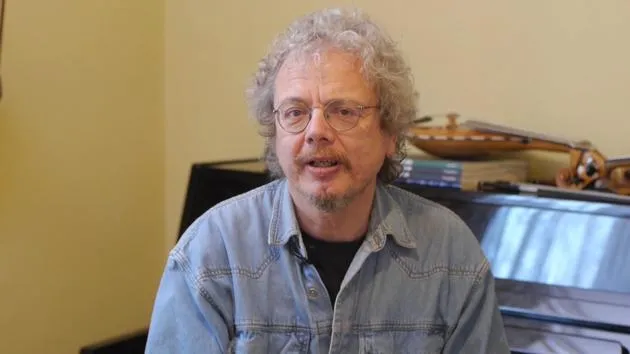
Chris HaighWir haben zuvor gesehen, wie sich auf jeder Stufe der Tonleiter ein anderer Akkord aufbauen lässt. Der I-Akkord ist ein major7, der II-Akkord ein minor7 und der V-Akkord ein Septakkord. Diese drei Akkorde treten sehr oft gemeinsam in derselben Reihenfolge auf – das nennt man einen II-V-I
Das steckt im Kurs
28 Lektionen (1h 46m) · 1 gratis
01. Verminderte Akkorde
6:10
02. Aufgabe: vermindert
0:17
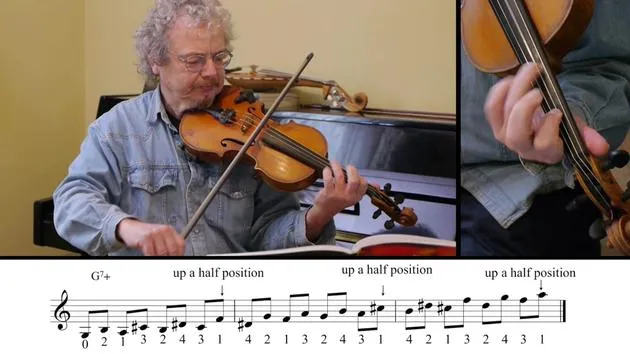
03. Übermäßige Akkorde
3:48
04. Aufgabe: übermäßige Akkorde
0:19
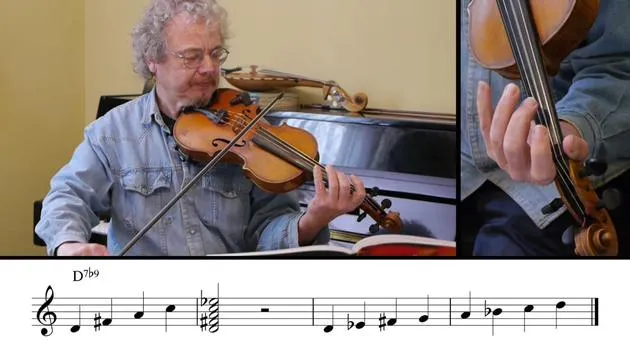
05. Minor 7b5/7b9
2:24
06. Aufgabe m7b5/7b9
1:15
07. Slash- und sus-Akkorde
6:18
08. Aufgabe: Slash- und Sus-Akkorde
0:18
09. Substitutionen und 'outside' spielen
7:21
10. Aufgabe: Outside spielen
0:29
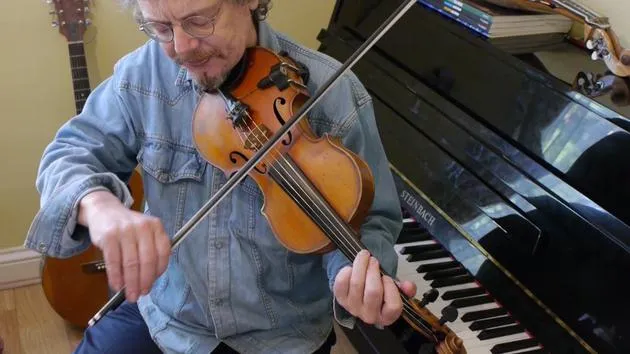
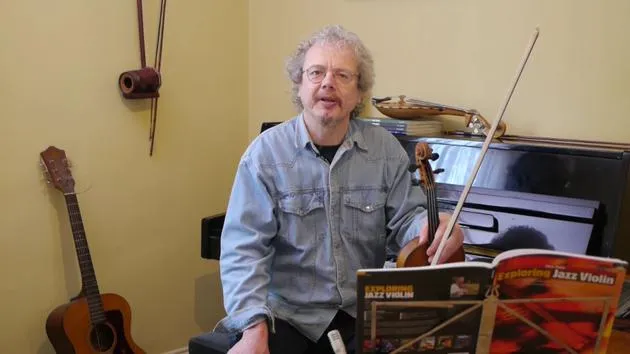
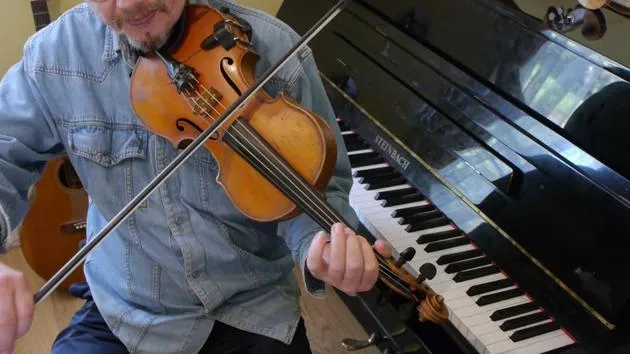
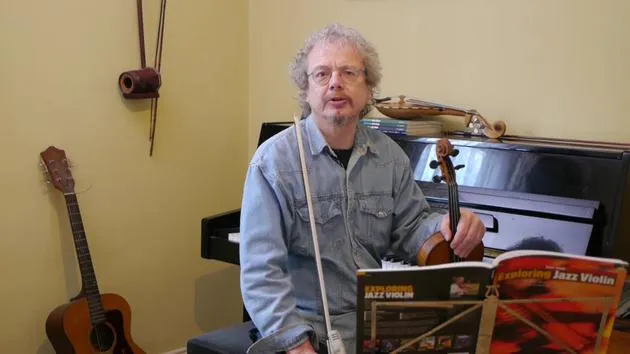
Transkript der Lektion
Understanding the 2-5-1 Progression
In this lesson, we're going to look at the two-five-one (2-5-1) we saw earlier. How a different chord can be built on each degree of the scale:
- The I chord is a major 7.
- The II chord is a minor 7.
- The V chord is a 7th.
These three chords very often appear together in the same order, known as a 251 in the key of G. This will be:
- A minor 7 (Am7)
- D7
- G major 7 (Gmaj7)
Importance of the 2-5-1 Progression
Understanding and recognizing the 251 makes it a lot easier to navigate through a chord sequence and helps you to play phrases with some logic and sense of direction.
What Does a 2-5-1 Look and Sound Like?
The 2 and 5 can either be half a bar each or a whole bar each. Because all three chords are created from the same scale, all the notes of each scale coincide. As you can see, this makes it easy to play a phrase that sits comfortably in each chord without having to change the scale as you go along.
Playing Techniques
Here are a few techniques you can try:
- Descending Line: Start on the root of a minor 7 and hit each new root as you arrive.
- Third of Each Chord: You can also start on the third of each chord.
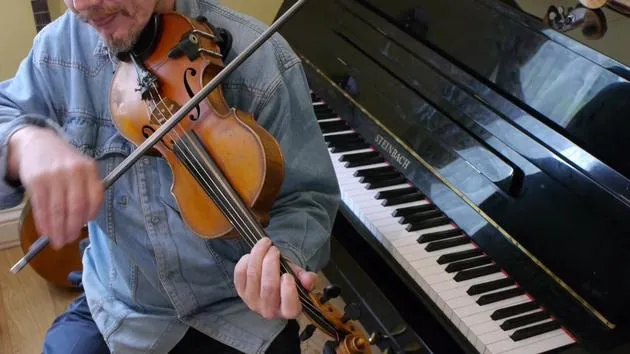
- Arpeggiating the Chord: Arpeggiating this way sounds very mechanical. It's much better to descend on the second arpeggio.
Experimenting with Notes
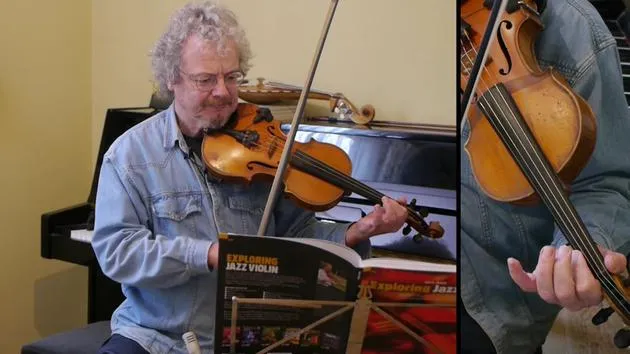
You get an interesting effect if you start the arpeggio on the third instead of on the root. So instead of 1-3-5-7, you now get 3-5-7.
- The ninth note of a minor 7 is B. This is an outside note. It's part of the scale, but it's not part of the chord, making it sound more colorful and interesting.
- You can take it even further, starting on the fifth of a minor 7, followed by 7, 9, and 11.
You don't have to play the D7 as an arpeggio. Adding these notes from outside the chord gives a more modern sound and an air of unpredictability.
Influences and Examples
A good example of a player who embraced this style was Stuff Smith.
- He was an American player who made his name in the 40s and was heavily influenced by bebop, which was much more adventurous in its approach to chords compared to the swing era.
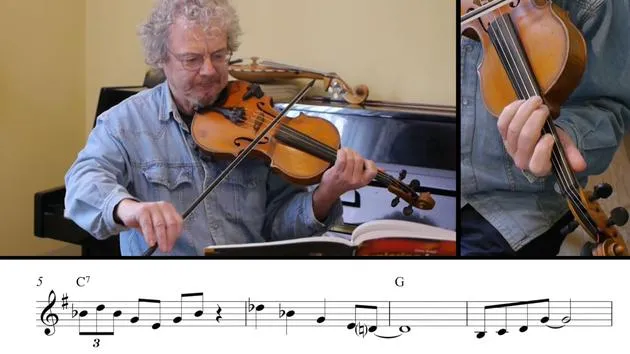
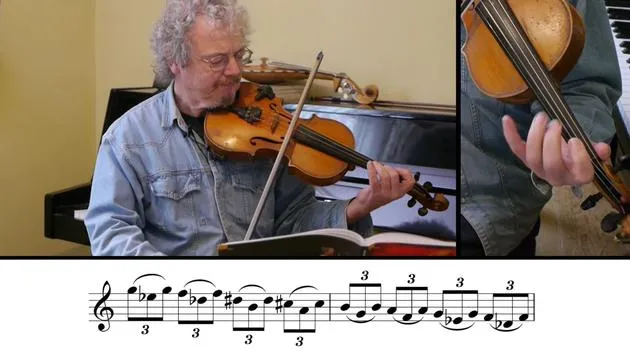
Stuff Smith Lick
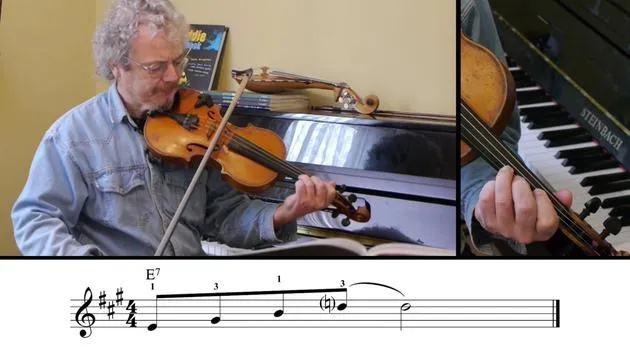
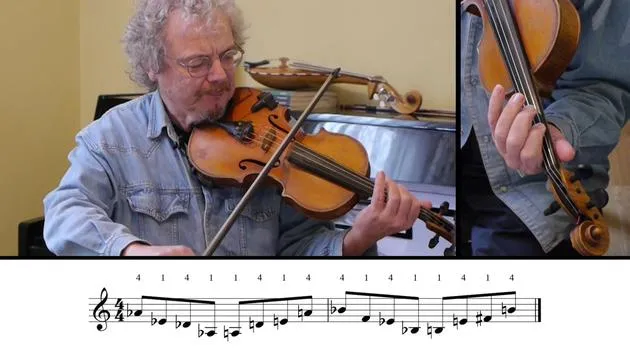
Here's a Stuff Smith lick which bounces around the chords:
- He often used a three-note chromatic descending scale over the 251.
- This starts on the root of a minor 7, descends to the flattened fifth of D7 (an outside note), creating tension before resolving to the root of G major 7.
He extends this idea to include arpeggios and also moves upwards from the root of the A minor 7 to the sharp 5 of the D7 to the third of G major 7.
Simplifying Your Approach
If you think this is getting a bit technical, don't worry. You're not expected to work out the relationships of notes to their chords as you're playing. The point is to memorize phrases like this so they become second nature.
Gropelli often used a simpler approach, playing blues phrases through a II V I.
Practice Suggestions
Here's an extended series of II V I chords:
- Use this to practice the scales, arpeggios, and licks from this chapter.
- Try making up your own phrases that have an obvious endpoint at the I chord.
Happy practicing!
28 Lektionen
1 Std. 46 Min. strukturierte Videolektionen
Erweiterte Videofunktionen
Verlangsamen, Passagen loopen, mitlesen
Handy, Tablet & Desktop
Üben, wo du willst
100 % Zufriedenheitsgarantie
30 Tage Geld-zurück-Garantie
Lern deinen Guru kennen
Lern deinen Guru kennen
Chris Haigh ist seit 25 Jahren professioneller Fiddle-Spieler mit Erfahrung in vielen verschiedenen Genres. Er hat auf über 75 Alben gespielt und dabei mit Künstlern wie Alison Moyet, Bob Geldof, All About Eve, Michael Ball, David Soul, Oumou Sangare, The Quireboys, Riverdance, Morcheeba, James Galway und Steps zusammengearbeitet.
Er hat Swing-Jazz mit The Kimbara Brothers, Diz Disley, Le Jazz, The Hot Club of London und den Quecumbar Allstars gespielt und leitet die siebenköpfige sowjetische Swing-Band The Kremlinaires.
Chris gibt Unterricht und Workshops zur Jazzgeigen-Technik und hat Jazzgeige an den Universitäten Middlesex, Brunel und Newcastle sowie am Truro College unterrichtet. Zu seinen Veröffentlichungen zählen neun Fiddle-Bücher, darunter The Fiddle Handbook.
Außerdem betreibt er Fiddling Around (fiddlingaround.co.uk), vermutlich die umfassendste und meistbesuchte Quelle für Fiddle-Wissen im Netz.







