



Minor 7b5/7b9
Mit
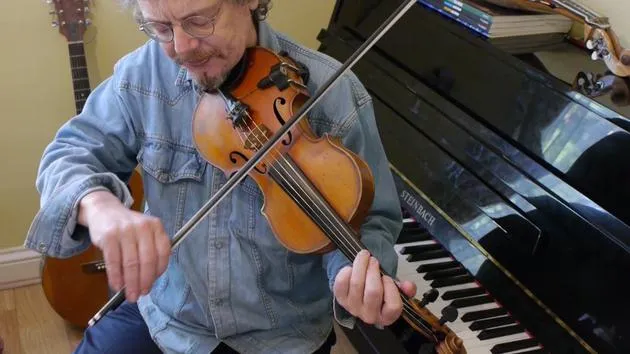
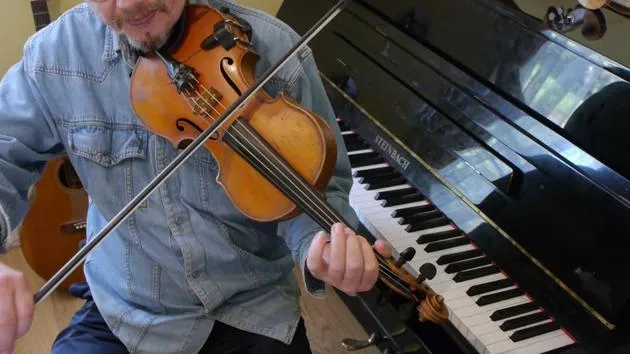
Chris HaighHier ist ein Akkordpaar, das oft zusammen auftritt. Sie sehen sehr kompliziert aus, sind aber eigentlich recht einfach zu handhaben. Du wirst ihnen in Stücken wie Autumn Leaves und Black Orpheus (Morning of the Carnival) begegnen
Das steckt im Kurs
28 Lektionen (1h 46m) · 1 gratis
01. Verminderte Akkorde
6:10
02. Aufgabe: vermindert
0:17
03. Übermäßige Akkorde
3:48
04. Aufgabe: übermäßige Akkorde
0:19
05. Minor 7b5/7b9
Du bist hier2:24
06. Aufgabe m7b5/7b9
1:15
07. Slash- und sus-Akkorde
6:18
08. Aufgabe: Slash- und Sus-Akkorde
0:18
09. Substitutionen und 'outside' spielen
7:21
10. Aufgabe: Outside spielen
0:29
Transkript der Lektion
Understanding Min 7B5 and 7B9 Chords
In this chapter, we're going to be looking at a pair of chords that often come together: Min 7B5 and 7B9.
They may look complicated, but they are actually quite easy to deal with. You'll come across them in tunes such as Autumn Leaves and Black Orpheus. These chords often occur in minor key songs.
Example in G Minor
For example, in the key of G minor:
- Instead of the typical minor progression (2-5-1):
- A minor 7, D7, G minor,
- you might encounter:
- A minor 7 flat 5, D7 B9, to G minor.
Minor 7 Flat 5 Chord
First, let's look at the minor 7, flattened fifth.
- This chord is an A minor 7 with the fifth flattened.
Here's how it breaks down:
- A minor 7: (show chord)
- A minor 7 with the fifth flattened: (show chord)
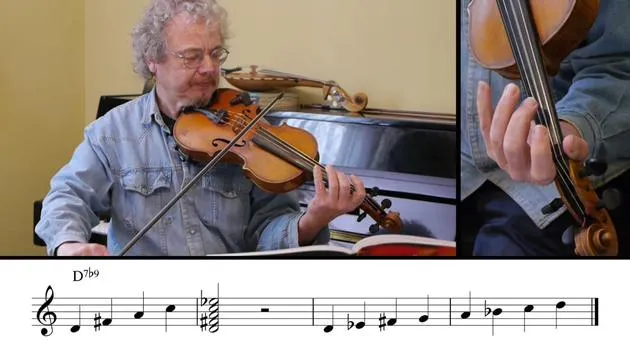
- D7, B9: (show chords)
Now, regarding D7, the ninth is the eighth. When it's flattened, it becomes that.
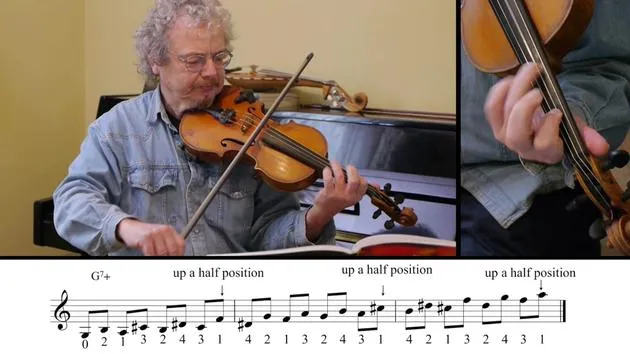
Arpeggio and Scale
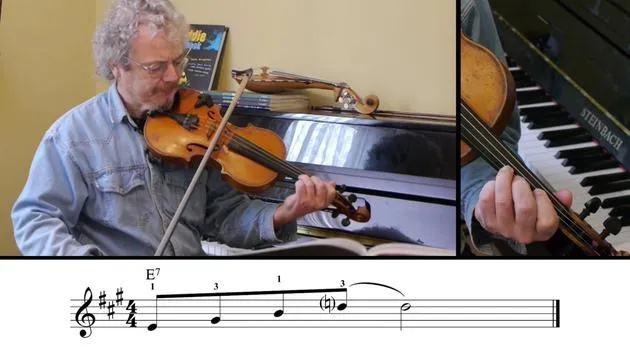
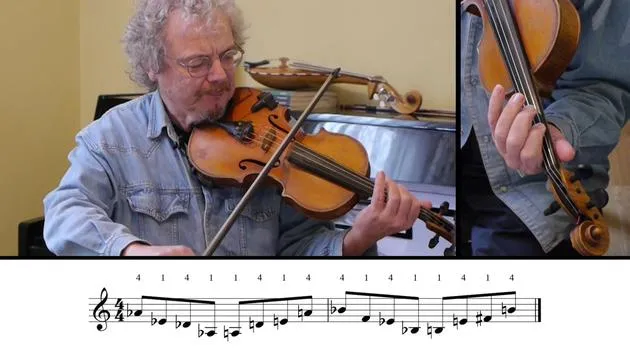
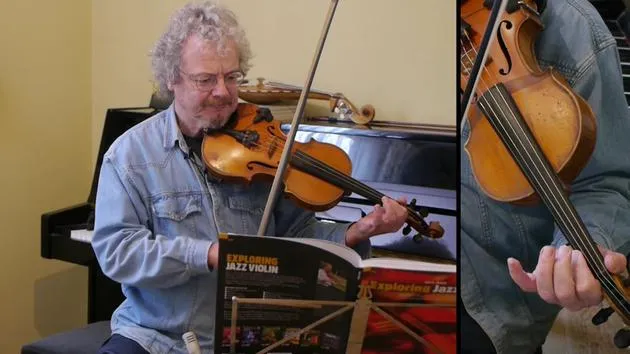
The arpeggio and the scale will be as follows:
The reason these chords work well together is that their scales coincide, as I'll demonstrate with the chords.
Riff Example
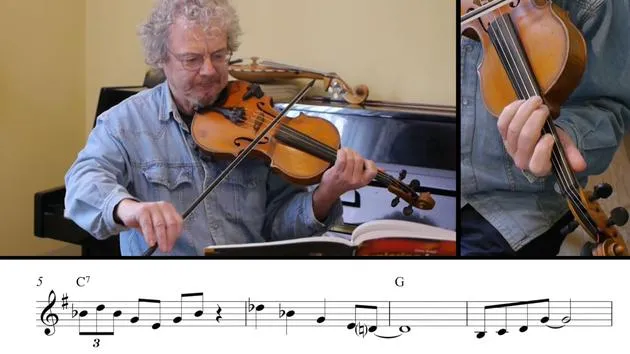
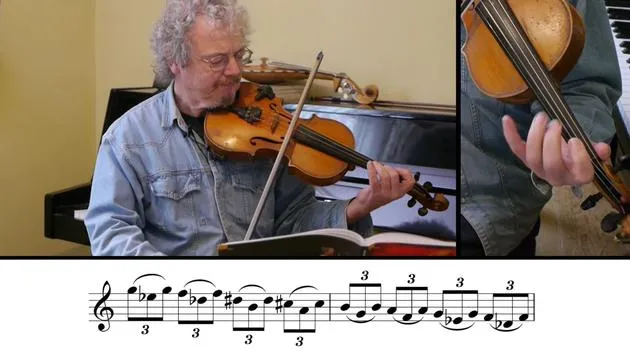
Here's a riff you could use over these two chords.
- It's not necessary to follow the same scale through the sequence.
- Instead, you can use a separate scale or arpeggio for each chord.
Alternative Approach
Another approach to these chords is to play the minor blues scale of the I chord, which is G minor.
28 Lektionen
1 Std. 46 Min. strukturierte Videolektionen
Erweiterte Videofunktionen
Verlangsamen, Passagen loopen, mitlesen
Handy, Tablet & Desktop
Üben, wo du willst
100 % Zufriedenheitsgarantie
30 Tage Geld-zurück-Garantie
Lern deinen Guru kennen
Lern deinen Guru kennen
Chris Haigh ist seit 25 Jahren professioneller Fiddle-Spieler mit Erfahrung in vielen verschiedenen Genres. Er hat auf über 75 Alben gespielt und dabei mit Künstlern wie Alison Moyet, Bob Geldof, All About Eve, Michael Ball, David Soul, Oumou Sangare, The Quireboys, Riverdance, Morcheeba, James Galway und Steps zusammengearbeitet.
Er hat Swing-Jazz mit The Kimbara Brothers, Diz Disley, Le Jazz, The Hot Club of London und den Quecumbar Allstars gespielt und leitet die siebenköpfige sowjetische Swing-Band The Kremlinaires.
Chris gibt Unterricht und Workshops zur Jazzgeigen-Technik und hat Jazzgeige an den Universitäten Middlesex, Brunel und Newcastle sowie am Truro College unterrichtet. Zu seinen Veröffentlichungen zählen neun Fiddle-Bücher, darunter The Fiddle Handbook.
Außerdem betreibt er Fiddling Around (fiddlingaround.co.uk), vermutlich die umfassendste und meistbesuchte Quelle für Fiddle-Wissen im Netz.







