



Audio aufnehmen

Mit
John WatsonNimm deine stärksten Motive in Ableton Live auf, generiere dann ein Bass-Pattern und extrahiere seine Akkorde auf eine neue MIDI-Spur.
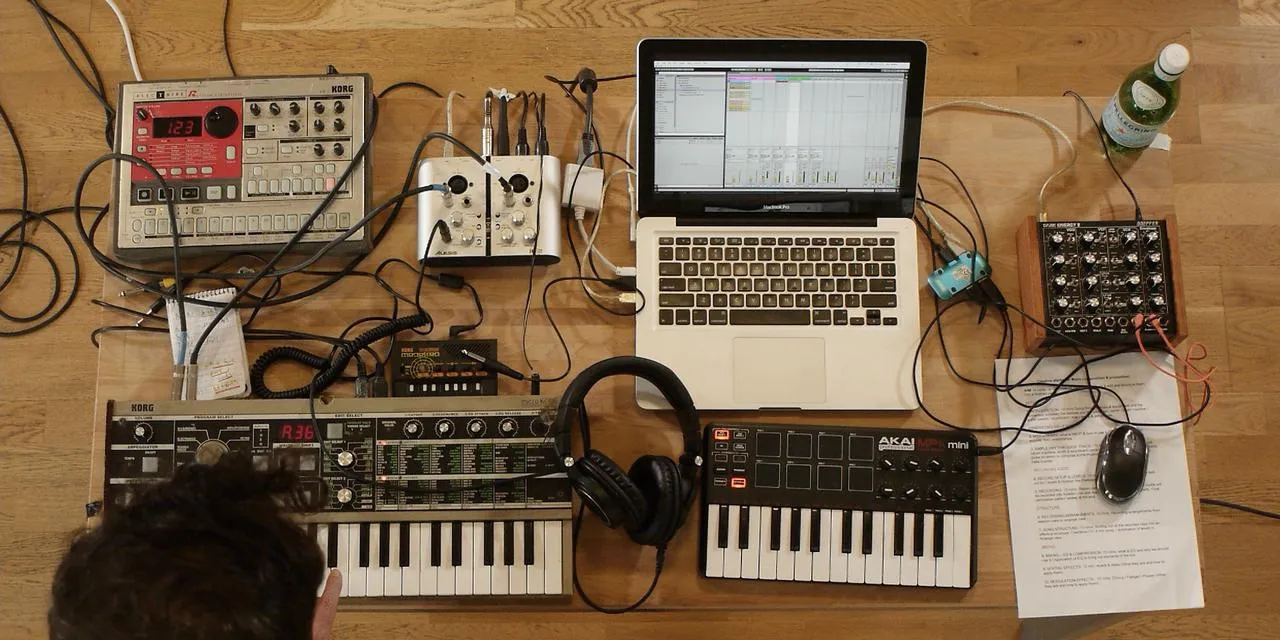
Das steckt im Kurs
14 Lektionen (1h 39m) · 2 gratis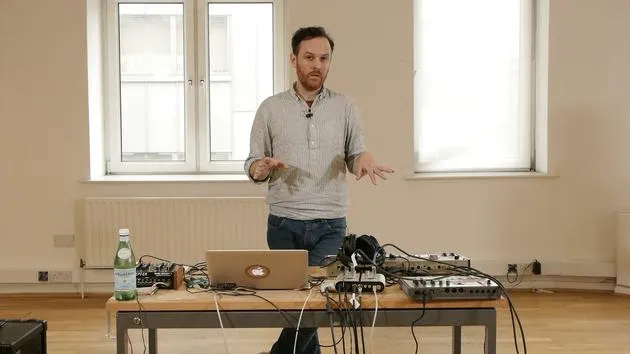
01. Erste Schritte und Geräte-Setup
11:07
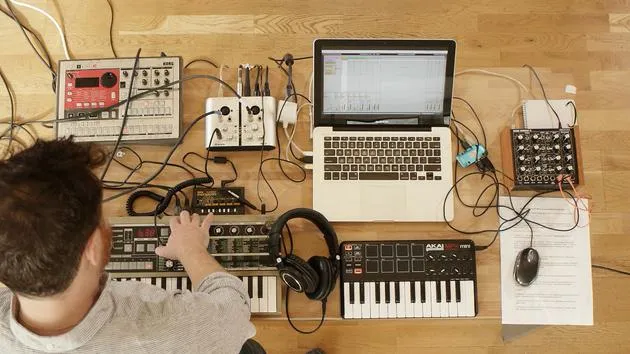
02. Ideen mit MIDI entwickeln - Einführung in MIDI
Gratis-Lektion6:12
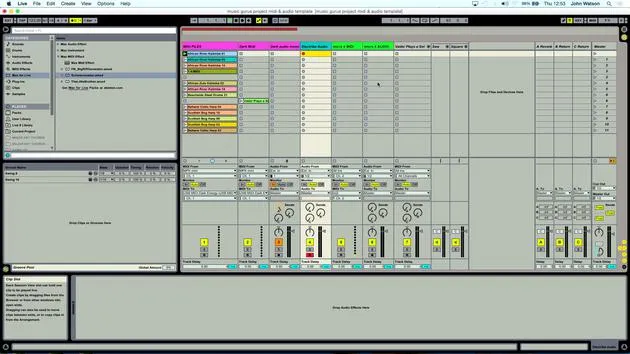
03. Eine einfache Rhythmus-Guide-Spur aufnehmen
7:41
04. Audio aufnehmen: Einrichtung und Pegel
6:21
05. Audio aufnehmen
Du bist hier6:25
06. Ein externes Instrument verwenden
3:27
07. Die Basslinie erstellen
11:05
08. Eine weitere Rhythmusspur hinzufügen
2:50
09. Premixing & Session View
9:59
10. Songstruktur und Arrangement-Ansicht
8:47
11. Mischen: EQ und Kompression
7:37
12. Räumliche Effekte
4:40
13. Modulationseffekte
5:26
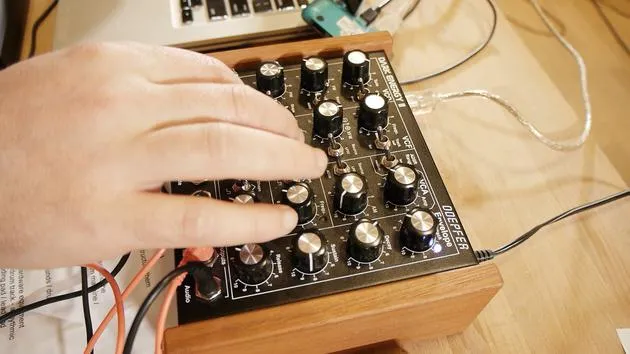
14. BONUS: Eine Basslinie mit dem Doepfer Dark Energy II erstellen
Gratis-Lektion7:26
Transkript der Lektion
Generating a Bass Pattern
So what I also want to do here is I'd like to generate a bass pattern that will work with this.
Creating Another MIDI Track
- I'm going to create another MIDI track, like so.
- I'm actually going to record the MIDI data that I've popped in here onto another track.
Extracting Chords
Okay, so this is where it might get a little bit confusing. Essentially, I've got here this MIDI device, the Schwarzenegger, and that is creating some chords.
- What I want to do is extract those chords onto a fresh MIDI track.
- Rather than just me individually playing notes that trigger chords, we're actually going to get the chords coming through as individual MIDI tracks.
Recording Chords
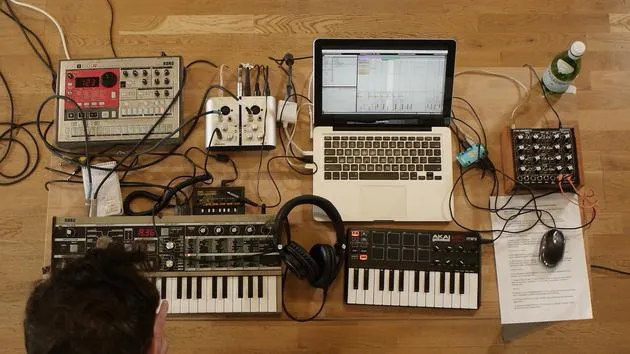
- I'm going to come in from the Microcorg MIDI and click the record button.
- I'll also click in, like so.
- Now, I'd like to record these two chords' MIDI information onto fresh MIDI tracks.
- Click Record like so.
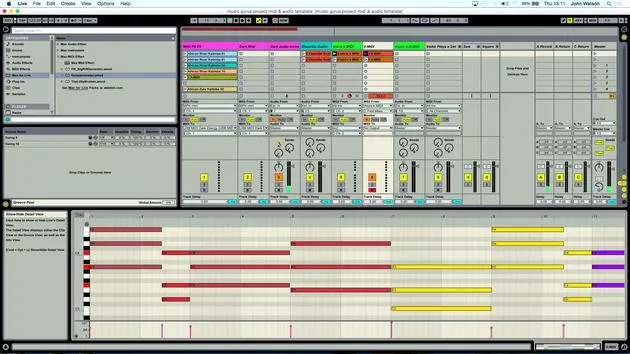
- You can see my chords actually being inputted onto this track.
Continuing the Recording
- That's one set recorded.
- Now, I'm going to move up to the first MIDI track that I had, and I'm going to record these ones in.
Let me just stop everything, like so. Then, I'll come in and record this line here.
- Again, what we're actually getting is the chord data going into these new MIDI tracks.
- This is going to give us a lot of flexibility now in terms of structuring the music, where we can cut individual notes out and play around with the arrangement of some of these chords.
Finalizing Chord Recording
Okay, so I've probably got enough there. That's working fine.
Generating a Bass Line
Next, I'd like to generate a little bass line as well. But first, I need to actually record the audio in so that we've got space to put this bass instrument.
Note: Remember, this sound card has only two inputs, so I need to commit to recording this in as audio.
Recording Audio
- The first sound that I had was a 36, a much gentler chord. Let's play this.
- I've also got my beat, which I can use to keep variety.
I'm going to record the audio now from the Microcorg. I'm going to jump between a couple of different sounds again to keep variety in there and keep interest.
Setting Up for Recording
- I have my two MIDI parts ready.
- I'm going to go in with the first part.
Now I've got an audio track that I've already set up at the beginning.
- I'm going to come in and hit Record like so, and the MIDI notes will now play and come in as audio onto this track.
Counting the Bars
I'm just stopping there, counting in my head:
- 4 bars, 8 bars, I think I went for.
- How many have I got here at the minute? 4, 8, 12, 16 bars.
This has given me a little bit of variation. I was also adjusting some filter cutoff, just opening up the synth sound a little bit.
- But I've committed now, so I've got a piece of audio here.
Moving to the Second MIDI Clip
Now, I'm going to move on to the second MIDI clip and record this one in.
- I'm going to change the sound over; let's go for this one here.
Let's have a listen.
- Okay, so again, a brighter sound, it's just going to have a little bit more impact, a bit more positive, a bit more lift in the track.
- These two ideas are going to be great to play around with the structure.
Final Recording
I'm just going to hit Record.
- Okay, so there I've recorded the second part in.
- Again, what I've got here: 1, 2, 3, 4, 5, 6, 7, 8, another 16 bars from that clip.
14 Lektionen
1 Std. 39 Min. strukturierte Videolektionen
Erweiterte Videofunktionen
Verlangsamen, Passagen loopen, mitlesen
Handy, Tablet & Desktop
Üben, wo du willst
100 % Zufriedenheitsgarantie
30 Tage Geld-zurück-Garantie
Lern deinen Guru kennen
Lern deinen Guru kennen
Nach einem Praktikum bei Dave Allen, dem Produzenten von Depeche Mode und The Cure, ließ sich John dazu inspirieren, in London Music Technology zu studieren. Seine Musikkarriere nahm nach einem erfolgreichen Vertrag bei CookShop Records Fahrt auf, wo er 9 Singles und 2007 ein Album veröffentlichte, das begeisterte Kritiken von Q, Uncut und Lowdown Magazine sowie Airplay bei XFM und Radio One erhielt.
John begann seine Ausbildung zum Tontechniker 2005 im Bonafide-Studio, wo er sein Können verfeinerte, und gründete noch im selben Jahr Jackdaw Recordings. Er hat mit vielen erfolgreichen Künstlern zusammengearbeitet und begann 2007, für den Pop-Musiker Patrick Wolf zu spielen, mit Auftritten in führenden Häusern in Großbritannien und international – darunter The Astoria und das Shepherds Bush Empire.
Von seinem Londoner Studio aus schreibt John heute Musik, mit zwei weiteren Veröffentlichungen bei CookShop, macht Tontechnik für namhafte Künstler und gestaltet Sounddesign für TV-Spots, Film, Theater und Unternehmensvideos.
Genau diese seltene Mischung aus Songwriter, Produzent und aktivem Studiotechniker bringt John in seinen Unterricht ein. In Creative Composition & Production in Ableton Live und Creative Sampling & Production in Ableton Live zeigt er dir, wie er aus rohen Ideen fertige, veröffentlichungsreife Tracks macht – das Schreiben, das Sampling, das Sounddesign und das praktische technische Know-how hinter einer professionellen Platte.







