



BONUS: Eine Basslinie mit dem Doepfer Dark Energy II erstellen

Mit
John WatsonLerne, wie du in Ableton Live mit einem externen Synthesizer, dem Doepfer Dark Energy II, eine Basslinie erstellst.
Das steckt im Kurs
14 Lektionen (1h 39m) · 2 gratis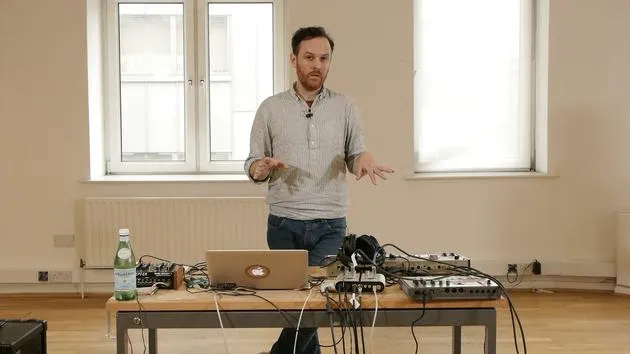
01. Erste Schritte und Geräte-Setup
11:07
02. Ideen mit MIDI entwickeln - Einführung in MIDI
Gratis-Lektion6:12
03. Eine einfache Rhythmus-Guide-Spur aufnehmen
7:41
04. Audio aufnehmen: Einrichtung und Pegel
6:21
05. Audio aufnehmen
6:25
06. Ein externes Instrument verwenden
3:27
07. Die Basslinie erstellen
11:05
08. Eine weitere Rhythmusspur hinzufügen
2:50
09. Premixing & Session View
9:59
10. Songstruktur und Arrangement-Ansicht
8:47
11. Mischen: EQ und Kompression
7:37
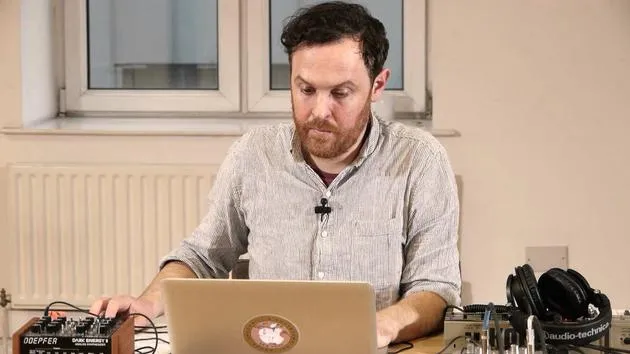
12. Räumliche Effekte
4:40
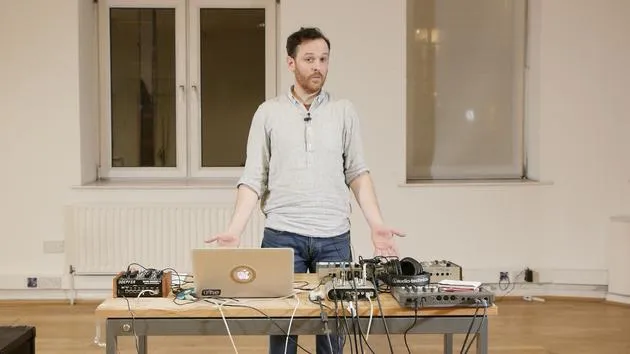
13. Modulationseffekte
5:26
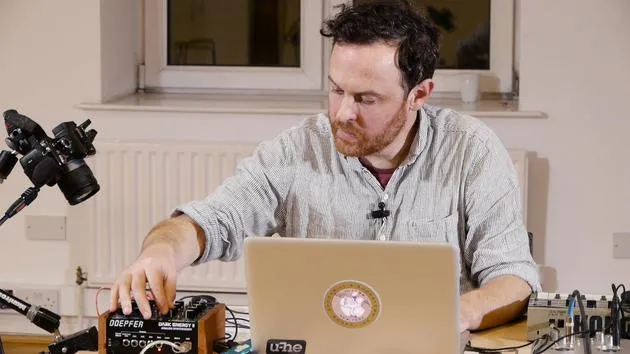
14. BONUS: Eine Basslinie mit dem Doepfer Dark Energy II erstellen
Du bist hier7:26
Transkript der Lektion
Creating a Bass Line with Dark Energy
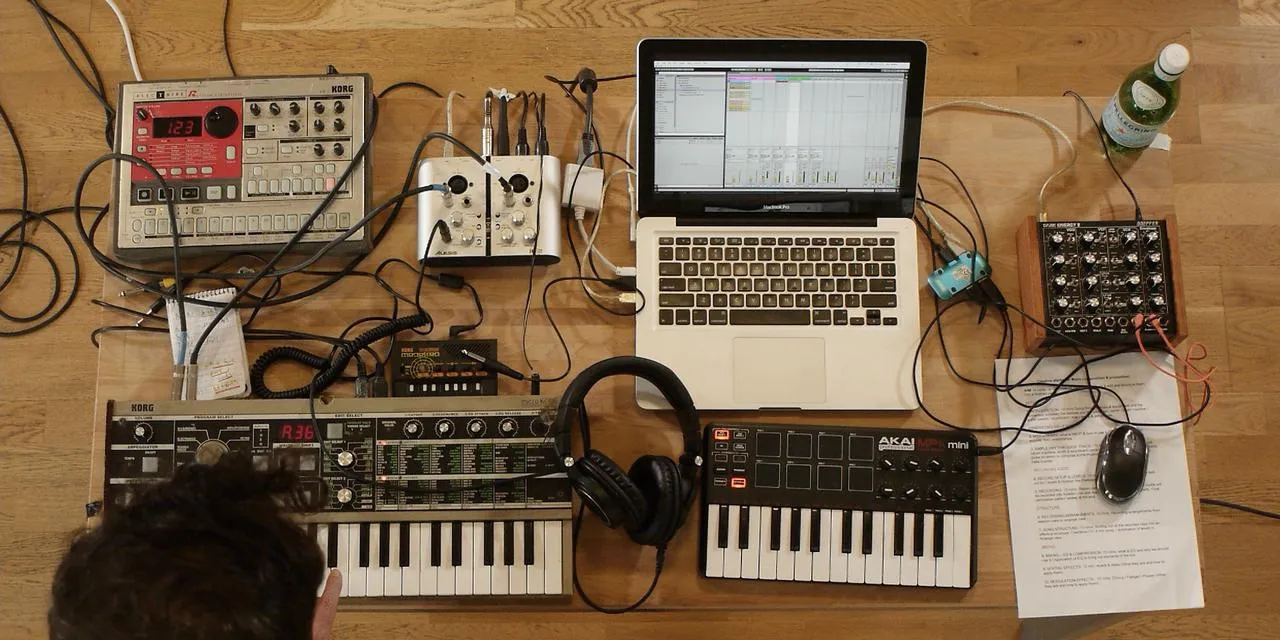
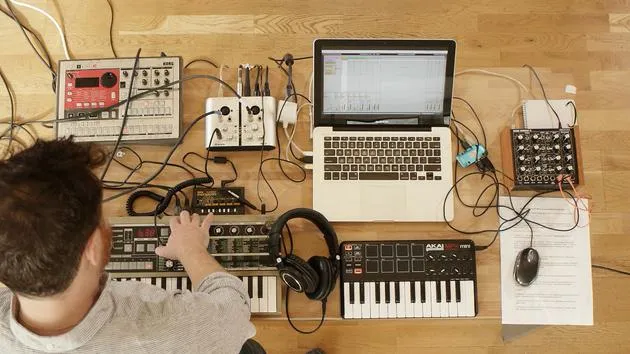
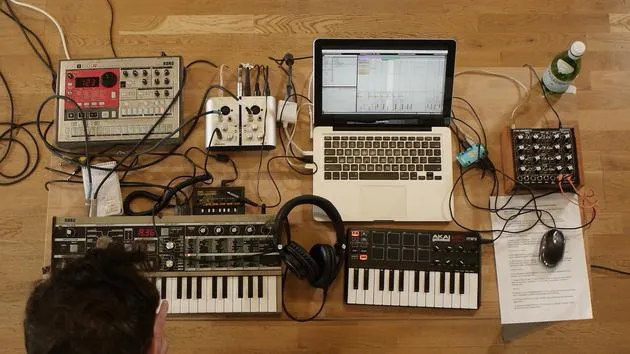
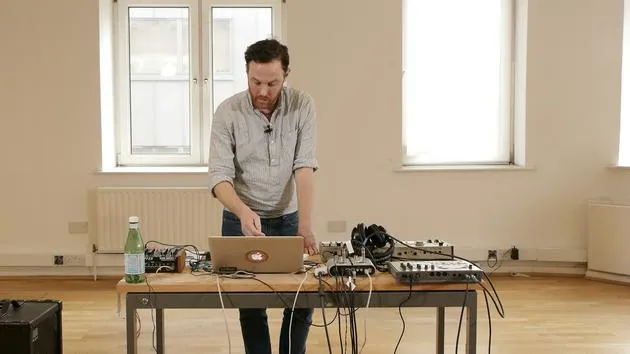
Hi there! My name is John Watson, and I've just recorded a track here at Music Gurus, one of my courses. In this lesson, I'll create a track from scratch in Ableton Live using three hardware devices.
Focus: Dark Energy and Bass Line Creation
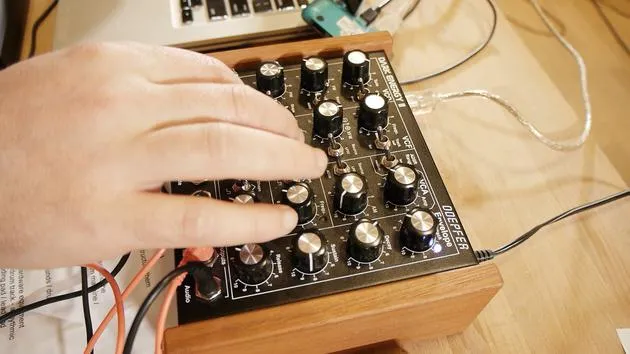
In this little excerpt, I'll focus on using the Doepfer Dark Energy to create a bass line that works with one of my chords.
Generating Chords
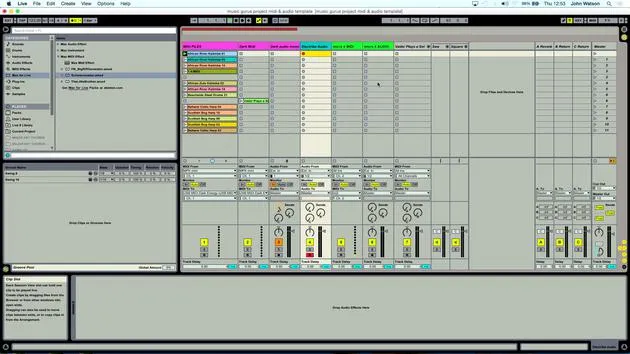
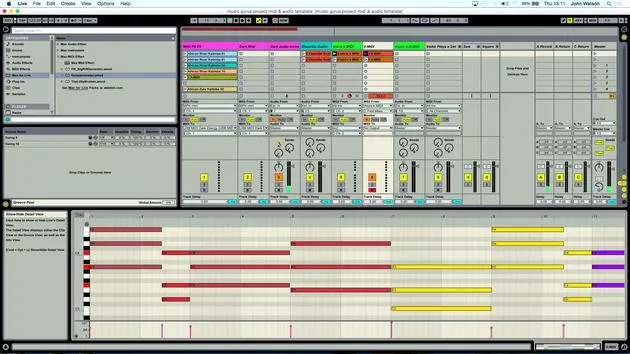
- I've got a little MIDI part here, and I'm going to open this up.
- These are the chords that I generated to accompany my polyphonic synth (in this case, a MicroKORG).
Copying MIDI Clips
- Next, I'll copy the MIDI clips over to the Dark Energy MIDI channel.
- When I open this up, you can see a copy of all of the notes.
Monophonic Synthesis
What I'll point out here is that the Doepfer Dark Energy is a monophonic synth, so we can only hear one sound at a time.
- This means it won't play these chord notes.
- This is beneficial because I want to create a bass line, which ideally focuses on one note at a time.
- You don't often find many chords in typical bass lines.
Editing the MIDI Notes
- I'm going to grab the first two notes and remove everything except the root notes.
- You don't have to be exact with this. It's fun to play around, but I'll play it pretty by the book.
Raw Setting Playthrough
Now, it's going to play through on the raw setting that the Dark Energy has got at the moment.
- I have no idea what it's going to sound like, so I'll probably need to tweak it.
Adjusting Parameters
- Play Back: As I play back what we've got, you can hear that the notes aren't long enough.
- Add Sustain: I need to adjust a few parameters on the synth.
- First, I need to add some more sustain so that the notes play for the correct length of time.
- Shift Octave Down: It doesn't sound very bass-like at the moment; it sounds a bit buzzy and nasty.
Further Tweaks
- I'm going to take the filter frequency down to ensure only bass tones come through.
- Shift from a square wave to a sawtooth wave to achieve a deeper bass.
- I'll open up the filter a little bit and check the MIDI clip.
Adjusting the Bottom C
- The bottom C isn't actually playing because it's come too low for the allowed octaves on this synth.
- I'll shift it up an octave.
Aligning MIDI Notes
Some of the MIDI notes aren't aligned with the grid, so I'll adjust those as well to ensure they sound a little more organic.
Resonance & Glide:
- I can add a little bit of resonance for a vowel sound.
- To ensure a smoother flow of the bass notes, I'll add more release.
Final Adjustments
- I've got two filters: a high pass filter that adds texture.
- Overall, it's starting to sound really good!
Routing the Low Frequency Oscillator
To add a bit of fun, I can route the low frequency oscillator into the filter. Let's see what we get here!
Wow, there's lots of options to play around with, but I prefer just a straight-up bass here.
Recording the Bass Line
- I need to ensure my audio channel is receiving the Dark Energy bass, which it currently is.
- I'll set the corresponding channels correctly, ensuring that my monitor in button is enabled.
- Since I'm not recording any more MIDI, I'll record onto the audio track.
- As I hit record, I notice I'm clipping, so I'll back the volume down a little and come in again.
Monitoring Levels
Keep an eye on the volume levels; we don't want to hit the amber or red at any point.
- After making adjustments, I'm fairly happy with the recording now.
Finalizing the Process
- I'll switch the monitor back to auto and mute the MIDI part to avoid playback through the Dark Energy.
- The bass line is now recorded!
Conclusion
In the excerpt, you can hear how the sound is shaped as it's being recorded. That's how we record our bass line!
Feel free to check out my courses at MusicGurus.com. You can download this project file for free to see what I've done here.
Thank you for joining me, and I hope you enjoy the process!
14 Lektionen
1 Std. 39 Min. strukturierte Videolektionen
Erweiterte Videofunktionen
Verlangsamen, Passagen loopen, mitlesen
Handy, Tablet & Desktop
Üben, wo du willst
100 % Zufriedenheitsgarantie
30 Tage Geld-zurück-Garantie
Lern deinen Guru kennen
Lern deinen Guru kennen
Nach einem Praktikum bei Dave Allen, dem Produzenten von Depeche Mode und The Cure, ließ sich John dazu inspirieren, in London Music Technology zu studieren. Seine Musikkarriere nahm nach einem erfolgreichen Vertrag bei CookShop Records Fahrt auf, wo er 9 Singles und 2007 ein Album veröffentlichte, das begeisterte Kritiken von Q, Uncut und Lowdown Magazine sowie Airplay bei XFM und Radio One erhielt.
John begann seine Ausbildung zum Tontechniker 2005 im Bonafide-Studio, wo er sein Können verfeinerte, und gründete noch im selben Jahr Jackdaw Recordings. Er hat mit vielen erfolgreichen Künstlern zusammengearbeitet und begann 2007, für den Pop-Musiker Patrick Wolf zu spielen, mit Auftritten in führenden Häusern in Großbritannien und international – darunter The Astoria und das Shepherds Bush Empire.
Von seinem Londoner Studio aus schreibt John heute Musik, mit zwei weiteren Veröffentlichungen bei CookShop, macht Tontechnik für namhafte Künstler und gestaltet Sounddesign für TV-Spots, Film, Theater und Unternehmensvideos.
Genau diese seltene Mischung aus Songwriter, Produzent und aktivem Studiotechniker bringt John in seinen Unterricht ein. In Creative Composition & Production in Ableton Live und Creative Sampling & Production in Ableton Live zeigt er dir, wie er aus rohen Ideen fertige, veröffentlichungsreife Tracks macht – das Schreiben, das Sampling, das Sounddesign und das praktische technische Know-how hinter einer professionellen Platte.







