



Tenor Sax with Tony Barba
Tony Barba of the Youngblood Brass Band shares how tenor sax players can get a bigger, more projecting sound to cut through a brass band.

What's in the course
20 lessons (3h 4m) · 2 free
Lesson transcript
Tips for Saxophone Players: Achieving a Bigger Sound
Introduction
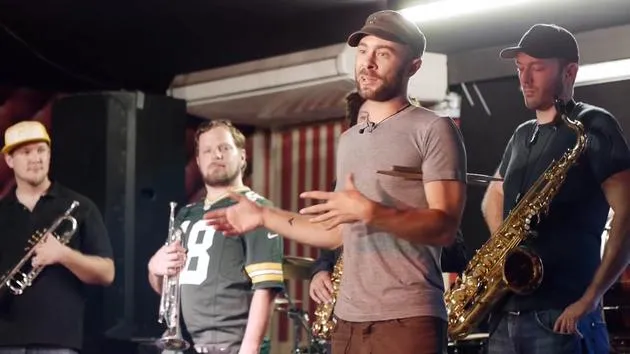
Hey, all! This is Tony from Youngblood. I play tenor saxophone in the band. If you're tuning into this video, you're probably a saxophone player looking for tips, maybe about how to play in a band similar to Youngblood or in a New Orleans style brass band.
Getting a Bigger Sound
One thing I'm going to focus on in this video is how to achieve a bigger sound. When Youngblood conducts clinics and master classes at schools or works with different bands, I notice that most saxophone players struggle with projection.
The Challenge
- You may never completely outshine the trombone, trumpet, or drums in a band, but it's essential to learn how to cut through the sound.
- As a soloist, you need to hold your own, especially when giving the brass players a break.
The Importance of Long Tones
Of course, if you've taken a saxophone lesson before or worked with a reputable teacher, you've likely been told about the importance of long tones and tone exercises.
- Resources: There are many online resources available for these exercises, so I won't go into detail here.
Understanding Embouchure
Let's talk about embouchure, the way your lips interact with the mouthpiece. Many saxophone players fail to move beyond the embouchure they were taught in fifth grade.
Common Mistakes
- Many students come to me with an embouchure that rolls the bottom lip over their teeth and takes only a small amount of mouthpiece.
- This creates a very pinched sound, limiting sound output.
Example: Using this incorrect embouchure, I can barely produce any sound.
A Better Approach to Embouchure
Relax and Adjust
One day, I faced this challenge in high school, and my teacher advised me to relax my embouchure:
- Less Bottom Lip: Use less bottom lip.
- More Mouthpiece: Take in more of the mouthpiece.
Initially, this approach may reduce your control, but it's essential for achieving a bigger sound.
Conceptual Practice
- Imagine putting your thumb in your mouth. This may seem silly, but it helps you adjust your embouchure naturally.
By doing this, you'll find:
- Your lip will naturally cover less of your bottom teeth.
- It will feel more comfortable and allow for better sound projection.
Demonstration
When I demonstrate the improved embouchure, notice:
- I'm rolling my bottom lip out more and covering my teeth, preventing squeaks and protecting the reed.
- With less lip over the teeth, projecting sound becomes significantly easier.
Conclusion
Initially, you may struggle with intonation or pitch, especially when adjusting your embouchure. However, by allowing your lip to roll out and taking more mouthpiece, you can blow much louder with more depth and bite to your tone.
Final Thoughts
Practice these techniques during your long tones and you'll notice improvements in your sound projection in brass bands. Hopefully, this helps you soar above the trombones and trumpets when you're playing.
See you guys later!
20 lessons
3h 4m of structured video lessons
Advanced video features
Slow down, loop a passage, follow along
Mobile, tablet & desktop
Practise wherever you are
100% satisfaction guarantee
30-day money-back guarantee
Meet your guru

Meet your guru
Youngblood Brass Band fuse uncompromising New Orleans brass with hip-hop energy and lyricism. Drawn from Madison, Brooklyn, Minneapolis and Chicago, the ten-piece has toured the world since 2000 and collaborated with the likes of Questlove and Talib Kweli. They are equally at home leading a marching band through their own compositions and headlining a punk festival. On MusicGurus they break down their New Orleans-meets-hip-hop sound - how they compose and arrange for horns, the rhythmic and harmonic vocabulary that ties it together, and how to play a horn line as part of a tight section, including the full parts to their tune 'Brooklyn'.







