



Practice Hack - Fingering Fluency

With
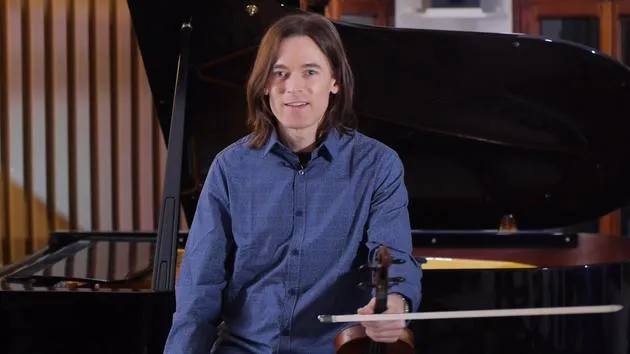
Zach BrockZach Brock shares his practice hack for building fingering fluency across all twelve keys without playing in all twelve, and why the intervals inside a melody matter.
What's in the course
24 lessons (2h 32m) · 1 free
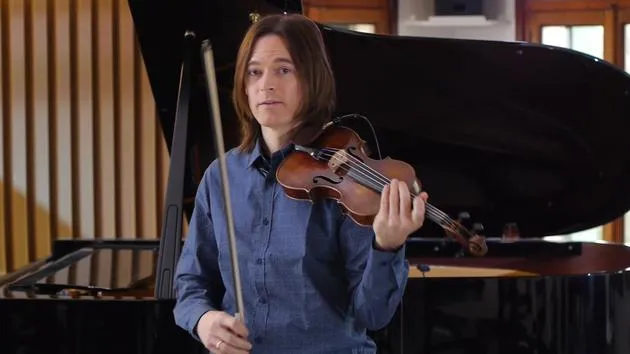
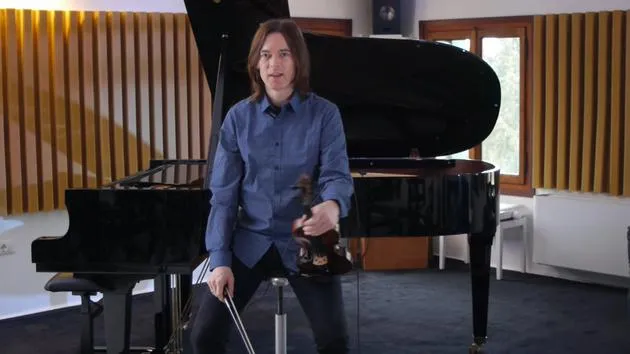
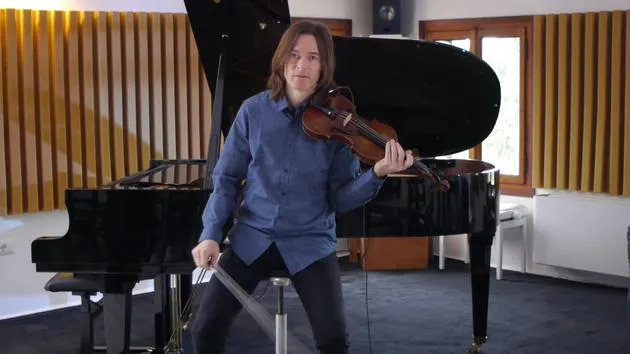
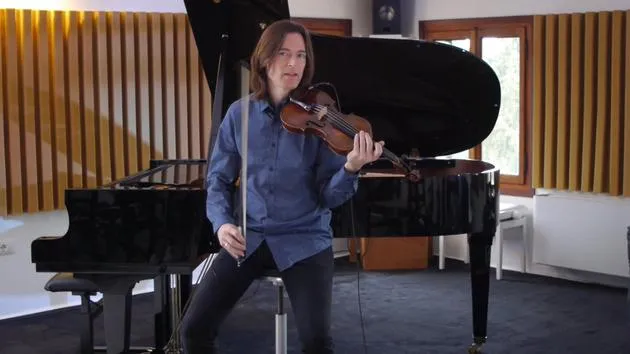
Lesson transcript
Advanced Exercises for Improvisation
I promised I would get into some more advanced exercises for those of you that have covered a lot of the basics. Today, I want to show you an exercise that I have a lot of fun with, and I'm sure you will, too.
Understanding Intervals in Melody
As you begin to improvise your melodies, it's essential to become aware of:
- The underlying harmony
- The groove
- Intervals in the melodies that you play
As violinists and string players, we sometimes take melodies for granted, playing them without analyzing their intervals. Understanding these components is especially useful as you expand your improvisatory palette. Knowing the intervals allows you to:
- Use familiar patterns
- Alter intervals to create variations
- Fit different harmonies or flip the intervals around
Classical players may be more familiar with terms such as inversion or retrograde inversion, and these terms relate directly to your ability to manipulate melodies.
Example: Analyzing "Danny Boy"
Let's take a look at the melody of "Danny Boy."
I will play it starting on my first finger, but I'll play it up higher on the violin just because I want to. Here's the breakdown of the intervals:
- Minor second (ascending)
- Major second (ascending)
- Major second (ascending)
- Major second (descending)
- Major second (ascending)
- Perfect fourth (jump up)
- Major second (down)
Practicing with Different Fingerings
Now, let's take a snippet of that and explore how to apply this over the instrument.
- Start on your first finger playing the note A natural.
- Now, let's do the same thing up an octave starting with our second finger.
- Next, play the same passage starting on your third finger.
- Finally, play it starting on your fourth finger.
Additionally, you have one more option without even needing to transpose: start on an open string.
This may seem strangely more challenging than it appears at first for some of you.
Covering All Fingering Options
If you practice starting on:
- First finger
- Second finger
- Third finger
- Fourth finger
- Open string
You'll have covered every fingering in any key!
This serves as a great practice hack for when you don't have the time to run through all fingerings and all 12 keys.
Benefits of This Exercise
When you explore all the fingerings of a motif, you also gain the ability to move it around your instrument. The key becomes less important; here's how:
- Once you're comfortable with a specific fingering, you can randomize it.
- This approach helps you break out of hearing a certain motif in just one key.
For example, take "Danny Boy" and experiment by moving it around, starting in third position on the E string and continuing downward into first position. You can even incorporate open strings along the way.
Expanding Your Improvisation
This exercise opens up your ability to play melodies wherever you wish. It challenges you to improvise, breaking free from staying in first or open position. You can explore different areas of the violin as your imagination takes you.
Incorporating Other Melodies
If "Danny Boy" doesn't inspire you, consider something from the bebop lexicon, like "Donna Lee."
- Start with your second finger and play.
- Then, switch to your first finger.
- Next, try your third finger, moving to your fourth finger.
As you work, find an open string to facilitate the exercise. This may skip ahead a few steps, but that's the nature of developing your skills.
Your Assignment
I encourage you to take a melody that you know well and:
- Analyze the intervals that form it.
- Experiment with moving it around.
- Start using different fingerings and open strings.
Additionally, consider applying it through:
- The cycle of fourths
- The cycle of fifths
- Chromatic movements
By doing this, you'll enhance your improvisational abilities and gain greater mastery over your playing. Happy practicing!
24 lessons
2h 32m of structured video lessons
Advanced video features
Slow down, loop a passage, follow along
Mobile, tablet & desktop
Practise wherever you are
100% satisfaction guarantee
30-day money-back guarantee
Meet your guru
Meet your guru
Heralded as "the pre-eminent improvising violinist of his generation," Zach Brock is a violinist and composer whose music draws on the traditions of jazz, classical, world and popular music.
Zach received his first Grammy Award in 2017 for his work on Snarky Puppy's album Culcha Vulcha. His acclaim as a bandleader has grown through appearances at venues such as Carnegie Hall and festivals like "Tudo e Jazz" in Brazil, while his reputation as a sideman has spread through his work with legendary bassist Stanley Clarke, contemporary instrumental super-group Snarky Puppy, and jazz masters Phil Markowitz and Dave Liebman.
Zach has made ten recordings as a leader or co-leader and is the first violinist to record for the venerable Dutch jazz label Criss Cross. He has also represented the U.S. Department of State as a Musical Ambassador in the Solomon Islands, performed as a featured soloist for two Sundance Festival feature film scores, and is currently an Artist In Residence at Temple University in Philadelphia.
In his course you will learn to improvise on the violin straight from the source: how Zach approaches melody, rhythm and harmony, and how to start finding your own voice the way he has alongside Snarky Puppy and beyond.







