



Advanced Scale Practice for Improvisation
With
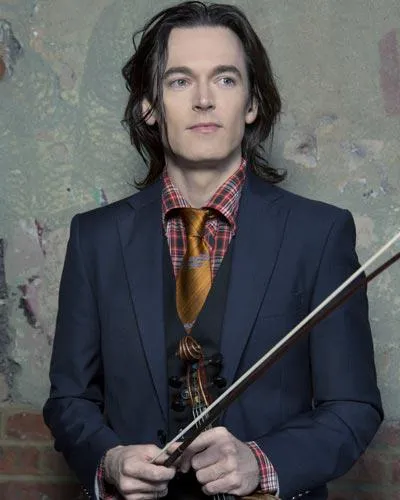
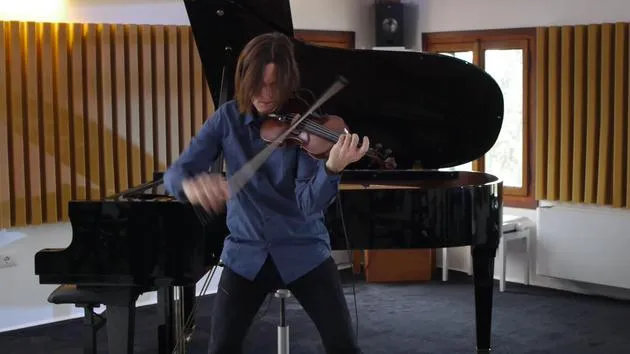
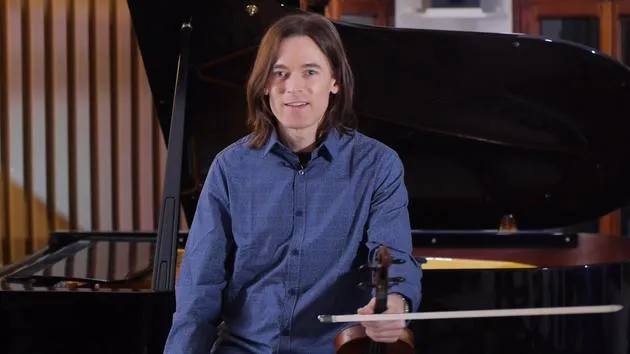
Zach BrockZach Brock shows how to practise scales by range rather than from the root, freeing up your improvising and pushing you beyond the easy open-string keys.
What's in the course
24 lessons (2h 32m) · 1 free
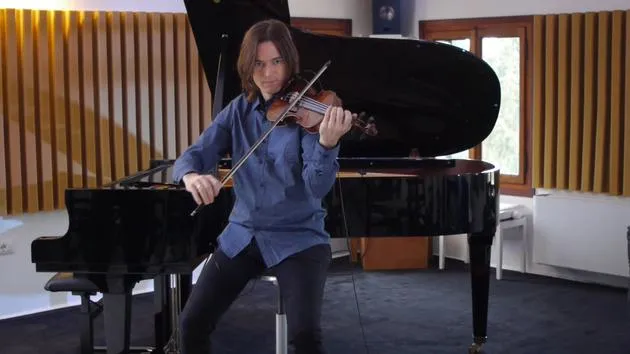
Lesson transcript
String Player Improvisation Techniques
String players tend to be very root-centric and key-centric. Even those who have reached a fairly high level of improvisatory vocabulary, for instance, when playing jazz and learning how to play blues in B flat, often begin their ideas from the root note of the chord.
Breaking Away from the Root
Today, I want to discuss how to practice your scales so that you aren't confined to always starting your ideas from the root of the chord. I have a little challenge for you to expand how you think about your instrument.
For those who have played Galamian scales or Carl Flesch scales, when I say "C major scale," many will instinctively begin with the second position, second finger. If I mention B flat, the same tendency arises, followed by F, where you'll hear similar patterns. This system of playing scales always starts from the root.
Thinking in Ranges
What has opened up a lot of exploration for me on my instrument, not just in improvisation but in classical pieces too, is the concept of thinking in terms of ranges instead of always starting from the first note of a scale.
- Low: The first octave
- Medium: Into the second octave and sometimes up higher
- High: A three-octave scale
- Extra High: Going to that fourth octave, generally occurring on one string
This approach might be advanced for some, but don't worry; it's easy to break down and build up to. Begin with one octave and then move to two.
Shifting Techniques
One valuable principle I learned from my teacher about playing scales on a string instrument is to always shift on a half step. If that isn't possible, shift on a strong beat. While this is technically sound for intonation and cleanness, during improvisation, you may need to shift on a whole step.
Playing range-based scales is a great way to start working on this. Here's a simplified way to think about it:
- The lowest note of any scale in any tonality is either going to be a G natural, A flat, or G sharp.
- I won't get into double sharps or flats.
Example: B Flat Scale
For instance, if I ask you to play a B flat scale, two octaves, most of you would start like this. Instead, I want you to:
- Play me a two-octave B flat major scale, starting on the lowest note that you can access.
It may not sound like B flat major to you, it might sound like G minor, but by practicing in this method, you'll gain access to the full range of that scale when improvising.
Directions of Playing
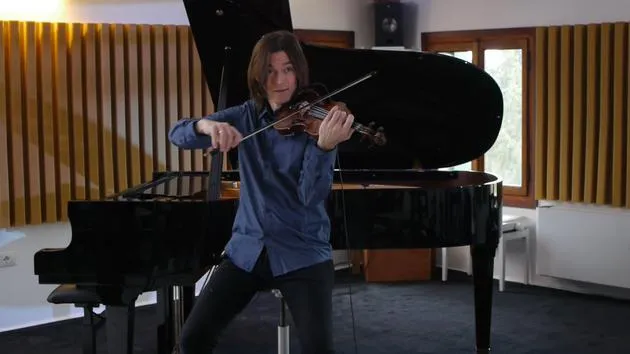
Let's also consider the different directions you can play on your string instrument:
- Vertical Plane: Going straight up one string
- Horizontal: Playing in position (first position, second position, etc.)
- Diagonal: Moving from low to high, etc.
Each of these approaches is worth exploring in every tonality you work on for improvisation, and it's excellent for technique as well.
Full Range Practice
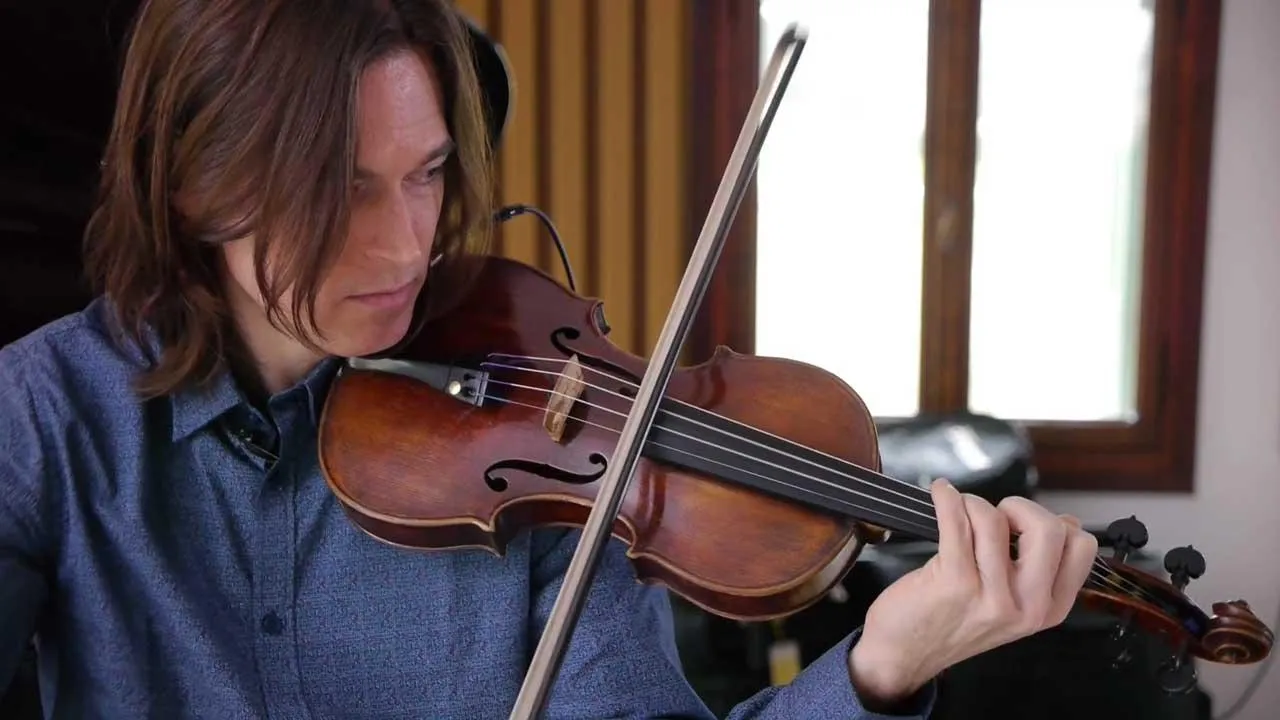
Now, let's return to the B flat major scale and practice it through the full range of the low position. This way, you're starting at the root but exploring all possible notes.
"It still sounds like G minor to a lot of you out there."
You can also utilize a tuner to help with this. Here's a nice B flat drone.
- Start from the lowest note.
- Shift up through the positions, playing B flat major.
This practice helps you become more aware of the notes you are playing up the neck, an essential skill for improvisation.
Playing Through All 12 Keys
For those of you who have spent a lot of time playing scales using method books (like Galamian or Carl Flesch), I challenge you: Have you ever played through all 12 keys without a book?
You must practice in all 12 keys to prepare for any possible situation in an improvised setting.
Note that jazz often involves flat keys because horns typically play in those keys. Personally, when I started improvising, I was comfortable in G and D (the 'happy keys' with open strings) but realized I had much work to do when it came to blues in D flat.
In summary, playing in all 12 keys is crucial, and there are efficient ways to practice this, which I will definitely discuss in future lessons.
24 lessons
2h 32m of structured video lessons
Advanced video features
Slow down, loop a passage, follow along
Mobile, tablet & desktop
Practise wherever you are
100% satisfaction guarantee
30-day money-back guarantee
Meet your guru
Meet your guru
Heralded as "the pre-eminent improvising violinist of his generation," Zach Brock is a violinist and composer whose music draws on the traditions of jazz, classical, world and popular music.
Zach received his first Grammy Award in 2017 for his work on Snarky Puppy's album Culcha Vulcha. His acclaim as a bandleader has grown through appearances at venues such as Carnegie Hall and festivals like "Tudo e Jazz" in Brazil, while his reputation as a sideman has spread through his work with legendary bassist Stanley Clarke, contemporary instrumental super-group Snarky Puppy, and jazz masters Phil Markowitz and Dave Liebman.
Zach has made ten recordings as a leader or co-leader and is the first violinist to record for the venerable Dutch jazz label Criss Cross. He has also represented the U.S. Department of State as a Musical Ambassador in the Solomon Islands, performed as a featured soloist for two Sundance Festival feature film scores, and is currently an Artist In Residence at Temple University in Philadelphia.
In his course you will learn to improvise on the violin straight from the source: how Zach approaches melody, rhythm and harmony, and how to start finding your own voice the way he has alongside Snarky Puppy and beyond.







