



Middle section
With
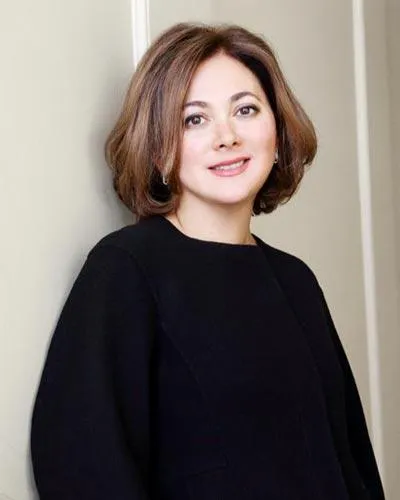
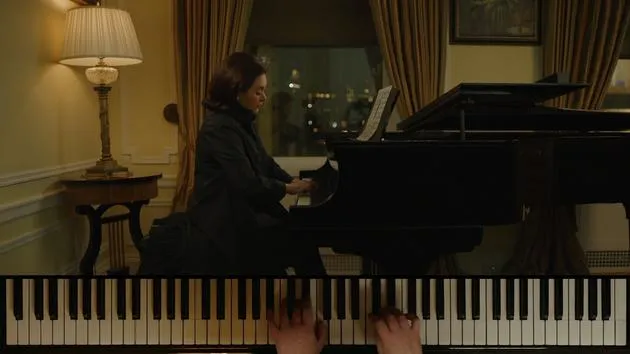
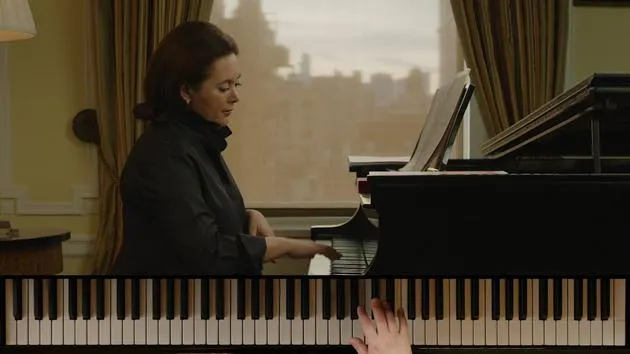
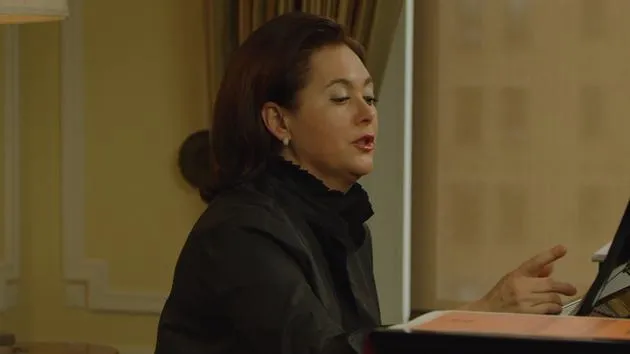
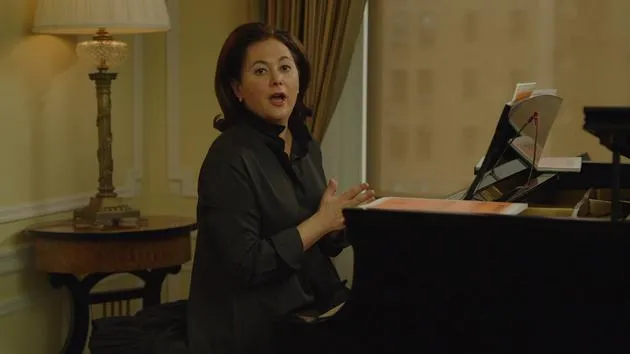
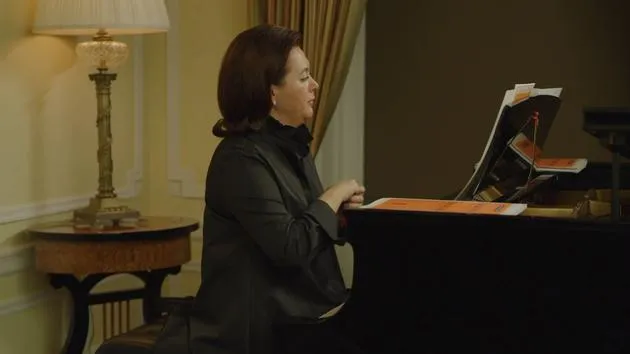
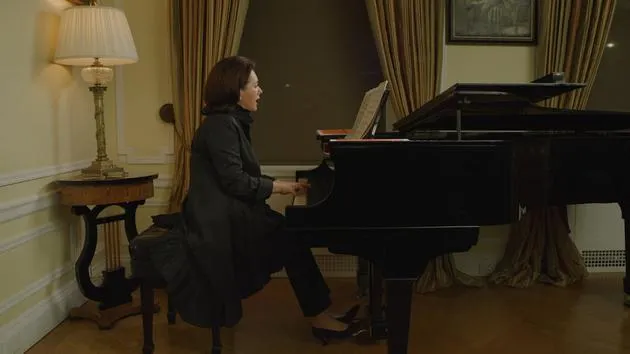
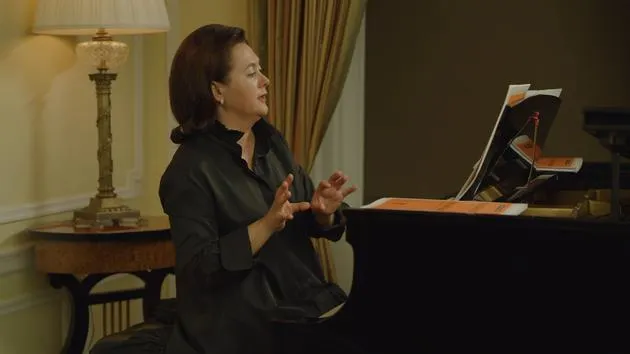
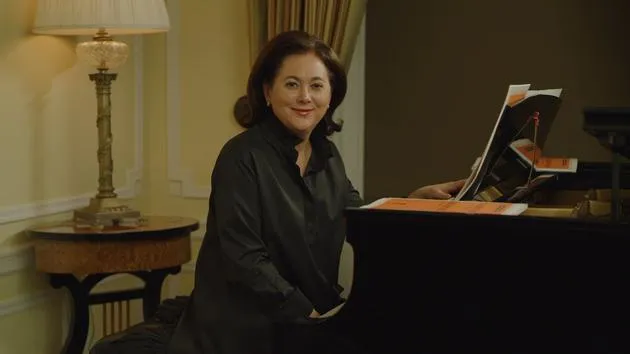
Julia ZilberquitJulia Zilberquit guides you through the middle section of Tchaikovsky's 'October: Autumn Song', from its light major mood up to the crescendo.
What's in the course
27 lessons (1h 57m) · 1 free
Lesson transcript
Music Lesson: The Middle Section
Middle Section Overview
The middle section starts in the major. It's very light, maybe a bit of a lighter mode. A lot of people tend to rush here; however, I don't think we should do that.
- It is certainly a movement that's going on, but it's still the same tempo.
- We need to ensure that we hear the moving basses, as they will bring us to the culmination and the modulation.
Awareness of the Middle Voice
We must also be aware of the middle voice.
- It's a very intricate voice, featuring polyphony, it's quite beautiful.
- Once again, we emphasize the very light mood.
- It's important that things do not fall apart.
Building Up a Crescendo
We are building up to a crescendo in measure 21.
- Listen carefully to the middle voice going on.
- Starting gently, we increase the crescendo.
Hand Positioning in Measure 21
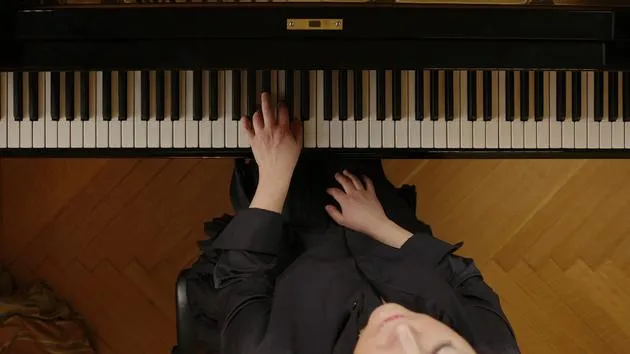
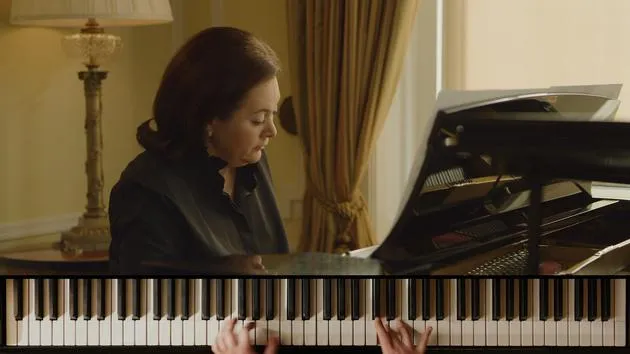
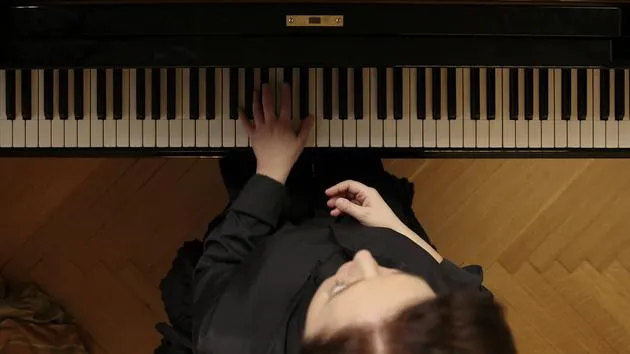
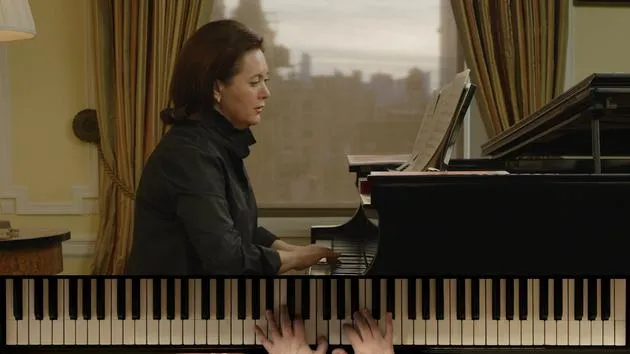
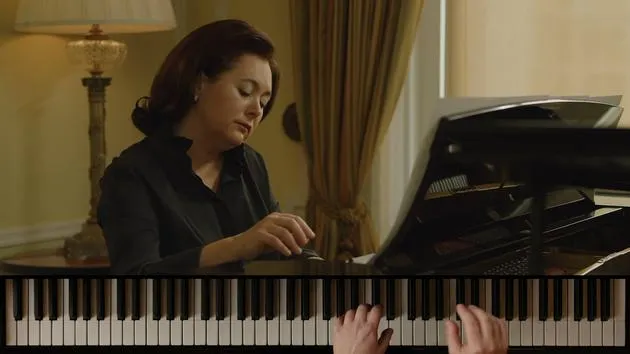
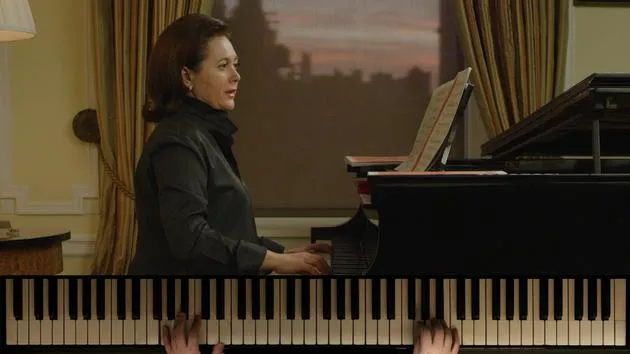
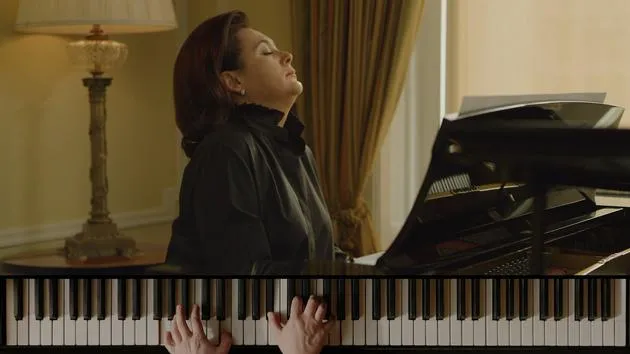
Now, in measure 21, we are changing the hands around a little bit.
- Here's what I'm doing:
- I take the first three notes with my left hand.
- Then, I take another three notes with my right hand.
- Finally, I play Bb with the left hand and A with the right hand.
This technique allows me to perform the arpeggiato a little faster. Arriving at that point is very important.
Dynamic Nuances
However, I urge you not to perform a huge rittenuto or a loud forte.
- We should maintain the dynamic colors here, very subdued.
- You can hold it on the same pedal in the middle section from measure 22 onward.
Playing Techniques for Measures 23-28
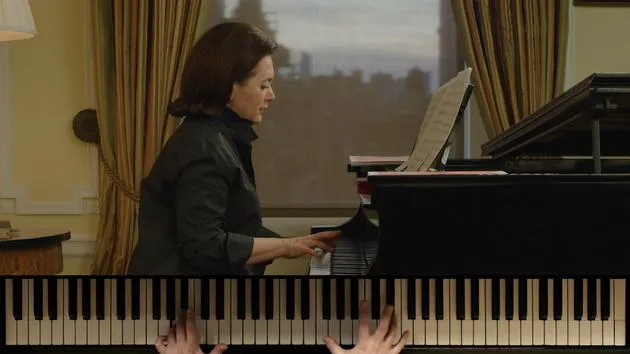
I also want to demonstrate how to play the chords between the hands differently in measures 23, 24, 27, and 28.
- For the grace note chord, I take the upper note F with my right hand and the other note with my left hand.
- For me, this is more convenient and provides smoother chords.
Emphasizing Sound Dynamics
At this point, Tchaikovsky calls for mezzo forte, allowing us to increase the sound a little.
- He repeats this section twice; Tchaikovsky loves his repeats.
- In fact, out of three or four pages, you really only need to learn about two, which is great.
Echo and Dialogue
I want the echo or the dialogue to be clearly heard.
- I will demonstrate it in a specific way.
- However, regardless of the dynamic plan you choose, I need to hear this clearly on both occasions.
Common Practice Among Pianists
Common practice among pianists is to maintain the momentum after the crescendo, displaying a dramatic quality, call it a "cry for help" or whatever you prefer, while remaining in mezzo forte.
- We should showcase that beautiful intonation again, especially since Tchaikovsky repeats this in measure 25.
- I always ask my students to play double piano pianissimo there, as it feels very intimate, something profound.
Right Hand and Left Hand Balance
I want them to play very softly with the right hand while subtly showcasing the left hand.
- It would sound like this: etc.
Conclusion of the Middle Section
This approach brings us to the conclusion of the middle section.
- In measures 30 and 31, I play a chord:
- Two lower notes in the left hand and two upper notes in the right hand.
- I hold them, then play upper A with the right hand.
The Famous Recitative
Next is that famous recitative, that well-known cello solo.
- Remember we discussed how Tchaikovsky loved his cello?
- Just like June, this section has the same structure.
- Before the third section, he includes a short, richer tattoo.
- This is longer and features a crescendo and diminuendo.
Split Between the Hands
I also make sure to split this section between the hands.
- From the beginning of measure 32, I play with the right hand, then execute 2, 3, 2, 3, 2, 3.
- Finally, I always play the last note with the left hand, as I want to smoothly transition into the chord.
27 lessons
1h 57m of structured video lessons
Advanced video features
Slow down, loop a passage, follow along
Mobile, tablet & desktop
Practise wherever you are
100% satisfaction guarantee
30-day money-back guarantee
Meet your guru
Meet your guru
Russian-born American pianist Julia Zilberquit has earned critical acclaim as a recitalist, chamber musician and recording artist. She was praised by The New York Times as "an outstanding soloist" after her Carnegie Hall performance of Cesar Franck's symphonic poem Les Djinns for piano and orchestra with Leon Botstein and the American Symphony Orchestra.
In 2014, Warner Classics released her CD Bach: Complete Solo Keyboard Concertos. This recording features the premiere of two Bach-Vivaldi Concerti Grossi arranged by Ms. Zilberquit for piano and orchestra, and was hailed as a "gorgeous rendition" by the prestigious Gramophone Magazine. Her arrangement of the Shostakovich Concertino for 2 Pianos, Op. 94 for piano and orchestra was premiered at Carnegie Hall; she has performed it worldwide to critical acclaim and recorded it with Vladimir Spivakov and the Moscow Virtuosi. Other recordings include a solo recording, The Mystery of Bagatelles, released by Naxos. The CD was praised as a "superb performance" by The Washington Post, and described as an "adventurous program, sparkling with unusual clarity and pointillistic luminescence" in London's Piano Magazine.
Her recitals have taken place at major concert halls including New York's Weill Recital Hall at Carnegie Hall, the 92nd Street Y, and Alice Tully Hall at Lincoln Center. Engagements at major international music festivals include appearances in Seattle, Colmar (France), Klangbogen (Vienna), Valery Gergiev's "White Nights" (St. Petersburg), Richter's "December Nights" (Moscow), "The Palaces of St. Petersburg," the Bard Music Festival in New York, and the Penderecki Festival (Poland).
A native of Moscow, Julia Zilberquit was born into a family of musicians. She graduated from the Moscow Gnessin School of Music and The Juilliard School (class of Bella Davidovich). She lives in New York City with her husband, son and daughter.
In this course she draws on that artistry to guide you through four movements of Tchaikovsky's "The Seasons" - March, April, June and October - so you can shape their poetry and colour at the keyboard yourself.







