



Middle section

With
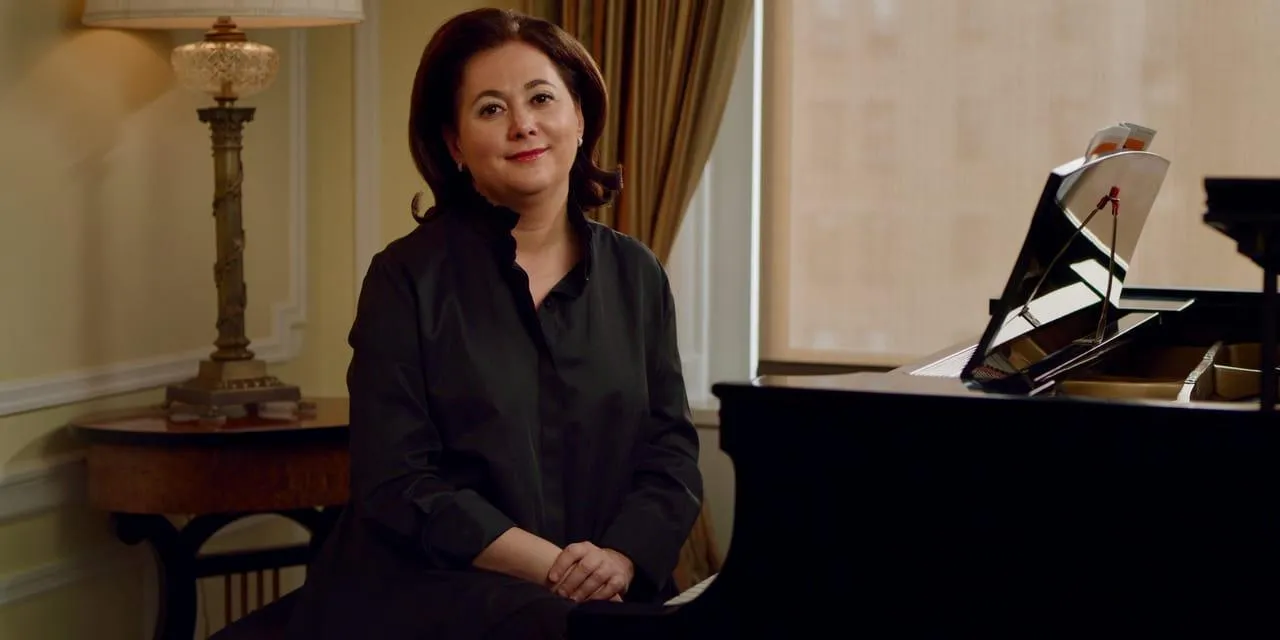
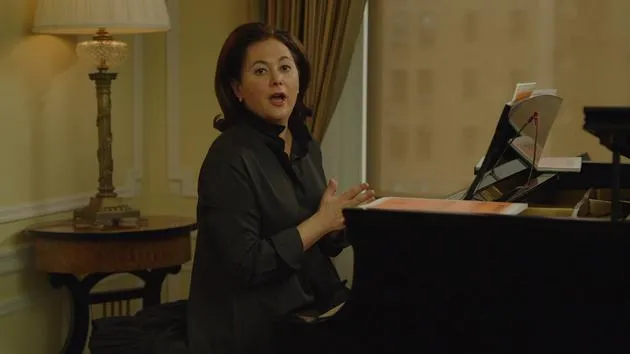
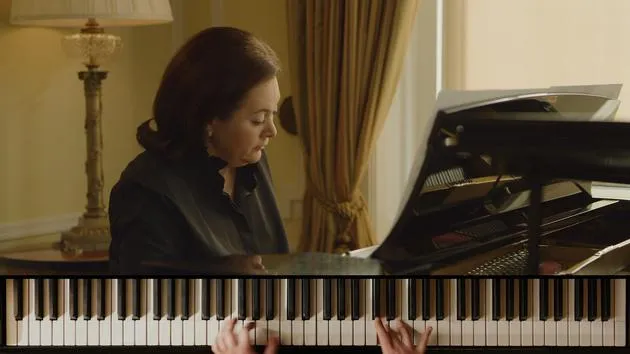
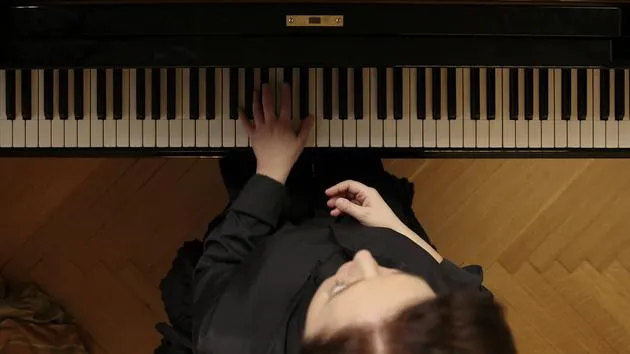
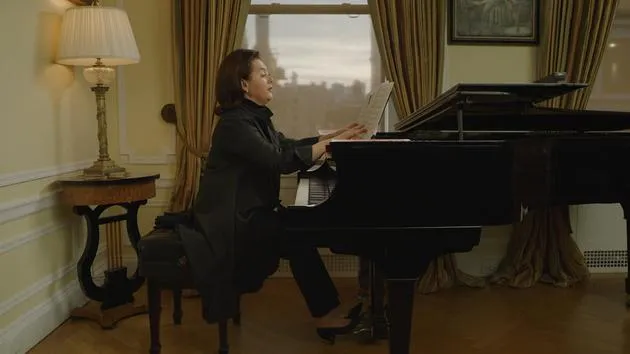
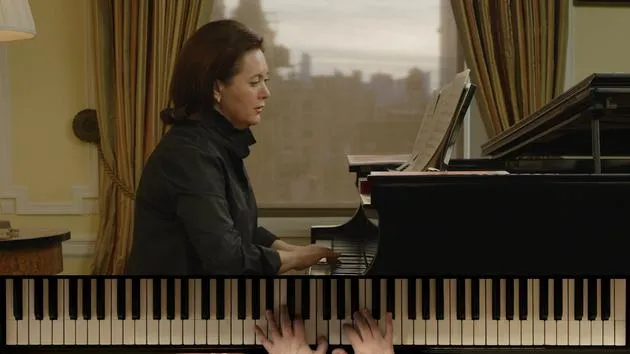
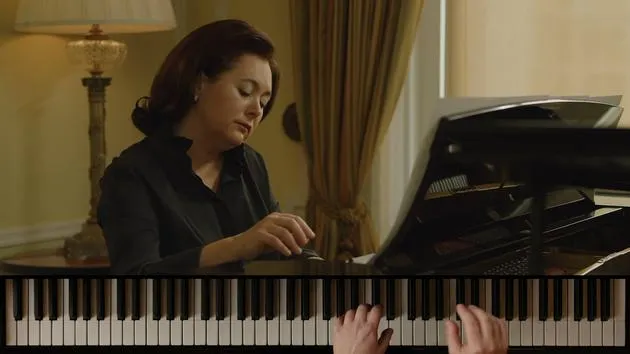
Julia ZilberquitJulia Zilberquit breaks down the tricky middle section of Tchaikovsky's April: Snowdrop, with fingering and practice tips for its repeated sixteenth-note passages.
What's in the course
27 lessons (1h 57m) · 1 free
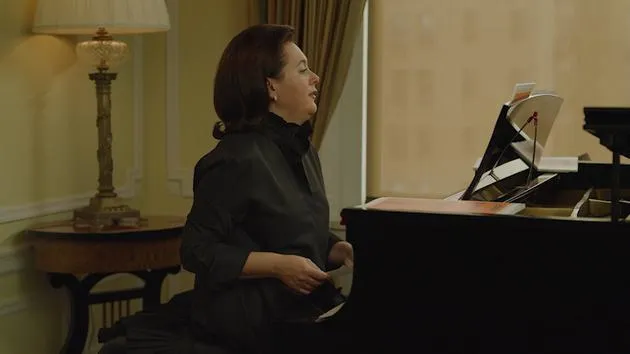
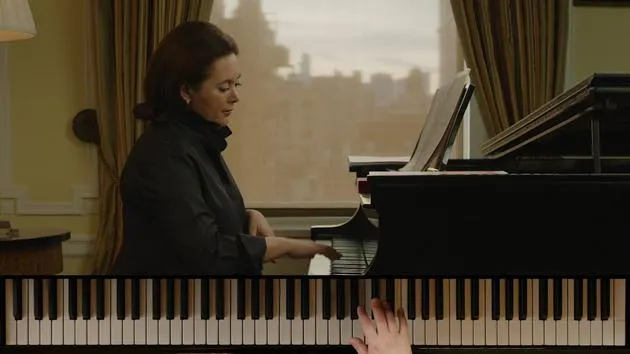
Lesson transcript
Music Lesson: Tchaikovsky's Middle Section Techniques
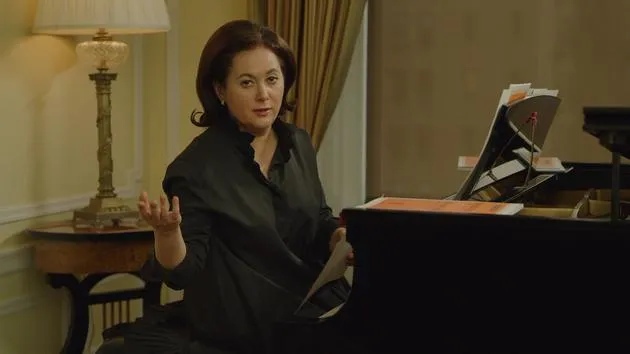
Now, the middle section ? the famous middle section ? poses a bit of a technical challenge with its well-known passages.
Repetition in the Second Section
The good news is that Tchaikovsky repeats the two bars over and over again, specifically eight times. Once you learn that one passage, you're set!
- The only difference? One passage ends on F, and the other on A.
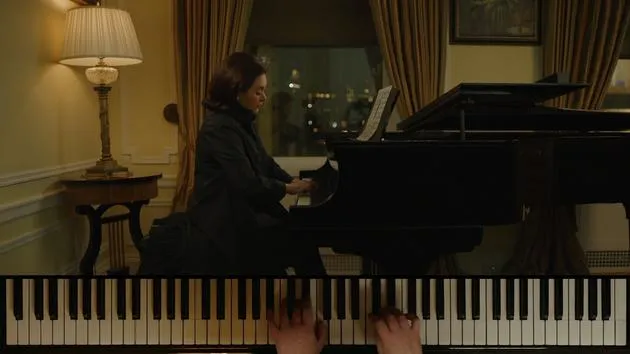
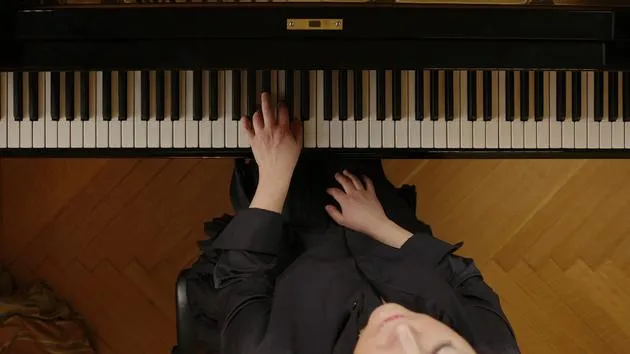
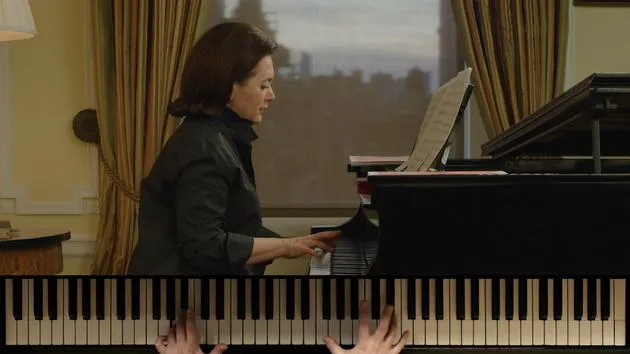
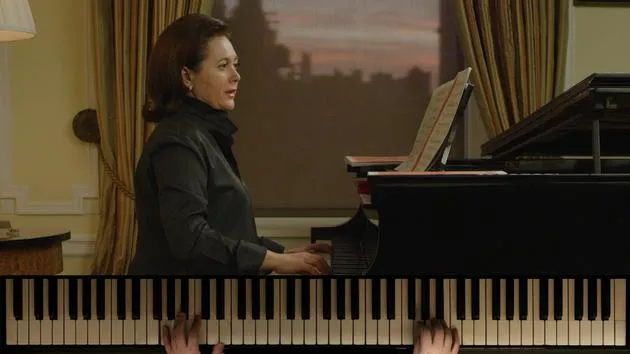
I personally prefer the fingers from that addition and always play them as follows:
- 2, 1, 2, 3, 4
- 1, 2, 3, 5
Practicing the 16th Notes
How to practice this challenging section? Here are some tips:
-
Practice Staccato:
Start quite slow, then gradually speed it up. -
Accents:
For practice, it's okay to accent it, but during performance, it's preferable not to. Think of it as a wind ? it's better to avoid strong accents. -
Old Practice Method:
Using stops (every other or every four notes) can also be effective here.
Left Hand Challenges
Now, let's address the tricky left hand jumps:
-
The left hand requires careful finger placement:
Always ensure that the fifth finger is on a D. -
Chord Practice:
Usually, you'd do four notes, either on the last chord.
Practice Steps:
- Practice the chords without the bass to gain confidence.
- Try with your eyes closed ? it's crucial to develop muscle memory!
- Focus either more on the right hand or the left hand, depending on where the challenge lies.
Suggested Exercises
To further aid in mastering this section:
-
Play just the lower notes:
e.g., 4, 5, 4, 5, 4 or 4, 5, 4, 5. -
Incorporate stops and reverse the order to solidify positions.
Performance Tips
Once you've learned it, pay attention to the piano start.
Here's a Slow Tempo Example:
- I will show it to you in a medium-slow tempo, focusing on the beautiful intonation.
A Little Secret:
- When you learn it, between measures 25 and 26, you can take a small moment to gather yourself.
Transitioning into the Second Movement
Once you've mastered that, you'll continue into the second movement.
-
Dynamics:
Pay attention to mezzo forte sections which are more dramatic and require more sound. -
Key Transitions:
You will experience a different color as we move into another key.
Important Measures to Note
- Measure 35 vs. Measure 51:
It's essential to recognize the differences in the left hand, which contains:- First section: three notes
- Second section: four notes and different three notes
Make a note of your endings:
- First Ending: Call it B1
- Second Ending: Call it B2
This distinction is important for the echo effect in music.
Recapitulation
Before repeating, Tchaikovsky wants us to adapt and read the notes carefully. The second time around brings a transition to a different key, incorporating question-and-answer phrasing.
- Final Suggestion:
Two measures before the recapitulation: take all chords into the left hand, leaving the right hand with only the melody.
Remember, this reflects Tchaikovsky's original writing style in measure 59, which is the same text as measure 1. We've come full circle!
27 lessons
1h 57m of structured video lessons
Advanced video features
Slow down, loop a passage, follow along
Mobile, tablet & desktop
Practise wherever you are
100% satisfaction guarantee
30-day money-back guarantee
Meet your guru
Meet your guru
Russian-born American pianist Julia Zilberquit has earned critical acclaim as a recitalist, chamber musician and recording artist. She was praised by The New York Times as "an outstanding soloist" after her Carnegie Hall performance of Cesar Franck's symphonic poem Les Djinns for piano and orchestra with Leon Botstein and the American Symphony Orchestra.
In 2014, Warner Classics released her CD Bach: Complete Solo Keyboard Concertos. This recording features the premiere of two Bach-Vivaldi Concerti Grossi arranged by Ms. Zilberquit for piano and orchestra, and was hailed as a "gorgeous rendition" by the prestigious Gramophone Magazine. Her arrangement of the Shostakovich Concertino for 2 Pianos, Op. 94 for piano and orchestra was premiered at Carnegie Hall; she has performed it worldwide to critical acclaim and recorded it with Vladimir Spivakov and the Moscow Virtuosi. Other recordings include a solo recording, The Mystery of Bagatelles, released by Naxos. The CD was praised as a "superb performance" by The Washington Post, and described as an "adventurous program, sparkling with unusual clarity and pointillistic luminescence" in London's Piano Magazine.
Her recitals have taken place at major concert halls including New York's Weill Recital Hall at Carnegie Hall, the 92nd Street Y, and Alice Tully Hall at Lincoln Center. Engagements at major international music festivals include appearances in Seattle, Colmar (France), Klangbogen (Vienna), Valery Gergiev's "White Nights" (St. Petersburg), Richter's "December Nights" (Moscow), "The Palaces of St. Petersburg," the Bard Music Festival in New York, and the Penderecki Festival (Poland).
A native of Moscow, Julia Zilberquit was born into a family of musicians. She graduated from the Moscow Gnessin School of Music and The Juilliard School (class of Bella Davidovich). She lives in New York City with her husband, son and daughter.
In this course she draws on that artistry to guide you through four movements of Tchaikovsky's "The Seasons" - March, April, June and October - so you can shape their poetry and colour at the keyboard yourself.







