



Coda
With
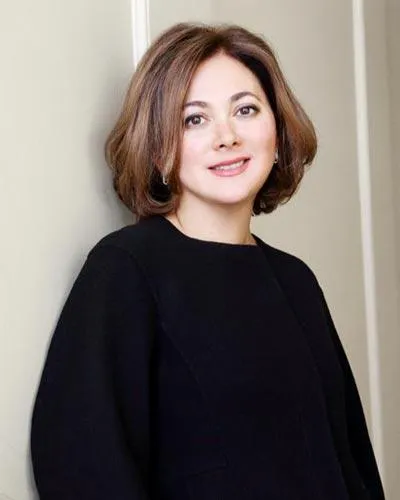
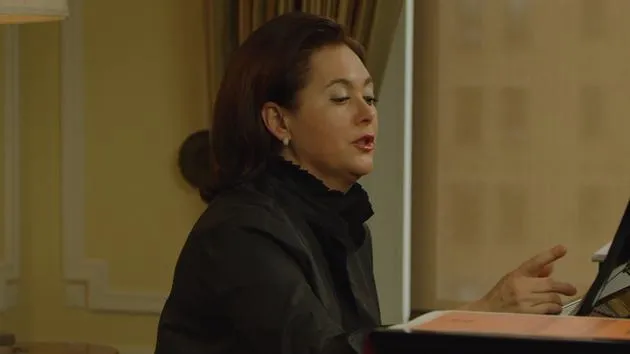
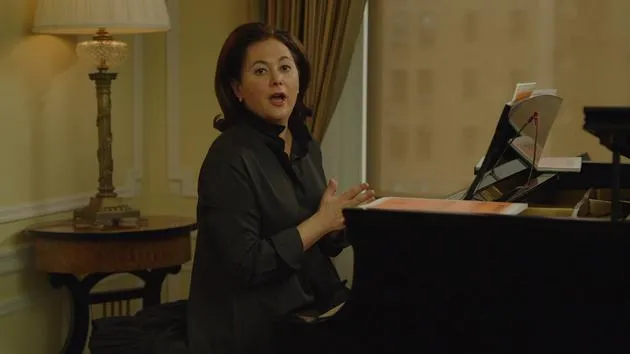
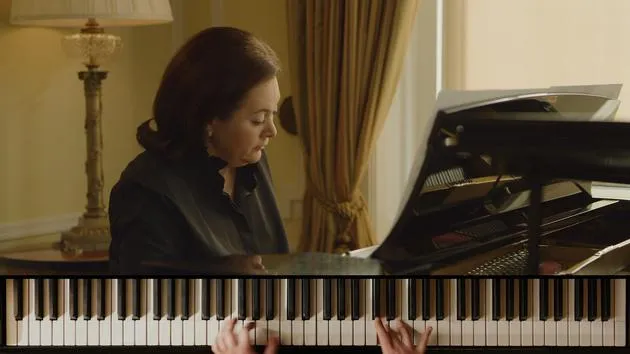
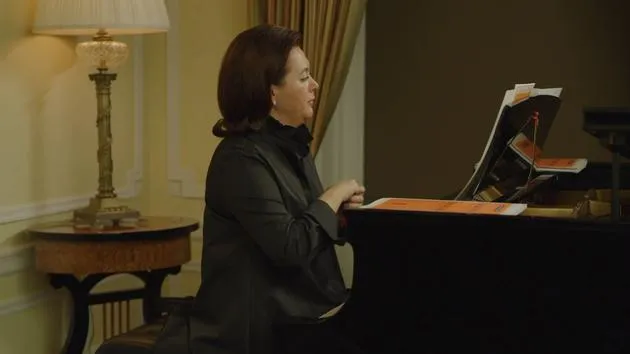
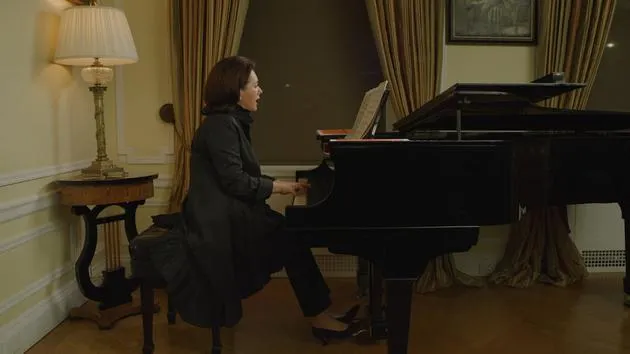
Julia ZilberquitJulia Zilberquit guides you through the Coda of Tchaikovsky's 'June: Barcarolle' - voicing the chords, holding the lower notes and bringing out its night-sky sonority.
What's in the course
27 lessons (1h 57m) · 1 free
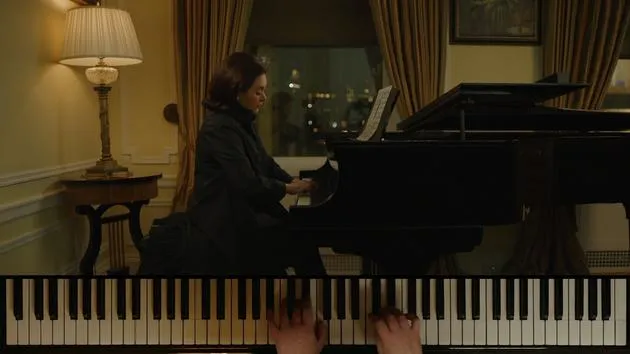
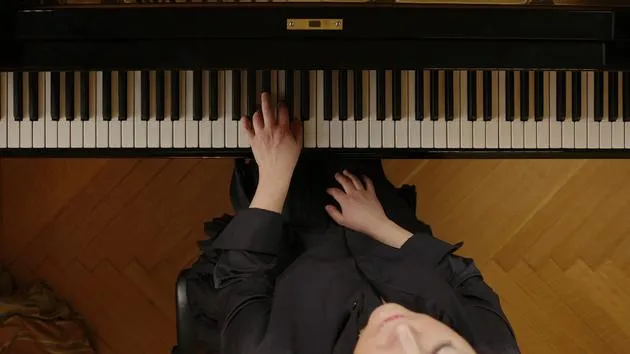
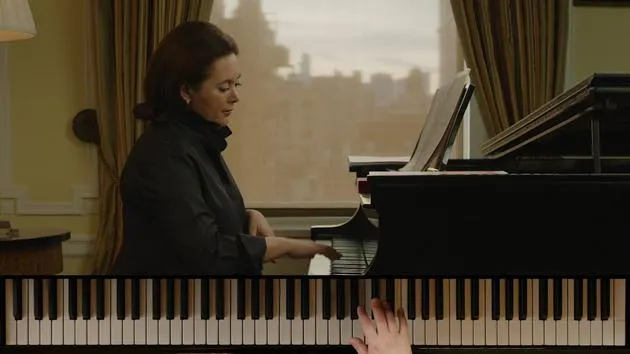
Lesson transcript
Koda Exploration
And then we arrive into the Koda.
If you remember the poetry that I wrote to you, it says it was a beautiful summer night and the stars were shining or gazing upon them.
Importance of the Stars
For me, it is very important to show those stars. And here they are, coming along in the lower register.
Students' Reaction
Now, some students become dazzled by this section for some odd reason. So, here's what I suggest we do:
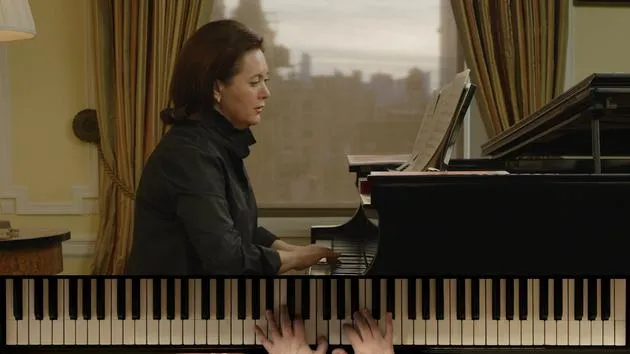
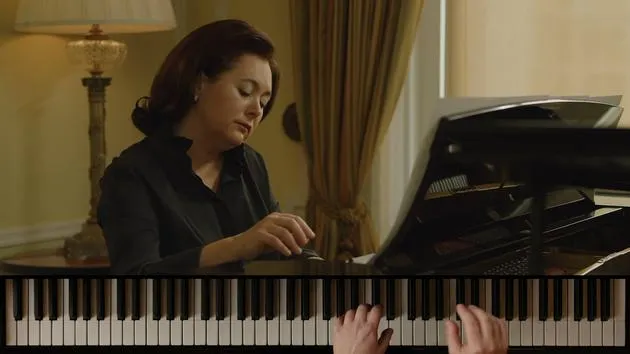
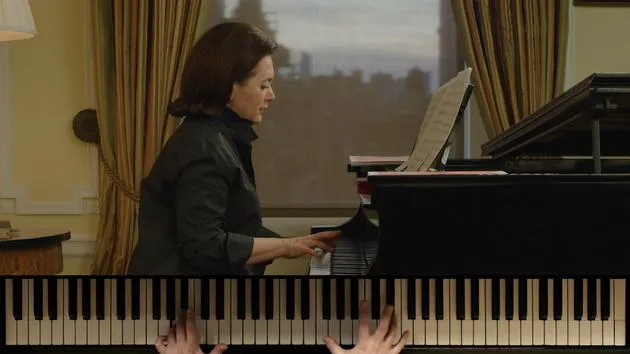
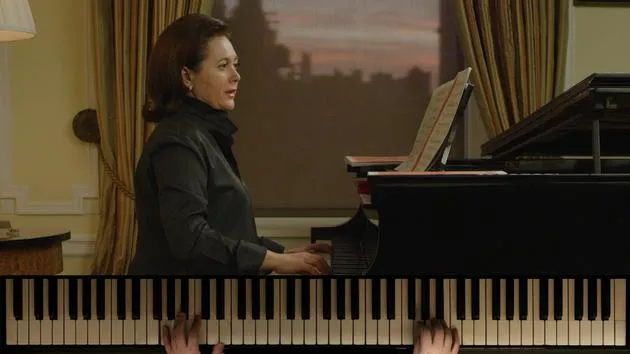
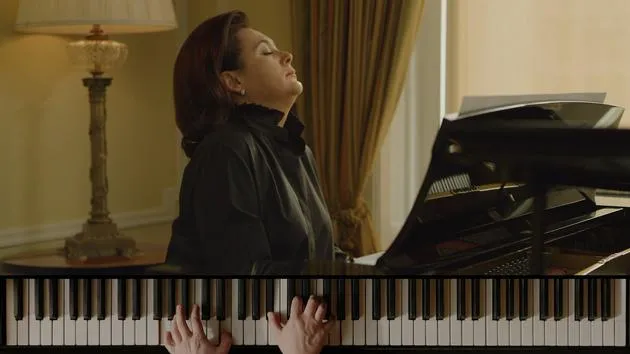
- Play the Chords: First of all, we play it as the chords, which is very useful. This will give you an idea of the hand position.
- Hold the Lower Note: We need to make sure that the lower note is held.
- Sonority of Notes: We always have a sonority of three notes or four notes. This is very important.
- Syncopation: There is some sort of syncopation as well.
- Beautiful Bass: I also want you to pay attention to the beautiful bass because it's holding it all together, and we need to hear this.
Measure 87 Insights
Now, there's a beautiful imitation. I want to also point out measure 87:
- First Edition: The first edition had an octave there instead of a second fifth.
- Tchaikovsky's Autograph: Tchaikovsky in his autograph had two fifths both times around.
- Common Practice: However, a lot of us play the octave in measure 87 just because we're so used to that. Both of them work.
Conclusion of the Koda
Now, we move to the conclusion of the Koda. The syncopated section reflects the first subsection , the so-called lullaby in the second part , which is this very soft double piano.
- Need to Hear the Line: I do need to know this; I need to hear this line.
- Crescendo: I would say it has a very small crescendo, and I do it just a little bit differently.
Arpeggiato Chords
As you see, there are nine G minor arpeggiato chords at the end. So I usually do it this way:
- Starting the Crescendo: I start the crescendo a little bit later, and then I do the diminuendo.
For me, this is such a quintessential sunrise.
Ravello Music Festival
I don't know; some of you probably know that there's a famous music festival in Ravello. It's called the Ravello Music Festival, and they have the most amazing thing , a beautiful surrounding.
- Sunrise Concerts: They have what is called the sunrise concerts. When people come to listen to the concert, it's dark. Slowly, the sun rises, and by the time the program is done, it's beautiful sunshine.
For me, this is such a beautiful ending of that summer night.
27 lessons
1h 57m of structured video lessons
Advanced video features
Slow down, loop a passage, follow along
Mobile, tablet & desktop
Practise wherever you are
100% satisfaction guarantee
30-day money-back guarantee
Meet your guru
Meet your guru
Russian-born American pianist Julia Zilberquit has earned critical acclaim as a recitalist, chamber musician and recording artist. She was praised by The New York Times as "an outstanding soloist" after her Carnegie Hall performance of Cesar Franck's symphonic poem Les Djinns for piano and orchestra with Leon Botstein and the American Symphony Orchestra.
In 2014, Warner Classics released her CD Bach: Complete Solo Keyboard Concertos. This recording features the premiere of two Bach-Vivaldi Concerti Grossi arranged by Ms. Zilberquit for piano and orchestra, and was hailed as a "gorgeous rendition" by the prestigious Gramophone Magazine. Her arrangement of the Shostakovich Concertino for 2 Pianos, Op. 94 for piano and orchestra was premiered at Carnegie Hall; she has performed it worldwide to critical acclaim and recorded it with Vladimir Spivakov and the Moscow Virtuosi. Other recordings include a solo recording, The Mystery of Bagatelles, released by Naxos. The CD was praised as a "superb performance" by The Washington Post, and described as an "adventurous program, sparkling with unusual clarity and pointillistic luminescence" in London's Piano Magazine.
Her recitals have taken place at major concert halls including New York's Weill Recital Hall at Carnegie Hall, the 92nd Street Y, and Alice Tully Hall at Lincoln Center. Engagements at major international music festivals include appearances in Seattle, Colmar (France), Klangbogen (Vienna), Valery Gergiev's "White Nights" (St. Petersburg), Richter's "December Nights" (Moscow), "The Palaces of St. Petersburg," the Bard Music Festival in New York, and the Penderecki Festival (Poland).
A native of Moscow, Julia Zilberquit was born into a family of musicians. She graduated from the Moscow Gnessin School of Music and The Juilliard School (class of Bella Davidovich). She lives in New York City with her husband, son and daughter.
In this course she draws on that artistry to guide you through four movements of Tchaikovsky's "The Seasons" - March, April, June and October - so you can shape their poetry and colour at the keyboard yourself.







