



II-V-I's
With
Chris HaighWe saw earlier how a different chord could be built on each degree of the scale. The I chord is a major7; the II chord is a minor7, and the V chord as a seventh. These three chords very often appear together in the same order – what is known as a II-V-I
What's in the course
28 lessons (1h 46m) · 1 free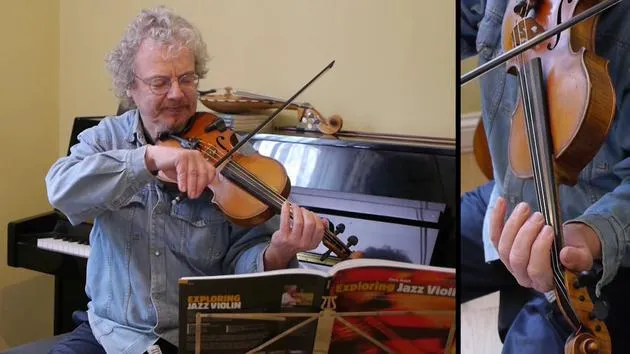
01. Diminished chords
6:10
02. Assignment: diminished
0:17
03. Augmented chords
3:48
04. Assignment: augmented chords
0:19
05. Minor 7b5/7b9
2:24
06. Assignment m7b5/7b9
1:15
07. Slash and sus chords
6:18
08. Assignment: slash and sus chords
0:18
09. Substitutions and playing outside
7:21
10. Assignment: playing outside
0:29
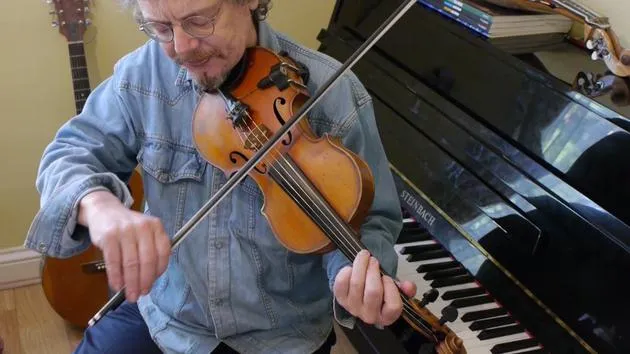
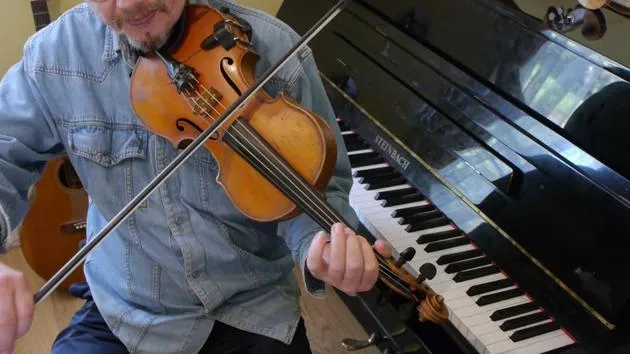
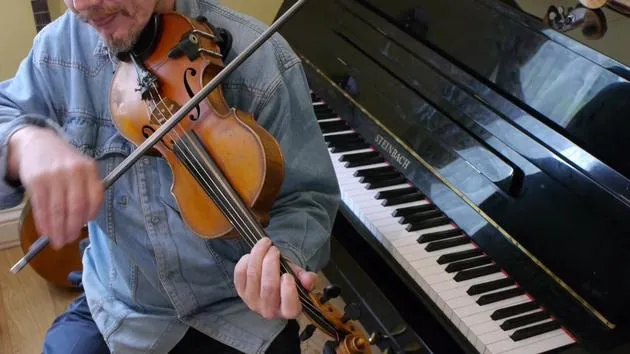
Lesson transcript
Understanding the 2-5-1 Progression
In this lesson, we're going to look at the two-five-one (2-5-1) we saw earlier. How a different chord can be built on each degree of the scale:
- The I chord is a major 7.
- The II chord is a minor 7.
- The V chord is a 7th.
These three chords very often appear together in the same order, known as a 251 in the key of G. This will be:
- A minor 7 (Am7)
- D7
- G major 7 (Gmaj7)
Importance of the 2-5-1 Progression
Understanding and recognizing the 251 makes it a lot easier to navigate through a chord sequence and helps you to play phrases with some logic and sense of direction.
What Does a 2-5-1 Look and Sound Like?
The 2 and 5 can either be half a bar each or a whole bar each. Because all three chords are created from the same scale, all the notes of each scale coincide. As you can see, this makes it easy to play a phrase that sits comfortably in each chord without having to change the scale as you go along.
Playing Techniques
Here are a few techniques you can try:
- Descending Line: Start on the root of a minor 7 and hit each new root as you arrive.
- Third of Each Chord: You can also start on the third of each chord.
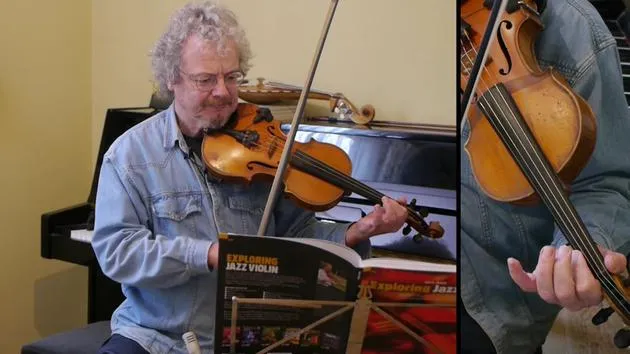
- Arpeggiating the Chord: Arpeggiating this way sounds very mechanical. It's much better to descend on the second arpeggio.
Experimenting with Notes
You get an interesting effect if you start the arpeggio on the third instead of on the root. So instead of 1-3-5-7, you now get 3-5-7.
- The ninth note of a minor 7 is B. This is an outside note. It's part of the scale, but it's not part of the chord, making it sound more colorful and interesting.
- You can take it even further, starting on the fifth of a minor 7, followed by 7, 9, and 11.
You don't have to play the D7 as an arpeggio. Adding these notes from outside the chord gives a more modern sound and an air of unpredictability.
Influences and Examples
A good example of a player who embraced this style was Stuff Smith.
- He was an American player who made his name in the 40s and was heavily influenced by bebop, which was much more adventurous in its approach to chords compared to the swing era.
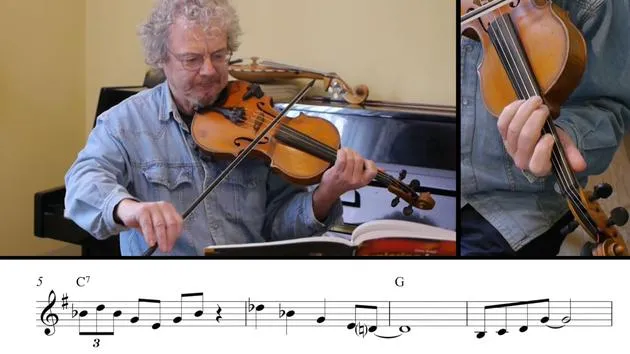
Stuff Smith Lick
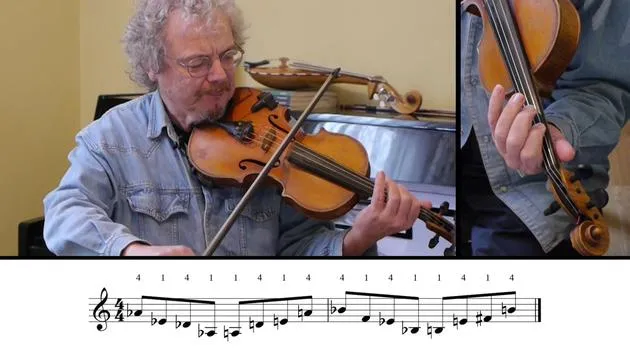
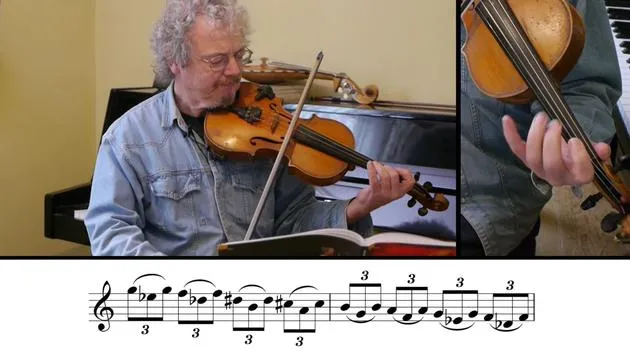
Here's a Stuff Smith lick which bounces around the chords:
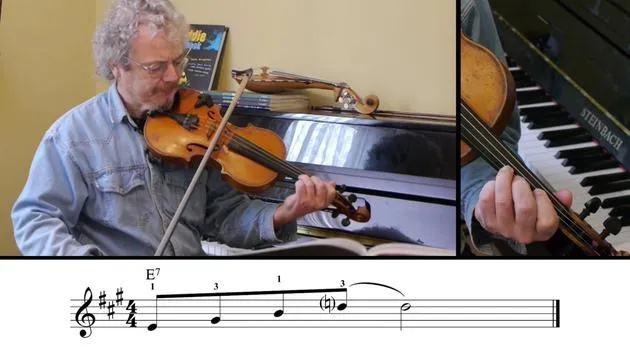
- He often used a three-note chromatic descending scale over the 251.
- This starts on the root of a minor 7, descends to the flattened fifth of D7 (an outside note), creating tension before resolving to the root of G major 7.
He extends this idea to include arpeggios and also moves upwards from the root of the A minor 7 to the sharp 5 of the D7 to the third of G major 7.
Simplifying Your Approach
If you think this is getting a bit technical, don't worry. You're not expected to work out the relationships of notes to their chords as you're playing. The point is to memorize phrases like this so they become second nature.
Gropelli often used a simpler approach, playing blues phrases through a II V I.
Practice Suggestions
Here's an extended series of II V I chords:
- Use this to practice the scales, arpeggios, and licks from this chapter.
- Try making up your own phrases that have an obvious endpoint at the I chord.
Happy practicing!
28 lessons
1h 46m of structured video lessons
Advanced video features
Slow down, loop a passage, follow along
Mobile, tablet & desktop
Practise wherever you are
100% satisfaction guarantee
30-day money-back guarantee
Meet your guru
Meet your guru
Chris Haigh has been a professional fiddle player for 25 years, with experience covering many different genres. He has played on over 75 albums, working with artists including Alison Moyet, Bob Geldof, All About Eve, Michael Ball, David Soul, Oumou Sangare, The Quireboys, Riverdance, Morcheeba, James Galway and Steps.
He has played swing jazz with The Kimbara Brothers, Diz Disley, Le Jazz, The Hot Club of London, and the Quecumbar Allstars, and leads a 7-piece Soviet swing band, The Kremlinaires.
Chris gives lessons and workshops on jazz violin technique and has taught jazz violin at Middlesex, Brunel and Newcastle universities and Truro College. His writing credits include nine fiddle books, among them The Fiddle Handbook.
He also runs Fiddling Around (fiddlingaround.co.uk), probably the most comprehensive and widely visited source of fiddle information on the web.







