



Slash and sus chords
With
Chris Haigh
What's in the course
28 lessons (1h 46m) · 1 free
01. Diminished chords
6:10
02. Assignment: diminished
0:17
03. Augmented chords
3:48
04. Assignment: augmented chords
0:19
05. Minor 7b5/7b9
2:24
06. Assignment m7b5/7b9
1:15
07. Slash and sus chords
You are here6:18
08. Assignment: slash and sus chords
0:18
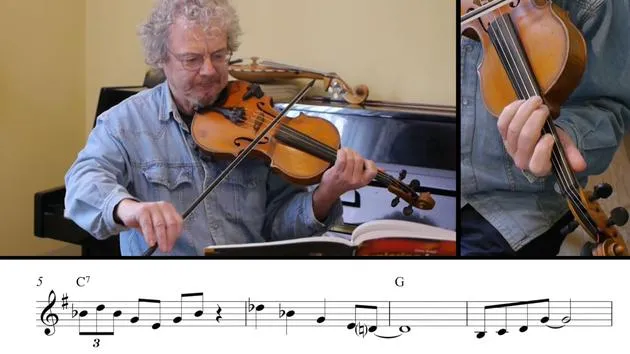
09. Substitutions and playing outside
7:21
10. Assignment: playing outside
0:29
Lesson transcript
Music Lesson: Slash Chords and Sus Chords
In this lesson, we're going to look at slash chords and sus chords.
Understanding Sus Chords
A sus chord is short for "suspended," and it refers specifically to the suspended 4th. The terms sus and sus 4 are interchangeable.
Structure of a Sus Chord
Normally, a chord has a root, 3rd, and 5th, as with the C chord:
- C: Root, 3rd, and 5th
In a sus chord, there is no third. Instead, there's:
- A perfect fourth a semitone above where the third would be.
So in C, that would lead to F. This creates a strong tension with the fourth wanting to resolve down to the third.
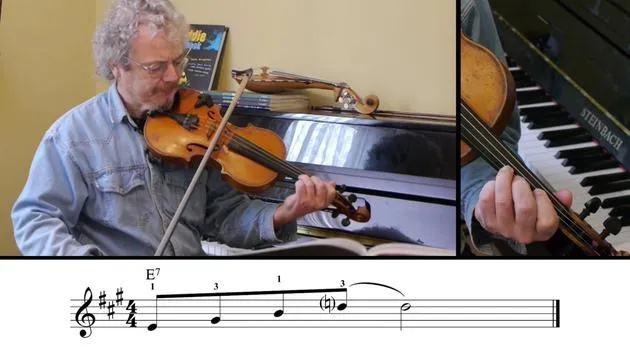
Example in G
Here's the same concept in G. In jazz, the sus chord is often a seventh or dominant chord, in which case the G7 sus will resolve to G7, which in turn resolves to C.
This sounds rather complicated, but these chords are actually quite easy to deal with. You can either:
- Emphasize the sus note and its downward resolution
- Ignore it altogether and treat the G7 sus as a G7.
Extended Example
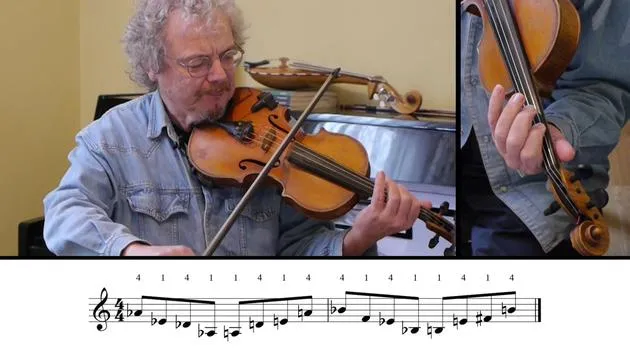
Here's an extended series of 25 1s, including a G7 sus.
Understanding Slash Chords
Typically, the root or bass note of a chord is the first letter of that chord.
- Example: For a C major 7 chord, the root is C.
However, a chord such as C/E (C over E) has a different note as the bass note.
Note: C over E is an inversion of the C chord.
Different Bass Notes
Sometimes, the bass note is not part of the normal chord at all. Slash chords are often used to provide an ascending or descending bass line that runs through a series of chords.
Example:
In a minor key, it's common to see a bass line descending from the root.
-
Listen to this example:
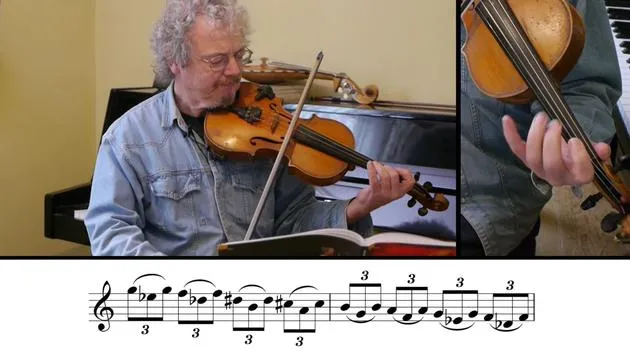
- 1st Chord: E minor
- 2nd Chord: E minor over E flat (often called E minor major 7, as it's an E minor chord with a major 7th)
- 3rd Chord: E minor over D
- 4th Chord: E minor over D flat
A good example of this kind of sequence is the tune Blue Skies.
Simplifying Slash Chords
Slash chords such as these are not difficult to manage. Unless you choose to emphasize the root note, you can simply ignore it.
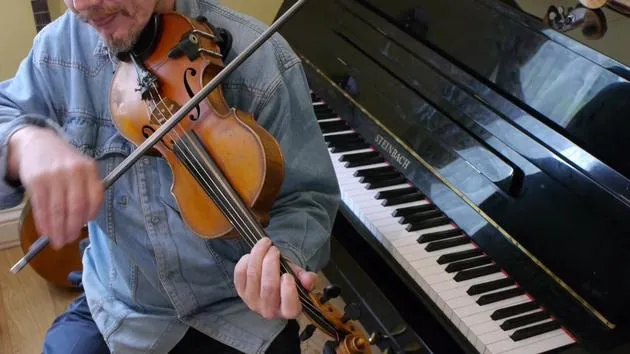
Example: Here's an example of me improvising over a minor descending line.
Summary of Chord Names
Here's a quick summary of the chord names:
- G
- G major 7
- G minor 7
- G minor 7 flat 5
- G7
- G diminished
- G augmented 7
- G7 b9
- G sus 4
- G b
Chord Understanding
When you've fully absorbed the lessons we've done so far, you should be able to work out the notes for any major and minor chords including:
- Major 7
- Minor 7
- Minor 7 b5
- Diminished
- Augmented 7
- b9
- Sus or Augmented chords
This looks like a big job, especially when you're playing through an unfamiliar chord sequence.
Tips for Easier Playing
There are two important things to keep in mind that will make your job easier:
-
Complex Chord Names
Complex chord names read from left to right. What's on the left is crucial, and the information gets steadily less important towards the right.- For example, with GM7b5, you'll first find that it's a G chord. Simply playing a G note will be sufficient if you've got nothing better to do.
- The next bit tells you it's minor, so we'll have a minor third in it, B flat.
- The 7 tells you it has a flattened 7, F natural.
- Finally, B indicates that the fifth, normally D, is flattened to D flat.
You certainly don't have to play every note in the chord. More often than not, you can simply ignore what's on the right-hand side of the chord name.
-
Chords Modification
Accompanists love to modify and substitute chords. If they see a G major, they will play G major 7 or any of its alternatives.A good accompanist knows which chords act structurally in the same way as the original, allowing them to add color and interest without spoiling the integrity of the tune.
Final Thought
What this means is that there's no point in obsessing about the fine details of every chord. If you memorize every last flat 9 and sharp 11, the chances are the accompanist will play something quite different anyway.
28 lessons
1h 46m of structured video lessons
Advanced video features
Slow down, loop a passage, follow along
Mobile, tablet & desktop
Practise wherever you are
100% satisfaction guarantee
30-day money-back guarantee
Meet your guru
Meet your guru
Chris Haigh has been a professional fiddle player for 25 years, with experience covering many different genres. He has played on over 75 albums, working with artists including Alison Moyet, Bob Geldof, All About Eve, Michael Ball, David Soul, Oumou Sangare, The Quireboys, Riverdance, Morcheeba, James Galway and Steps.
He has played swing jazz with The Kimbara Brothers, Diz Disley, Le Jazz, The Hot Club of London, and the Quecumbar Allstars, and leads a 7-piece Soviet swing band, The Kremlinaires.
Chris gives lessons and workshops on jazz violin technique and has taught jazz violin at Middlesex, Brunel and Newcastle universities and Truro College. His writing credits include nine fiddle books, among them The Fiddle Handbook.
He also runs Fiddling Around (fiddlingaround.co.uk), probably the most comprehensive and widely visited source of fiddle information on the web.







