



Stephane Grappelli
With
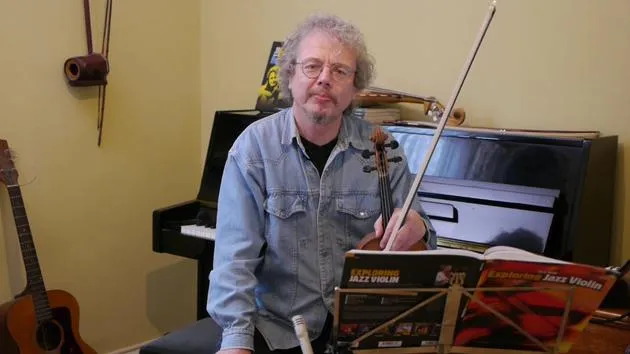
Chris HaighChris Haigh introduces the style of jazz violinist Stéphane Grappelli - his soft, breathy muted tone and the finger-pattern licks that became his trademark.
What's in the course
26 lessons (1h 53m) · 1 free
Lesson transcript
The Influence of Stefan Grappelli in Jazz Violin
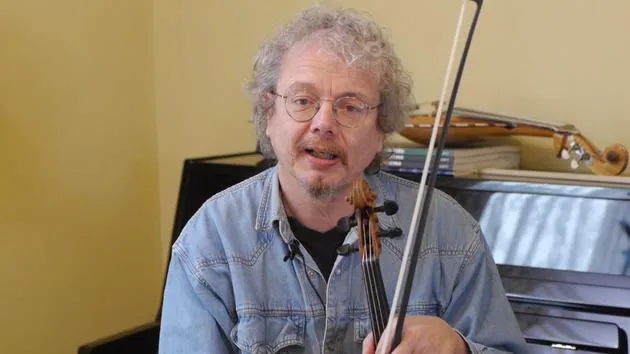
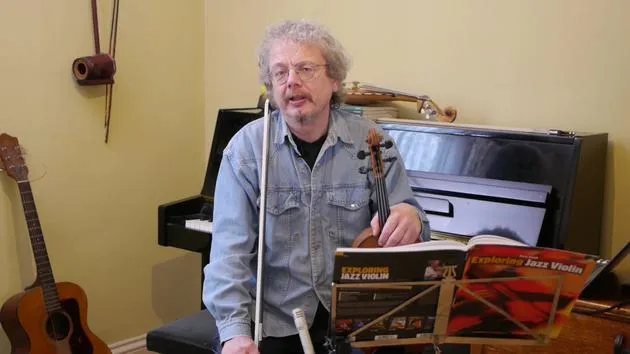
Now this chapter is dedicated to the playing of Stefan Grappelli. He was by far the most influential of jazz violinists.
The Grappelli Experience
I know from experience that if you play jazz violin in public, no matter what your style, people will come and tell you how much you sound like Stefan Grappelli. This can be quite an honor, or it can be extremely annoying.
Grappelli recorded in the 1930s and 40s with a gypsy guitarist called Django Reinhardt, who was a great soloist and extremely influential in his own right. They teamed up to form a five-piece band called the Quintet of the Hot Club of France, which created a new European style of jazz that has continued to be extremely influential to this day.
Playing with Django
When Grappelli played with Django, he had to compete with three guitars, requiring him to play very loud and hard. After the war, he mostly played with pianists and, from the 1970s, with smaller bands, often in England. He no longer had to play so hard; he had the luxury of a decent PA system from then on, allowing him to play much softer.
This soft style of his playing is one of its finest aspects. He often used a mute when playing very quietly, resulting in a soft, wispy, breathy kind of sound.
Trademark Licks and Techniques
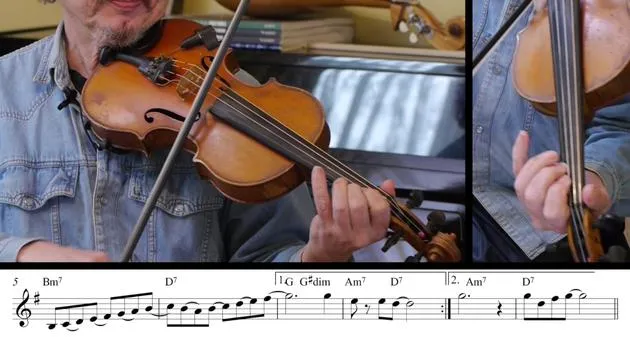
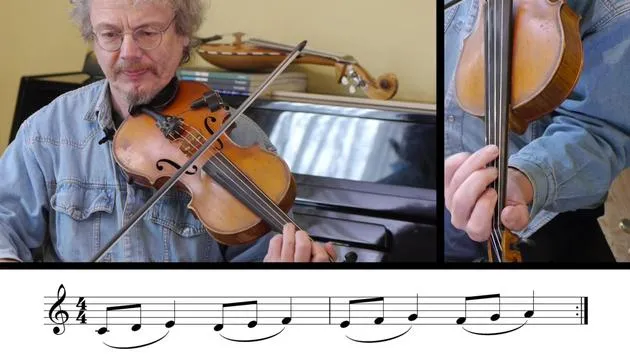
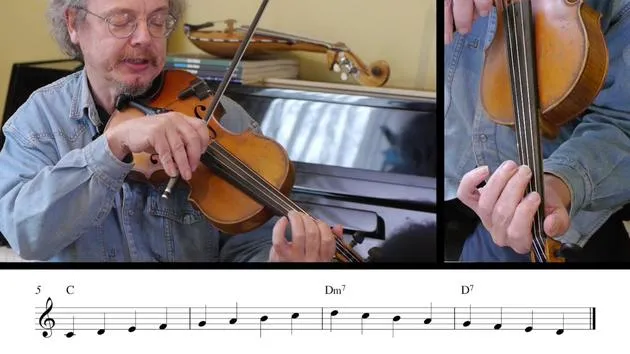
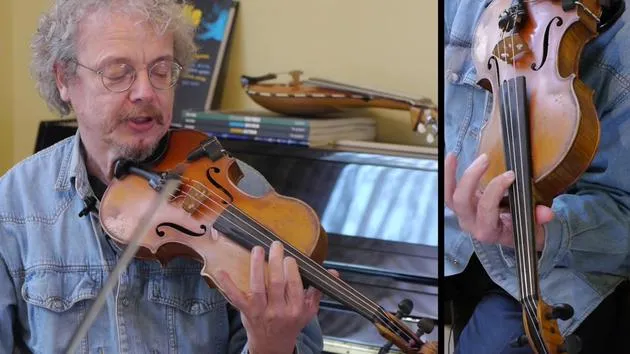
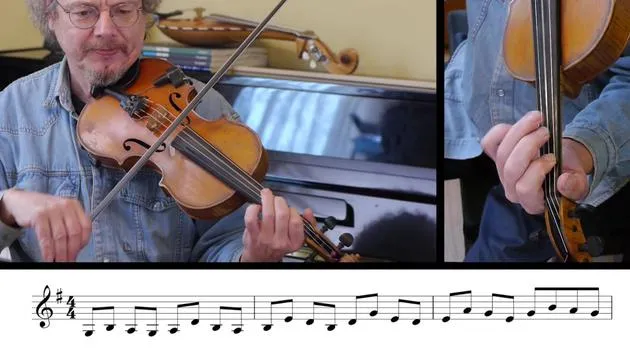
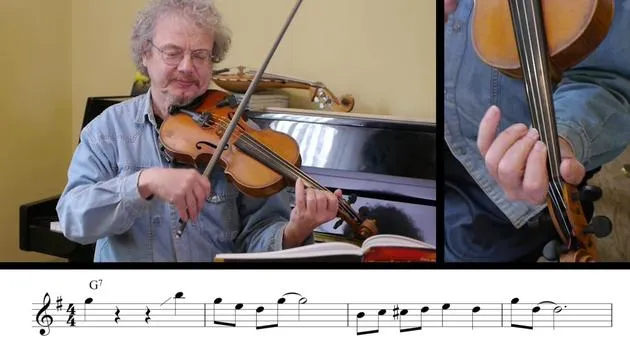
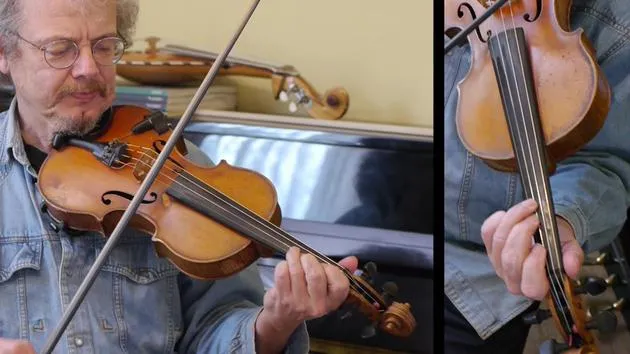
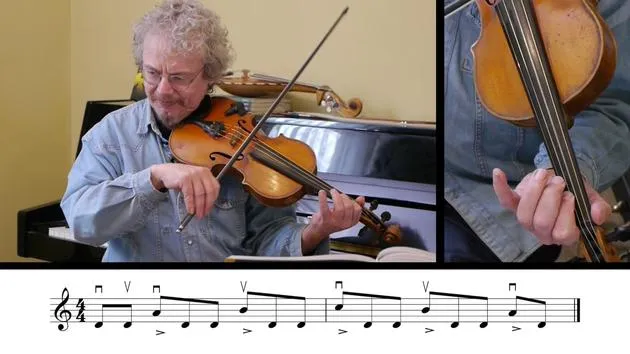
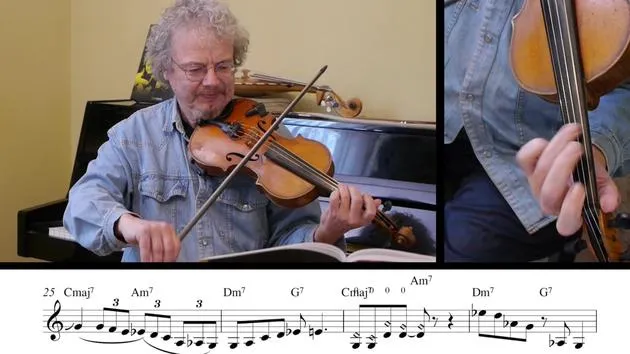
Many of Grappelli's trademark licks are based on finger patterns. For example, there's one that involves a stretch from a fourth finger to a flattened first finger, which creates a very nice cutting effect.
As with all licks, it's easy to find variations. Here's a more complex version of the one we just did. Licks like these will easily transfer to other keys, where you can use the same fingering. For example, going down a fifth on the A string puts it in the key of G.
Some licks only really work in one key. A good example of that is the open 14 lick on the E string. This works well because it's high and cutting, complementing an E chord. If you take it down a string, it's still good but not quite as effective.
Grappelli, much like Joe Venuti, enjoyed using parallel fifths. They're very easy to perform. Always think of the lower note as the melody note and follow it with the string above.
Here's an example.
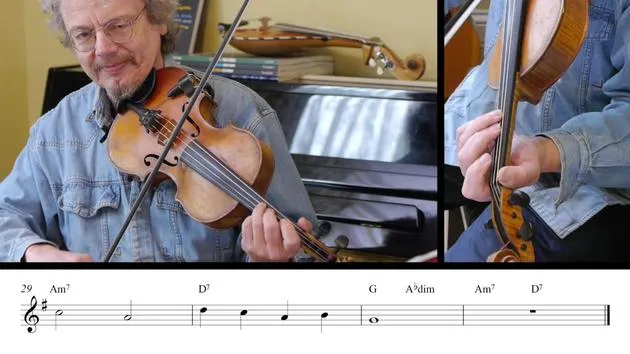
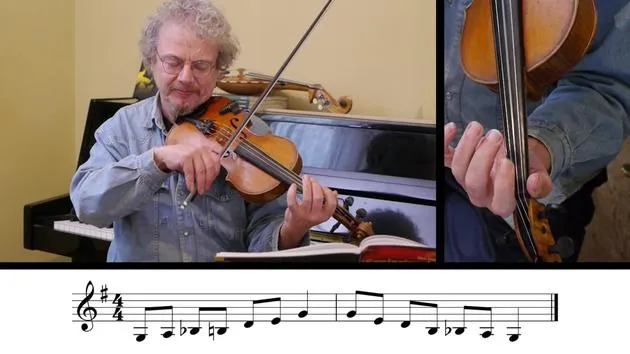
Another version, a more complex one, uses chromatic notes. A favorite way to end a tune in G is a descending chromatic scale ending on a low G and pausing on the Ab. He would often dwell on the Ab just before the end of a scale. This is one of his favorite spicy notes to insert just before the end of a phrase or line.
A Favorite Lick
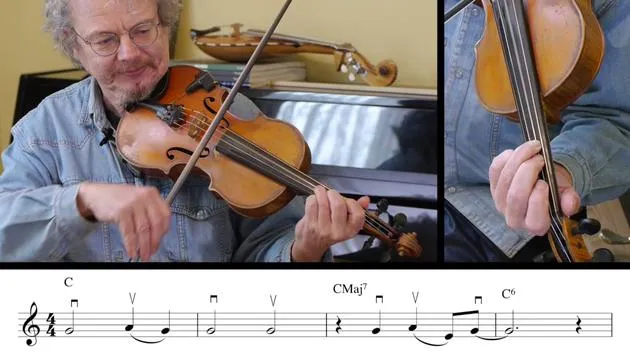
One of Grappelli's favorite trademark licks was the harmonic lick, usually fingered as 2, 1, 2, 1. He often played this lick by moving up and down the strings.
Example Performance
Finally, here's a tune in Grappelli style and a solo that incorporates some of these licks.
First, we'll hear the tune, which is called Swing Parisienne. And here we are again, but this time we'll play the solo version.
26 lessons
1h 53m of structured video lessons
Advanced video features
Slow down, loop a passage, follow along
Mobile, tablet & desktop
Practise wherever you are
100% satisfaction guarantee
30-day money-back guarantee
Meet your guru
Meet your guru
Chris Haigh has been a professional fiddle player for 25 years, with experience covering many different genres. He has played on over 75 albums, working with artists including Alison Moyet, Bob Geldof, All About Eve, Michael Ball, David Soul, Oumou Sangare, The Quireboys, Riverdance, Morcheeba, James Galway and Steps.
He has played swing jazz with The Kimbara Brothers, Diz Disley, Le Jazz, The Hot Club of London, and the Quecumbar Allstars, and leads a 7-piece Soviet swing band, The Kremlinaires.
Chris gives lessons and workshops on jazz violin technique and has taught jazz violin at Middlesex, Brunel and Newcastle universities and Truro College. His writing credits include nine fiddle books, among them The Fiddle Handbook.
He also runs Fiddling Around (fiddlingaround.co.uk), probably the most comprehensive and widely visited source of fiddle information on the web.







