



Keeping your place
With
Chris HaighChris Haigh shows how to keep your place in a tune's structure once you leave the melody behind to improvise, using the standard "Come Home" as a worked example.
What's in the course
26 lessons (1h 53m) · 1 free







Lesson transcript
Keeping Your Place Within a Tune
In this video, we're going to look at the question of how to keep your place within the structure of a tune.
Understanding the Melody
- When you're playing the melody, that's not a problem because you know exactly where you are.
- However, we're going to move into improvisation, where you'll leave the melody behind.
Familiarizing with the Tune
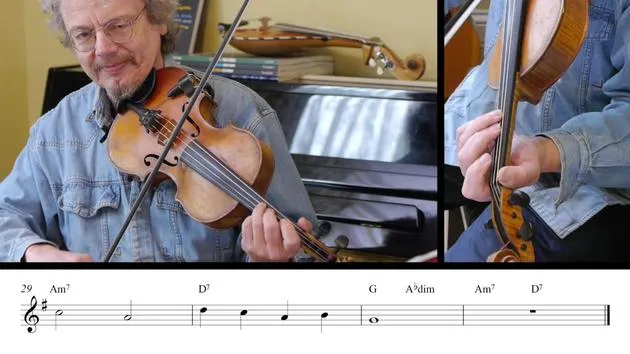
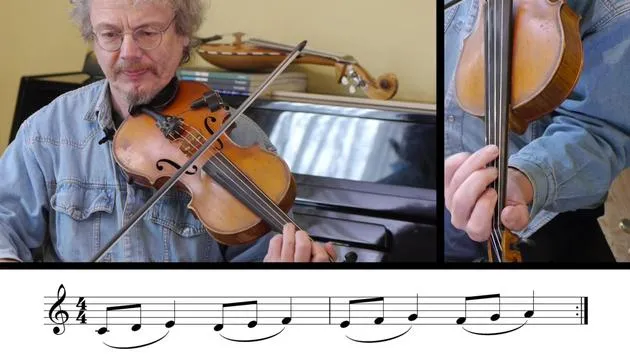
To keep track of what you would be playing if you were performing the melody, first, we need to get familiar with a tune called "Come Home."
- Play that tune through quite a few times to ensure you are very familiar with it.
Breaking Down the Melody
Next, we will start breaking it down. The first exercise is to try leaving out bits of the melody of different lengths:
- Play two bars of melody and then stop for two bars.
- Keep that melody going in your head.
- Try four bars of melody and then four bars of silence.
The idea here is that whether you're playing it or not, the melody keeps on going just as the chords keep on going. You must be able to jump back into that melody at any point.
Variations of Gaps
Try doing different variations on leaving gaps:
- Three bars of silence and then one bar of melody.
- Three bars of melody followed by one bar of silence.
- Experiment with two bars of melody and eight bars of silence.
Eventually, you'll find that you'll not get lost quite so easily.
Introducing Riffs
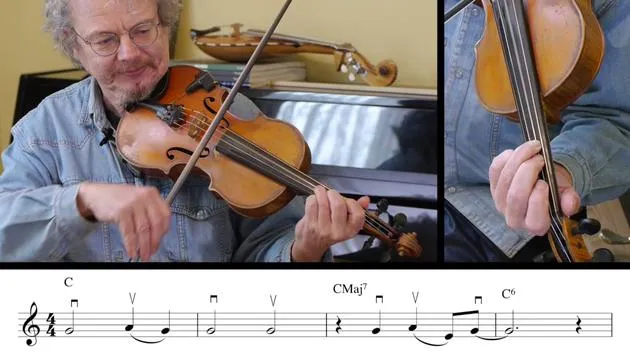
Now, we'll introduce the idea of a riff, which is a short, catchy melody that you will memorize and use repeatedly.
- In this case, we'll use it to fill a gap.
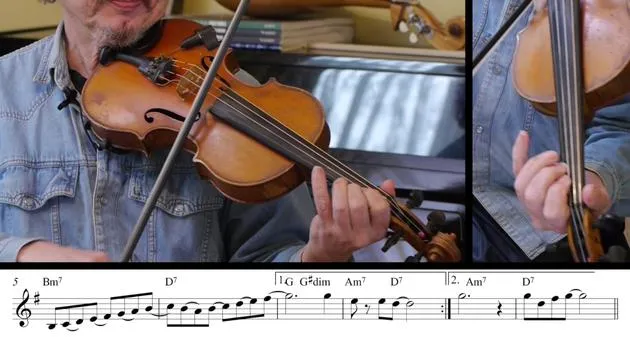
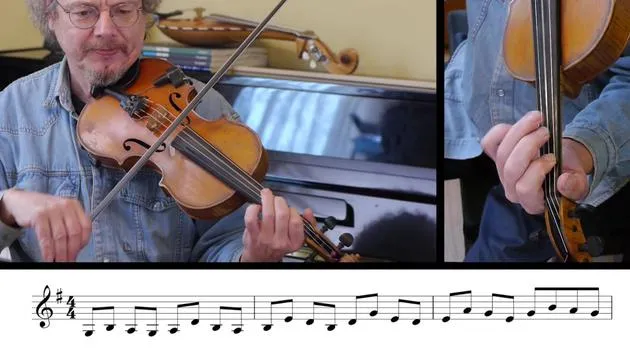
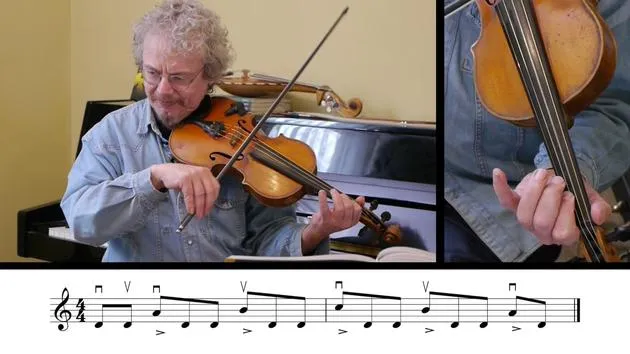
- The first phrase is "1, 2, 3, 4, 1," used to fill a gap of two bars.
I'll play through a bit of the tune and just replay that over and over again to demonstrate how it fits with the chords.
Alternating Melody and Riff
Now, let's practice alternating:
- Start either with the melody or with the riff, followed by a couple of bars of the other.
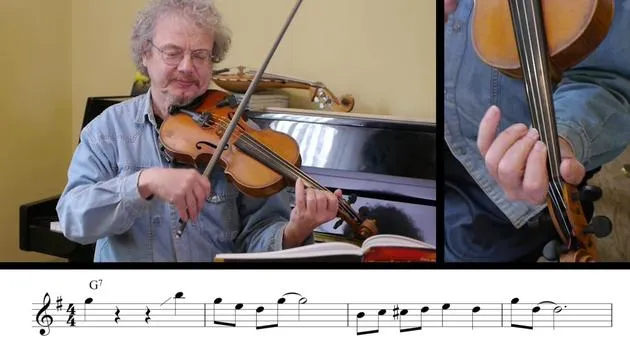
For instance, let's try the same thing with one of Stefan Grappelli's favorite licks:
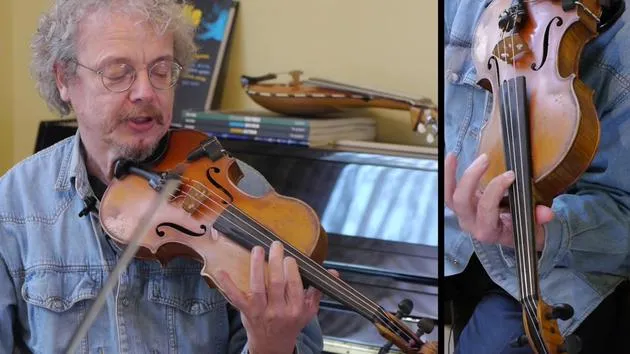
- This lick involves a four-finger slide up to D followed by a little phrase.
I'll play that a couple of times through and then we can start alternating.
Mixing It Up
Next, let's mix it up even more by using both riffs along with some melody.
- We've broken the tune down into two-bar sections, showing that all these bits are interchangeable and replaceable.
Visualization of Improvisation
I like to think of improvisation as playing with LEGO bricks.
- Each LEGO brick is of a specific length and size; you can take out a bit of melody and put in a bit of something else.
This perspective makes improvisation easier to understand.
Learning Riffs
You can learn riffs like these:
- From these videos
- By listening to recordings of other players
- Or by creating your own
Once you've learned a lick, ensure you become very familiar with it so you can use it repeatedly, much like Stefan Grappelli did.
Varying Your Licks
Don't be ashamed to use them repeatedly! That's how you become familiar with them. However, you do need to learn to vary them in terms of:
- Key
- Accent
- Length
This variation allows for flexibility, enabling you to use them in different types of tunes at varying tempos.
Using the C Major Scale
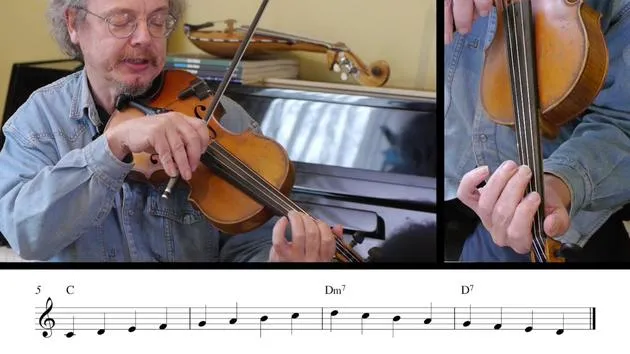
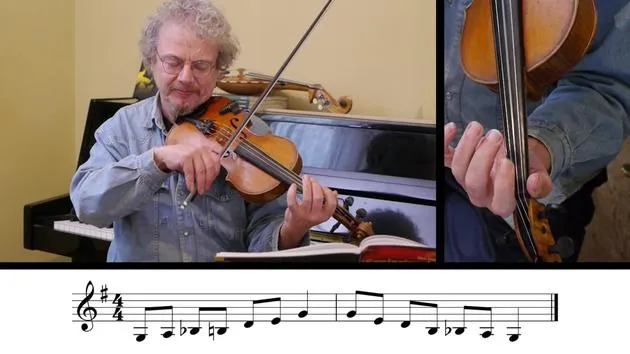
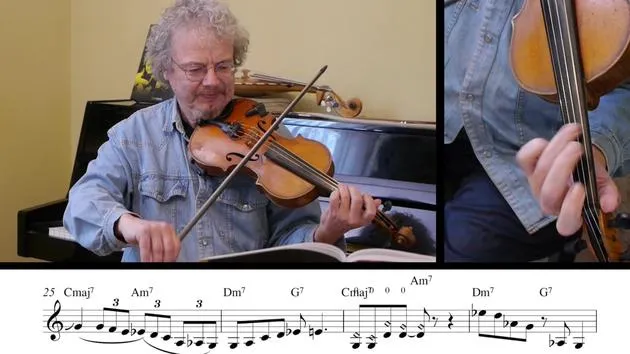
Now let's look at using the C Major scale over the whole sequence and alternating it with bits of melody.
- Rather than using riffs, we'll incorporate sections of the C Major scale.
To begin, let's hear what it sounds like with this scale over all the different chords.
Conclusion
What we've learned is that to some extent, this scale will work over all of the chords.
- While I varied quite a bit, I was generally staying within the scale.
Now that we know that this is going to work, let's try alternating bits of melody with bits of the C Major scale.
26 lessons
1h 53m of structured video lessons
Advanced video features
Slow down, loop a passage, follow along
Mobile, tablet & desktop
Practise wherever you are
100% satisfaction guarantee
30-day money-back guarantee
Meet your guru
Meet your guru
Chris Haigh has been a professional fiddle player for 25 years, with experience covering many different genres. He has played on over 75 albums, working with artists including Alison Moyet, Bob Geldof, All About Eve, Michael Ball, David Soul, Oumou Sangare, The Quireboys, Riverdance, Morcheeba, James Galway and Steps.
He has played swing jazz with The Kimbara Brothers, Diz Disley, Le Jazz, The Hot Club of London, and the Quecumbar Allstars, and leads a 7-piece Soviet swing band, The Kremlinaires.
Chris gives lessons and workshops on jazz violin technique and has taught jazz violin at Middlesex, Brunel and Newcastle universities and Truro College. His writing credits include nine fiddle books, among them The Fiddle Handbook.
He also runs Fiddling Around (fiddlingaround.co.uk), probably the most comprehensive and widely visited source of fiddle information on the web.







