



Varying the head
With
Chris HaighWhen you play a head, you should never play just as it is written. There are many things you can do to loosen it up, give it more freedom and make it more personal
What's in the course
26 lessons (1h 53m) · 1 free
Lesson transcript
Lesson: Exploring Proper Tune in Jazz
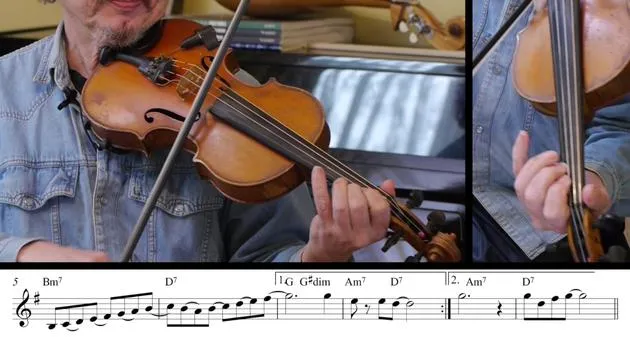
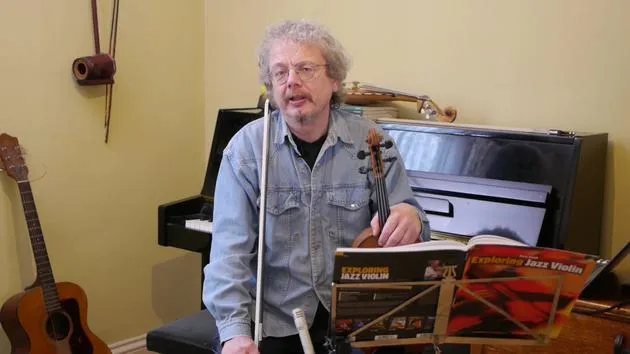
Now, in this lesson, it's time to look at proper tune. The melody line of a jazz tune is often called the head. The example we're going to use here is a tune called Head First.
Playing the Head
When you play the head, you should never play it just as it's written. There are many things you can do to loosen it up, give it more freedom, and make it more personal. Among the things you can do are:
-
Sliding notes:
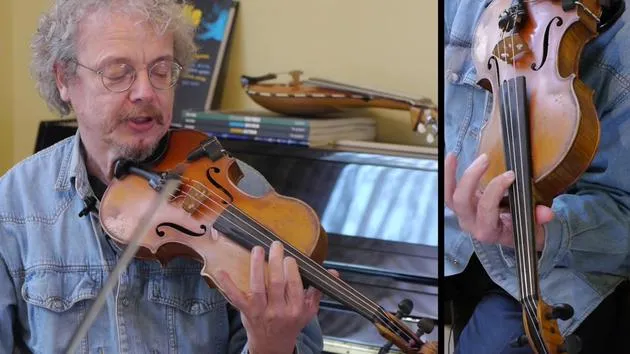
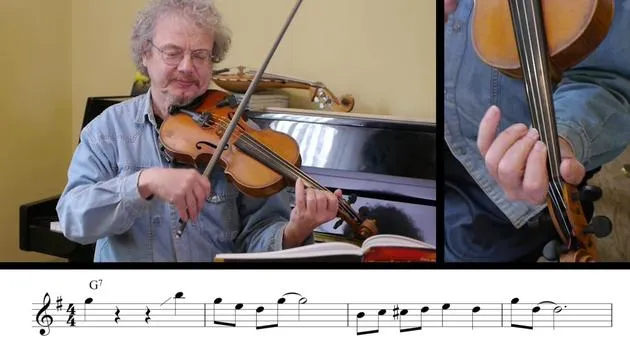
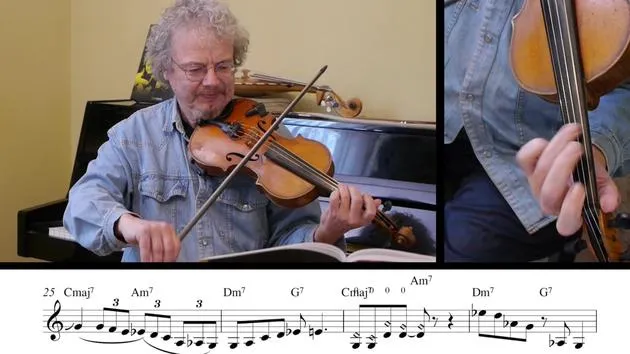
- In the very first bar, you might slide that D note about half a semitone.
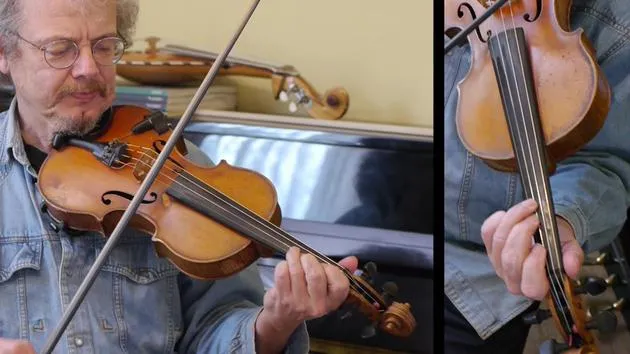
- Here's a nice swoop: often, I will replace an open string note, such as that D, with the third position note where I'm sliding up to the second finger.
- This allows me to do a nice slide and a nice vibrato, which you couldn't get with your fourth finger or with an open string.
-
Syncopation:
- This is where you alter the position of a note to add an element of surprise.
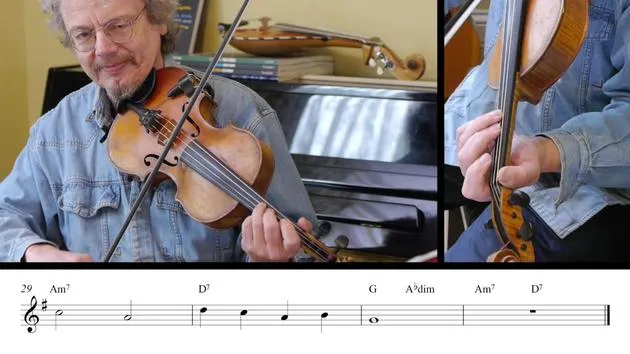
- In the fourth line of the tune, you can bring the G note at the end forward so that it comes before the bar line.
- Alternatively, you could shorten the D and lengthen and bring forward the C.
You can do this at will, anywhere through a tune, just to add a little bit more freedom.
Splitting Notes
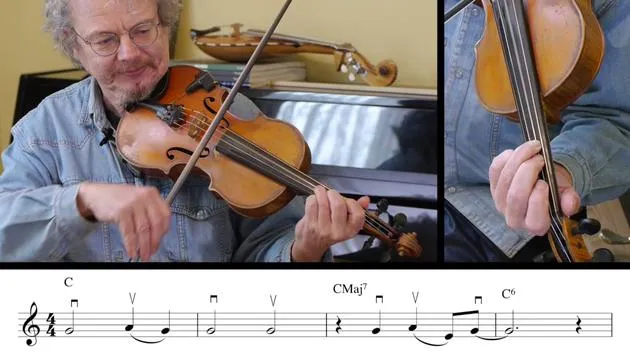
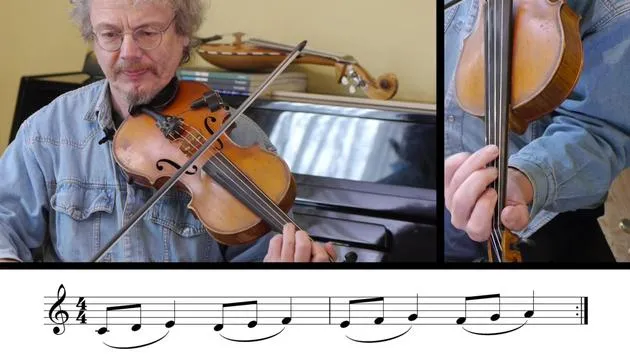
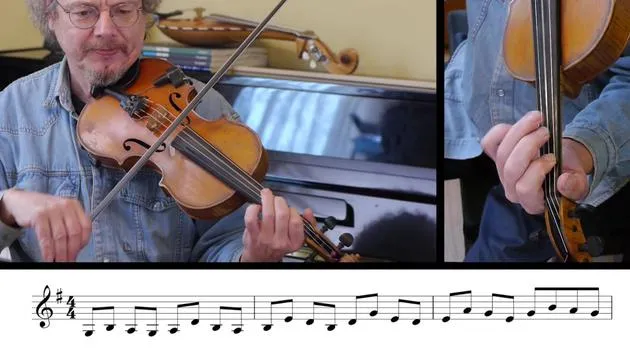
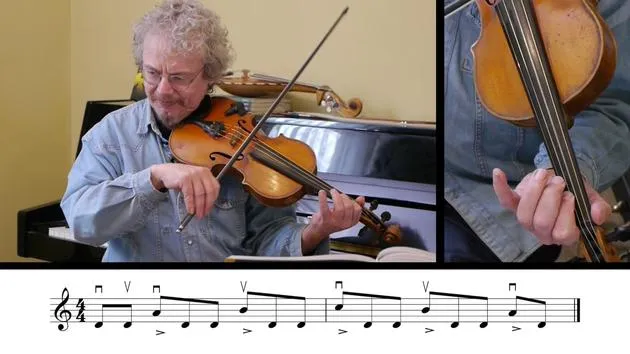
- Splitting notes is a good idea, particularly where you have a tune that has lots of crotchets or minims.
- For example, that bar could become:
- If you've got a series of crotchets, as in the fourth line, it can sound like nothing swinging about. However, if you split them up, it develops a swing.
- The long notes, such as that G, are a good place to really break it up. You can try something like this.
This is something Stefan Grappelli liked to do a lot. He would perform something known as a pedal, where he goes down an octave.
Passing Notes
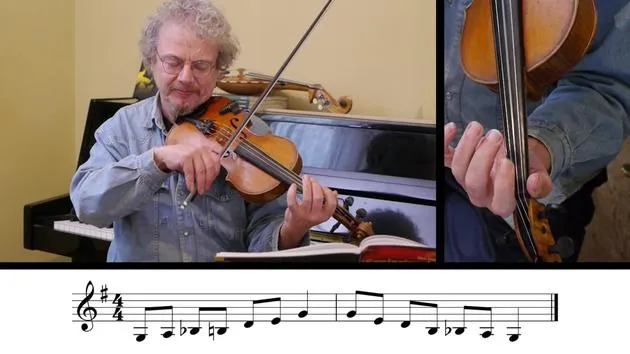
Passing notes are often chromatic notes that link to melody notes. For example:
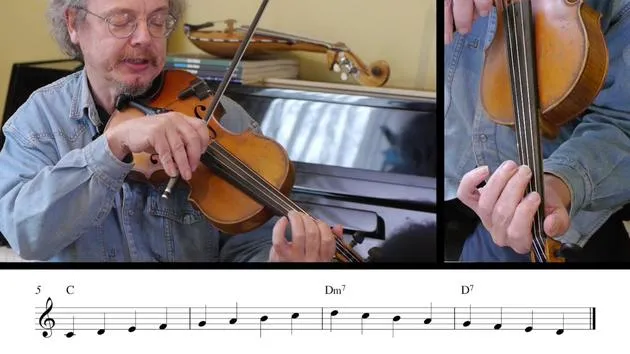
- In the third bar, instead of playing the standard notes, you can stick in an extra chromatic note.
- In the fifth bar, from here to there, you could go up or down in pitch with additional notes.
- Whenever there are two notes separated by a space, you can stick some notes in between.
Displacing Phrases
Another technique is the displacing of phrases. This includes:
- Extending a phrase
- Repeating a phrase
- Repeating notes or extending notes within a phrase
This obviously disrupts whatever's going to come next, so you have to think on your feet and find a way of making space for what you've just done.
For example, let's take the fourth line again:
- You might extend that A.
- Then, you could make the notes in the next bar quicker.
- Perhaps you might extend the note in the second bar.
Conclusion
The whole tune is flexible in many ways. This is what makes it interesting for you to play the same tune over and over again and for the listener to hear you perform it.
If they come to a performance and see you play a tune they've heard a hundred times, they don't want it exactly as it was written. They don't want it exactly as it was first recorded or sung. And personally, you don't want to play it exactly as you last played it. Even if that was your best performance, you want to play it differently every time.
And remember, we're not even talking about improvisation or solos; we're talking about the melody itself.
Let me play Head First again, and this time I'll vary it in a lot of these small ways that we've just described.
26 lessons
1h 53m of structured video lessons
Advanced video features
Slow down, loop a passage, follow along
Mobile, tablet & desktop
Practise wherever you are
100% satisfaction guarantee
30-day money-back guarantee
Meet your guru
Meet your guru
Chris Haigh has been a professional fiddle player for 25 years, with experience covering many different genres. He has played on over 75 albums, working with artists including Alison Moyet, Bob Geldof, All About Eve, Michael Ball, David Soul, Oumou Sangare, The Quireboys, Riverdance, Morcheeba, James Galway and Steps.
He has played swing jazz with The Kimbara Brothers, Diz Disley, Le Jazz, The Hot Club of London, and the Quecumbar Allstars, and leads a 7-piece Soviet swing band, The Kremlinaires.
Chris gives lessons and workshops on jazz violin technique and has taught jazz violin at Middlesex, Brunel and Newcastle universities and Truro College. His writing credits include nine fiddle books, among them The Fiddle Handbook.
He also runs Fiddling Around (fiddlingaround.co.uk), probably the most comprehensive and widely visited source of fiddle information on the web.







