



Introduction to the blues
With
Chris HaighChris Haigh introduces the blues for jazz violinists: the 12-bar chord sequence, the blue-note scales, and the feeling that drives it.
What's in the course
26 lessons (1h 53m) · 1 free
Lesson transcript
Understanding the Blues
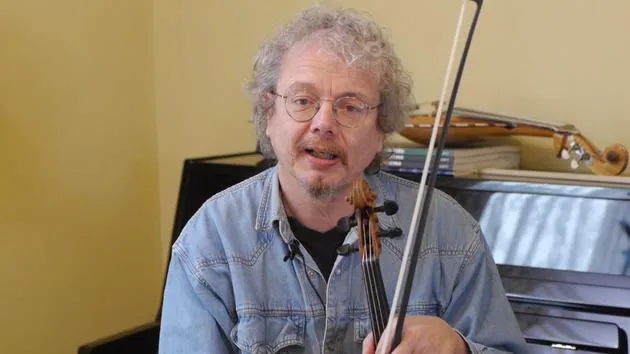
Now it's time to move on to the blues. Blues is a separate and self-contained genre in itself, but it's also an essential element of jazz. There are three different aspects to what the blues is:
-
Chord Sequence:
Mostly 12 bars in length. -
Scales:
A series of scales containing flattened or blue notes. -
Emotional Expression:
A general feeling of angst and passion which you can put into your music.
The 12 Bar Sequence
Let's first of all look at the 12 bar sequence. Most jazz numbers follow a 32 bar pattern, certainly all the ones we've followed so far, and they have an A and a B section. The blues is quite different; it just has a single section which is 12 bars long.
This is what the 12 bar blues sounds like. I'll just give you the chords to hear to start with. Now, you've got to be able to really internalize this.
Arpeggios
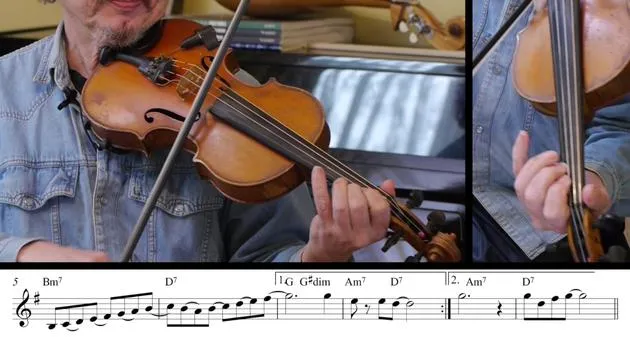
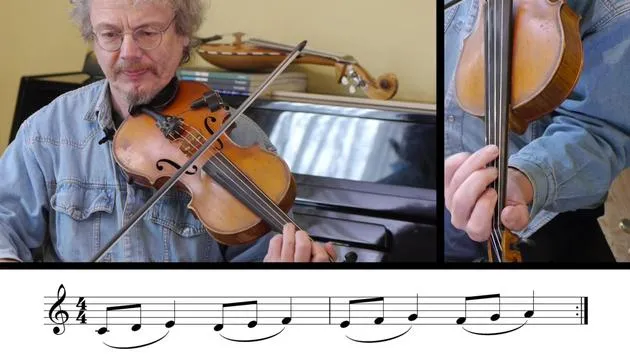
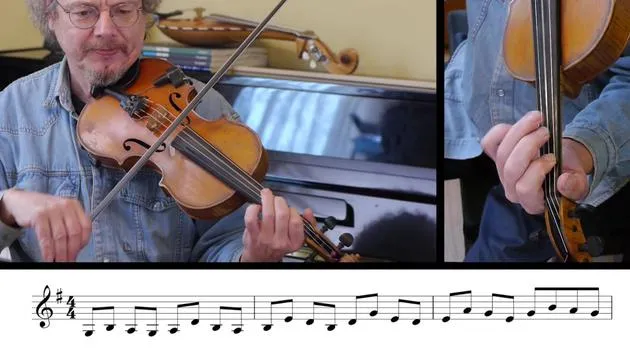
What we're going to do is play arpeggios (the 1, 3, and 5) for each of these chords. The three chords are:
- Tonic: G or the I chord
- Subdominant: C or the IV chord
- Dominant: D or the V chord
You need to get very familiar with this sequence, so play along with the arpeggios and memorize it so you don't need to look at the music as simple arpeggios.
"It sounds very staid and not at all bluesy."
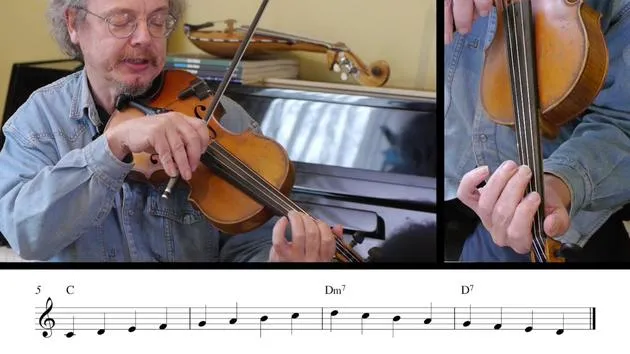
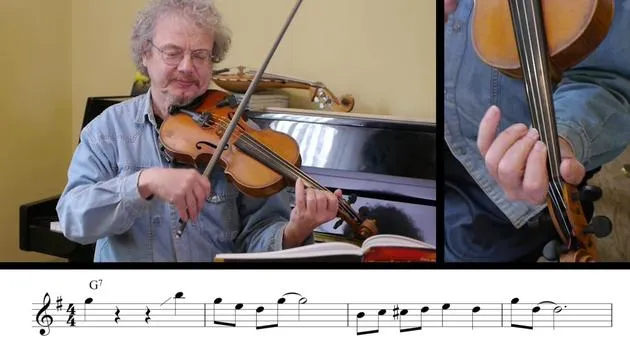
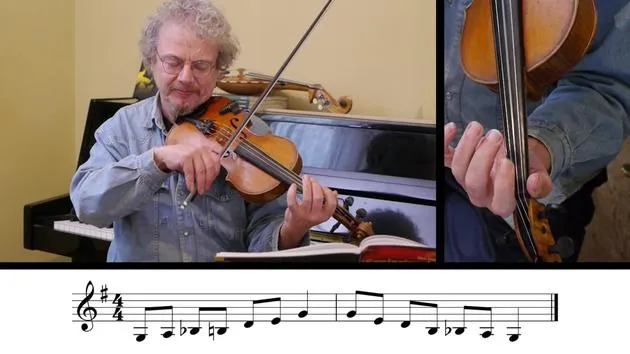
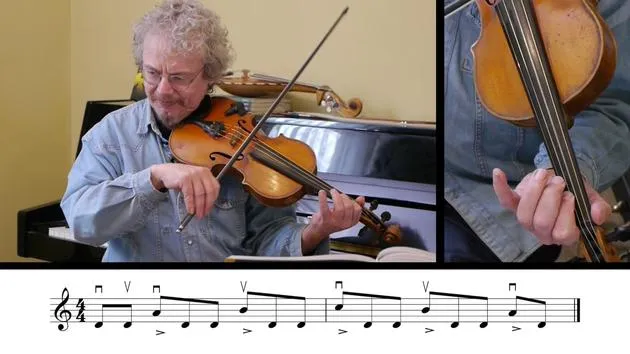
We can spice things up by adding a flattened seventh to each chord and turning the arpeggio into what's often called a boogie woogie pattern.
Swinging the Pattern
So, we're going to swing the first part of the pattern and we're going to put in that flattened note. This is a bass line, and it isn't normally what the fiddle would play. However, like the arpeggios we did earlier, it's very valuable for learning to navigate your way around a blues sequence.
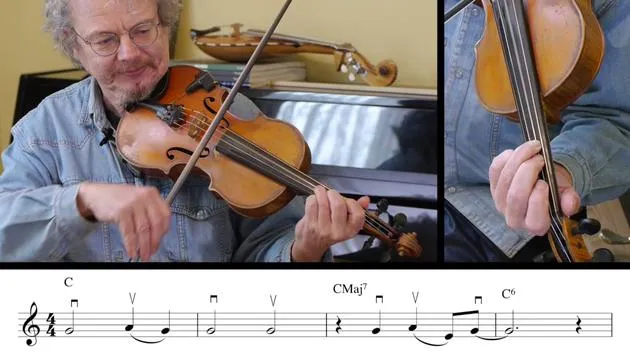
Another approach is to play horn riffs that punctuate the rhythm and the chord.
Simple Melody
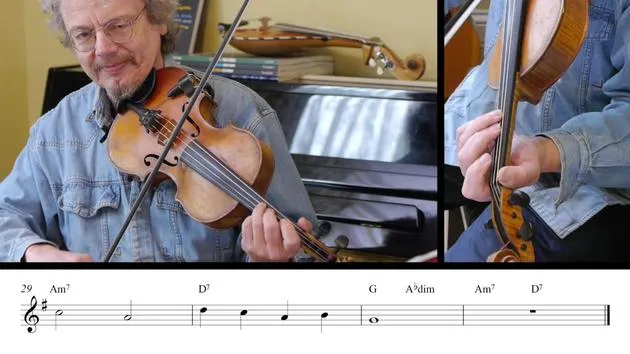
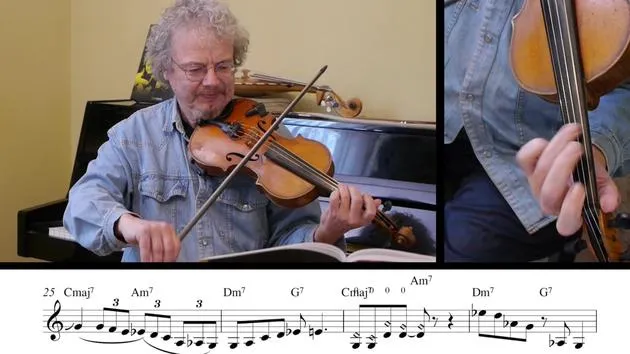
Now here's a very simple melody that will work over the blues sequence.
Common Variations
Finally, a quick look at some of the common variations to the blues sequence:
- It's common to make the second bar a two chord, returning to the I for the rest of the line.
- Also, the final bar is often a five chord, which helps to punctuate the sequence and mark the end of the 12 bar.
Here's the slightly more elaborate 12 bar blues sequence with the horn riffs.
26 lessons
1h 53m of structured video lessons
Advanced video features
Slow down, loop a passage, follow along
Mobile, tablet & desktop
Practise wherever you are
100% satisfaction guarantee
30-day money-back guarantee
Meet your guru
Meet your guru
Chris Haigh has been a professional fiddle player for 25 years, with experience covering many different genres. He has played on over 75 albums, working with artists including Alison Moyet, Bob Geldof, All About Eve, Michael Ball, David Soul, Oumou Sangare, The Quireboys, Riverdance, Morcheeba, James Galway and Steps.
He has played swing jazz with The Kimbara Brothers, Diz Disley, Le Jazz, The Hot Club of London, and the Quecumbar Allstars, and leads a 7-piece Soviet swing band, The Kremlinaires.
Chris gives lessons and workshops on jazz violin technique and has taught jazz violin at Middlesex, Brunel and Newcastle universities and Truro College. His writing credits include nine fiddle books, among them The Fiddle Handbook.
He also runs Fiddling Around (fiddlingaround.co.uk), probably the most comprehensive and widely visited source of fiddle information on the web.







