



Joe Venuti
With
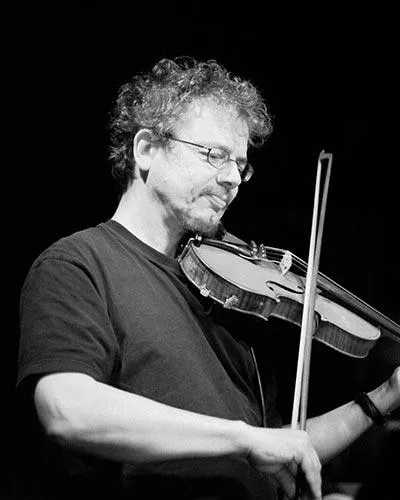
Chris HaighChris Haigh explores Joe Venuti, the pioneering 1930s jazz violinist, including his trademark trick of an unconventional bow hold on 'Four String Joe'.
What's in the course
26 lessons (1h 53m) · 1 free
Lesson transcript
Exploring the Styles of Giovannutti
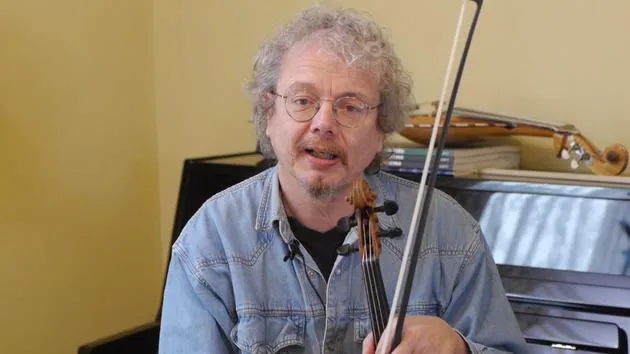
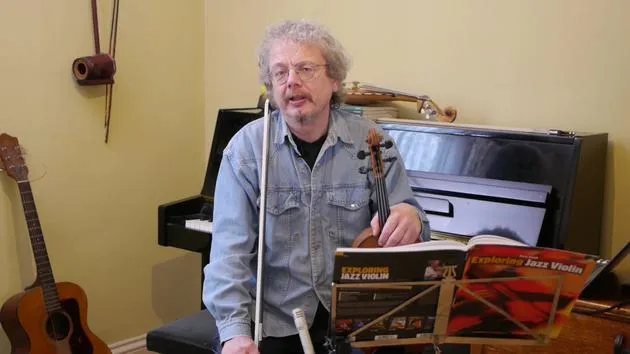
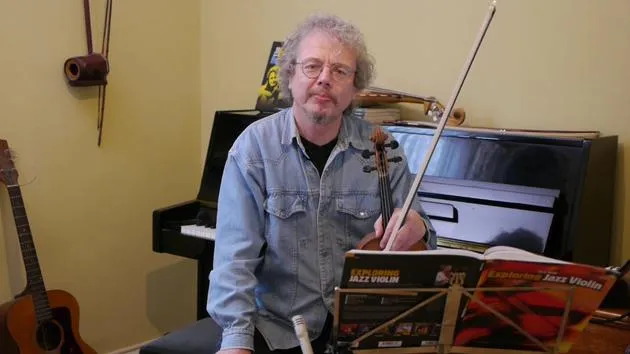
Now, I promised you at the start that we were going to be looking at the styles of some individual players.
A Pioneer of Jazz Violin
All of this chapter is going to be dedicated to Giovannutti. Giovannutti was an Italian American and he was probably the pioneer of jazz violin recording in the 20s and 30s with guitarist Eddie Lang and with some larger combos.
The Trickster
Venuti was, as well, an experimenter. He was a great trickster and he loved both practical jokes, which he played on other musicians, and musical jokes of various kinds.
Venuti's Trademark Jokes
I'm going to demonstrate one of his trademark jokes, which was a way of playing with a very unconventional use of the bow. He used this on a tune called Four String Joe.
The Unconventional Bow Technique
Now, I'll show you how we do this:
- Take your normal bow.
- Unscrew the end of the bow and take off the screw.
- Take off the hair.
- Wrap the hair around the top of the violin.
Now you can play all four strings at once! It's not very practical, but it is quite amusing.
The Double Shuffle
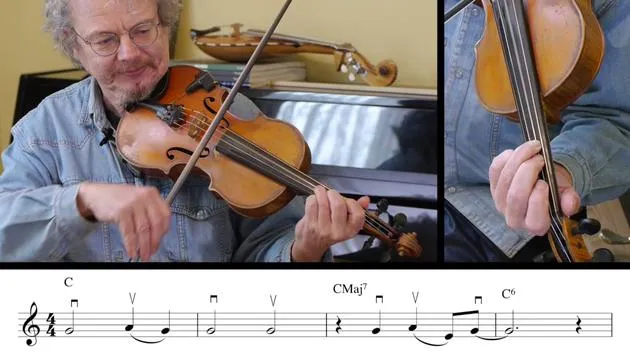
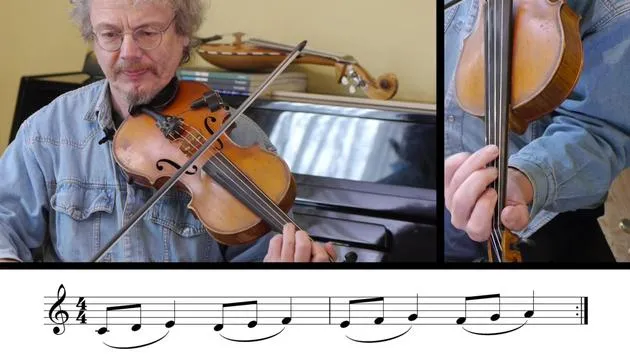
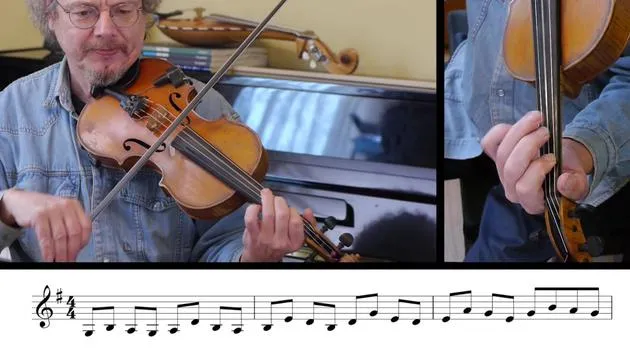
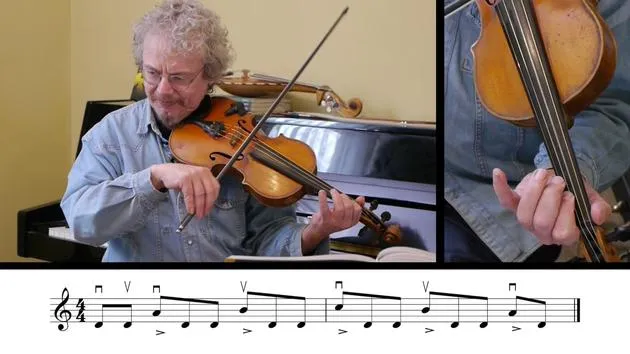
Another of his musical ideas was the double shuffle. This is something that has found its way a great deal into country music and country fiddling. I think he was one of the first people to pioneer this.
- The Concept: The double shuffle is a rocking bow rocking across two strings and incorporates syncopation.
- Rhythmic Pattern: At its simplest, it's this: If I tap my foot...
- 1, 2, 3, 4.
So those three note patterns, the da da da da da da, get placed in a different place against the bar line, making for an interesting rhythmic pattern.
Developing the Double Shuffle
You can develop this by changing the upper note:
- Start with the basic pattern.
- Once you've mastered that, move freely on the upper string to play whatever melody you like.
Important: Don't try doing that until you've absolutely got that rhythm stuck in your head!
Turning It Up a Notch: Arpeggios
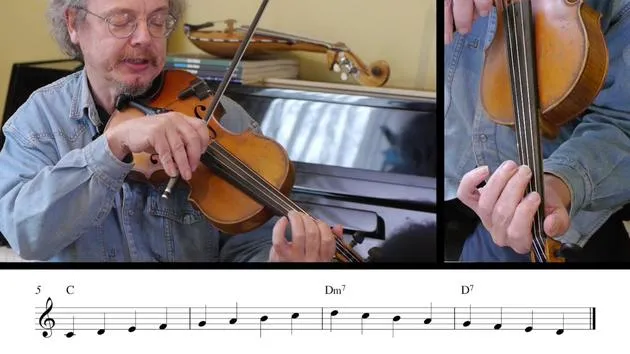
It gets more interesting still if you turn it into an arpeggio.
The Yodel Technique
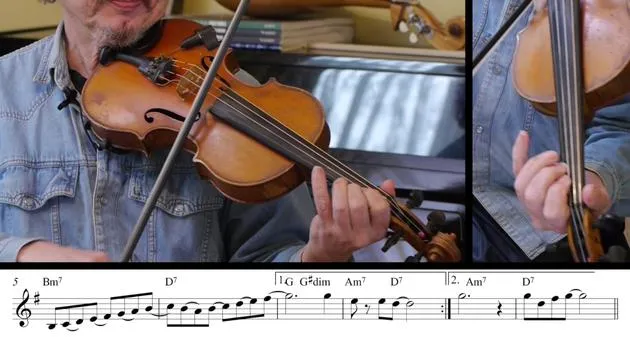
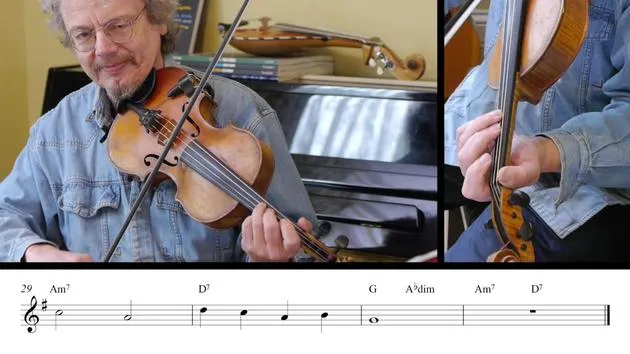
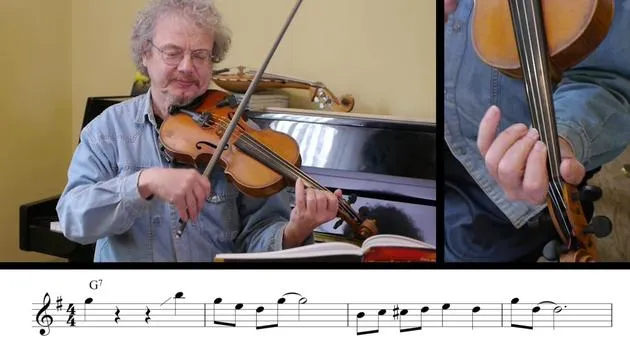
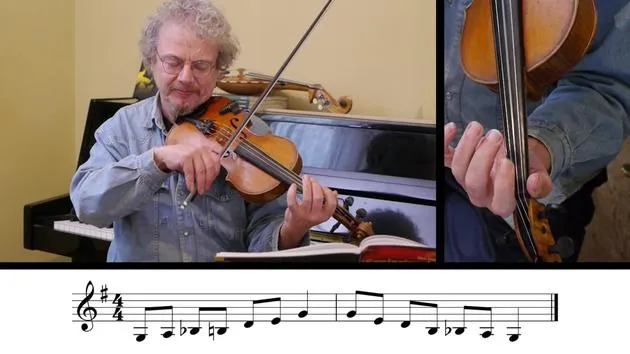
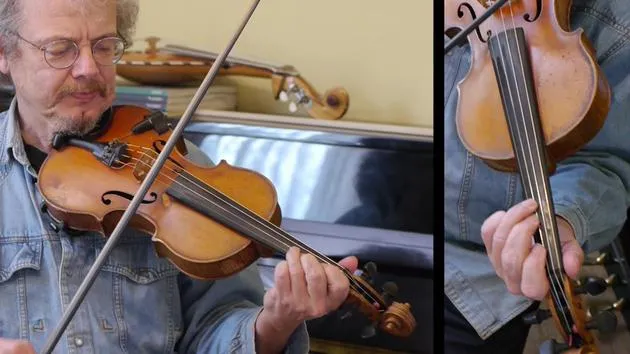
Another trademark lick of Giovannutti is the yodel. This is based on a scale where the melody note is shadowed by another note following behind it, which is a sixth below.
- Scale in G:
- A descending yodel using that key would be...
You can also speed it up by adding some chromatic notes to make it a bit more interesting.
- Many yodels have a descending pattern;
- Here's an ascending yodel.
Rich Melodic Phrases
Venuti loved parallel fifths. They turn very simple melodic phrases into something rich and exotic.
- At its simplest, take a phrase:
- If you finger both the note you just heard and the string above it, and bow both strings, you get something much more exotic.
This is very easy to do because normally you have to go to quite some effort to stop playing the adjacent strings. Here, you're playing two strings at once.
Development with Chromatic Phrases
You can develop chromatic phrases very well, and he's quite a long phrase of Giovanni.
Special Effects: Harmonics
As I told you before, Venuti loved special effects of every sort. He liked to use harmonics.
-
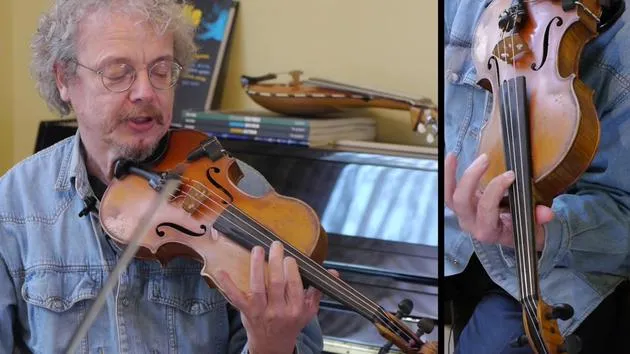
Natural Harmonics: Found at certain points up and down the string; the most accessible ones are in third position.
-
Technique: Fingering these notes lightly produces natural harmonics.
-
Artificial Harmonics: These are much harder to do:
- In this case, finger a note with your first finger.
- Very lightly touch the string with your fourth finger to produce a note two octaves higher than the starting note.
To get other notes, slide the whole thing. This is difficult, particularly as you ascend the string; the distance between your two fingers must get smaller at exactly the right rate.
Conclusion
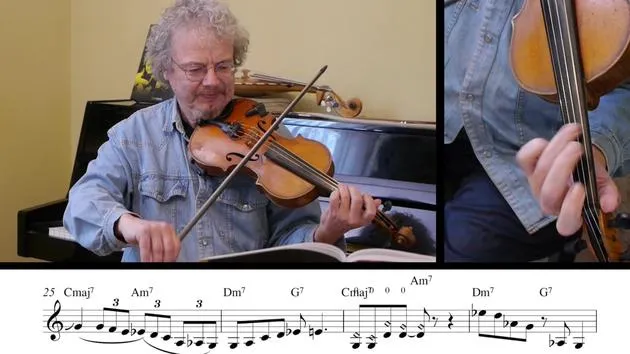
This is something Venuti was very good at. Finally, let's have a go at a tune which brings together a series of Venuti licks called Jumping with Joe.
26 lessons
1h 53m of structured video lessons
Advanced video features
Slow down, loop a passage, follow along
Mobile, tablet & desktop
Practise wherever you are
100% satisfaction guarantee
30-day money-back guarantee
Meet your guru
Meet your guru
Chris Haigh has been a professional fiddle player for 25 years, with experience covering many different genres. He has played on over 75 albums, working with artists including Alison Moyet, Bob Geldof, All About Eve, Michael Ball, David Soul, Oumou Sangare, The Quireboys, Riverdance, Morcheeba, James Galway and Steps.
He has played swing jazz with The Kimbara Brothers, Diz Disley, Le Jazz, The Hot Club of London, and the Quecumbar Allstars, and leads a 7-piece Soviet swing band, The Kremlinaires.
Chris gives lessons and workshops on jazz violin technique and has taught jazz violin at Middlesex, Brunel and Newcastle universities and Truro College. His writing credits include nine fiddle books, among them The Fiddle Handbook.
He also runs Fiddling Around (fiddlingaround.co.uk), probably the most comprehensive and widely visited source of fiddle information on the web.







