



Blues scales and licks
With
Chris HaighChris Haigh builds the blues sound on jazz violin, adding the flattened third to the pentatonic to create blues scales and the licks that come from them.
What's in the course
26 lessons (1h 53m) · 1 free
Lesson transcript
Blues Scales and Licks
In this lesson, we're going to look at blues scales and blues licks.
Major vs. Minor Scales
First of all, let's look at the difference between major and minor scales:
- Third Note: The third note of a scale defines whether a scale arpeggio or chord is major or minor.
- Major is happy.
- Minor is sad.
The G major pentatonic scale we looked at before had a major third, and so it sounded happy.
And that is your major third.
If we add an extra note, the flattened third, we get the G major blues scale.
- This scale has both:
- The flat (or minor) third
- The natural major third
So it has the option of being both happy and sad.
Bendable Notes
What's more, this is a bendable note. It means it can act like an emotional switch.
Understanding Blues
Now, two things need to be said before we go any further:
-
Varied Interpretations: If you've read about the blues before, you might have discovered that not everyone describes blues in the same way. Guitarists, in particular, have a very different idea about how to explain blues. But trust me, for a violinist, this is the best starting point.
-
Modern Construction: The idea of a blues scale is a modern and rather artificial construction. The people who invented blues did so without any idea of creating any kind of coherent music theory. They simply played and sang notes that fitted the chords they played and the feelings they felt at the time.
So don't get too hung up on ideas of what is the correct blues scale.
Major Blues Scale
The major blues scale is:
- The pentatonic scale
- Plus the flattened third.
From this, we're going to create some blues licks.
Examples of Blues Licks
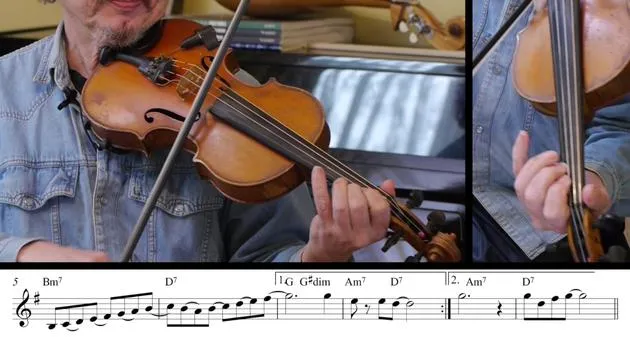
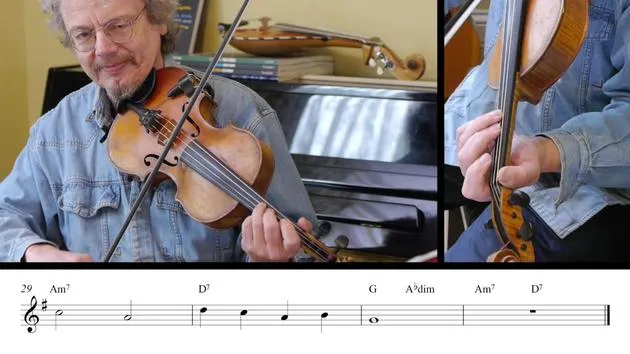
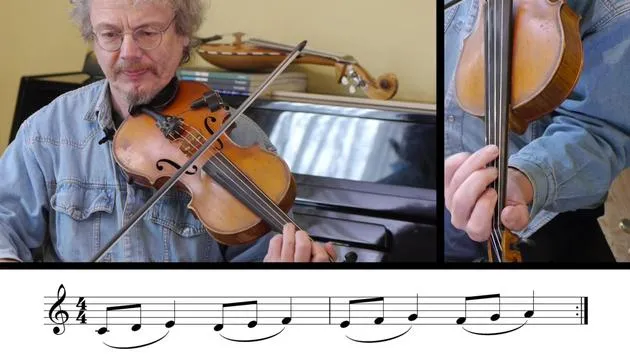
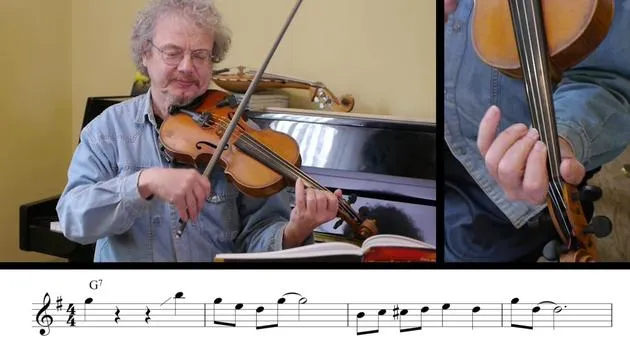
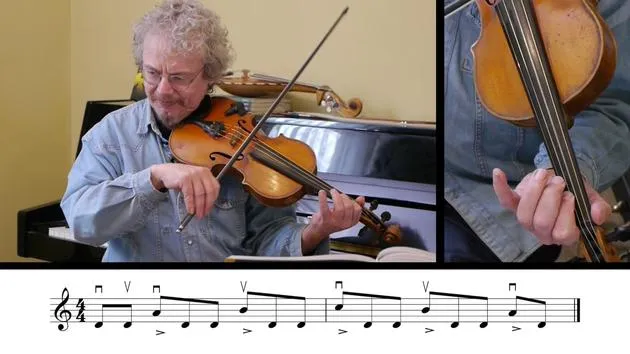
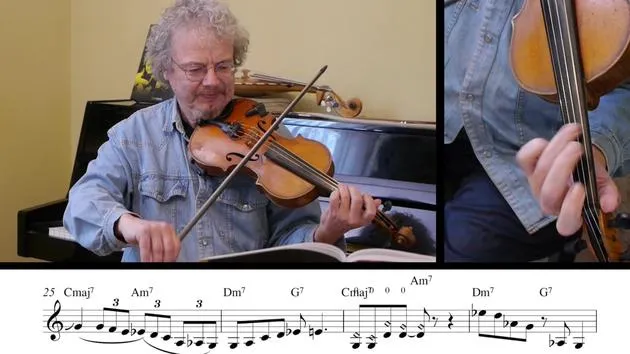
Here's an example of a lick based on the major blues scale:
- Example 1: [Insert Lick Here]
- Example 2: [Descending Lick]
- Example 3: [Lick played by Stefan Grappelli]
Blues licks like this will usually work at any point in the 12-bar blues, regardless of which chord we're on. Therefore, they can be played repeatedly.
Repeating Riffs
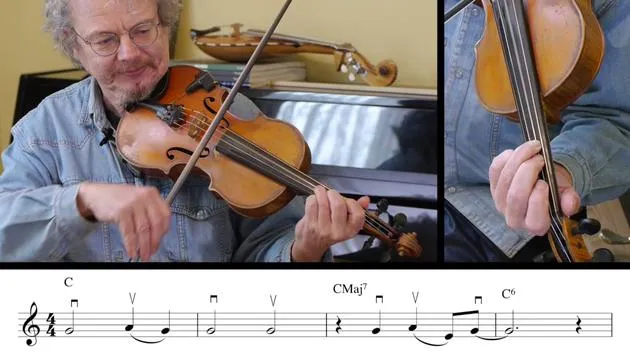
Here's an example of a repeating riff:
- [Insert Repeating Riff Here]
There's another approach to changing chord sequences.
- You can play a riff on the one chord and then transpose it up to the four and up to the five.
Closed Position Fingering
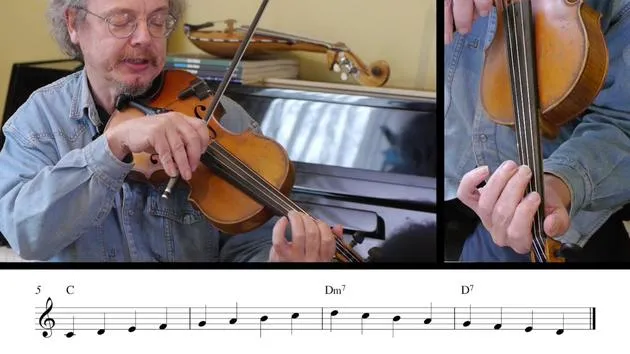
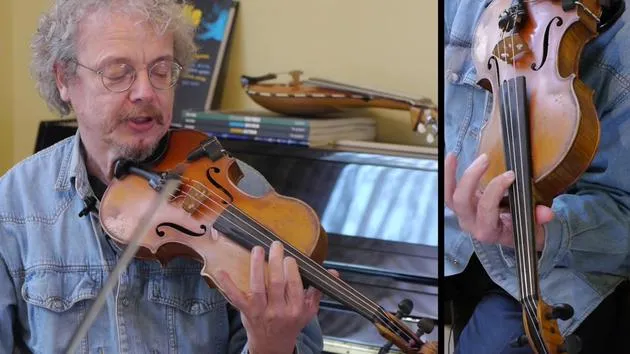
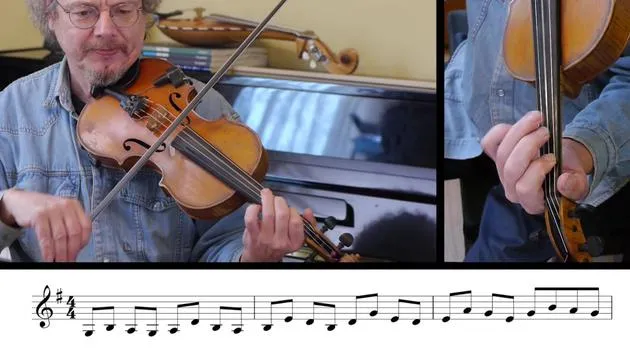
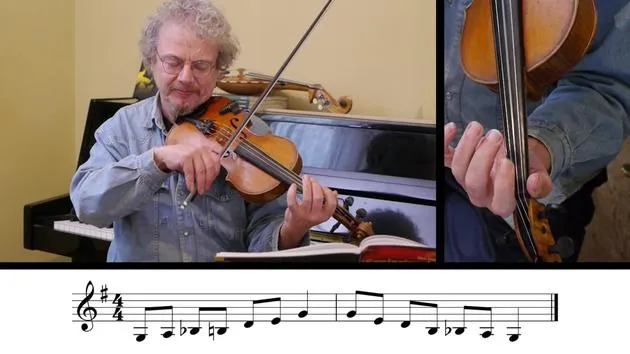
Finally, for this section, remember the closed position fingering that we used for the pentatonic scale. We can do exactly the same for the major blues scale.
So here it is in G major:
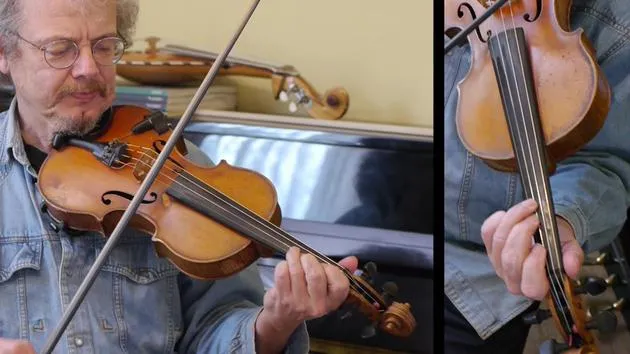
- Start off in third position, first finger on the G string.
- Notice that I'm using the same third finger for the natural and for the flattened and natural note. The reason being that we can slide that note.
Then, we're going to go up to the top of the position and down to the bottom.
Just as with the pentatonic scale, we could play over the full range of the neck using the same finger pattern.
So with the blues scale, we can do exactly the same thing.
Now, use the backing for the G major blues to practice all these ideas and licks, and try coming up with some of your own licks!
26 lessons
1h 53m of structured video lessons
Advanced video features
Slow down, loop a passage, follow along
Mobile, tablet & desktop
Practise wherever you are
100% satisfaction guarantee
30-day money-back guarantee
Meet your guru
Meet your guru
Chris Haigh has been a professional fiddle player for 25 years, with experience covering many different genres. He has played on over 75 albums, working with artists including Alison Moyet, Bob Geldof, All About Eve, Michael Ball, David Soul, Oumou Sangare, The Quireboys, Riverdance, Morcheeba, James Galway and Steps.
He has played swing jazz with The Kimbara Brothers, Diz Disley, Le Jazz, The Hot Club of London, and the Quecumbar Allstars, and leads a 7-piece Soviet swing band, The Kremlinaires.
Chris gives lessons and workshops on jazz violin technique and has taught jazz violin at Middlesex, Brunel and Newcastle universities and Truro College. His writing credits include nine fiddle books, among them The Fiddle Handbook.
He also runs Fiddling Around (fiddlingaround.co.uk), probably the most comprehensive and widely visited source of fiddle information on the web.







