



Impro rythmique et comping
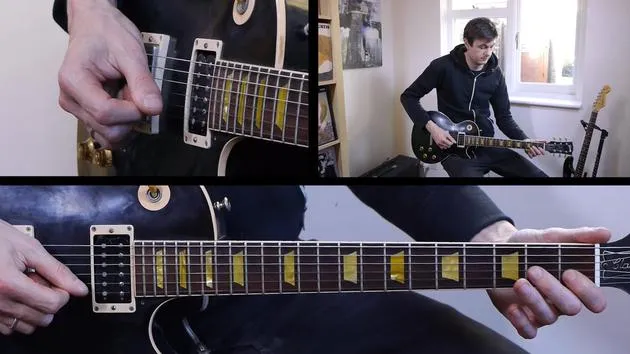
Lance-toi dans l'improvisation rythmique, ou comping - construis des motifs de grattage et des subdivisions rythmiques sur un accord de Sol pour accompagner un groupe ou un soliste.
Le contenu du cours
43 leçons (3h 11min) · 1 gratuites
01. Introduction aux approches de l'improvisation
1:00
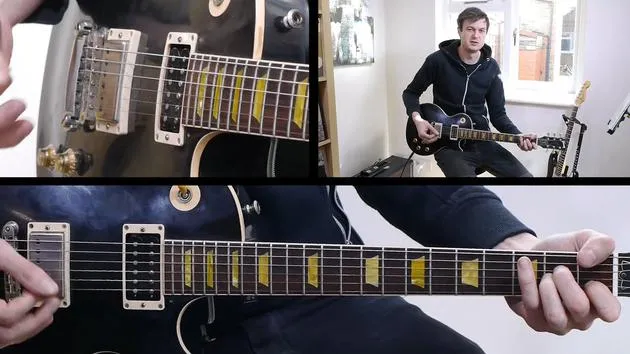
02. Premiers pas dans l'improvisation
9:22
03. Improviser sur les notes de l'accord
10:18
04. Exercice : Trouver les notes de l'accord
4:05
05. Ajouter de l'intérêt rythmique à tes solos
4:11
06. Exercice : improviser sur un changement d'accord
2:52
07. Défi : envoie ton impro
0:24
08. Embellir une mélodie
5:36
09. Défi : Envoie ta mélodie
0:26
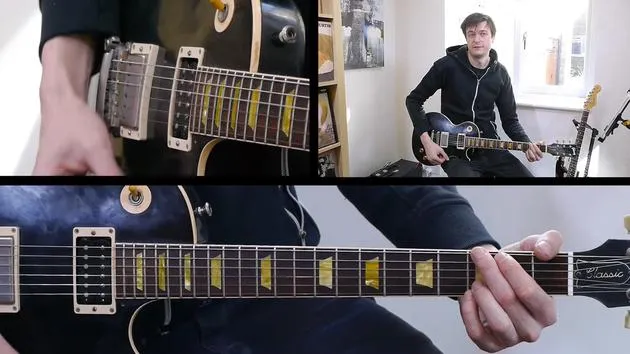
10. Impro rythmique et comping
Tu es ici9:55
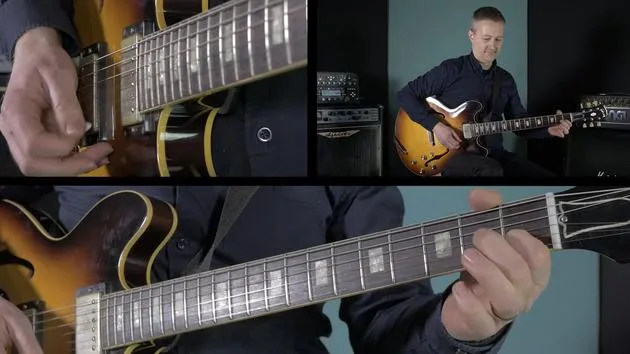
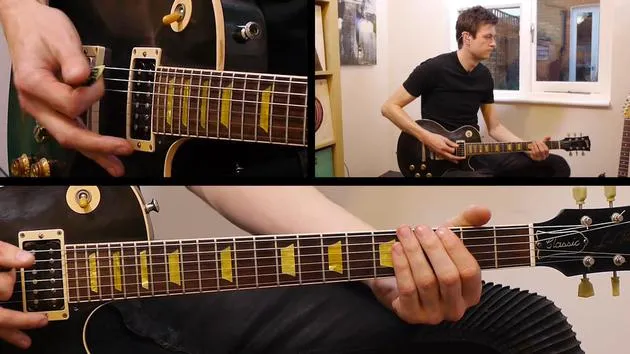
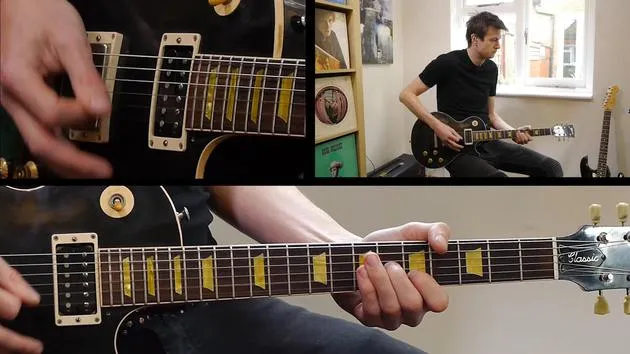
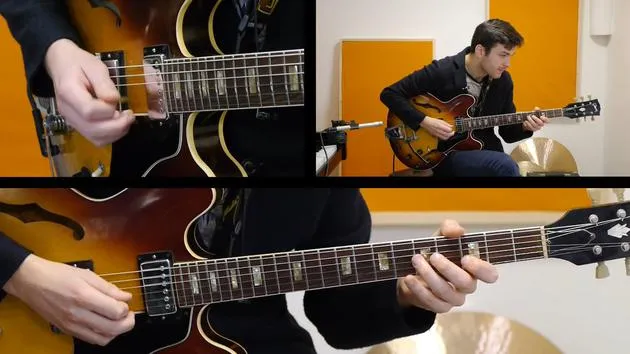
Transcription de la leçon
Rhythmic Based Improvisation: Comping
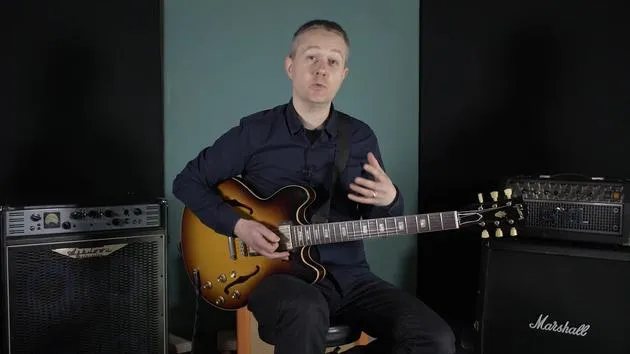
Okay, so what I'd like to talk to you about now is rhythmic based improvisation, or comping as it's known. This is probably something you'll do more often than even lead based improvisation.
It's an absolutely essential skill, being able to keep solid time and come up with interesting and stylistic rhythm parts to accompany a band, a song, or another soloist potentially.
Starting with the Basics
We're going to start at the very beginning, look at the basics, and just discuss some strum pattern ideas.
Chord Progression:
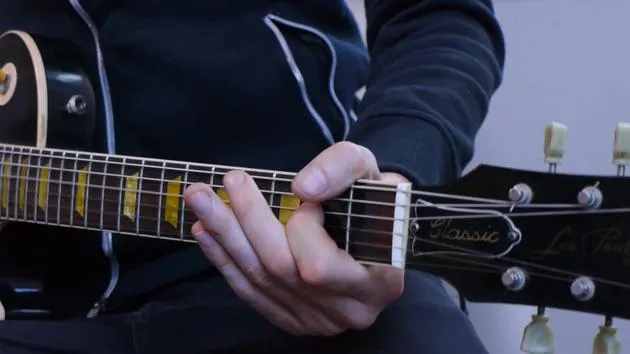
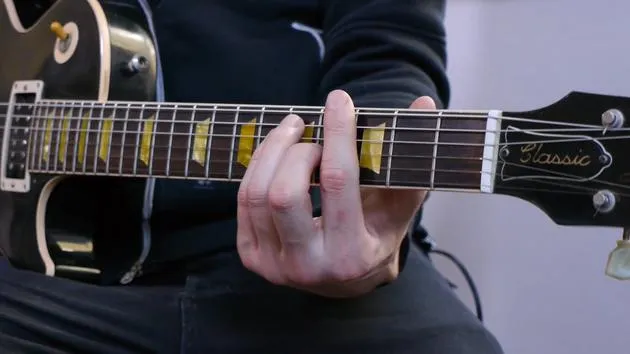
- G Major Chord: Hopefully, you're all familiar with that great chord.
- Static Chord: We need to be aware of different rhythmic subdivisions.
Common Rhythmic Subdivisions:
-
Crotchet (Quarter Note): 1, 2, 3, 4.
- Playing on every beat of the bar with a downstroke.
-
Eighth Notes (Quavers): 1 and 2 and 3 and 4 and.
-
Semi-quavers (16th Notes):
- Play twice as fast:
- 1 E and A, 2 E and A, 3 E and A, 4 E and A.
- This will sound like:
- 1 E and A, 2 E and A, 3 E and A, 4 E and A.
- Play twice as fast:
These are the three common subdivisions that you want to be really confident playing. I think it's a great exercise to stick a metronome on and do exactly what I just did there.
Practice Suggestions:
- Start with Crotchets.
- Whenever you feel in the zone, switch to Semi-quavers.
- Alternate back to Eighths, then back to Crotchets, and then to Semi-quavers.
Practicing with a scratchy sound can be a really good way to hear how you're nailing the rhythm.
Combining Rhythms to Create Strum Patterns
Now, let's look at combining some of those rhythms to come up with strum patterns.
Chord Progression Example:
- C Major Chord
- A Minor
- F Major: Play it as a half bar (third fret on D, second fret on G, barring the B and E strings on the first fret).
- Return to G Major.
Eighth Note Based Strum Ideas:
-
Strum pattern: 1, 2, 3, 4.
-
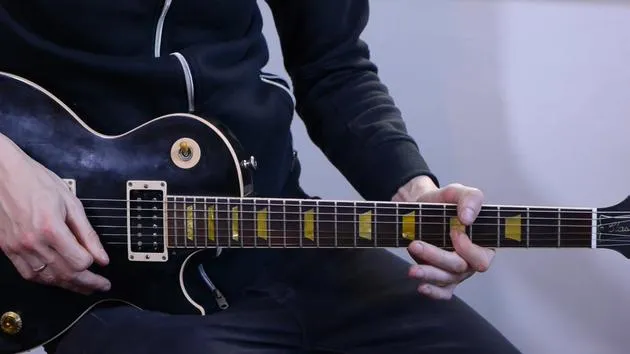
It's essential to maintain movement with your right hand.
"Although I'm not playing every single eighth note, my right hand looks as if it is."
Ghosting Technique:
- When missing out a string, you can still "ghost" the strings.
- This means keeping your right hand in consistent motion to avoid feeling awkward when repeating patterns.
Example:
- In a G chord, ghost some of the eighth notes.
Dynamic Considerations
Always think about dynamics with your right hand.
- If you hit all the strings evenly, it sounds unmusical.
Demonstration:
- Strumming all strings at the same dynamic sounds flat. Adjusting dynamics can transform the sound.
Developing Rhythmic Patterns
Let's take that a step further and look at ghosting with 16th note rhythms.
Try it again on the G chord.
Example:
- Play: 1 and 2 as three downs instead of down, up, down.
- Maintain that 16th note pace consistently with your right hand.
Experimenting with Musicality
Experiment with different chords and notice how musical the sounds become.
Reminder:
- The right dynamic is crucial; otherwise, it sounds even worse with 16th note patterns.
Key Points to Remember:
- You don't have to hit all six strings on every stroke.
- Instead, think about control and musicality.
Final Thoughts
Do try these exercises with all the examples on the PDF. If you'd like to record your own strum patterns, please send them in.
We'd love to hear them and provide feedback!
43 leçons
3h 11m de leçons vidéo structurées
Fonctions vidéo avancées
Ralentissez, bouclez un passage, suivez la partition
Mobile, tablette et ordinateur
Pratiquez où vous voulez
Satisfaction garantie à 100 %
Garantie remboursement 30 jours







