



Premiers pas dans l'improvisation
Le contenu du cours
43 leçons (3h 11min) · 1 gratuites
01. Introduction aux approches de l'improvisation
1:00
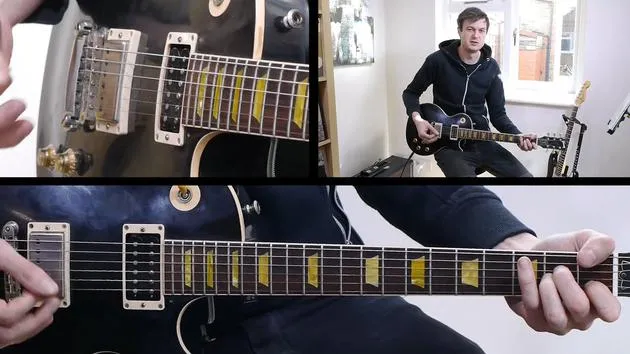
02. Premiers pas dans l'improvisation
Tu es ici9:22
03. Improviser sur les notes de l'accord
10:18
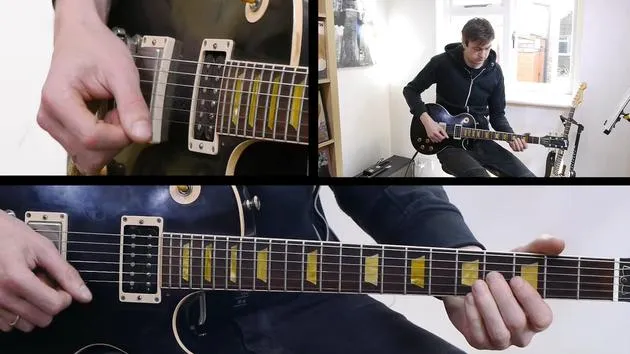
04. Exercice : Trouver les notes de l'accord
4:05
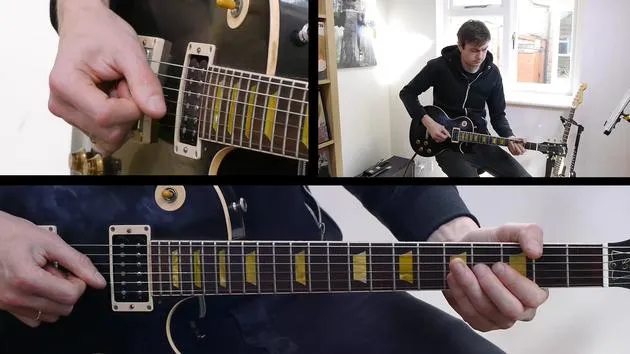
05. Ajouter de l'intérêt rythmique à tes solos
4:11
06. Exercice : improviser sur un changement d'accord
2:52
07. Défi : envoie ton impro
0:24
08. Embellir une mélodie
5:36
09. Défi : Envoie ta mélodie
0:26
10. Impro rythmique et comping
9:55
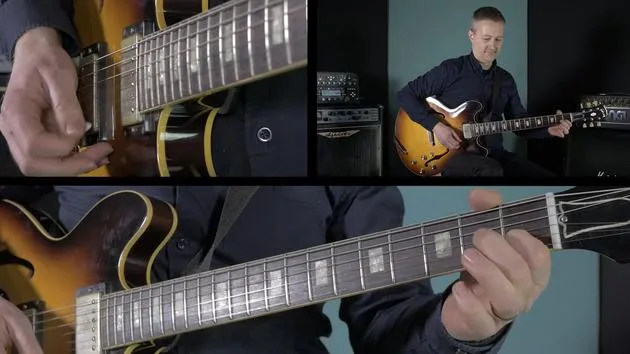
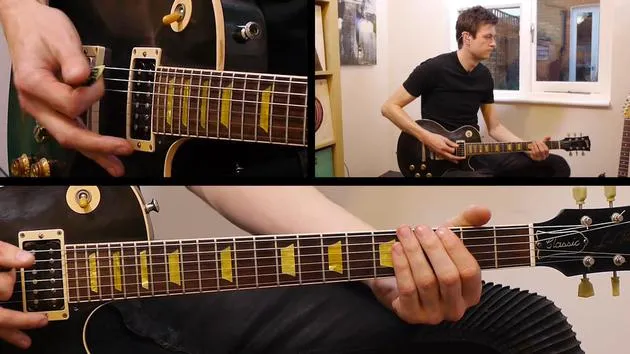
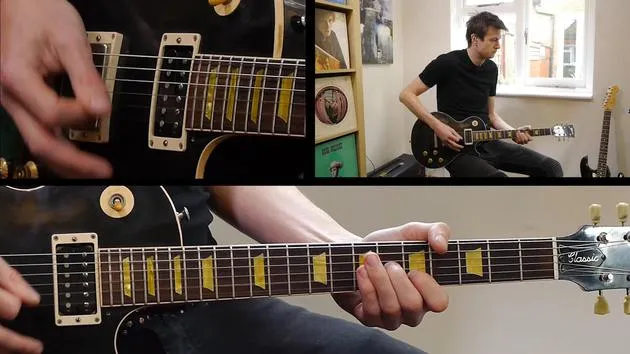
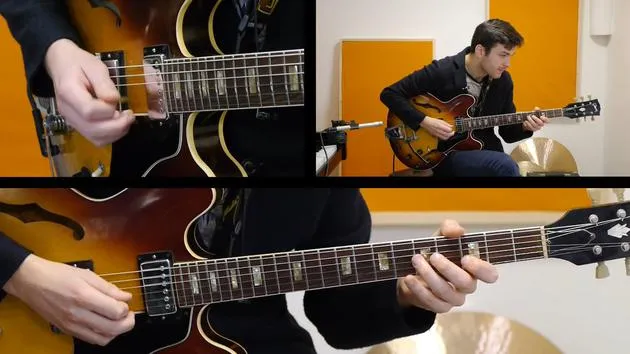

Transcription de la leçon
Improvisation in Music: Approaches and Techniques
Hello, guys! Today, we're diving into improvisation and exploring various methods for approaching it creatively.
Understanding Improvisation
Improvisation is about having the creativity and freedom to express what you're thinking in your head through your instrument. The ultimate goal is to seamlessly play your ideas. However, it doesn't just happen magically! There are numerous tools at our disposal that can help translate our thoughts onto the fretboard.
Relevance to Rock School Syllabus
If you are taking the Rock School syllabus, this lesson is particularly relevant for you. There is a part of the exam dedicated to improvisation. If you choose melodic improvisation, this will greatly assist you!
First Approach: Chord Tones
Let's begin with chord tones. If you're not familiar with this term, it simply refers to the notes present in a chord that we're improvising over.
What Are Chord Tones?
For example, in a C major chord, there are three chord tones:
- C
- E
- G
You might be surprised to learn that although you play five strings on a C major chord, you are actually only using three different notes: two C's, two E's, and one G.
Constructing Major Chords
To construct any major chord, we use the formula of:
- Root
- Third
- Fifth
These intervals come from a scale, hopefully, you're familiar with the major scale.
Let's play through the C major scale:
- C
- D
- E
- F
- G
- A
- B
We return to C.
Chord Tones in the Major Scale
The notes from the C major chord come directly from the scale. The best notes to hit when playing over a C major chord are the chord tones: C, E, and G.
While you can play other notes from the scale, they might create tension against the chord. Let me demonstrate:
- Loop: [C major chord]
- Play through C major scale:
1, 2, 3, 4...
Notice how the chord tones sound like they belong with the chord. Let's play those individually:
- Root: C
- Third: E
- Fifth: G
Exercise Suggestion
A great exercise is to identify the chord tones from a major chord. Don't stop at C major; try it in other keys like D or G! Find notes 1, 3, and 5, they are your strong notes for those chords.
Exploring Minor Chords
Before we move on to chord progressions, let's discuss minor chords and how they differ from major chords.
Key Difference: The Third
The significant difference between a major chord and a minor chord is just one note: the third. For example, in an A minor chord versus an A major chord, we change the middle third:
- A major: Root, Third (C#), Fifth (E)
- A minor: Root, Flattened Third (C), Fifth (E)
Targeting Chord Tones in Minor Chords
For an A minor chord, the chord tones are:
- Root: A
- Flattened Third: C
- Fifth: E
Let's try that:
- Play roots, thirds, and fifths.
- Create melodies using these three notes.
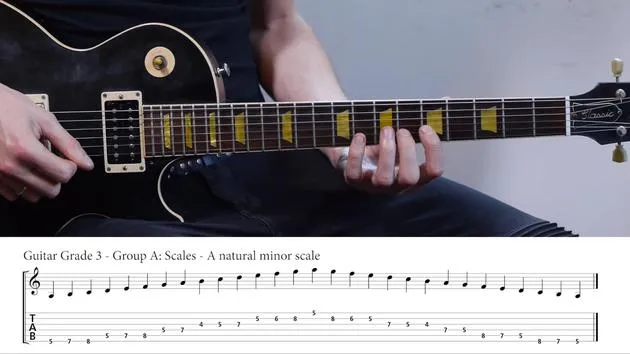
Let me show you the A natural minor scale:
When you play it, you'll find the chord tones sound strong, while the passing notes might create tension.
Using Tension Creatively
Let's create a simple phrase by moving from a B (which is not a chord tone) to a C (a chord tone):
- Start with B.
- Resolve to C.
You'll find that just by playing with a few notes, you can create compelling phrases.
Embracing Limitations
As you start improvising, it can feel overwhelming with the options available.
Restricting Yourself
Try:
- Restricting the number of available notes.
- Limiting your improvisation to a specific technical challenge.
- Confining yourself to a physical area of the neck.
These limitations can spark creativity and help you develop your improvisation skills.
Let's take these concepts and start experimenting!
43 leçons
3h 11m de leçons vidéo structurées
Fonctions vidéo avancées
Ralentissez, bouclez un passage, suivez la partition
Mobile, tablette et ordinateur
Pratiquez où vous voulez
Satisfaction garantie à 100 %
Garantie remboursement 30 jours







